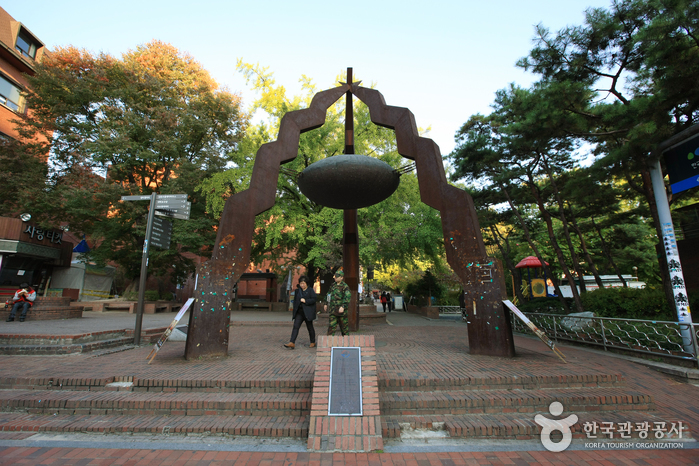
Marronnier Park (마로니에공원)
2.0Km 2021-07-14
104, Daehak-ro, Jongno-gu, Seoul
+82-2-2148-4158
Marronnier Park was given its name due to the marronnier trees, or horse chestnut trees, growing within the area. The location where Seoul National University's College of Liberal Arts & Science and School of Law once stood, it is now a park dedicated to culture and arts open to the public. In addition to a variety of outdoor performances that take place throughout the area, exhibitions and cultural centers create a romantic atmosphere unique to the park.
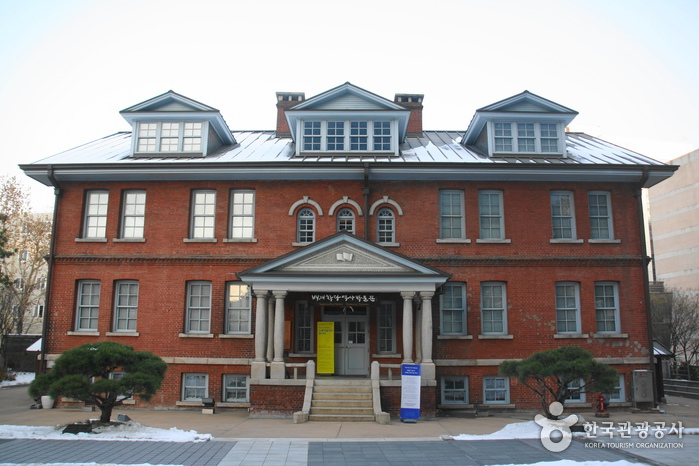
Appenzeller Noble Memorial Museum (배재학당 역사 박물관)
2.0Km 2022-10-14
19, Seosomun-ro 11-gil, Jung-gu, Seoul
+82-2-319-5578
The Appenzeller Noble Memorial Museum is dedicated to Henry Gerhart Appenzeller, the missionary who opened the first Western-style educational institution in Korea in 1885. The school started with English and core subjects, but expanded into the Pai Chai University, Pai Chai High School, and Pai Chai Middle School and has many famous alumni, including Rhee Syng-man. The memorial hall opened in 2008 in the east wing of the original school building, which was built in 1916 and designated as a Seoul Monument. With dynamically arranged permanent exhibitions, annual special exhibitions and special lectures, the museum offers a unique learning experience to visitors and people with an interest in the history of education in Korea.
![Innisfree - Myeong-dong 2(i)-ga Branch [Tax Refund Shop] (이니스프리 명동2가점)](http://tong.visitkorea.or.kr/cms/resource/70/2887870_image2_1.jpg)
Innisfree - Myeong-dong 2(i)-ga Branch [Tax Refund Shop] (이니스프리 명동2가점)
2.0Km 2024-04-22
1F, 2F (Myeongdong 2-ga), 27, Myeongdong 10-gil, Jung-gu, Seoul
-

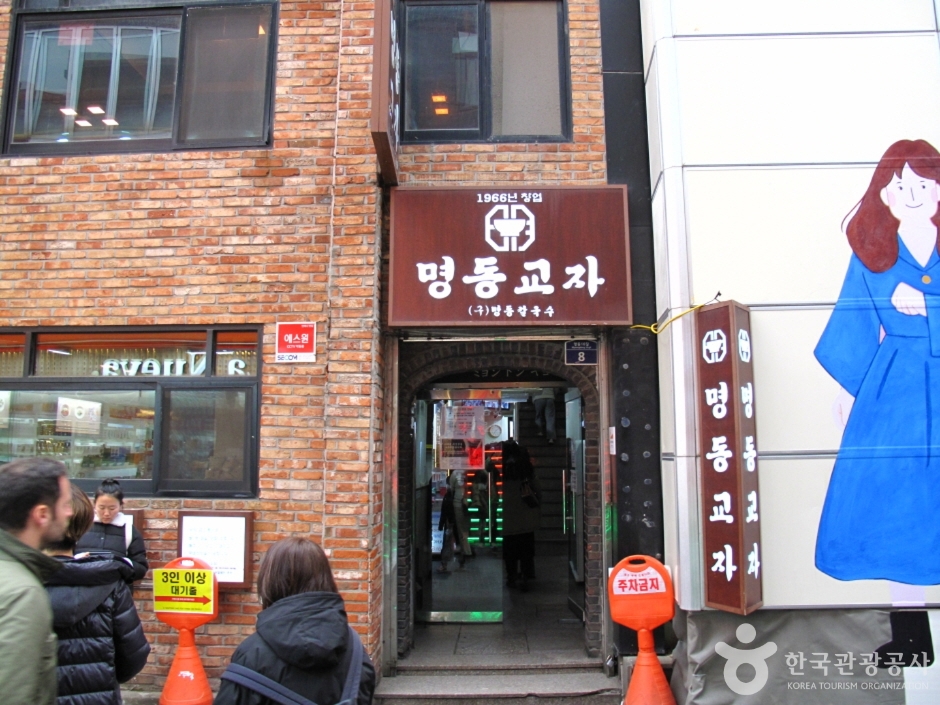
Myeongdong Kyoja (명동교자)
2.0Km 2024-03-25
29 Myeongdong 10-gil, Jung-gu, Seoul
+82-2-776-5348
Since 1970, Myeongdong Kyoja has been a staple in Myeongdong for its kalguksu (noodle soup), believed to be the progenitor of the Myeongdong-style kalguksu known for its rich broth and delicious gyoja (mandu). The restaurant's hallmark dish, kalguksu, features handmade noodles served in a deep, flavorful broth. In addition to its famous noodle soup, other beloved dishes include mandu and bibim guksu (spicy noodles).
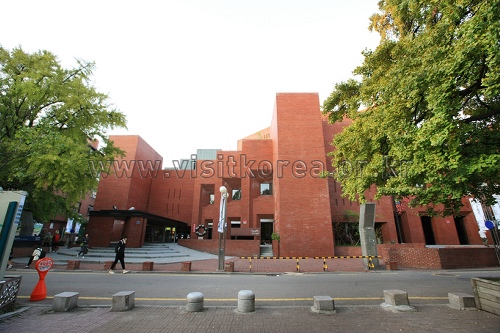
Arko Arts Theater (아르코예술극장)
2.0Km 2021-04-16
7, Daehak-ro 8-gil, Jongno-gu, Seoul
+82-2-3668-0007
Opened on April 1, 1981, Arko Arts Theater’s mission statement is to “boost performance art, obtain performance space to promote its popularity among the public, and support stages to pure art organizations facing financial difficulties." As the center of performance art, the theater also began to attract a slew of small theaters and has played a pivotal role in promoting performance art and populating Dongsung-dong with artists. The theater offers a large hall, small hall, multipurpose studio space, and practice room.
Bank of Korea Money Museum (화폐박물관)
2.0Km 2024-03-18
39 Namdaemun-ro, Jung-gu, Seoul
This Renaissance-style three-story stone building is the museum of the Bank of Korea. The older Bank of Korea was established as the central bank of the Korean Empire in 1909 and has been designated as a National Historical Site. During the Japanese colonial period, the bank was renamed the Bank of Joseon, and the building was used as the main and head office of the Bank of Korea until 2001. The building has been used as the nation’s Money Museum since June 2001 in celebration of the 50th anniversary of the Bank of Korea. The museum has 13 exhibition rooms on two floors, with one basement floor and two above-ground floors. It holds special exhibitions of various currency and art collections to provide domestic and foreign visitors with the opportunity to enjoy the history and culture of currency. Visitors can learn about the Bank of Korea and the central banking system, as well as how to identify counterfeit notes and how money is produced and circulated. It is also a good place for children to learn about currencies from around the world. Advance reservations are required, and parking is not available. The museum can easily be reached via subway by getting off at Hoehyeon Station (Seoul Subway Line 4) and exiting through Exit 7.
 English
 한국어
한국어 日本語
日本語 中文(简体)
 Deutsch
 Français
 Español
 Русский


