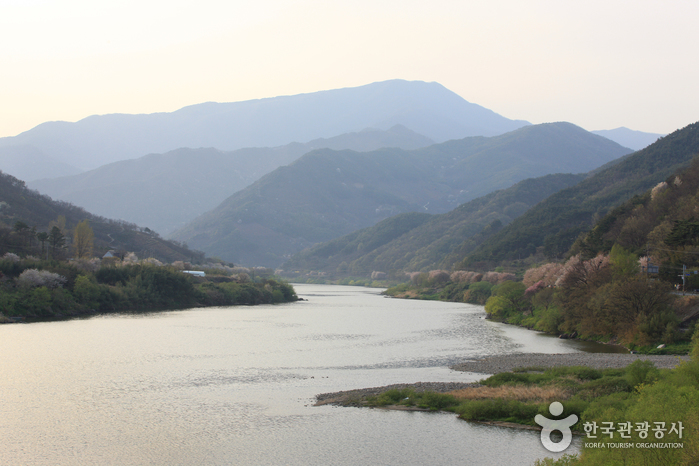
Seomjingang River (섬진강)
11.2Km 2022-08-25
Okgwa-myeon, Gokseong-gun, Jeollanam-do
+82-61-360-8419
The Seomjingang River, one of the four major rivers in Korea, starts from Imsil and Sunchang. It merges with several bodies of water in Gokseong, Gurye and Hadong before flowing into the South Sea.
In Gokseong, the Seomjingang River is also known as the Sunjagang River. It flows about 36 kilometers through the region. A number of big and small valleys throughout the length of the river provide fantastic views and relaxation spots all year round. Also, Riverside Festival and Seomjingang Literature Forum are held every summer to offer fun summer activities along the river.
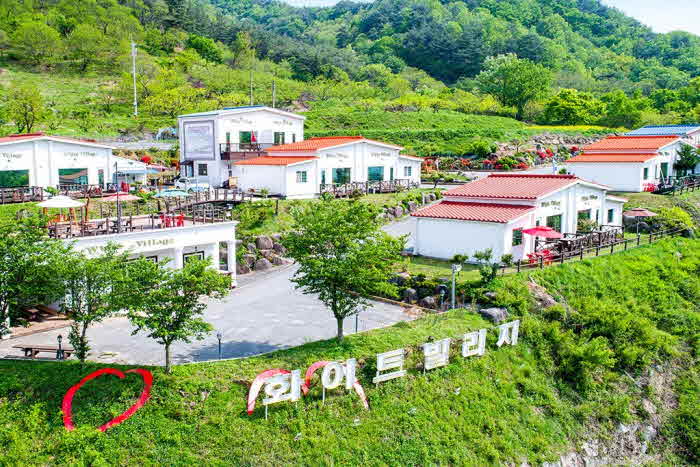
White village / 화이트빌리지
11.6Km 2025-03-05
1598-96 , Daehwanggang-ro, Gokseong-gun, Jeollanam-do
+82-61-363-7531, +82-10-3640-2656
White Village is a pension on the banks of the Daehwanggang River in Gokseong-gun, Jeollanam-do. The surrounding scenery is outstanding year-round. Guests who like fishing can try their luck in the Daehwanggang River while chatting with new friends. The Daehwanggang Trail passes by the pension and is great for walking or mountain-biking; or visitors can take the beautiful riverside path from Amnok Amusement Park to Seomjin River. Localc attractions such as Seomjingang Train Village and Daeansa Temple are 15 to 20 minutes away by car, while Gokseong Zipline is 4 minutes away.

Samhwa Gwangwang Nongwon (삼화관광농원)
12.5Km 2024-03-04
208 Immyeon-ro, Gyeom-myeon, Gokseong-gun, Jeollanam-do
061-362-8586,7
Samhwa Gwangwang Nongwon is a Korean restaurant specializing in duck dishes. Its signature menu is the ori jeongol (duck hot pot). The rich broth, boiled with ample duck meat, vegetables, and perilla seeds, is exceptionally flavorful. Another popular dish is the ori jumulleok (spicy stir-fried marinated duck), where tender meat seasoned with spicy yet sweet sauce pairs perfectly with steamed white rice.
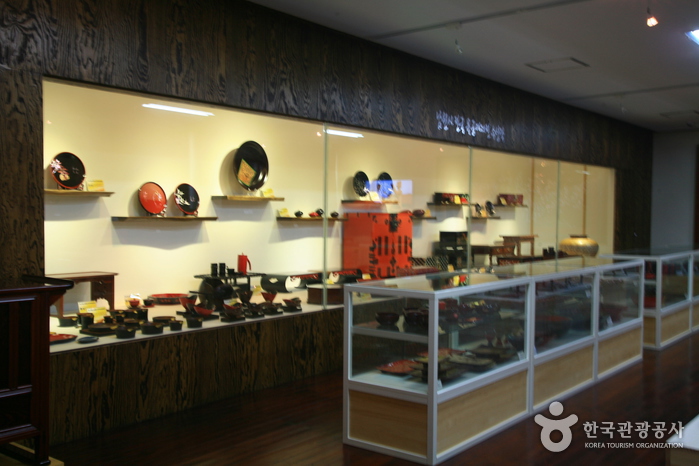
Namwon Traditional Lacquer Craft Center (남원시 옻칠공예관)
13.8Km 2024-04-06
1234-5 Yocheon-ro, Namwon-si, Jeonbuk-do
Namwon Traditional Lacquer Craft Center is a lacquer crafts exhibition hall that opened in 2004 to spread lacquer culture, research on lacquer technology, and foster the younger generations. In Namwon, lacquer woodworking has been developed since ancient times, and traces of lacquerwork from the Bronze Age were discovered here. Accordingly, this craft center was built to establish Namwon as a central city for lacquer crafts through continuous research and development.
This two-story center consists of an exhibition hall, a store, an experience room, a laboratory, an audio-visual education room, and a training room. The exhibition hall displays awardwinning craft works and various lacquered crafts such as bowls, furniture, spoons and chopsticks, cabinets with flower and grass designs, tables, janggu (hourglass-shaped drum) sticks, and utensils used in ancestral rites. In addition, it operates experience programs for the general public and a store that sells lacquer crafts.
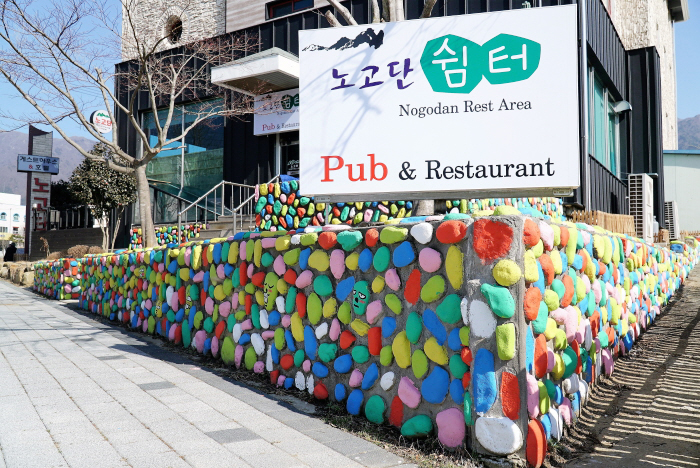
Nogodan Guesthose (노고단 게스트하우스&호텔)
14.2Km 2024-08-01
40 , Hagwan 1-gil, Gurye-gun, Jeollanam-do
+82-61-782-1507
Nogodan Guesthouse & Hotel is located in Gwansan-ri, Gurye-gun, Jeollanam-do, and is popular with weekend trippers and family vacationers visiting Jirisan National Park. Local hot spring water (high in traces of germanium) is provided in all rooms, so residents can relieve their fatigue in a hot spring bath after hiking; while from the hotel’s rooftop garden residents can enjoy fine views of Jirisan Mountain. A shuttle service to Nogodan, where the Jirisan trail starts, costs 20,000 won per person for the round trip. And at the 1st floor Buen Camino Restaurant & Pub l you can enjoy Jirisan black pork barbecue, Jirisan zucchini pancake, and seasonal vegetable side dishes.
Gurye Cheoneunsa Temple (천은사(구례))
14.9Km 2021-10-02
209, Nogodan-ro, Gurye-gun, Jeollanam-do
+82-61-781-4800
Located north of Gurye on Jirisan Mountain, and built during the Unified Silla Period, Cheoneunsa Temple is one of the three great Buddhist temples of Jirisan Mountain. Cheoneunsa Temple is believed to have been built by Monk Deokun and Monk Seru from India in AD 828 during the 3rd year of King Heungdeok. Because it initially laid next to spring water as clean and cold as a morning dew, the temple was also called Gamrosa, meaning Sweet Dew Temple. The spring water was rumored to clean one’s body and soul, leading to crowd of Buddhist monks to visit the temple. During King Chungryeol’s reign, the temple was named the Best Temple in the south.
The temple was burned down during the Imjin War (1592-1598) and then later rebuilt and renamed Cheoneunsa. Legend has it that while the temple was being rebuilt, a large serpent often came out of the spring. When the serpent was finally captured and killed, the spring waters suddenly dried up. Hence the name Cheoneunsa, meaning Disappearance of Spring Water, was given.
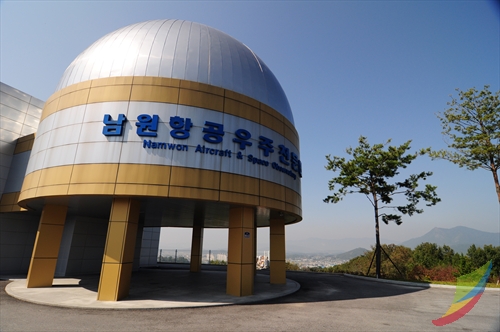
Namwon Aircraft & Space Observatory (남원항공우주천문대)
15.2Km 2024-04-07
48-63, Yangnim-gil, Namwon-si, Jeonbuk-do
+82-63-620-6900
Chosen as a government funded project, Namwon Aircraft & Space Observatory was granted 4.6 billion won by the Ministry of Science, ICT and Future Planning in 2006 for project development.
The three-story observatory, with a total area of 6,532 square meters, has an exhibition hall showing the history of space aviation, an aviation experience hall, and a 10-meter-wide dome showing images of the night sky. The secondary observatory is equipped with a 600 millimeter telecope and other astronomical telescopes ranging in focal length from 125 millimeter to 350 millimeter for observing Namwon's night sky. In addition to the telecopes, retired combat planes from the air force, including the main fighter plane Phantom from the 1970s, are displayed outside.
Namwon Aircraft & Space Observatory offers programs such as tours and experience programs for groups. These include a 4D film experience of the sun and celestial bodies, a virtual aviation experience, and lectures about astronomy, all of which can accommodate up to 120 people per session. A variety of classroom learning activities are also offered in the summer to attract more visitors.
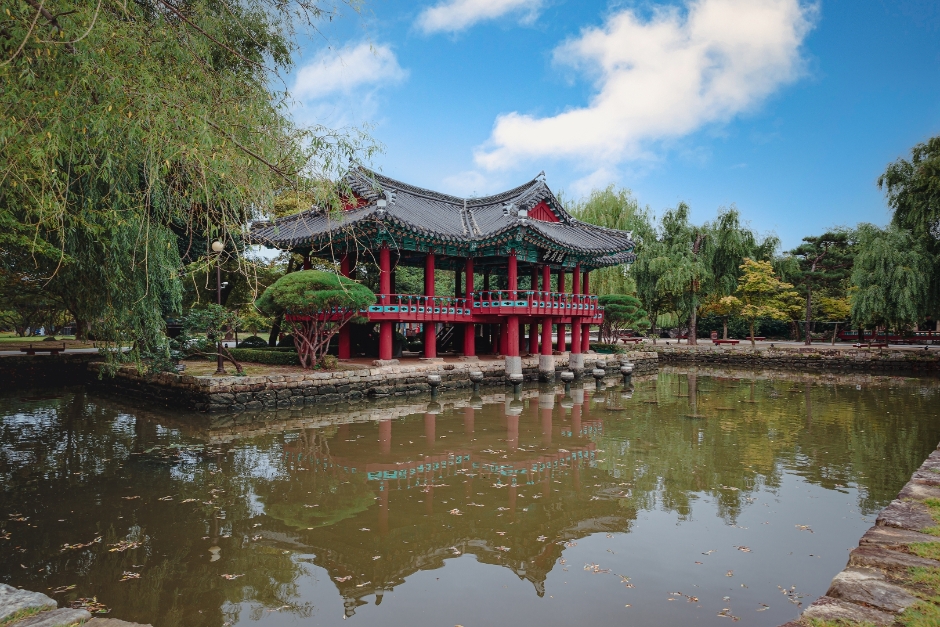
Gwanghalluwon Garden (광한루원)
15.3Km 2025-10-23
1447 Yocheon-ro, Namwon-si, Jeonbuk-do
Originally known as Gwangtongnu, Gwanghalluwon Garden was built by Hwang Hui Jeongseung in 1419 during the reign of Joseon dynasty’s King Sejong. Because of its outstanding beauty, Governor Jeong In-ji gave the garden the name "Gwanghallu" in 1444, comparing it to a garden from the palace on the moon. It is famous as the location where Lee Mong-ryong and Chunhyang (two lovers from a well-known Korean folk story) first met. In the 1920s Chunhyangsa Temple was established in the neighboring area and a portrait of Chunhyang was hung in a place of honor. The garden is the venue of the Chunhyangjae Festival every spring, celebrating the deep and lasting love of the famous couple. The area around Gwanghalluwon Garden is full of many attractions, including Ojakgyo Bridge, symbolizing the bridge connecting Chilseok and Gyeonwu from the traditional story of Chilseok; and Chunhyang Hall, Wolmae-jip (house of Chunhyang's mother), Wanwoljeong Pavilion, Yeongjugak Pavilion, Samsinsan and many other traditional buildings.
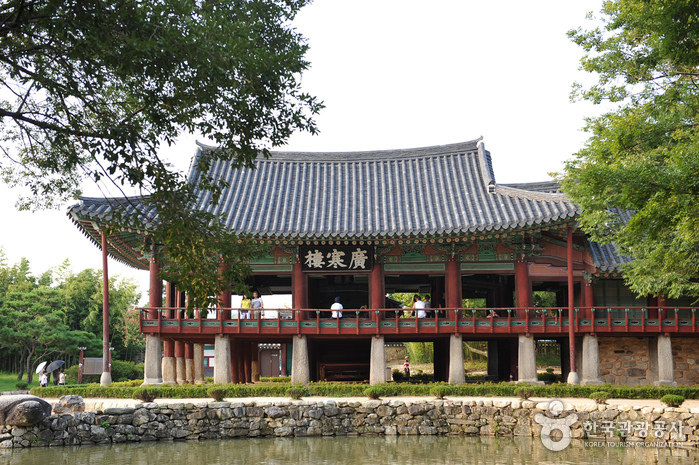
Gwanghallu Pavilion (광한루)
15.3Km 2024-04-07
1447, Yocheon-ro, Namwon-si, Jeonbuk-do
+82-63-620-6172
Rebuilt in 1638 (the 16th year of King Injo), Gwanghallu Pavilion is one of the Joseon dynasty’s most exemplary structures. The pavilion was constructed in 1419 by Hwang Hui, a noted prime minister in the early Joseon dynasty, during his exile to Namwon. The name of the pavilion at that time was Gwangtongnu. In 1434, while the pavilion was undergoing reconstruction, scholar and politician Jeong In-ji called it Gwanghallu after Gwanghancheongheobu, the mythical palace on the moon. Designated as Treasure No. 281, the pavilion is one of four major pavilions known for excellent craftsmanship, along with Yeongnamnu Pavilion (Miryang), Chokseongnu Pavilion (Jinju), and Bubyeoknu (Pyeongyang). Gwanghalluwon Garden, which consists of Gwanghallu Pavilion, a pond, Bangjangjeon Pavilion, and Yeongjugak Pavilion form Historic Site No. 33.
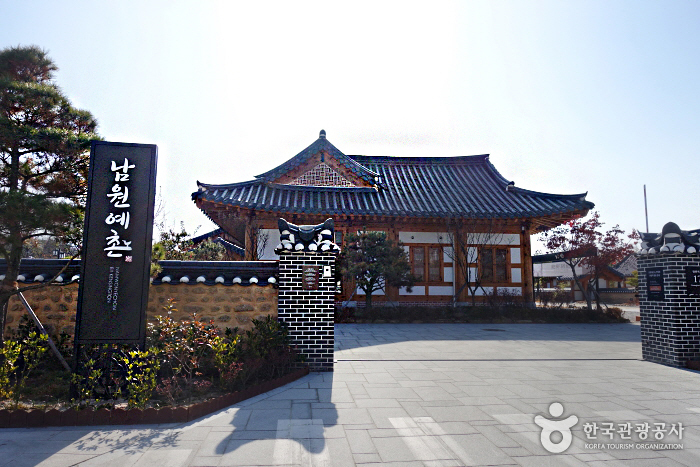
Namwonyechon by Kensington (남원예촌)
15.5Km 2024-12-24
17 , Gwanghanbuk-ro, Namwon-si, Jeonbuk-do
+82-63-636-8001
Namwonyechon in Namwon, Jeollabuk-do, combines the beauty of traditional hanok with the convenience of a hotel. In summer, rooms with daecheongmaru are popular, and in winter, you can cozy up to an oakwood fire. A hanbok experience, pansori and gayageum performances, and a traditional games experience are provided free of charge. Residents get a free entry pass with mapae(a certificate to allow officials to use horses) to nearby Gwanghalluwon Garden, Chunhyang Theme Park, and Baekdudaegan Ecological Education Center. Room minibars are also free of charge.
 English
 한국어
한국어 日本語
日本語 中文(简体)
 Deutsch
 Français
 Español
 Русский


