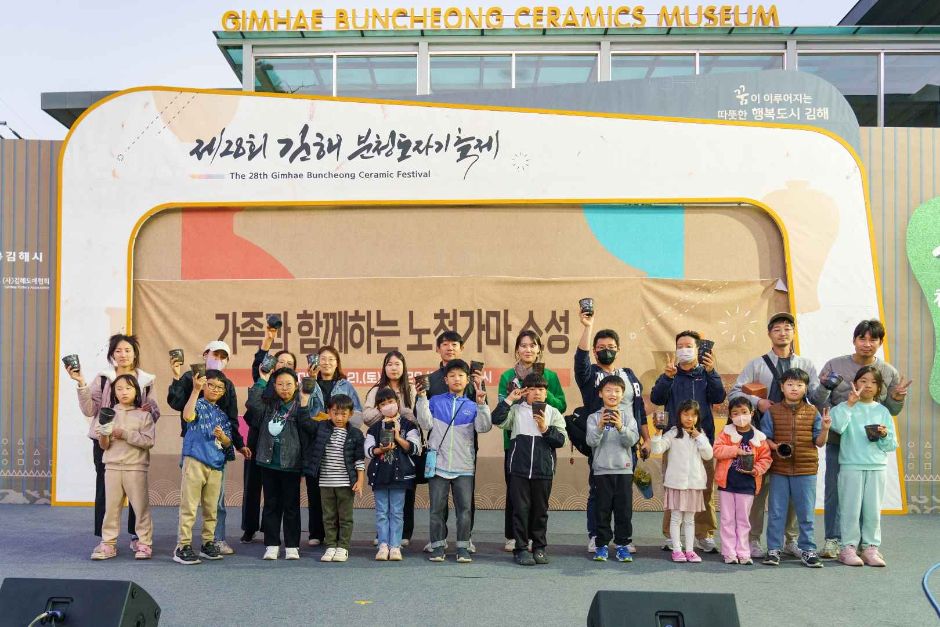
Gimhae Buncheong Ceramics Festival (김해분청도자기 축제)
14.6Km 2025-07-11
17 Buncheong-ro, Jillye-myeon, Gimhae-si, Gyeongsangnam-do
+82-55-330-3245
The Gimhae Buncheong Ceramics Festival highlights the excellence of Buncheong ceramics and their everyday appeal. The festival offers a chance to see a wide variety of ceramics and participate in hands-on activities such as traditional kiln firing.
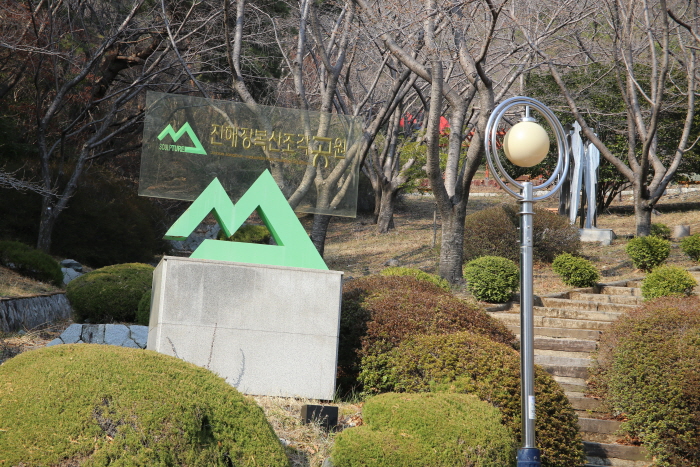
Jangboksan Sculpture Park (장복산조각공원)
15.3Km 2025-03-22
56-42, Jangboksan-gil, Jinhae-gu, Changwon-si, Gyeongsangnam-do
+82-55-225-7024
Jangboksan Sculpture Park stands as the unofficial gateway to Jinhae at the end of Jangbok-ro Road between Masan and Jinhae. Built in 1979 in the wake of a mountain landslide, the park offers a panoramic view of Jinhae and its quiet waters. In spring, more than ten thousand cherry trees interspersed throughout the pines come to full bloom, permeating the air with their sweet fragrance.
Nearby attractions include Daegwangsa and Jinheungsa Temples, the Citizens’ Hall, the Gyeongnam Literary Hall, and Jinhae Park Land, located halfway up Jangboksan Mountain. To visit these attractions and explore the beauty of the forest, simply follow the walking trail from Jinhae Girls’ High School to the park (1.5 kilometers) and continue walking along the path from the Jangboksan Rest Area to Gumajin Tunnel (1 kilometer).
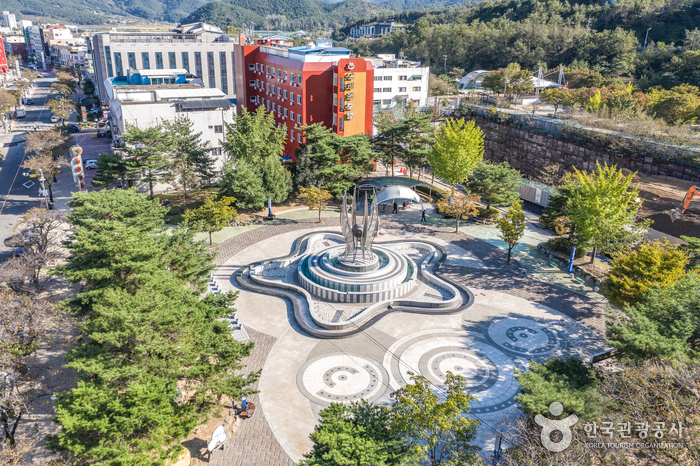
Bugok Hot Springs Special Tourist Zone (부곡온천 관광특구)
15.7Km 2024-02-27
77 Oncheonjungang-ro, Bugok-myeon, Changnyeong-gun, Gyeongsangnam-do
Bugok, named after its cast-iron pot-like terrain, boasts the hottest spring in Korea with a temperature of 78°C. It features various attractions such as Hanol Park and fountain park for performances, a refreshing trail, golf courses, and foot baths. Bugok Hot Springs is believed to be effective for arthritis, skin diseases, and fatigue recovery. Nearby attractions include Uponeup Marsh, Hwawangsan Mountain, and the Gaya Tombs.

Birthplace of the16th President of Korea, Roh Moo-hyun (진영 봉하마을과 노무현 대통령 생가)
15.8Km 2022-12-29
129, Bongha-ro, Gimhae-si, Gyeongsangnam-do
+82-1688-0523
Bongha Village is located 4.5km to the east of Jinyeong-eup, on the foot-slopes of Bonghwasan mountain. It is a typical farming village, and its major produce is Jinyeong sweet persimmons and rice. Its name comes from the mound above it on Bonghwasan mountain, where in the past beacons were lit as a method of communication. Bonghwasan mountain is home to Bonghwasa temple and two famous valleys: Doduk (thief) valley on the east side, named because of the many thieves that used to operate in the area, and Yasi (fox) valley on the west side, which looks like a fox lying on its front, looking back at its tail.
Birthplace of the former President of Korea, Roh Moo-hyun
The birthplace of the former President of Korea, Roh Moo-hyun, is a brick house with a slate roof that consists of two small rooms and a kitchen. Although it is a shabby house, everything in it seems rare and precious to visitors. The earth, stones, and water, as well as household items, are popular with visitors. Some visitors even take stones and soil from the garden home with them in plastic bags, and some take water, believing that water from the ex-president’s birthplace is almost sacred.
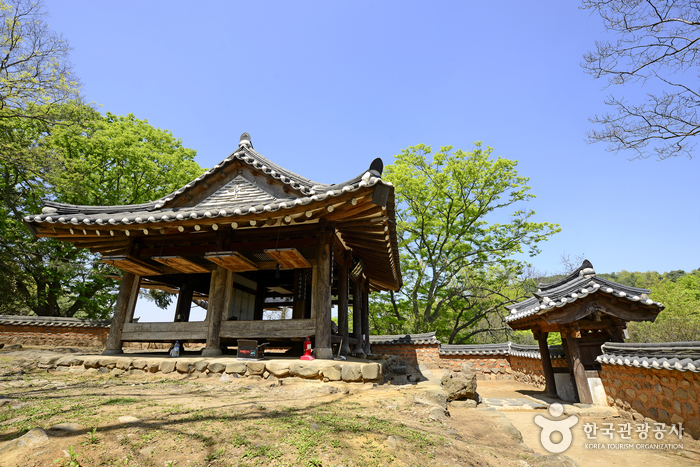
Mujinjeong Pavilion (무진정(함안))
16.1Km 2024-07-10
25 Goesan 4-gil, Haman-gun, Gyeongsangnam-do
Mujinjeong Pavilion was built atop a hill to enjoy the surrounding scenery. It was built in 1567 by the descendants of Mujin in honor of his memory. Mujin passed the government officer exam in 1483 and was promoted in 1507. The pavilion is built with three kan (space between pillars) in the front and two kan on the side, and a gabled roof. The floor is raised off the ground. There are no decorations on atop the pillars, showcasing the style during the early Joseon period.
Yeojwacheon Stream (여좌천(벚꽃명소))
16.3Km 2024-07-05
16 Yeojwacheon-ro, Jinhae-gu, Changwon-si, Gyeongsangnam-do
+82-55-225-3691
The area around Yeojwacheon Stream is well known as one of Jinhae’s best spots for viewing cherry blossoms. It is also the location of the bridge where the two leading characters, Gwanu and Chaewon of "Romance (2002)," an MBC TV series, first met as tourists who came to Jinhae to enjoy Jinhae Gunhangje Festival. After the episode was aired, the bridge instantly became popular and widely known as the Romance Bridge. Each April, the entire city of Jinhae is filled with cherry blossoms, but the Yeojwacheon Stream area has the most beautiful cherry blossoms which makes it a prime tourist attraction.
Anmingogae Hill (안민고개)
16.9Km 2021-01-29
Areas of Jangboksan Mountain, Anmin-dong, Seongsan-gu, Changwon-si, Gyeongsangnam-do
+82-55-225-3691
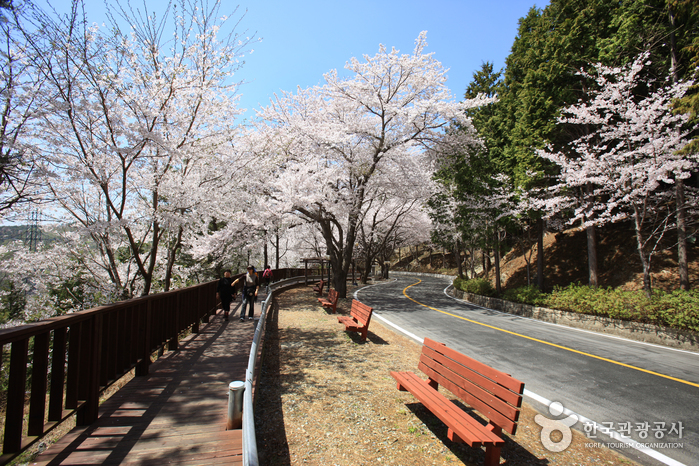
Anmingogae Hill is a 9-kilometer-long hill that stretches from Taebaek-dong in Jinhae to Anmin-dong in Changwon. Cherry blossom trees line both sides for 6 kilometers of the 9-kilometer road, making up the famous inhae Cherry Blossom Tunnel. The hill is also known for its view of Jinhaeman Bay, Ungsan Mountain, Sirubong Peak and Cheonjabong Peak. The hill is dotted with benches placed about 100 meters apart, offering visitors a seat to catch their breath while enjoying the view and cherry blossom trees.
Also of note is Anmin Saengtaegyo Bridge (Anmin Ecology Bridge), which was built as a passageway for wild animals to travel between Jangboksan and Ungsan mountains after the mountains were divided by the Anmin Tourism Road running between Jinhae and Changwon.
Ancient Tombs in Marisan Mountain, Haman (함안 말이산 고분군)
17.0Km 2023-10-12
114 Bondong-gil, Gaya-eup, Haman-gun, Gyeongsangnam-do
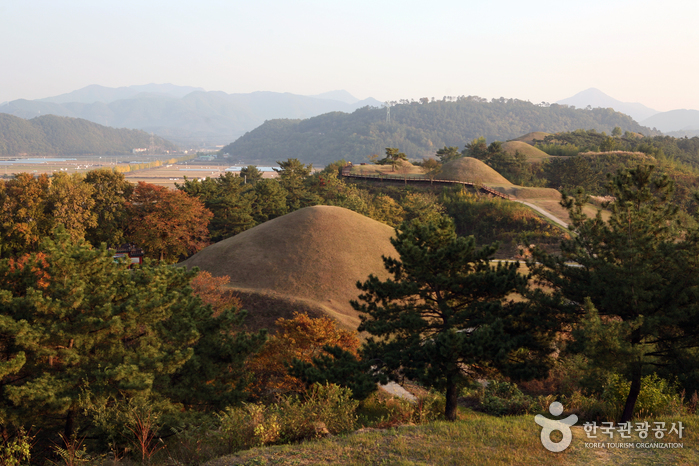
The Ancient Tombs in Marisan Mountain are from the Aragaya State, and showcase the Gaya culture through many remaining relics. There are around 100 large tombs, assumed to be those of the Aragaya kings, located on the upper summit, as well as nearly 1,000 smaller tombs on the lower side of the mountain. The tombs were first excavated during the Japanese occupation, as which point Tomb No. 34 was found to be the largest tomb, with a circumference of 39.3 meters and a x_height of 9.7 meters. However, Tomb Nu. 8 is more famous, discovered to inter five people and including armor designed with images found on the tomb walls of Goguryeo kingdom.
Mannyeongyo Bridge (만년교)
17.7Km 2023-06-27
42, Wondari-gil, Changnyeong-gun, Gyeongsangnam-do
+82-55-530-1471
Mannyeongyo Bridge in Yeongsan, Changnyeong is an arch-shaped stone bridge over the village creek. Because the creek flows from the south of the mountain, the bridge is also known as Namcheongyo Bridge. Natural rocks found on the sides of the creek are used as stone flooring, and well-polished granite stones are stacked on top of the rocks in the shape of an arch. The top of the bridge is layered with round natural stones and covered with soil as a pathway for people crossing the bridge. The road surface curves and stretches on both ends, making the atmosphere of the bridge more cozy. It was first built in the 4th year of King Jeongjo of the Joseon dynasty (1780) and rebuilt in the 29th year of King Gojong (1892). It is said that the bridge is still strong enough for villagers to pass, and flood-proof. (Source: Cultural Heritage Administration)
![Hotel 385 [Korea Quality] (호텔385 [한국관광 품질인증])](http://tong.visitkorea.or.kr/cms/resource/12/2651712_image2_1.JPG)
Hotel 385 [Korea Quality] (호텔385 [한국관광 품질인증])
17.8Km 2025-07-07
15 , Chungjang-ro 82beon-gil, Jinhae-gu, Changwon-si, Gyeongsangnam-do
+82-55-552-0385
Hotel 385 in Changwon-si, Gyeongsangnam-do, offers cost-effective accommodation near Jinhae Intercity Bus Terminal, and is a favourite with spring-time tourists in town to see the cherry blossom. The hotel has a variety of rooms, including basic standard rooms; VVIP 38.5 room with seperate shower and toilet, VVIP SKY room that is ideal for families; and barrier-free rooms for disabled customers. The hotel is also equipped with wide doors and elevators for wheel chair users and information blocks for the visually impaired. (Wheelchairs can be provided upon prior request.). Free breakfast servive is provided from VIP rooms.
 English
 한국어
한국어 日本語
日本語 中文(简体)
 Deutsch
 Français
 Español
 Русский


