
Gyeongju Expo Solgeo Art Museum (경주솔거미술관(솔거미술관))
4.1Km 2025-05-19
614 Gyeonggam-ro, Gyeongju-si, Gyeongsangbuk-do
Gyeongju Expo Solgeo Art Museum is Gyeongju’s first public art museum, opened in 2015 with the donation of 830 works by the Korean painter Park Dae-sung. Designed by the renowned architect Seung H-Sang, the museum’s architecture blends people, space, and nature. It features a permanent exhibition of works by Park Dae-sung, along with special rotational exhibitions by invited artists. For visitors seeking deeper insight into the artwork, the museum offers a docent program. The window in the permanent exhibition hall has become a popular SNS spot and is often referred to as a moving painting.
Salon Heritage (살롱헤리티지)
4.1Km 2025-05-26
614 Gyeonggam-ro, Gyeongju-si, Gyeongsangbuk-do
Salon Heritage is a world cultural heritage media promotion hall, located inside the Gyeongju World Expo Memorial, which was designed by renowned architect Kengo Kuma, drawing inspiration from Daereungwon Ancient Tombs and columnar joints of Gyeongju. It features dynamic media walls, a media tunnel and a world heritage study, offering visitors an immersive digital experience to explore the rich heritage of Gyeongju.
Myeongdong Kalguksu (명동칼국수)
4.2Km 2024-02-28
46-4 Yongdam-ro, Gyeongju-si, Gyeongsangbuk-do
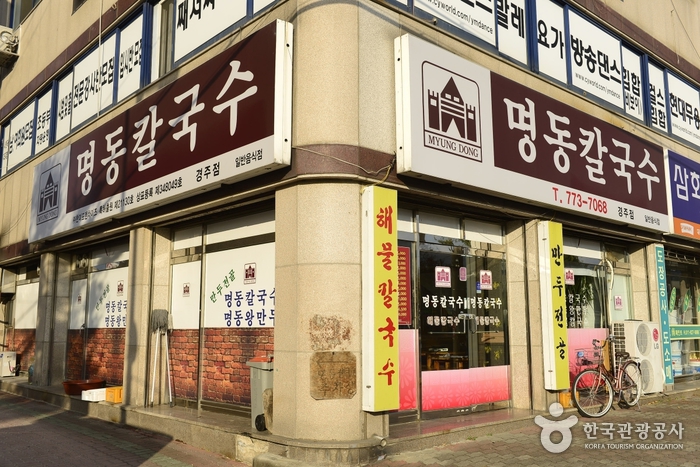
Myeongdong Kalguksu is a noodle restaurant specializing in kalguksu (noodle soup), located near Gyeongju Hwangseong Park. It offers kalguksu, haemul kalguksu (noodle soup with seafood), mandu jeongol (mandu hot pot), and more, prepared with chewy noodles and rich anchovy broth. After your meal, you can explore nearby attractions such as Gyeongju Civic Stadium, Arts Center, and Bitnuri Garden, as this area is rich in the cultural and historical heritage of the Silla dynasty.
Gyeongju Expo Park (경주엑스포공원)
4.3Km 2024-11-11
614 Gyeonggam-ro, Gyeongju-si, Gyeongsangbuk-do
Gyeongju Expo Park is located in the Bomun Tourist Complex in Gyeongju, offering a thematic experience of Korean culture through exhibitions, performances, and hands-on activities showcasing the art and culture of the Silla dynasty (BC 57-AD 935). The park features various attractions such as Gyeongju Tower, Timeless Media Art, Solgeo Art Museum, Lumina Night Walk, Cheomseongdae Film Hall, and Asadal Sculpture Park.
Hwangseong Park (황성공원)
4.3Km 2025-06-19
431-12 Wonhwa-ro, Gyeongju-si, Gyeongsangbuk-do
Situated near the Gyeongju Municipal Library and Gyeongju Arena, Hwangseong Park is notable for its dense forest populated with stunning pine trees and centuries-old trees. During summer, it becomes a haven for blooming Lilyturfs, while in autumn, ancient trees such as zelkova and oak showcase vibrant colors, enhancing the natural beauty of the area. Within the park, visitors can find the Statue of General Kim Yusin, a Korean archery range, and a Ssireum (Korean traditional wrestling) ring. Nearby attractions include Gyeongjueupseong Walled Town, Cheonmachong Tomb, Daereungwon Ancient Tombs, and Hwangnidan Street.
Gyeongju-si Special Tourist Zone (경주시 관광특구)
4.3Km 2025-03-25
614 Gyeonggam-ro, Gyeongju-si, Gyeongsangbuk-do
+82-54-779-6084
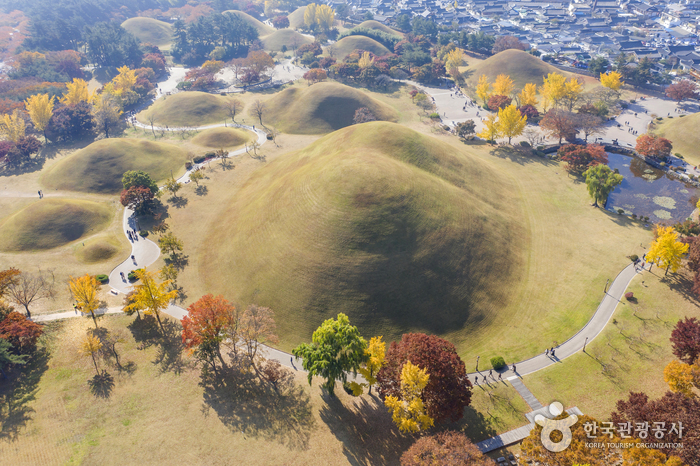
Gyeongju was the capital city of the ancient kingdom of Silla. The city is often referred to as a “museum without walls” because of the many cultural relics scattered throughout the city. Almost everything in this city, from the streets to the mountains, is rich in history. Gyeongju has roughly 300 sites that have been designated as a cultural heritage, with some of them being UNESCO-recognized World Heritage Sites.
The Gyeongju Special Tourist Zone includes the districts of Namsan, Wolseong, Daereungwon, Hwangryongsa, and Sanseong. This area has a total of 52 cultural assets registered on the World Heritage list. Many of the hills are actually royal tombs and fields of grass used to be sites of ancient temples.
The entire Namsan Mountain can almost be considered a cultural asset because of the many stone pagodas and Buddha statues that can be found here. The Bulguk district is home to many of Gyeongju’s most well-known attractions such as Bulguksa Temple, Seokguram Grotto, Gyeongju Folk Village, Silla Arts and Science Museum, and Goereung.
In the Bomun district, there are plenty of recreation facilities surrounding Bomunho Lake. Other attractions in the area include Gyeongju World Culture Expo Park, Gyeongju World, and Silla Millennium Park.
[Gyeongju Special Tourist Zone]
Areas included: Downtown area, Bomun Lake Resort, and Bulguksa Temple in Gyeongju-si, Gyeongsangnam-do
Area size: 32,650,000㎡
Tourist Attractions: Bulguksa Temple, Seokguram Grotto, Daereungwon Tomb Complex, Namsan Mountain, Bomunho Lake, Shilla Millennium Park, Gyeongju World Culture Expo Park, etc.
Donggung Palace and Wolji Pond (경주 동궁과 월지)
4.5Km 2025-10-23
102 Wonhwa-ro, Gyeongju-si, Gyeongsangbuk-do
+82-54-750-8655
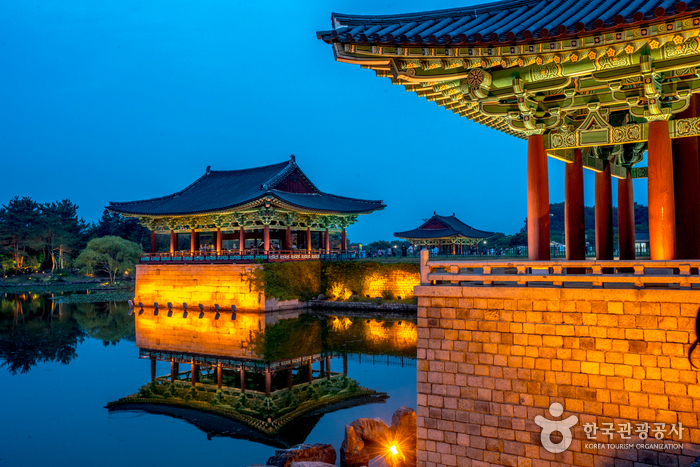
Donggung Palace and Wolji Pond in Gyeongju are secondary palace sites of Silla. The palace, along with other secondary palaces, was used as the eastern palace where the prince lived, and banquets were held during auspicious events or to welcome important guests. It is also where King Gyeongsun of Silla invited King Wang Geon of Goryeo and had a feast to complain about the critical situation in 931 after being invaded by Gyeon Hwon. After unifying the three kingdoms, Silla's King Munmu dug a large pond in the 14th year of his reign (674), creating three islands in the center of the pond along with a 12-peaked mountain to the northeast. Beautiful flowers and trees were planted here, and rare birds and animals were raised. In the Samguksagi (History of the Three Kingdoms) from the Goryeo dynasty, there is only a record of Imhaejeon Hall and no mention of Anapji Pond. After Silla fell and the place fell into ruins during the Goryeo and Joseon dynasties, poets and calligraphers looked at the pond and recited a line of poetry that says, “The once splendid palace is gone, and only geese and ducks fly in.” That's why the place is called Anapji, using the letters 'an' for wild geese and 'ab' for ducks. In the 1980s, pottery fragments with the inscription "Wolji" were excavated, and it was confirmed that this area was originally called "Wolji," which means "a pond that reflects the moon." And the name Anapji was changed to Wolji Pond afterwards.
◎ Travel information to meet Hallyu’s charm - "The Beauty Inside"
Se-gye visits this place to refresh her mind after she argues with Do-jae over the contract. Being one of the most famous tourist sites in Gyeongju, the scenery here is enough to help you forget the argument that you’ve just had, especially at night.
Gyeongju Seongdong Market (경주 성동시장)
4.7Km 2025-03-25
11 Wonhwa-ro 281beon-gil, Gyeongju-si, Gyeongsangbuk-do
+82-54-772-4226
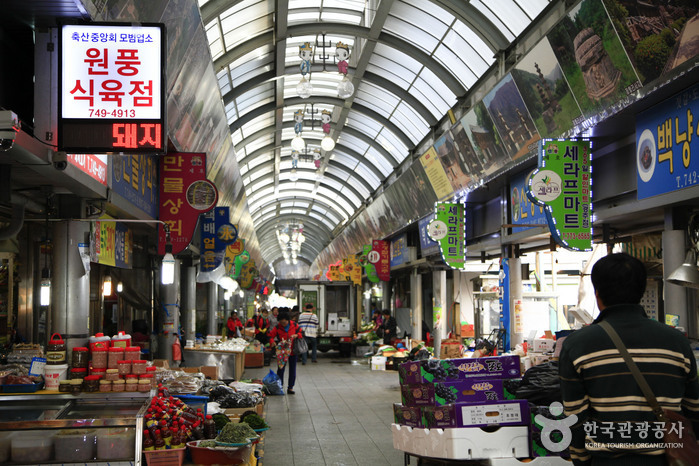
Gyeongju Seongdong Market has approximately 300 stores and 30 vendors. The market as found its place as the city’s representative local marketplace since its opening in 1971. Following a decline of customers due to the public's steadily increasing preference of supermarkets, Gyeongju Seongdong Market underwent a huge renovation in the recent past. From floorings to ceilings, and alleyways and walls, the market received a new look that emphasizes Gyeongju's historical significance to attract travelers and the local community alike.
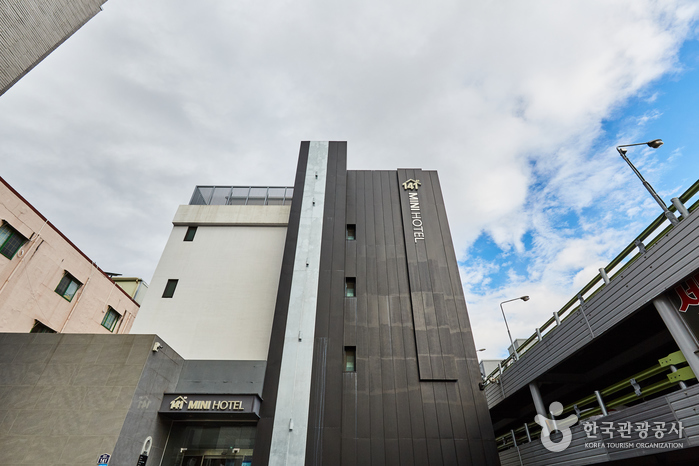
141MINIHOTEL (141미니호텔)
4.8Km 2024-12-19
141 , Wonhyo-ro, Gyeongju-si, Gyeongsangbuk-do
+82-54-742-8502
The 141 Mini Hotel is in Gyeongju, Gyeongsangbuk-do - capital of the ancient Silla kingdom and often described as ‘a museum without walls’. The hotel caters to both holiday and business travelers, and hotel facilities include a book cafe, gallery, board game room, and business center, so visitors enjoy hotel-level convenience at motel-level prices. Gyeongju Station and Gyeongju Express Bus Terminal are just 5 minutes and 10 minutes away respectively; while tourist sites such as Daereungwon Tomb Complex, Donggung Palace and Wolji Pond, Cheomseongdae, and Bulguksa Temple are all nearby.
 English
 한국어
한국어 日本語
日本語 中文(简体)
 Deutsch
 Français
 Español
 Русский


