
Seosan Buseoksa Temple (부석사(서산))
9.6Km 2024-12-03
243 Buseoksa-gil, Seosan-si, Chungcheongnam-do
+82-41-662-3824
Located on Dobisan Mountain in Seosan, Chungcheongnam-do, Buseoksa Temple was built by the Great Monk Uisang in 677, the 17th year of King Munmu of Silla, and was later rebuilt by Great Monk Muhak during the Joseon dynasty. The temple houses eight seated Buddha statues and attracts many visitors due to its magnificent surrounding scenery.
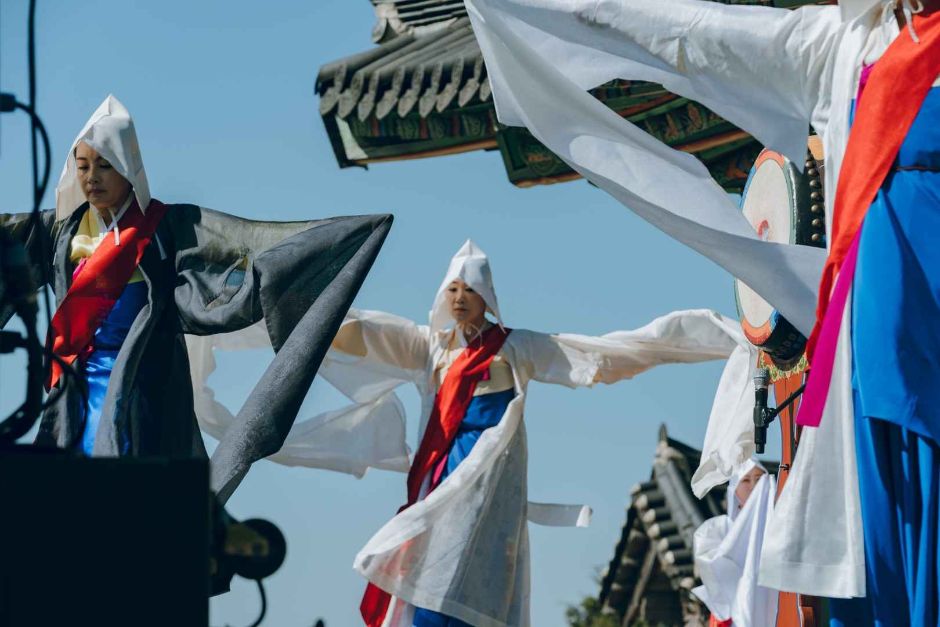
Seosan Haemi Eupseong Festival (서산해미읍성축제)
11.5Km 2025-07-29
143 Nammun 2-ro, Seosan-si, Chungcheongnam-do
+82-41-660-2696
The Seosan Haemi Eupseong Festival is a cultural festival held at Seosan Haemieupseong Walled Town, an ancient fortress with a 600-year history. The festival combines light, music, and the historic fortress to create a fantastic nighttime scenery and offers content for all generations. During the day, visitors can enjoy sophisticated performances while picnicking, and at night, they can partake in a vibrant evening stroll.
Haemieupseong Walled Town (서산 해미읍성)
11.6Km 2025-08-06
143 Nammun 2-ro, Seosan-si, Chungcheongnam-do
Haemieupseong Walled Town is a representative fortress from the Joseon period. Additional famous walled towns in Korea include Gochangeupseong Walled Town and Naganeupseong Walled Town. Haemieupseong Walled Town was established in 1491 during the 22nd year of King Seongjong. Its perimeter is approximately 1.8 kilometers, the x_height is 5 meters, and total area is 196,381 m², making it a huge fortress. Through restoration and purification projects, its old image has been restored as a historic park and it is famous as a site of Catholic martyrs' in the late Joseon era.
During the persecution of Catholics, many Catholics from Chungcheong-do were forced to come to Haemieupseong Walled Town where the administration office was located. Upon arrival, they were tortured to death. In particular, approximately 1,000 people are recorded as having been executed during the persecution in 1866.
The plaza inside of the fortress has a prison site where Catholics were chained up under the Daewongun government, and a gigantic old tree which was the tree used for torturing. The stones which were used for thrashing are located outside of a fortress gate and have become a holy place.
Seosan House of Yu Gibang (서산 유기방가옥)
11.6Km 2024-03-11
72-10 Imunan-gil, Seosan-si, Chungcheongnam-do
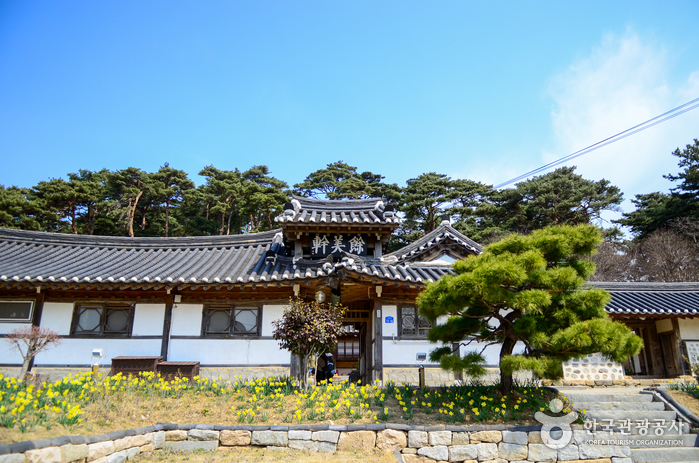
House of Yu Gibang was built in the early 1900s and measures 4,770㎡. As a valuable historical asset, it was designated as a Chungcheongnam-do Folk Culture Heritage on October 31, 2005. The house faces south on a low mountain with a thick pine forest background. A courtyard is at the center of the house, created by the straight line-shaped anchae to the north, the haengnangchae to the west, and a chat room with anchae to the east. Initially, there was a middle gate in front of the anchae, but it was demolished in 1988 and replaced with a pavilion-shaped gate as seen now.

Jeonggane Baksok Nakjitang (정가네박속낙지탕)
12.2Km 2024-02-26
6, Sudeung-gil, Taean-eup, Taean-gun, Chungcheongnam-do
Jeonggane Baksok Nakjitang is a restaurant specializing in baksok nakjitang (gourd and octopus soup, steamed rice not included) and haemul kalguksku (noodle soup with seafood). Baksok nakjitang (gourd and octopus soup) is a folk dish of Taean, a soup made with octopus sourced from Taean’s tidal flats and calabash. This restaurant uses only the freshest octopus caught from Taean’s tidal flats, so the octopus remains chewy and tender even after boiling. Noodles can be added to the soup. Taean’s proximity to the sea and its extensive tidal flats make seafood from Taean plentiful and delicious.
Seosan Gaesimsa Temple (개심사(서산))
12.8Km 2021-09-18
321-86, Gaesimsa-ro, Seosan-si, Chungcheongnam-do
+82-41-688-2256
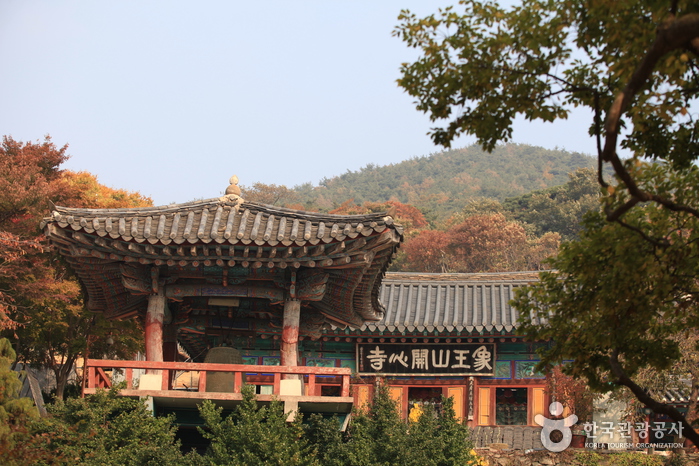
Situated in a dense forest in Sangwangsan Mountain and 6 kilometers away from Haemi-myeon, Gaesimsa Temple is one of the four major temples in Chungcheongnam-do. The path from the parking lot to the temple site is quite remote and curved, but beautiful especially in spring when cherry blossoms are in full bloom.
The temple was built in 1484 during the 15th year of King Seongjong and designated as a Treasure. The architecture of the temple stands out, as the buildings use bent tree trunks for pillars.
Baekhwasan Mountain (Taean) (백화산(태안))
13.6Km 2025-01-17
41-2 Dongmun-ri, Taean-eup, Taean-gun, Chungcheongnam-do
Baekhwasan Mountain, standing at 258 meters tall and located north of Taean, is relatively small, allowing for an easy climb. Its name, Baekhwa, is derived from the appearance of the snow-capped mountain, which resembles a white cloth draped over its peak. The mountain is rich in pine trees and rocks and is home to historical sites such as the Rock-carved Standing Buddha Triad in Dongmun-ri, and the Baekhwasanseong Fortress. A suspension bridge spans a cliff on the mountain, and the summit offers a spectacular view of the sunset.
Taean Taeeulam Hermitage (태을암(태안))
13.9Km 2021-07-30
78-132, Woni-ro, Taean-gun, Chungcheongnam-do
+82-41-672-1440
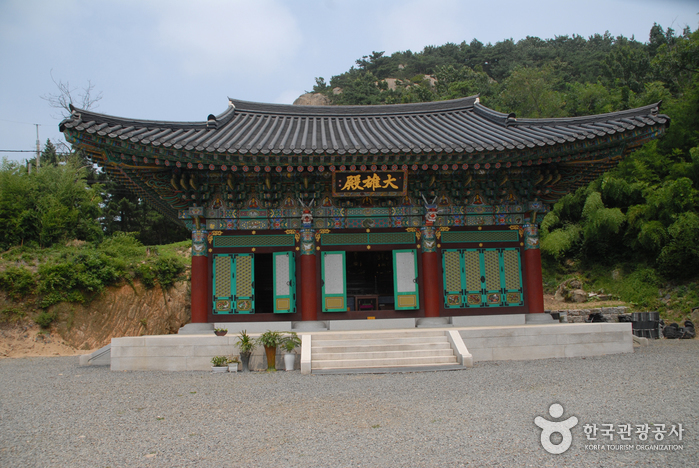
Taeeulam Hermitage is well-known for Rock-carved Standing Buddha Triad, designated as National Treasure No. 307. Featuring gently smiling Buddhas, Taean’s Budda Triad has a unique formation with a smaller Bodhisattva figure set in the middle with two Buddha statues on the sides, being different from a typical triad which usually features a main Buddha in the middle surrounded by two Hyeopsi Bosal (Buddhist saint) on the sides.
Taeeulam Hermitage is located on the western coast, providing opportunities to interact with China and Chinese culture but this also allowed for frequent appearances of foreign raiders. With this geographical background, Taean was able to accept Chinese precedent culture earlier than other areas and established excellent Buddhist cultural relics.
Myeoncheoneupseong Walled Town, Dangjin (당진면천읍성)
14.6Km 2023-07-17
14 Mongsan-gil, Dangjin-si, Chungcheongnam-do
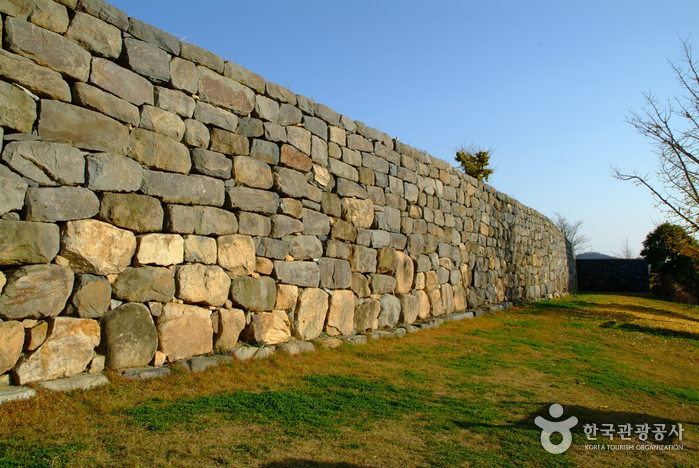
Since the ancient days, the city of Dangjin was where an important sea route to China existed along with Seosan and Taean. Not only was it an essential trading post with China, it was also a critical military hub. Myeoncheoneupseong Walled Town is widely known to have been constructed in the 16th year of King Chungnyeol's reign in the Goryeo Dynasty (1290) but many believe that it had actually existed ever since the early Baekje period for the purpose of stopping foreign invasions. Myeoncheoneupseong was a fortress that had four main gates in the east, west, south and north.
Taeanhaean National Park (태안해안국립공원)
14.9Km 2022-09-06
9, Gwisil-gil, Taean-gun, Chungcheongnam-do
+82-41-672-9738
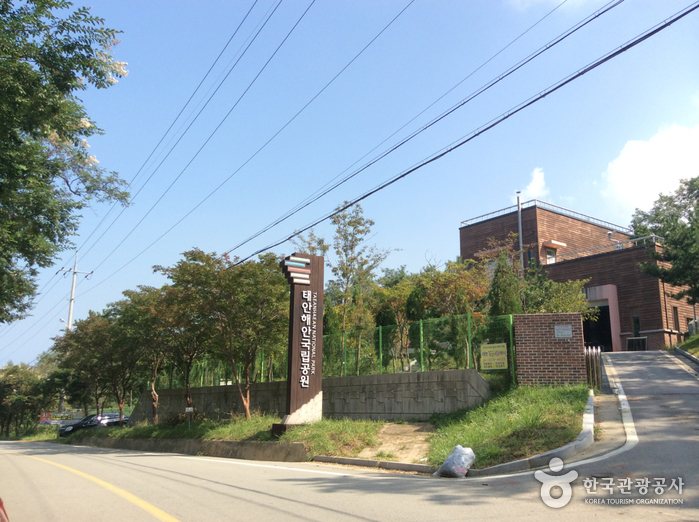
Taeanhaean National Park includes nearly 130 islands in the area around Taean-gun, designated as a Slow City. The park has a picturesque landscape with beautiful beaches, rock formations, mountain peaks and sea cliffs. The area (328.99 ㎢) was designated as a national park in October 1978, and at present, nearly 250 different species of plants grow within its boundaries.
 English
 한국어
한국어 日本語
日本語 中文(简体)
 Deutsch
 Français
 Español
 Русский


