![Geomunoreum Lava Tube [UNESCO World Natural Heritage Site] (거문오름 [유네스코 세계자연유산])](http://tong.visitkorea.or.kr/cms/resource/61/2661661_image2_1.jpg)
Geomunoreum Lava Tube [UNESCO World Natural Heritage Site] (거문오름 [유네스코 세계자연유산])
18.2Km 2025-03-13
569-36 Seongyo-ro, Jocheon-eup, Jeju-si, Jeju-do
+82-64-710-8981
Geomunoreum Lava Tube stands out as one of the distinct oreum (the Jeju language term for parasitic cones) on Jeju Island, marked by its extensive network of around 20 lava tubes running through the volcanic structure. This site is not only a geological marvel but also a sanctuary for diverse biological species. Visitors begin their journey at the Jeju World Natural Heritage Center, from where a path leads directly to the Geomunoreum Lava Tube. It is important to note that prior reservations are required to visit. The significance of this location as a key geological feature was recognized when it was designated as a UNESCO World Natural Heritage Site in 2007. Additionally, an international trekking event is hosted annually to celebrate its global importance.
Seogwipo Gasiri Village (Noksan-ro Canola Flower Road) (서귀포 가시리마을 (녹산로 유채꽃도로))
18.4Km 2024-01-09
20 Gasi-ro 565beon-gil, Pyoseon-myeon, Seogwipo-si, Jeju-do
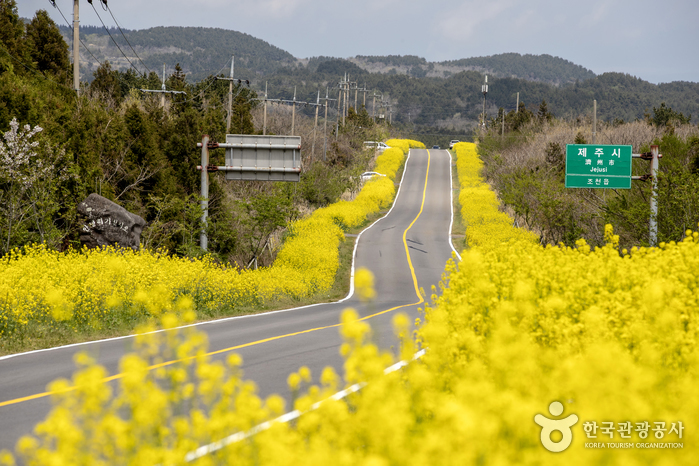
Seogwipo Gasiri Village is where canola flowers and cherry blossoms bloom simultaneously over a 10-kiliometer section from its access road every April, boasting a picturesque driving route. The combination of yellow canola flowers and light pink cherry blossoms is very special. Selected as one of the “100 Beautiful Roads in Korea,” Gasiri Noksan-ro Road is a road that passes through Noksanjang and Gammajang, which were the best horse farms of the Joseon period, and is currently one of the best canola flower roads in Jeju. As such, it is called the "First Sight of the Ten Sights of Gasiri Village." In addition, visitors can enjoy beautiful natural scenery unique to Jeju, such as Ttarabioreum and Keunsaseumioreum Parastic Cones.
Jeju Horse Park (조랑말체험공원)
18.9Km 2024-01-11
381-15 Noksan-ro, Seogwipo-si, Jeju-do
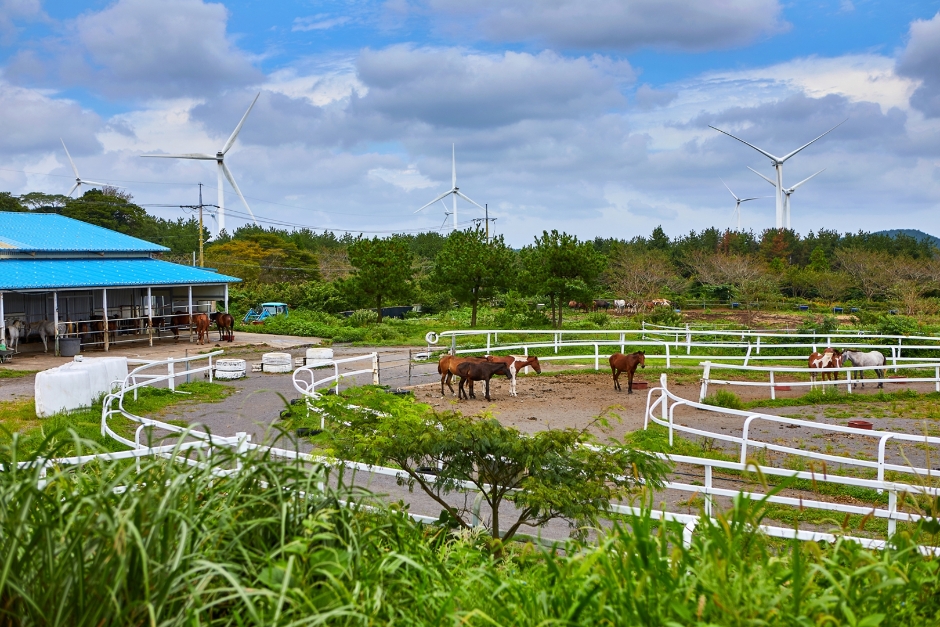
Jeju Horse Park offers a venue to promote Jeju’s horse culture in an easy and fun way. The park has kept intact the 600-year history of nomadic culture at the site of Gasi-ri Village which used to house Gammajang, the place for raising the best horses during the Joseon dynasty. The park includes the Jeju Horse Museum, Ttarabi horseback riding track, Maeum Cafe, Mongol Yurt Guesthouse, camping site, Art Shop, and an experience place to focus on the Project for a New Cultural Space Creation through the support of the Ministry of Agriculture, Food and Rural Affairs. The Jeju Horse Museum was the first national museum created by a village and its main theme covers the history and culture of the village. It is also regarded as a new form of community business model.
 English
 한국어
한국어 日本語
日本語 中文(简体)
 Deutsch
 Français
 Español
 Русский


