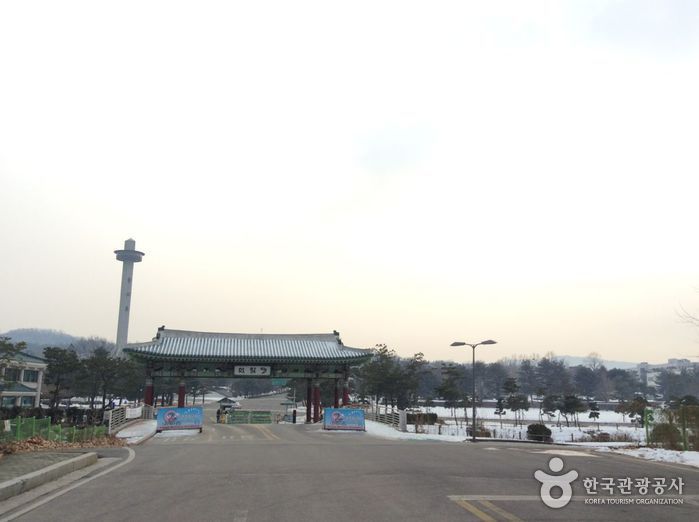
Korea Military Academy (육군사관학교)
18.1Km 2022-08-30
574, Hwarang-ro, Nowon-gu, Seoul
+82-2-2197-6125
Korea Military Academy is a place of strict rules, patriotism, and military cadets. It was extremely difficult for outsiders to visit the academy until 1997, when a special tourism course was created. The course showcases the major sites at Korea Military Academy. Starting from the school information center, visitors can see the museum, memorial hall, and exhibition center in a 1.5 hour course. The Military Museum displays treasures and materials from each branch of the military, while visitors can see the history of the military and lifestyle of cadets at the memorial hall. However, the highlight of a trip to Korea Military Academy is watching the Hwarang Ceremony, a parade of cadets which takes place every Saturday at 11:30. In the ceremony, cadets don their formal uniform to march. Touring the academy at 10 is perfect for watching the parade later.

Incheon Grand Park (인천대공원)
18.1Km 2025-01-10
236 Munemi-ro, Namdong-gu, Incheon
+82-32-466-7282
Incheon Grand Park is an urban nature park located in Jangsu-dong, Namdong-gu, Incheon. The park is surrounded by Gwanmosan Mountain and Sangasan Mountain. Spanning across 727 acres of land, Incheon Grand Park is the only large-scale natural green park in Incheon. The park provides a pleasant atmosphere for citizens to escape from the city life and enjoy the natural surroundings. Over 4 million people visit the park every year to take in the clean air and relax in nature.
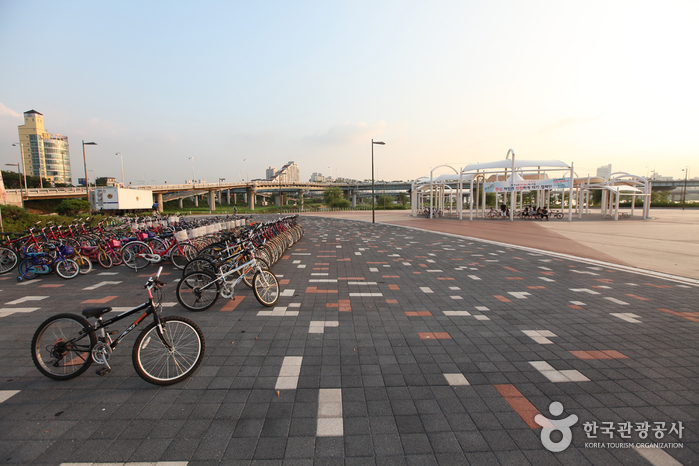
Gwangnaru Hangang Park (광나루한강공원)
18.1Km 2021-12-25
83-66, Seonsa-ro, Gangdong-gu, Seoul
+82-2-3780-0501
Hangang Citizen's Park, composed of 12 areas including Jamsil, Ttukseom and Jamwon, is an eco-friendly park providing areas for sports and leisure. The park is equipped with various cultural and recreational facilities and also has an ecological park. Gwangnaru Hangang Park formed naturally through rich silt that flowed in from the upper Hangang River that was then filled with reeds, creating an ideal habitat for groups of migratory birds.
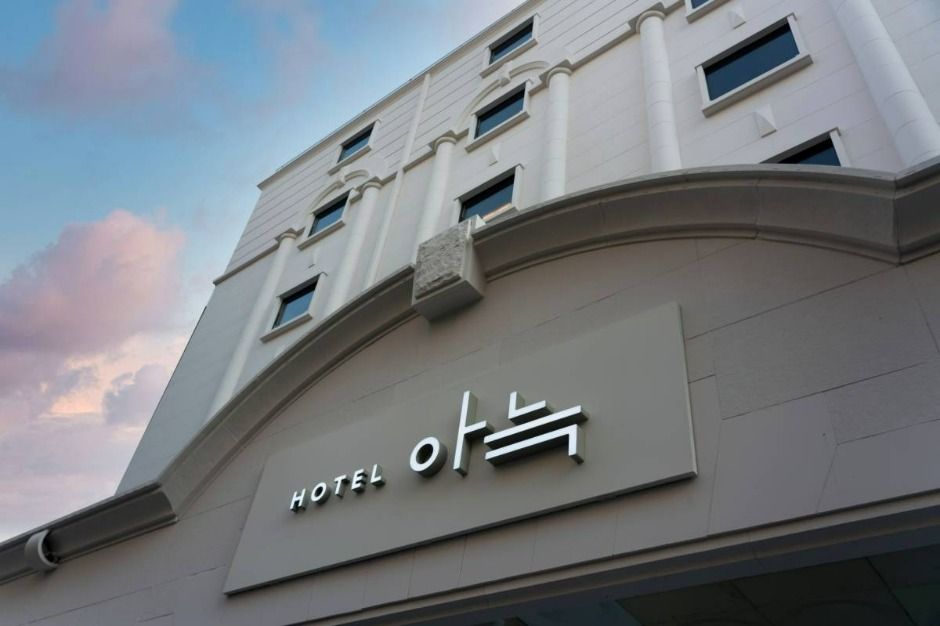
The Hyoosik Aank Hotel Incheon Bupyeong (더휴식 아늑호텔 인천 부평점)
18.1Km 2025-04-08
18-8 Gyeongwon-daero 1417beon-gil, Bupyeong-gu, Incheon
The Hyoosik Aank Hotel Incheon Bupyeong offers a variety of room types focusing on a specific theme for both leisure and relaxation, such as a deep sleep room with a premium massage chair, a singing room with noraebang equipment and soundproof walls, a deluxe couple room with two high-end gaming PCs, a movie room with a beam projector, a spa room with a tile tub, a party room, a twin bedroom, and a regular standard room. The hotel also has a parking lot and a guest lounge.
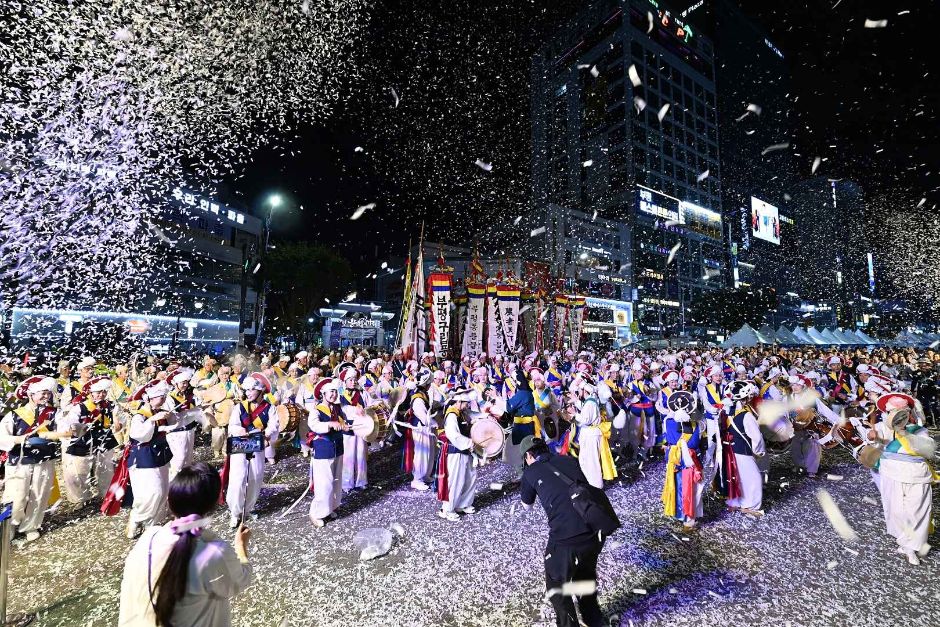
Bupyeong Pungmul Festival (부평풍물대축제)
18.3Km 2025-10-23
60 Bupyeong-daero, Bupyeong-gu, Incheon
+82-32-509-7516
Bupyeong Pungmul Festival is a lively festival dedicated to traditional folk celebration. "Pungmul" is the collective term for instruments and decorations used to play "pungak," a lively entertainment folk music performed to foster excitement during in a traditional celebration. This vibrant festival, which is centered around the joyous theme of pungmul, takes place in the heart of Bupyeong. It is a community festival supported by active participation from local residents, offering a rich taste of local charm. Visitors are advised to explore the Bupyeong Underground Shopping Center, the world’s largest underground shopping center listed in the Guinness World Records, and Bupyeong, the birthplace of Korean jazz.
[Global Zone]
Welcome to the "Global Zone" of Incheon's famous Bupyeong Pungmul Festival!
"A Valuable Pungmul Festival, A Bupyeong Festival Together"
The Bupyeong Pungmul Festival has been selected as a 2024~2025 Cultural Tourism Festival, and is now leaping forward as a festival for the world. At its core is a dedicated platform for international tourists.
Learn More.
http://bpfglobal.kr
Seoul Bangidong Ancient Tombs (서울 방이동 고분군)
18.3Km 2022-12-29
219, Ogeum-ro, Songpa-gu, Seoul
+82-2-2147-2800
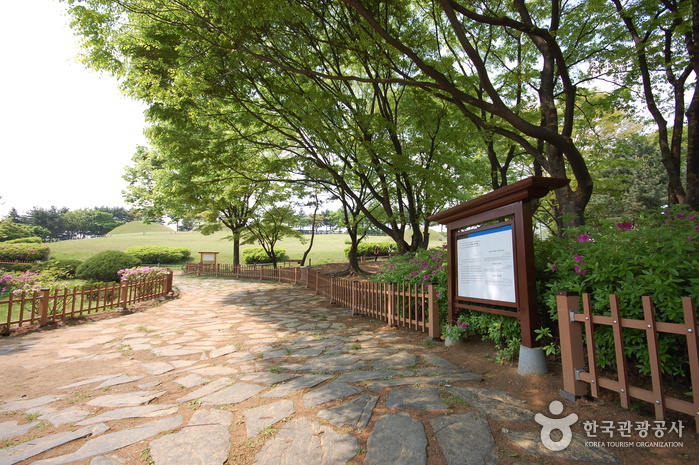
The ancient tombs in Bangi-dong were discovered during the land readjustment project of Jamsil-jigu District in 1975. A total of eight ancient tombs were excavated until 1976, and the site was restored into a park in 1983. The Bangi-dong area was originally a low line of hills with an altitude of 30-50 meters above sea level, but it has been made into flatland for urban development purposes. Tomb numbers 1 to 6 lie on the same hill, while tomb no. 7 and 8 are located on another hill a short distance away.
All eight tombs have circular burial mounds. The insides of the a tomb feature a square or rectangular-shaped burial chamber with earthen ground and stone walls, and a passage leading from the tomb entrance to the chamber. However, details of the burial chambers vary by tomb. Most of the tombs had been robbed before the investigation, but a few relics such as plates and pots have been excavated. At the time of excavation, the relics were presumed to have come from the Baekje dynasty (18 BC-660 AD), but it is now estimated that they date back to the Unified Silla Period (676-935 AD).
Gyeonggi Cheonggyesa Temple (청계사(경기))
18.4Km 2021-11-23
475, Cheonggye-ro, Uiwang-si, Gyeonggi-do
+82-31-345-2533
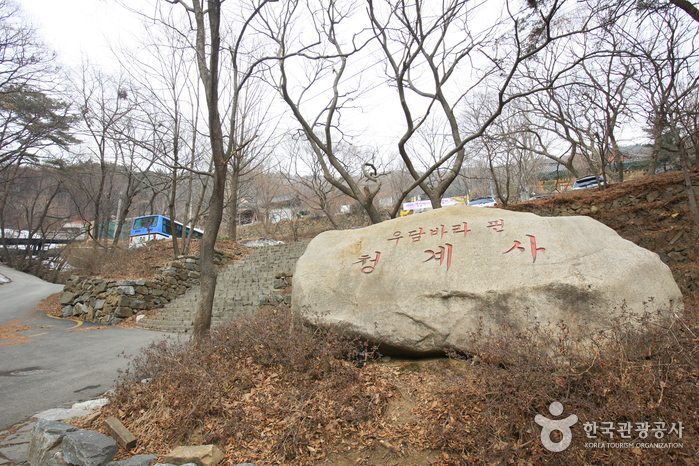
Cheonggyesa Temple is a Buddhist temple near Baegunhosu Lake that became well-known as the site of udumbara flower, a rarity that blooms on Buddhist statues. Built during the Silla Kingdom, the temple offers many sights, including the Cheonggyesa Temple Monument, Geungnakjeon Hall, the bell tower, Samseonggak Shrine, Ksitigarbha Hall, and Gamnoji Pond. Among the many things to see, visitors should not miss a glimpse of the Bronze Bell of Cheonggyesa Temple and the Wood Printing Block in Cheonggyesa Temple. Created in the 27th year of the reign of King Sukjong (1701) of the Joseon dynasty, the Bronze Bell has been designated as a national treasure, and is adorned with elaborate patterns.

Olympic Park (올림픽공원)
18.4Km 2023-10-19
424 Olympic-ro, Songpa-gu, Seoul
+82-2-410-1114
Olympic Park is an impressive leisure facility in which historic remains from the Baekje era share space with modern, state-of-the-art sports stadiums, an eco-friendly forest, and spacious grass fields. The legacy of the 1988 Seoul Olympics, the park not only houses the country’s largest sports arena, but has also become a place where Seoul residents come to relax and unwind.
Spread across approximately 1.45 million square meters, Olympic Park encompasses the land that was once Mongchontoseong Fortress and Mongchonhaeja (manmade lake) from the early Baekje period. The park is divided into several zones, including a leisure sports park, a cultural art park, an eco-park, and the History Experience Park dedicated to the area’s rich historic heritage.
Because Olympic Park is so large and takes over three hours to explore, visitors are advised to familiarize themselves with entrances and exits and travel routes before they start. To further save time, visitors can ride the Road Train (“Hodori Train”) located next to Peace Square.
Soma Museum of Art (소마미술관)
18.5Km 2023-04-13
424, Olympic-ro, Songpa-gu, Seoul
+82-2-425-1077
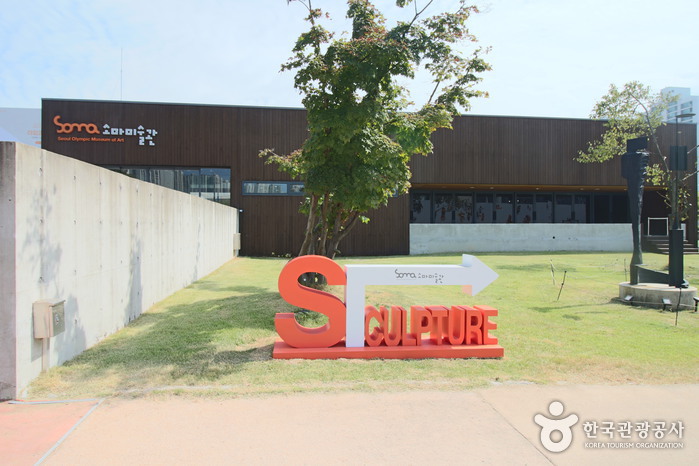
Soma Museum of Art was opened in September 2004 as a cultural space amid the nature of Seoul Olympic Park. The museum displays over 222 sculptures, and offers a variety of cultural and educational programs, including the nation's first drawing center and archive.
Olympic Park Stadium (올림픽공원 경기장)
18.5Km 2021-06-11
424, Olympic-ro, Songpa-gu, Seoul
+82-2-410-1114
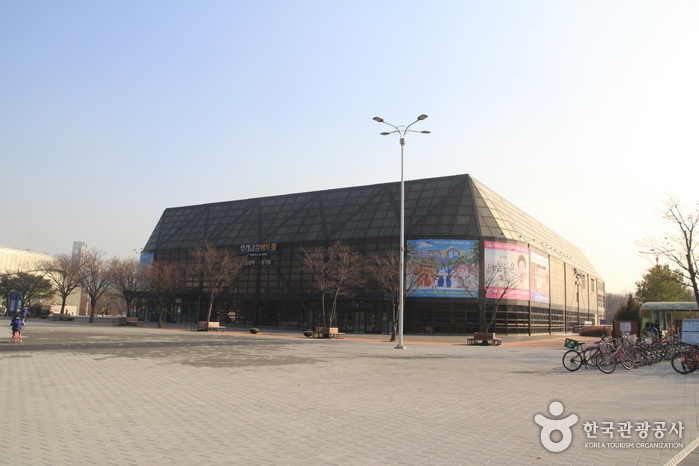
Olympic Park is an expansive outdoor area for Seoul residents to enjoy, offering facilities and venues for a range of events including athletic competitions, concerts and other performances. The park houses athletic facilities including the gymnasium of the ’88 Seoul Olympic Games, a fencing stadium, weightlifting stadium, swimming pool and tennis courts. Moreover, those venues are multi-purpose facilities that can host a wide range of events and performances.
 English
 한국어
한국어 日本語
日本語 中文(简体)
 Deutsch
 Français
 Español
 Русский


