![Lf Hazzys - Myeong-dong [Tax Refund Shop] (LF(명동헤지스종합))](http://tong.visitkorea.or.kr/cms/resource/55/2878655_image2_1.jpg)
Lf Hazzys - Myeong-dong [Tax Refund Shop] (LF(명동헤지스종합))
6.0Km 2024-04-19
28, Myeongdong 8ga-gil, Jung-gu, Seoul
-
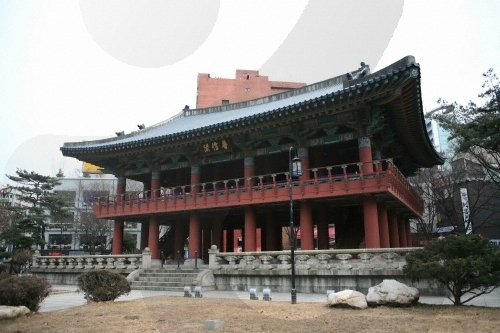
Bosingak Belfry (보신각 터)
6.0Km 2024-03-04
54, Jong-ro, Jongno-gu, Seoul
+82-2-2133-2641
Bosingak Belfry is also known as Jonggak. It was the site in which a large bell, used to keep the time in Seoul, was found during the Joseon period (1392-1897). Bosingak Belfry was burned down during the Korean War (1950-1953) and was reconstructed in 1979. The original bell was moved to the Gyeongbokgung Palace, and a new bell was forged in 1985. At midnight, January 1, the bell at the Bosingak Belfry is rung to welcome the new year. Many people gather around the belfry to make a wish for their new year.

Cheongun Literature Library (청운문학도서관)
6.1Km 2023-08-16
40 , Jahamun-ro 36-gil, Jongno-gu, Seoul
Cheongun Literature Library is located at the foot of Inwangsan Mountain and can be reached by following the mountain's walking trail starting from Changuimun Gate along the fortress wall. This public hanok library is designed in consideration of the sloped topography and the natural scenery of Inwangsan Mountain. The library consists of two floors: an underground floor and a ground floor. While the ground floor is designed as a traditional hanok, the underground floor is made of concrete to support the hanok building and the spacious outdoor yard. By implementing the natural slope in the library's design, the underground southern entrance is exposed, allowing sunlight to enter. The underground floor features a wide collection of books while the ground floor serves as a place for reading. The natural environment surrounding the library adds to the hanok building's traditional and peaceful charms.
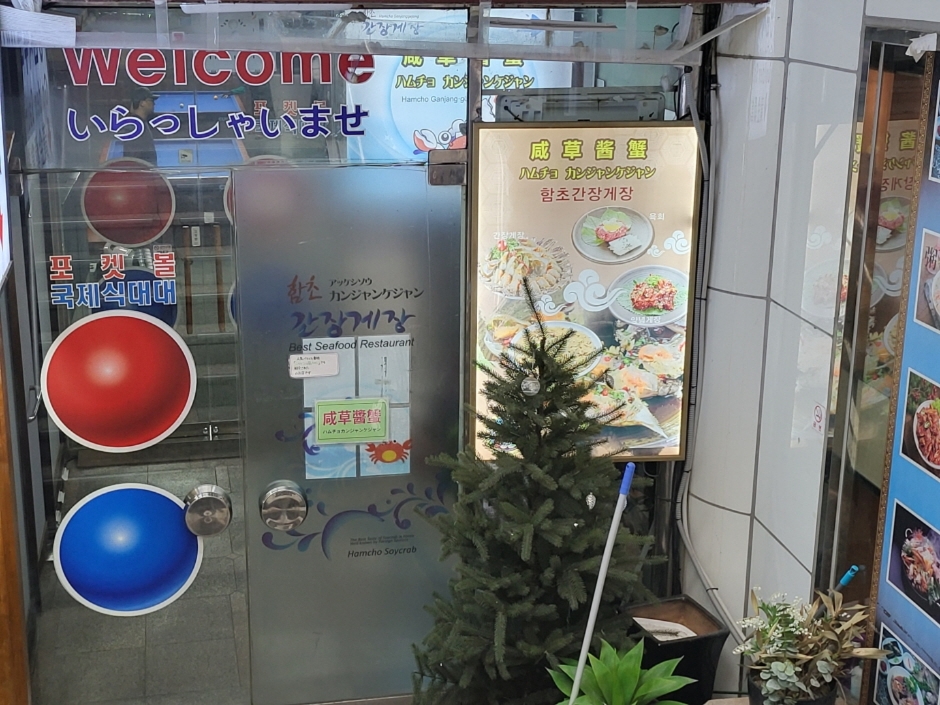
Hamcho Ganjanggejang (함초간장게장)
6.1Km 2024-03-11
27, Myeongdong 8ga-gil, Jung-gu, Seoul
+82-2-318-1624
Situated in Myeongdong Street, Hamcho Ganjanggejang specializes in ganjang gejang (soy sauce marinated crab). Their signature dish, ganjang gejang, is made by marinating blue crab in soy sauce and is a favorite among Koreans. Saeu jang (soy sauce marinated shrimp) and other seafood dishes (abalone, octopus, etc.) are also a must-try. In addition, the traditional Korean side dishes are so tasty that the restaurant never runs out of customers.
![CheongKwanJang - Jonggak Station Branch [Tax Refund Shop] (정관장 종각역)](http://tong.visitkorea.or.kr/cms/resource/13/2878213_image2_1.jpg)
CheongKwanJang - Jonggak Station Branch [Tax Refund Shop] (정관장 종각역)
6.1Km 2024-04-22
#102, 95, Sambong-ro, Jongno-gu, Seoul
-
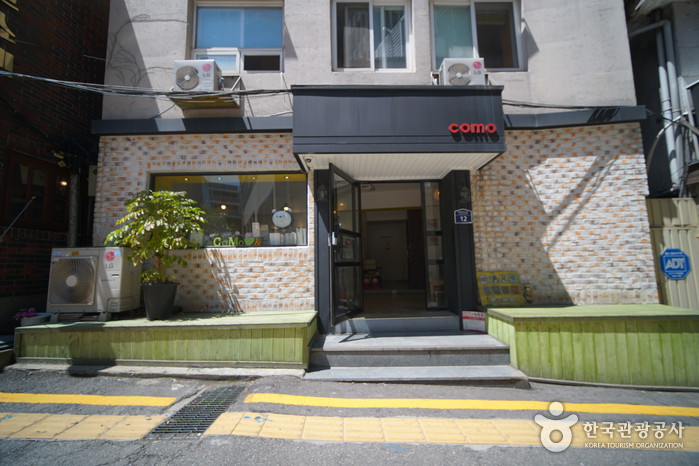
Myeongdong Guesthouse Como (명동게스트하우스 꼬모)
6.1Km 2024-12-23
12 , Toegye-ro 24-gil, Jung-gu, Seoul
+82-2-755-5437
Como is a guesthouse in Jongno-gu, Seoul, just 3-minute’s walk away from Myeongdong Station on Line 4. Como is particularly popular with foreign travelers: staff are fluent in English and Chinese, and luggage storage is free of charge. Rooms come in different sizes to cater from single travelers to family groups, and all have a separate bathroom and toilet. Must-see local sights such as Namsan Seoul Tower, Sungnyemun Gate, and Namdaemun Market are easily reached by car or bus.
![Olive Young - Gayang Station Branch [Tax Refund Shop] (올리브영 가양역)](http://tong.visitkorea.or.kr/cms/resource/04/2880104_image2_1.jpg)
Olive Young - Gayang Station Branch [Tax Refund Shop] (올리브영 가양역)
6.1Km 2024-04-18
1F, 476, Yangcheon-ro, Gangseo-gu, Seoul
-
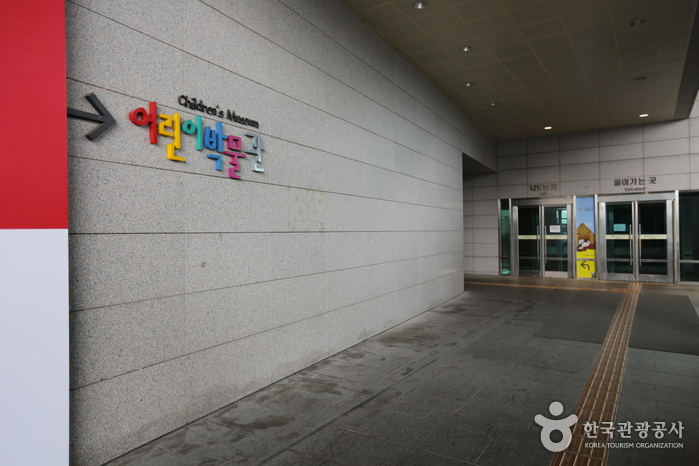
Childrens Museum of the National Museum of Korea (국립중앙박물관 어린이박물관)
6.1Km 2021-09-15
137, Seobinggo-ro, Yongsan-gu, Seoul
+82-2-2077-9000
The Children’s Museum of the National Museum of Korea is an experience-oriented museum where children can see, touch, and feel history through hands-on programs and games. The permanent exhibition hall displays replicas of historical items so children can learn about Korea’s cultural heritage in a fun and interactive way. Children can also experience the lifestyle and wisdom of the past through experience programs.
Jogyesa Temple (조계사(서울))
6.1Km 2024-10-25
55 Ujeongguk-ro, Jongno-gu, Seoul
As the main temple as well as the district head temple of the Jogye order in Seoul, Jogyesa Temple is the center of Korean Buddhism. The temple was built in the late 14th century during the Goryeo period but was completely destroyed in a fire. It was rebuilt under the name of Gakwangsa Temple in 1910 with the effort of many respectful monks, namely Han Yong-un and Lee Hee-gwang. The temple was given a role as the head temple of Korea’s Buddhism and renamed to Tegosa Temple in 1936. In 1954, a purification drive took place to eliminate Japanese influence and revive traditional Buddhism, which established the present day Jogyesa Temple as a result.
Jogyesa Temple plays an important role in Korean Buddhism as the head temple of the Jogye order. Jogyesa Temple’s Dharma Hall serves as the main venue for several Buddhist events, holding rituals, lectures, ceremonies, and other events all year long. The annual lantern festival in celebration of Buddha's birthday also takes place at this temple.
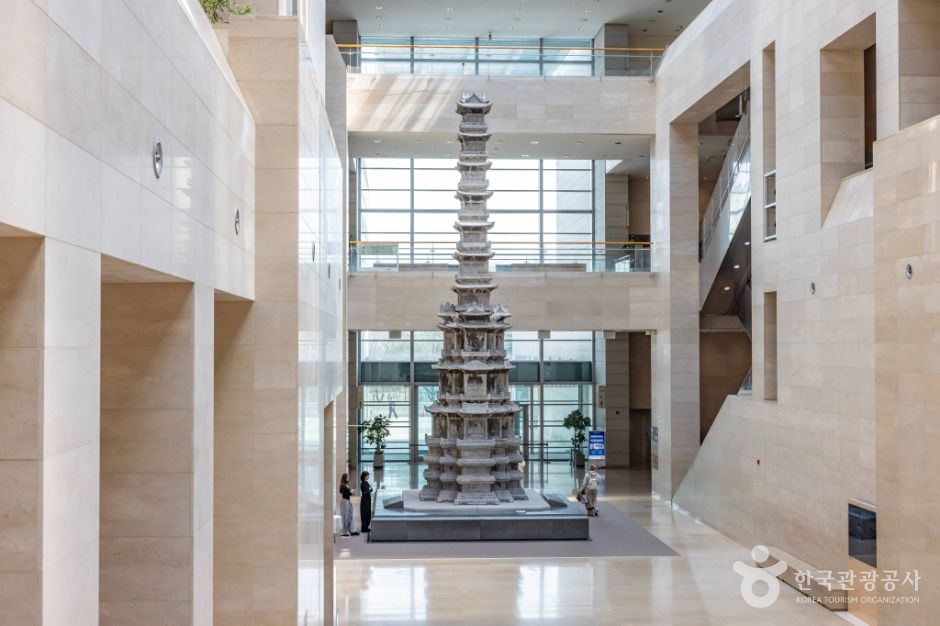
National Museum of Korea (국립중앙박물관)
6.1Km 2025-11-21
137 Seobinggo-ro, Yongsan-gu, Seoul
The National Museum of Korea houses a vast collection of artifacts from ancient times to the modern era in a wide range of topics, including art and culture. The museum houses a Children's Museum, where visitors can learn more about the nation's history through educational programs and experiences. The outdoor grounds feature pagodas and other stone artworks too large to be on display inside.
In addition to galleries with a wide array of national and international pieces, the National Museum of Korea is a stage for a number of cultural activities related to collection, preservation, research and analysis, social training, academic publications, intercultural exchange programs, concerts, and more.
 English
 한국어
한국어 日本語
日本語 中文(简体)
 Deutsch
 Français
 Español
 Русский


