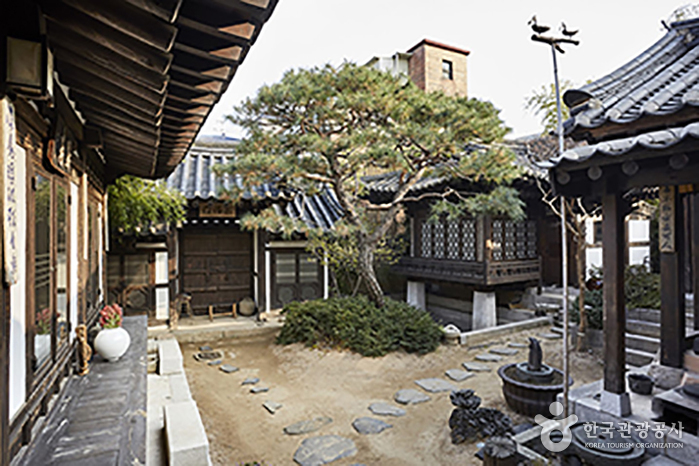
Rakkojae Seoul Bukchon Hanok Hotel (락고재 서울 북촌 한옥호텔)
6.3Km 2025-10-27
49-23 , Gyedong-gil, Jongno-gu, Seoul
Rakgojae Bukchon Hanok Hotel in Jongru-gu, Seoul, is a traditional hanok compound with a 130-year history, renovated by master carpenter Jeong Yeong-jin. The elegant gate and stone walls, the traditional roof tiles, the jangdokdae jar store, the pavilions and ponds - not to mention the beautiful pine trees - express the archetypal beauty of hanok. Sitting on the daecheongmaru (wooden patio) with a breeze in the trees, guests will feel taken back in time. Guestrooms are clean and comfortable, and visitors can relax in a wood-fired red-clay sauna and a jade-covered ondol room,. Traditional culture programs are available.
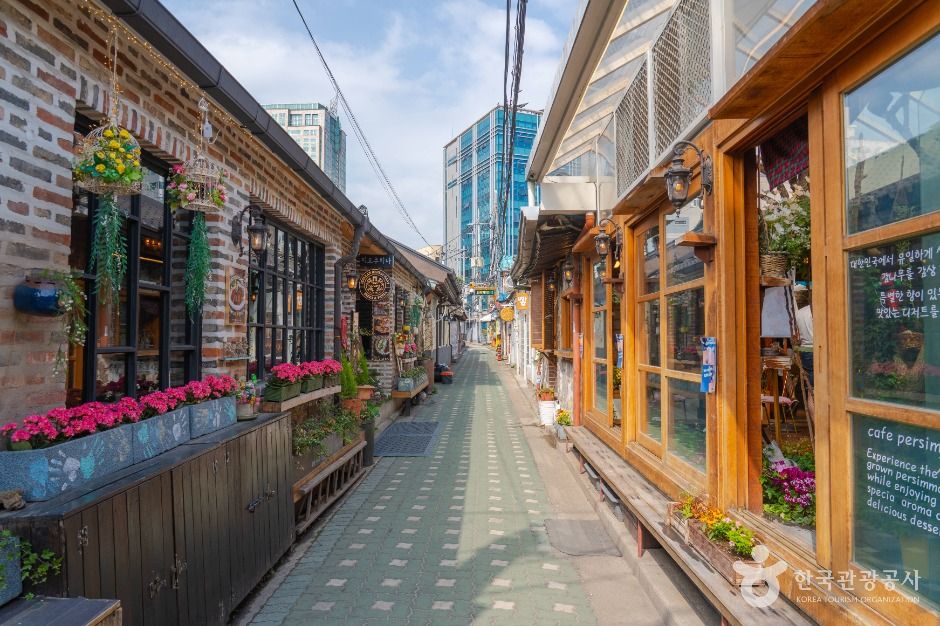
Ikseon-dong Hanok Street (익선동 한옥거리)
6.3Km 2025-10-27
Ikseon-dong, Jongno-gu, Seoul
Ikseon-dong is a place where the harmony of alleys and hanok houses exudes beautiful charm and is a must-visit spot for tourists of all ages and genders. It is also an area that connects the younger and older generations.
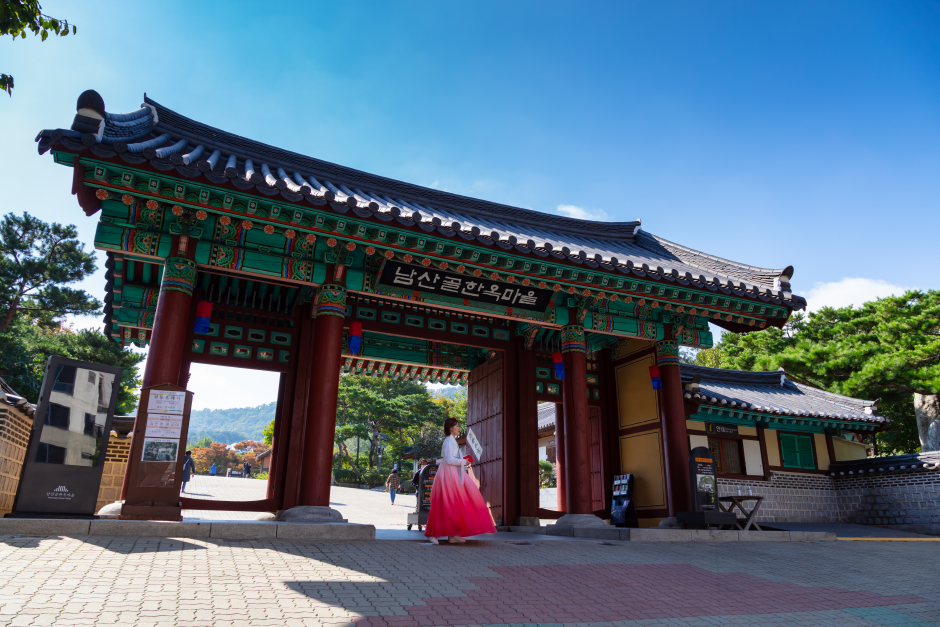
Namsangol Hanok Village (남산골한옥마을)
6.4Km 2025-07-14
28 Toegye-ro 34-gil, Jung-gu, Seoul
Namsangol Hanok Village opened in 1998 on the northern side of Namsan Mountain in the center of the capital. This village has five restored hanok (traditional Korean house) premises, a pavilion, a traditional garden, a performance art stage, and a time capsule plaza, making it a perfect spot for locals and tourists to take a leisure walk. Upon entering from the front gate, visitors will get a taste of Korea's traditional life while escaping from bustling city life. The traditional garden with its pavilion and old houses creates a peaceful ambiance before the forested Namsan Mountain. A time capsule commemorating Seoul’s 600th anniversary was buried in 1994 at the highest point of the village and is scheduled to be reopened 400 years later in 2394.
The five hanok premises at Namsangol Hanok Village once belonged to aristocrats and government officials of the Joseon dynasty. Each house was originally located in a different neighborhood, but they were all moved to this area and restored to their original form. The houses were rebuilt using their original materials, except for one house, where the materials were too old and deteriorated to be reused. The premises were carefully restored and replicated according to their original form to depict the owners’ social class and personality. These buildings are now used as an exhibit to portray the living environment during the Joseon dynasty and as a venue for educational and cultural programs for children and tourists.
Some of the unique programs and activities to participate in include wearing hanbok, folding hanji (traditional Korean paper), writing in Korean, traditional tea ceremony, traditional etiquette school, and herbal medicine experience. There are also taekwondo demonstrations and other various performances held around the village. Visitors can also try traditional games such as yunnori (traditional board game), or understand more about the area through a guided tour.
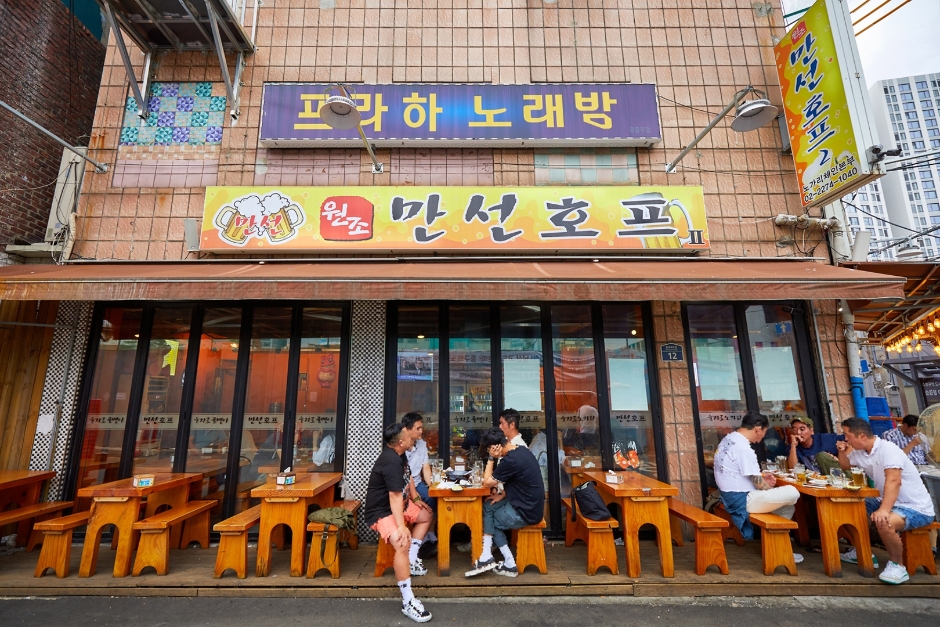
Euljiro Nogari Alley (을지로 노가리골목)
6.4Km 2025-11-06
Eulji-ro 129, Jung-gu, Seoul
Going out of Exit 3 of Euljiro 3-ga Station on Seoul Metro Line 3 and turning to the alley, you will find many pubs selling Nogari/Dried Young Pollack (Korean people grill and dip it in red pepper paste to eat as a side dish with alcohol) and restaurants specializing in Golbaengi/Sea Snails (It is a kind of conch shell, and Korea people made it a seasoned dish and enjoy it with Somyeon/Thin Noodles or use it as a bar sack). People gather in small groups at every outdoor table and sit in every alley to enjoy beer and snacks on weekday evenings and weekends, so it isn't easy to find a seat.
Originally, this area was lined with various company buildings and shops selling tools. However, in 1980, the pub 'Eulji OB Bear' opened, and as similar pubs opened nearby, it naturally came to be called 'Euljiro Nogari Alley.' As the affordable prices of snacks and beer attracted nearby office workers and college students, it has become increasingly popular, leading to its current status.
Here, along with a cold draft beer, let's try the K-snacks only available in Korea, such as Nogari/Dried Young Pollack and Golbaengi/Sea Snails. In addition, snacks such as chicken and fried dishes are also available, so try various snacks.

Myungbo Art Hall (명보아트홀)
6.4Km 2025-04-15
47 Mareunnae-ro, Jung-gu, Seoul
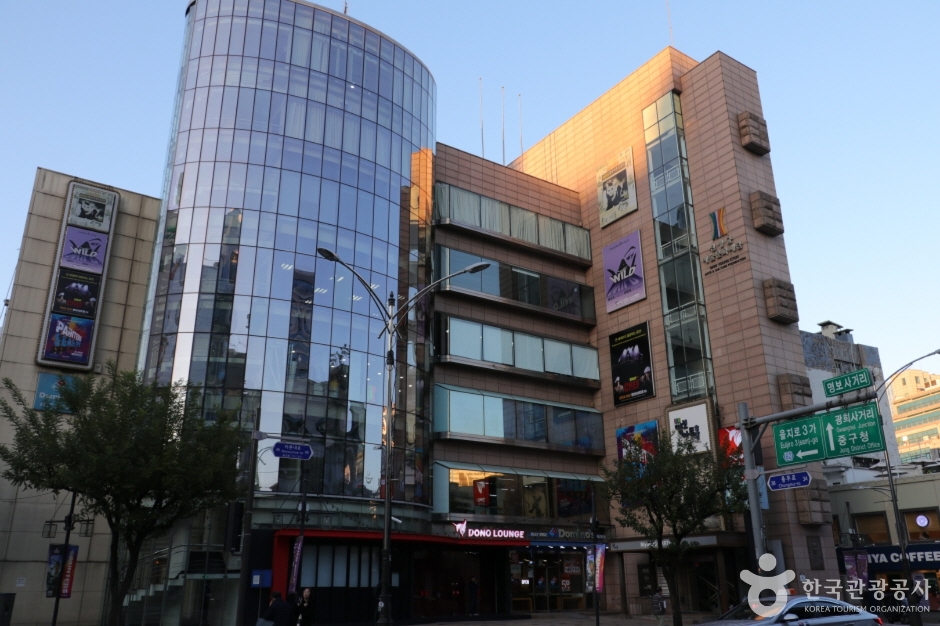
Located in Euljiro 3(sam)-ga, the heart of Seoul, Myungbo Art Hall is a cultural complex that consists of a professional theatre hall. Renovated from Myungbo Theater in 2009, Myungbo Art Hall is equipped with state-of-the-arts lighting and sound equipment that guarantees high-quality theatre experience for the audience. In addition, the hall also has comfortable seats along with other amenities for the audience's convenience. Myungbo Art Hall aims to globalize Korean performance culture by creating a variety of content that incorporate Korean theatre with tourism. This area is also where the house of Admiral Yi Sun-sin was located, which is honored with a memorial plaque listing his accomplishments.
Bumin Hospital Seoul (서울부민병원)
6.4Km 2025-10-23
1st Floor, International Healthcare Center, 389 Gonghang-daero, Gangseo-gu, Seoul
Seoul Bumin Hospital, a 300-bed general hospital that opened in April 2011, is a leader in medical culture with its exceptional medical staff, diagnostic equipment, and eco-friendly hospital practices. In particular, the Spine and Joint Center's medical staff, with their huge experience and expertise, provide Korea's highest level of medical services, including 3D navigation-assisted knee and hip surgery, stem cell therapy, robotic joint replacement surgery, hip endoscopic surgery, spinal deformity surgery, minimally invasive spinal surgery, and non-surgical treatments.
Dong-Lim Knot Museum (동림매듭박물관)
6.4Km 2021-12-21
10, Bukchon-ro 12-gil, Jongno-gu, Seoul
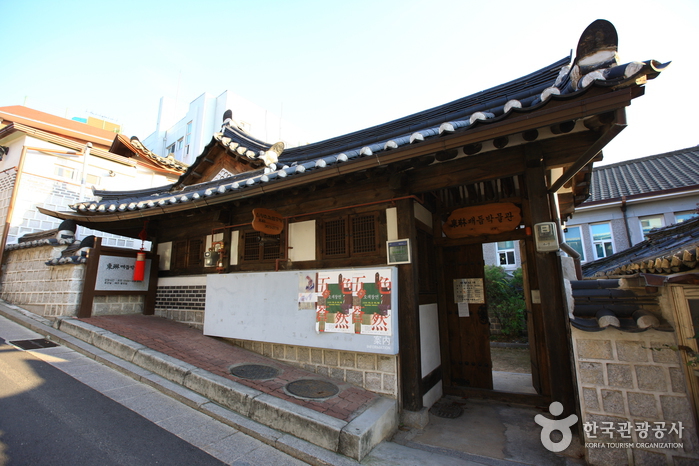
Opened in April 2004, Dong-Lim Knot Museum exhibits a variety of decorative traditional Korean maedeup (knots): norigae for hanbok, belts, pouches, as well as materials like thread, cord, and accessories. Housed in a hanok, a traditional Korean house, the gallery has a variety of exhibits, including old and new artwork, and creations that reflect modern trends.
Haepungbuwongun Yun Taekyeong's Jaesil (해풍부원군윤택영댁재실)
6.4Km 2021-11-10
28, Toegye-ro 34-gil, Jung-gu, Seoul
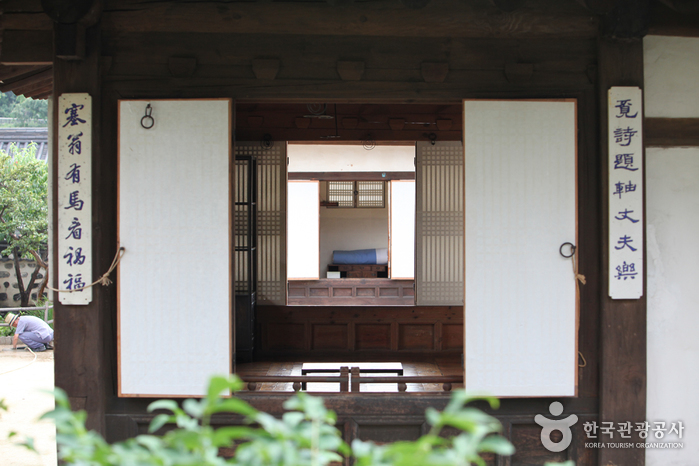
Haepungbuwongun Yun Taekyeong's Jaesil is a shrine house built by the father-in-law of King Sunjong of Joseon dynasty in 1906 when his daughter was proclaimed the crowned princess of Joseon and entered Changdeokgung Palace to later become Queen Sunjeong. Red pine trees salvaged from the demolition of Gyeongungung Palace were used to construct the house. It was originally located in Jegi-dong, Dongdaemun-gu, but was later restored and moved to its present location. The shrine of the house that was destroyed in 1960 was also restored.
Because the house is more of a shrine rather than residential living quarters, it has many unique features. For example, unlike other houses, it has the anchae (women’s quarters) located across from sarangbang (men’s quarters) with daecheong (living room) positioned between them.
Jongno 3(sam)-ga Jewelry District (종로3가 귀금속 전문상가)
6.4Km 2025-06-30
Jongno3-ga, Jongno-gu, Seoul-si
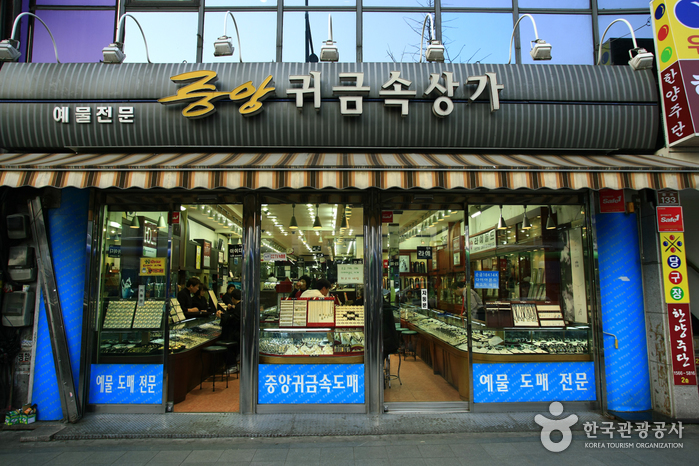
There is an enormous selection of wholesalers and retail jewelry stores in this district, spread throughout Jongno 3(sam)-ga and 4(sa)-ga. The glittering showcases here are especially popular amongst young people and foreign tourists looking to find fine jewelry at affordable prices. Stores in the jewelry district have a selection of designs that are extraordinarily diverse and prices that are 20 to 40% lower than at other jewelry outlets in Korea.
 English
 한국어
한국어 日本語
日本語 中文(简体)
 Deutsch
 Français
 Español
 Русский


