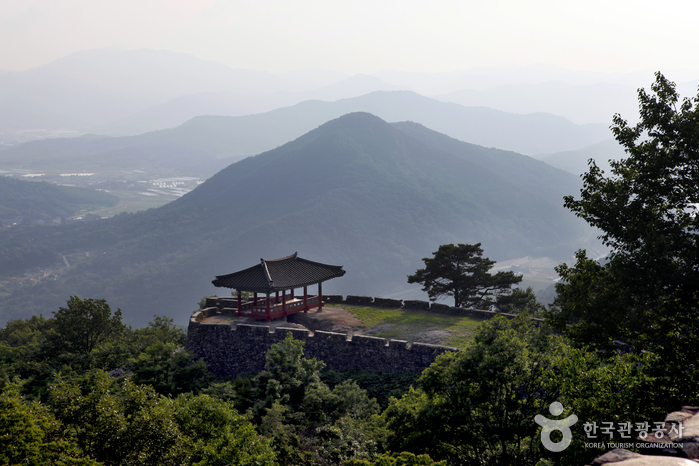
Geumseongsanseong Fortress (담양 금성산성)
15.7Km 2025-01-13
Dorim-ri, Damyang-gun, Jeollanam-do
+82-61-380-2812
Geumseongsanseong Fortress in Geumseongsan Mountain (603m) forms a boundary
between two small villages located on the border of two provinces (Geumseong-myeon,
Damyang-gun, Jeollanam-do and Sunchang-gun, Jeollabuk-do) and is one of the
three popular mountains of the Honam region (the Southwestern region of Korea
that includes Jeollanam-do and Jeollabuk-do). The fortress is surrounded by
two walls connecting Cheolmabong Peak, Undaebong Peak, and Jangdaebong Peak.
The total length of the outer wall is 6.486 meters and inner wall is 859 meters.
Historians are uncertain about the year the fortress was built, and
have concluded that it dates back to the Three Kingdoms Period (57 BC – 676 AD) based on an examination of the ruins and remains discovered in the surrounding
area. The fortress was reconstructed in 1409 and repaired in 1610 after the
Imjin War (1592-1598). Following that, it continued to develop into a strong
military base.
- Classification: Historic Site No. 353
- Date of Designation: August 24, 1991
- Owner: Park Jinseong and 85 persons
- Age: Three States Era
- Site Area: 1,349,977㎡
- Kind of Cultural Properties: Castle Site

Gyubongam Hermitage (Hwasun) (규봉암(화순))
16.3Km 2024-02-20
40-28 Dowon-gil, Iseo-myeon, Hwasun-gun, Jeollanam-do
Gyubongam Hermitage is a small hermitage located on Mudeungsan Mountain. It is believed to have been established during the Silla dynasty (B.C. 57-A.D. 935) and underwent renovations in 1959 to attain its current appearance. Renowned for its picturesque scenery, Gyubongam Hermitage is said to be a must-visit spot for those climbing Mudeungsan Mountain. It is particularly famous for its vibrant autumn foliage, and the area around the hermitage is abundant with rocky cliffs.
![Stay Hwangryong[Korea Quality] / 스테이황룡 [한국관광 품질인증]](http://tong.visitkorea.or.kr/cms/resource/48/2810848_image2_1.jpg)
Stay Hwangryong[Korea Quality] / 스테이황룡 [한국관광 품질인증]
16.6Km 2024-10-30
5-3, Haengbok 1-gil, Hwangnyong-myeon, Jangseong-gun, Jeollanam-do
+82-10-7142-5646
Stay Hwangryong is a tranquil hanok accommodation where the Hwangryonggang River flows in front. The hanok surrounded by a low stone wall is divided into two sections: Sarangchae and Anchae. The broad yard with flowering trees add more beauty to the landscape. The guest rooms of Stay Hwangryong include Hwangryong, good for six guests, Sarangchae 1 and 2 that are both good for two travelers, and a Maru that is the equivalent of a living room. The modern hanok retains the traditional beauty, while having added the convenience of modern facilities. Bright lightings on the ceiling and glass windows dressed in white curtains that replaced hanji give a more trendy look. Individual heating system per room, WiFi, and air conditioning are provided. The kitchen is equipped with a rice cooker, induction cooktop, and other kitchenware for those who wish to cook during the stay. Each room has a barbecue grill for guests to enjoy. The yard with plentiful sunlight is good for small gatherings, such as family gatherings and birthday parties.
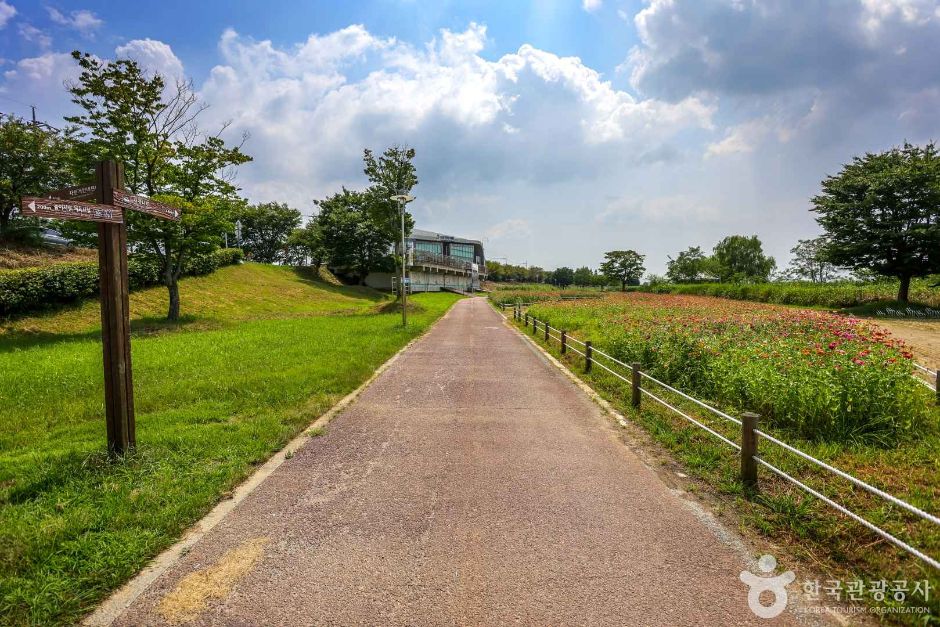
Yeongsangang River Bike Road (영산강 자전거길)
16.7Km 2025-08-12
377 Seochangduk-gil, Seo-gu, Gwangju
The Yeongsangang River Bike Road, stretching 133 kilometers along the Yeongsangang River in Gwangju, offers a scenic route. It winds past notable landmarks including the Seungchonbo Reservoir, Najudaegyo Bridge, Yeongsanpo Port, Hwangpo sailboat, Natural Dyeing Culture Center, and Naru Village. Along the path, riders can enjoy five of the most picturesque spots in Yeongsan. The starting point of the route, the Yeongsangang River Bike Road Information Center, provides free bicycle rentals and bike safety training.
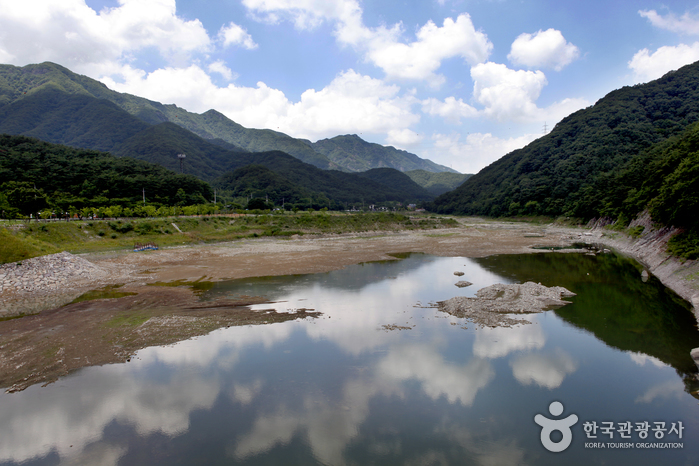
Chuwolsan Mountain (추월산)
17.1Km 2025-01-13
981, Chuwolsan-ro, Damyang-gun, Jeollanam-do
+82-61-380-3492
Located 13 kilometers away from Damyang-eup, Chuwolsan Mountain (731 m) was designated Jeollanam-do Provincial Monument No. 4 and is one of the five famous mountains of Jeollanam-do. It marks the boundary between Jeollanam-do, South Jeolla Province (Wolgye-ri, Yong-myeon, the most northern town in Damyang-gun) and Jeollabuk-do, North Jeolla Province (Bokheung-myeon, Sunchang-gun). The mountain has a dense forest, rock formations and stones, and rock walls that look like manmade fortifications with a narrow path to the west which can accommodate only one person at a time.
Shaped like a Buddhist monk lying down when it is seen from Damyang-eup's side, it is popular for its various naturally grown medicinal herbs as well as rare kinds of Chuwolsan orchids. The base of the mountain has gentle slopes and densely packed old pine trees, making it the best destination for families in summer. The hiking trail is hard to climb despite the fact that the peak is not very high. However, it is visited by mountain climbers all year long.
Before reaching Sangbong Peak, there is a hermitage and a mineral spring that never dries up. The peak also boasts an impressive view of the surrounding area, including Damyangho Lake. Chuwolsan Mountain was a battle site during the Imjin War along with the nearby Geumseongsanseong Fortress. The last battle of Donghak Peasant Revolution also took place at Chuwolsan Mountain.
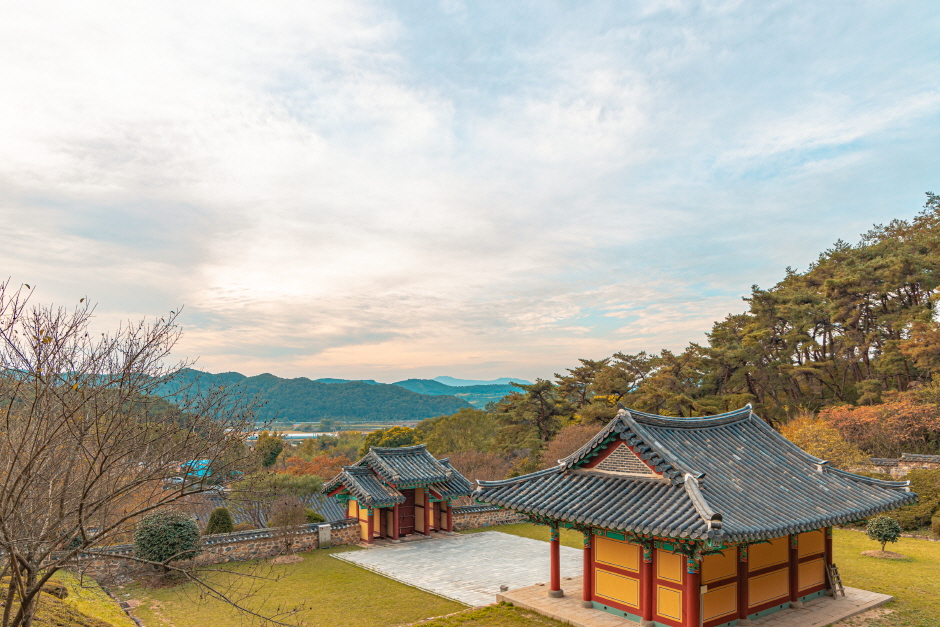
Wolbongseowon Confucian Academy (월봉서원)
18.3Km 2021-07-06
133, Gwanggok-gil, Gwangsan-gu, Gwangju
+82-62-960-8253
Wolbongseowon Confucian Academy, built in 1578, was established by Kim Gyehwi and other confucian scholars to honor Ki Daeseung's study and virtue through Mangcheonsa Shrine. The location of the academy was moved to its current site in 1646, and the name Wolbong was given by King Hyojong in 1654. In 1671, Bak Sang and Bak Sun's shrines were moved from Deoksansa Shrine by the suggestion of Song Siyeol. Also, Kim Jangsaeng and Kim Jip's shrines were additionally placed in 1673. Unfortunately, the confucian academy was abolished due to the abolition policy of Daewongun in 1868. Later, Bingwoldang Hall was built by Jeollanam-do's Confucian scholars in 1938, followed by Gojiksa Shrine in 1972, Jangpangak Pavilion and Oesammun Gate in 1978, Sau in 1980 and Naesammun Gate in 1981. Bingwoldang is designated as Gwangju Monument No. 9 and woodblocks of Gobongjip are preserved in Jangpangak Pavilion.
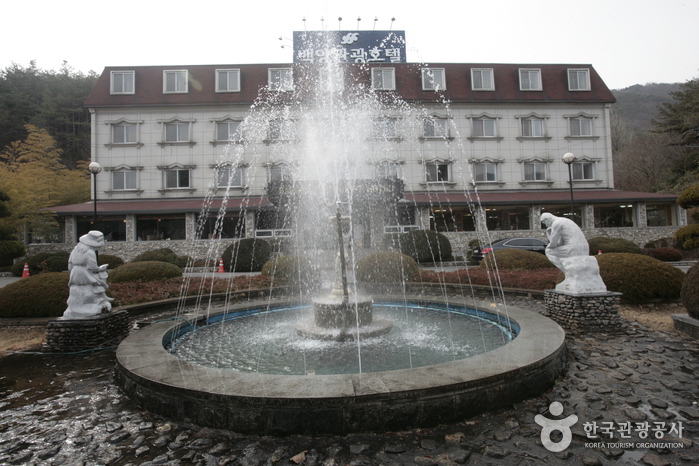
Baegyang Tourist Hotel (백양관광호텔)
18.5Km 2025-01-07
941, Baegyang-ro, Jangseong-gun, Jeollanam-do
+82-61-392-2114
Baegyang Tourist Hotel is located next to Baegyangsa Temple at the foothills of Naejangsan Mountain. The rooms offer beautiful views of nature all year round, with some rooms showing the magnificent mountain while others showing a bird's-eye-view of the hotel's garden. The hotel is perfect for family vacations and business trips.
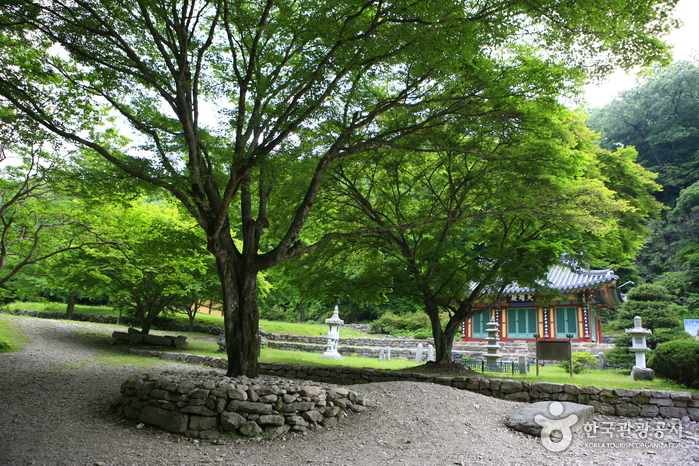
Sunchang Gangcheonsa Temple (강천사 (순창))
18.6Km 2024-04-07
270, Gangcheonsan-gil, Sunchang-gun, Jeonbuk-do
+82-63-652-5420
Located approximately 1.8 kilometers from the entrance of Gangcheonsan County Park, Gangcheonsa Temple was built by Monk Doseon during the first year of Queen Jinseong of Silla (AD 887). In the third year of King Chungsuk of Goryeo (1316), the temple saw the addition of a five-story stone pagoda, built by Monk Deokhyeon. At its peak, the temple was said to have had 12 hermitages and housed 1,000 monks. It was burned down during the Imjin War (1592-1598), leaving only the pagoda, but was rebuilt a few years later by Monk Soyo during the 37th year of King Seonjo (1604). Unfortunately, the temple was burned down again in the Korean War, but was once again restored to its original state in 1959.
Cultural assets found at the temple include Stone Guardian Post of Chungsin-ri & Namgye-ri, Sunchang Guesthouse, and the Three-story Stone Pagoda of Sunhwa-ri. Nearby tourist attractions include Geumseongsanseong Fortress, Yongsopokpo Falls, Gangcheonho Lake, Damyangho Lake, Chuwolsan Mountain, Huimunsan Mountain, and Naejangsan National Park.
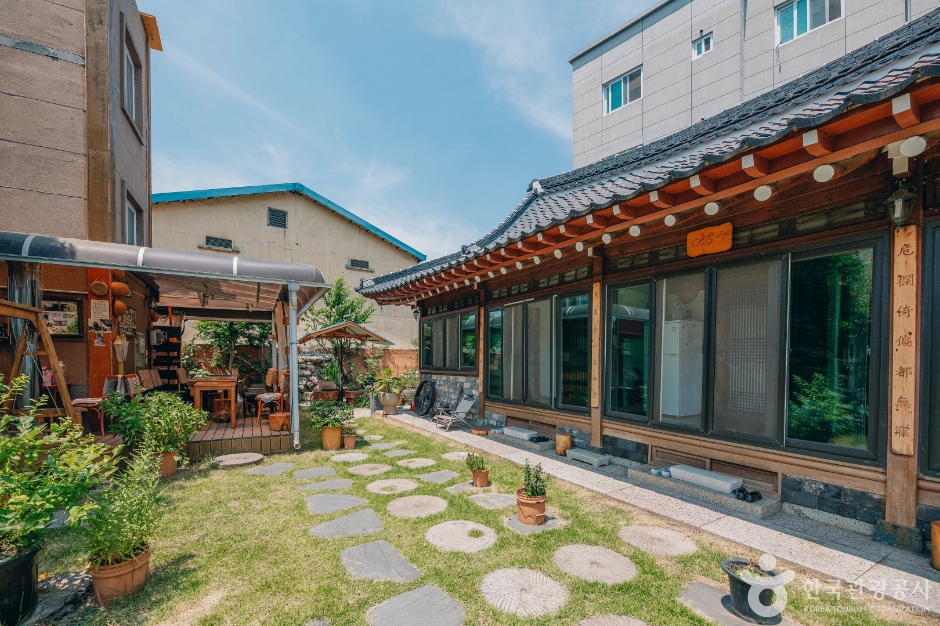
Dasomchae (다솜채)
18.6Km 2024-12-22
27 , Naesang-ro 51beon-gil, Gwangsan-gu, Gwangju
+82-70-8830-7700
Dasomchae in Songjeong-dong, Gwangju, Jeollanam-do, is a guesthouse in an 80-year-old hanok with a spacious yard. All rooms have red clay walls and natural cotton bedding is provided. The yard contains many elegant locust, plum,and other fruit trees, and summertime brings the lovely sight of trumpet creepers winding round the chimney. The location is convenient for transport as it’s only a 10-minute drive to Gwangju Songjeong Station.
Sunchang Jangnyu Experience Center (순창장류체험관)
18.8Km 2024-04-07
55, Minsokmaeul-gil, Sunchang-gun, Jeonbuk-do
+82-63-650-5432
Located in front of the Traditional Gochujang Folk Village in Sunchang, Jeollabuk-do, Sunchang Jangnyu Experience Center offers visitors the opportunity to sample and make delicious dishes using Sunchang's famous gochujang (red pepper paste). Visitors can make refined gochujang using traditional methods, along with a variety of other popular dishes such as injeolmi (rice cake coated with powdered soybeans) and twibap (popped rice snack). In addition to a range of experience programs, clean accommodation facilities are also available for program participants.
 English
 한국어
한국어 日本語
日本語 中文(简体)
 Deutsch
 Français
 Español
 Русский


