![Mayfield Hotel [Tax Refund Shop] (메이필드관광호텔)](http://tong.visitkorea.or.kr/cms/resource/89/2880089_image2_1.jpg)
Mayfield Hotel [Tax Refund Shop] (메이필드관광호텔)
14.3Km 2024-04-16
94, Banghwa-daero, Gangseo-gu, Seoul
-
![Misope [Tax Refund Shop] (미소페)](http://tong.visitkorea.or.kr/cms/resource/02/3314502_image2_1.jpg)
![Moncross [Tax Refund Shop] (몽크로스)](http://tong.visitkorea.or.kr/cms/resource/25/3313425_image2_1.jpg)
![Roem - MODA Outlet Guri Namyangju Branch [Tax Refund Shop] (로엠 모다이울렛 구리남양주점)](http://tong.visitkorea.or.kr/cms/resource/97/3314497_image2_1.jpg)
Roem - MODA Outlet Guri Namyangju Branch [Tax Refund Shop] (로엠 모다이울렛 구리남양주점)
14.3Km 2024-06-27
230, Gyeongchunbuk-ro, Guri-si, Gyeonggi-do
-
![The Izzat - MODA Outlet Guri Namyangju Branch [Tax Refund Shop] (더아이잗모다아울렛구리남양주)](http://tong.visitkorea.or.kr/cms/resource/56/3313956_image2_1.jpg)
The Izzat - MODA Outlet Guri Namyangju Branch [Tax Refund Shop] (더아이잗모다아울렛구리남양주)
14.3Km 2024-06-27
230, Gyeongchunbuk-ro, Guri-si, Gyeonggi-do
-
![Flamingo - MODA Outlet Guri Namyangju Branch [Tax Refund Shop] (후라밍고 모다이울렛 구리남양주점)](http://tong.visitkorea.or.kr/cms/resource/46/3313446_image2_1.jpg)
Flamingo - MODA Outlet Guri Namyangju Branch [Tax Refund Shop] (후라밍고 모다이울렛 구리남양주점)
14.3Km 2024-06-26
230, Gyeongchunbuk-ro, Guri-si, Gyeonggi-do
-
![Zosuni - MODA Outlet Guri Namyangju Branch [Tax Refund Shop] (조순희모다아울렛구리남양주)](http://tong.visitkorea.or.kr/cms/resource/60/3313360_image2_1.jpg)
Zosuni - MODA Outlet Guri Namyangju Branch [Tax Refund Shop] (조순희모다아울렛구리남양주)
14.3Km 2024-06-26
230, Gyeongchunbuk-ro, Guri-si, Gyeonggi-do
-
![It Michaa - MODA Outlet Guri Namyangju Branch [Tax Refund Shop] (잇미샤모다아울렛구리남양주)](http://tong.visitkorea.or.kr/cms/resource/82/3314182_image2_1.jpg)
It Michaa - MODA Outlet Guri Namyangju Branch [Tax Refund Shop] (잇미샤모다아울렛구리남양주)
14.3Km 2024-06-27
230, Gyeongchunbuk-ro, Guri-si, Gyeonggi-do
-
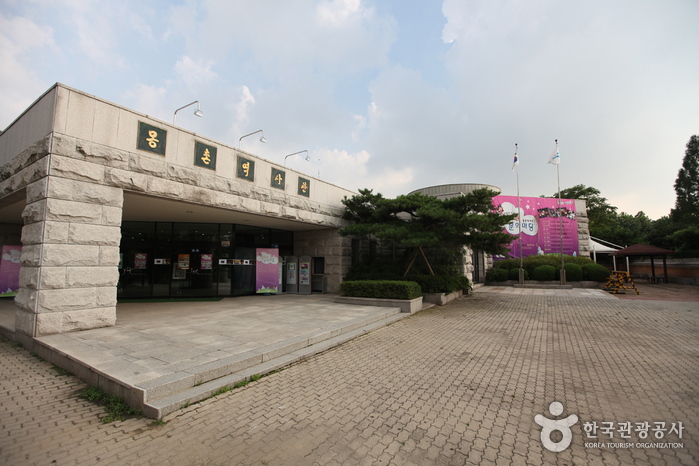
Mongchon Museum of History (몽촌역사관)
14.3Km 2021-08-13
424, Olympic-ro, Songpa-gu, Seoul
+82-2-2152-5900
The Mongchon Museum of History, located within Olympic Park, displays artifacts from the excavations of Mongchontoseong Fortress, such as earthen fortifications as well as other artifacts of the Baekje Kingdom period, offering a glimpse into Baekje culture. A model of a Baekje dugout hut site reveals ancient dwelling patterns. Also, the facility displays a perfectly preserved model of ancient houses and tombs, giving visitors the feel of traveling back to prehistoric ages.
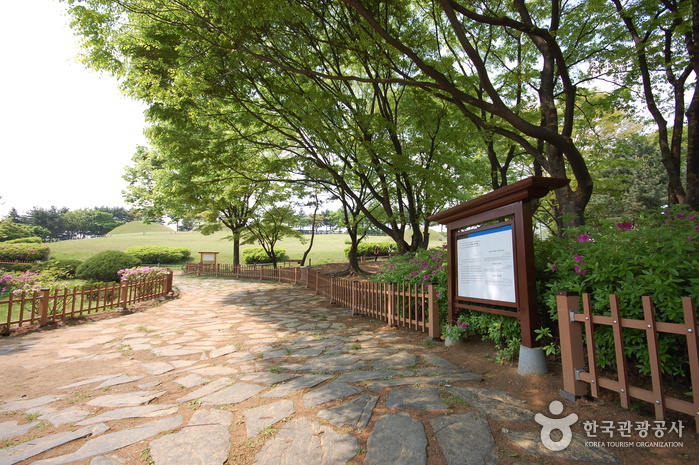
Seoul Bangidong Ancient Tombs (서울 방이동 고분군)
14.4Km 2022-12-29
219, Ogeum-ro, Songpa-gu, Seoul
+82-2-2147-2800
The ancient tombs in Bangi-dong were discovered during the land readjustment project of Jamsil-jigu District in 1975. A total of eight ancient tombs were excavated until 1976, and the site was restored into a park in 1983. The Bangi-dong area was originally a low line of hills with an altitude of 30-50 meters above sea level, but it has been made into flatland for urban development purposes. Tomb numbers 1 to 6 lie on the same hill, while tomb no. 7 and 8 are located on another hill a short distance away.
All eight tombs have circular burial mounds. The insides of the a tomb feature a square or rectangular-shaped burial chamber with earthen ground and stone walls, and a passage leading from the tomb entrance to the chamber. However, details of the burial chambers vary by tomb. Most of the tombs had been robbed before the investigation, but a few relics such as plates and pots have been excavated. At the time of excavation, the relics were presumed to have come from the Baekje dynasty (18 BC-660 AD), but it is now estimated that they date back to the Unified Silla Period (676-935 AD).
 English
 한국어
한국어 日本語
日本語 中文(简体)
 Deutsch
 Français
 Español
 Русский


