
Hyundai Department Store Trade Center (현대백화점 무역센터점)
10.2Km 2025-12-19
517 Teheran-ro, Gangnam-gu, Seoul
Hyundai Department Store focuses on achieving customer satisfaction by exceeding expectations and reshaping the lifestyle culture to suit each individual's needs and wants. Connected to Samseong Station on Seoul Subway Line 2, Hyundai Department Store Trade Center is easily accessible and among the most sought-after shopping destinations in Seoul along with the nearby COEX Mall.
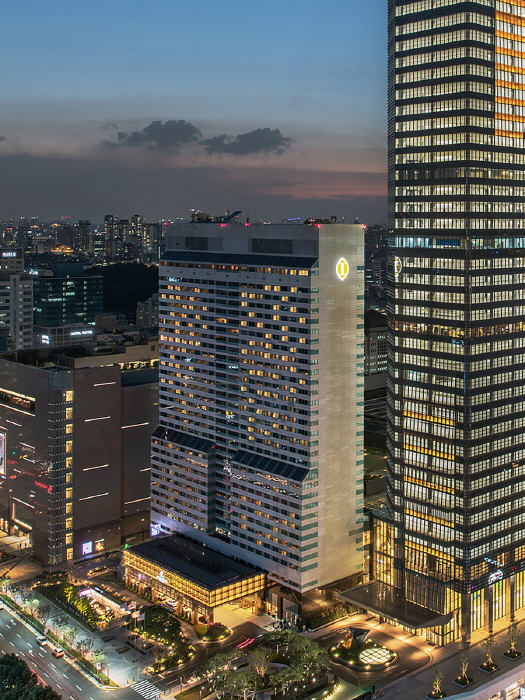
Grand InterContinental Seoul Parnas (그랜드 인터컨티넨탈 서울 파르나스)
10.2Km 2024-08-20
521, Teheran-ro, Gangnam-gu, Seoul
The Grand InterContinental Seoul Parnas is conveniently located in the heart of southern Seoul’s business district, featuring COEX convention and exhibition center, and City Airport. THe nearby COEX Mall offers duty free shops, a casino, cinema and over 200 shops.
The hotel is the largest 5-star hotel in Korea, featuring state-of-the-art amenities, including a grand ballroom and 15 banquet halls, perfect for hosting conventions and gathers of all sizes. Each of the 516 guestrooms is large and decorated comfortably for the perfect stay. Also, the hotel offers various restaurants from French, Italian, Asian, Japanese, to Chinese with top of the line chefs that cook up a delicious meal.
Parnas Mall (파르나스몰)
10.2Km 2025-01-06
521, Teheran-ro, Gangnam-gu, Seoul
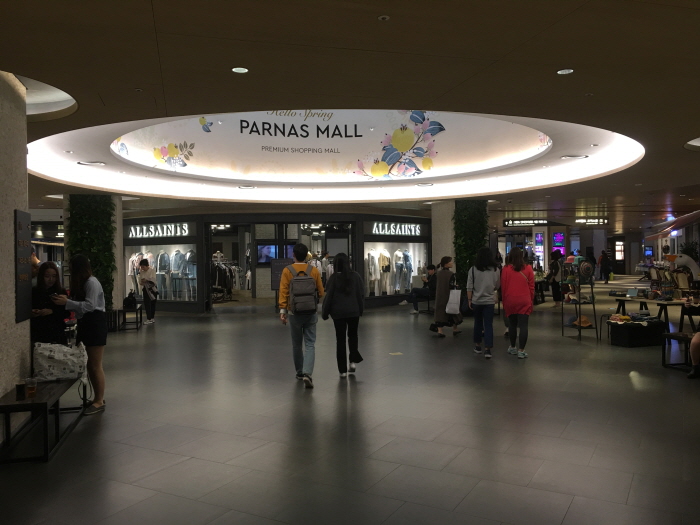
Parnas Mall is the first premium casual shopping mall opened by a hotel chain. Grand Intercontinental Seoul's Parnas Mall is located on the first underground level and features shopping, food, beverages, and cultural activities all in one place.
Universal Arts Center (유니버설아트센터)
10.2Km 2024-03-19
664 Cheonho-daero, Gwangjin-gu, Seoul
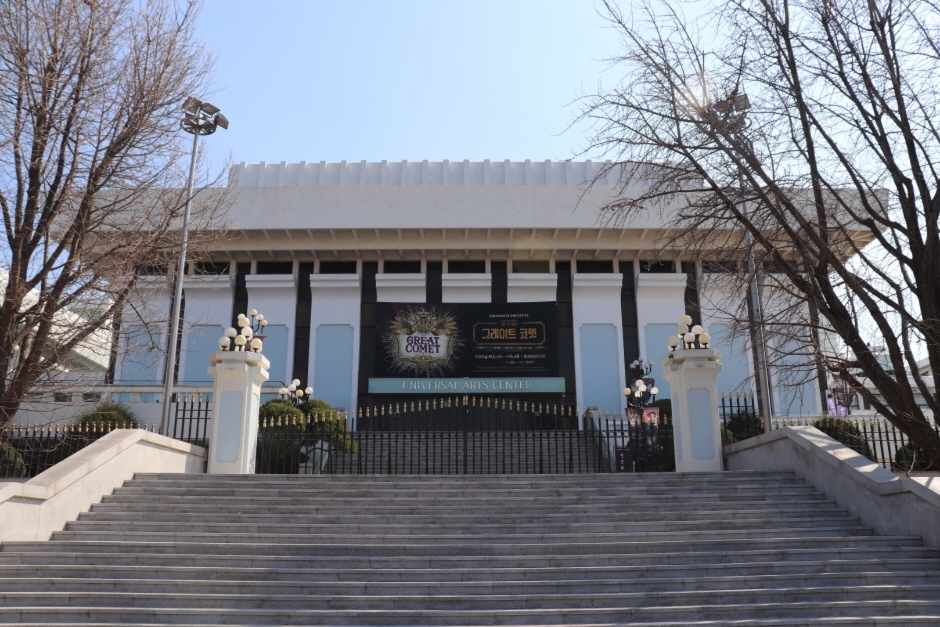
Universal Arts Center, inaugurated in 1981, stands as a prominent venue for performances. Renowned for its splendid and classic architectural interior, it is celebrated for its distinctiveness. Its main facilities include the Grand Theater, the Luna Hall capable of accommodating up to 300 guests for banquets, and an audience lounge. It serves as a harmonious space where performance venues, artistic community, and art educational institutions converge. Here, visitors can enjoy a diverse array of performances ranging from ballet and musicals to concerts.

Yongma Falls Park (용마폭포공원)
10.3Km 2024-02-20
250-12 Yongmasan-ro, Jungnang-gu, Seoul
Yongma Falls Park is situated on the mid-slope of Yongmasan Mountain, established following the closure of an aggregate collection plant. The park showcases three artificial waterfalls: Cheongnyongpokpo Falls, Baengmapokpo Falls, and Yongmapokpo Falls. Each waterfall comprises two tiers, with x_heights ranging from 21m to 51.4m. The park is equipped with various amenities, including ponds, tennis courts, soccer fields, a wildflower garden, walking trails, and a barefoot walking trail.
Hallym University of Graduate Studies (한림국제대학원대학교)
10.3Km 2025-01-10
405, Yeoksam-ro, Gangnam-gu, Seoul
Founded in 2004 by Ilsong Educational Foundation, Hallym University of Graduate Studies is a private college located at 405, Yeoksam-ro, Gangnam-gu. Originally, it was founded as an international graduate college of Hallym University in 1997, but it has separated from Hallym University as of 2004.
The Hyooshik Simdo Hotel & Spa Sillim by Aank (더휴식 심도 호텔 앤 스파 신림역점)
10.3Km 2025-04-22
7 Nambusunhwan-ro 181-gil, Gwanak-gu, Seoul
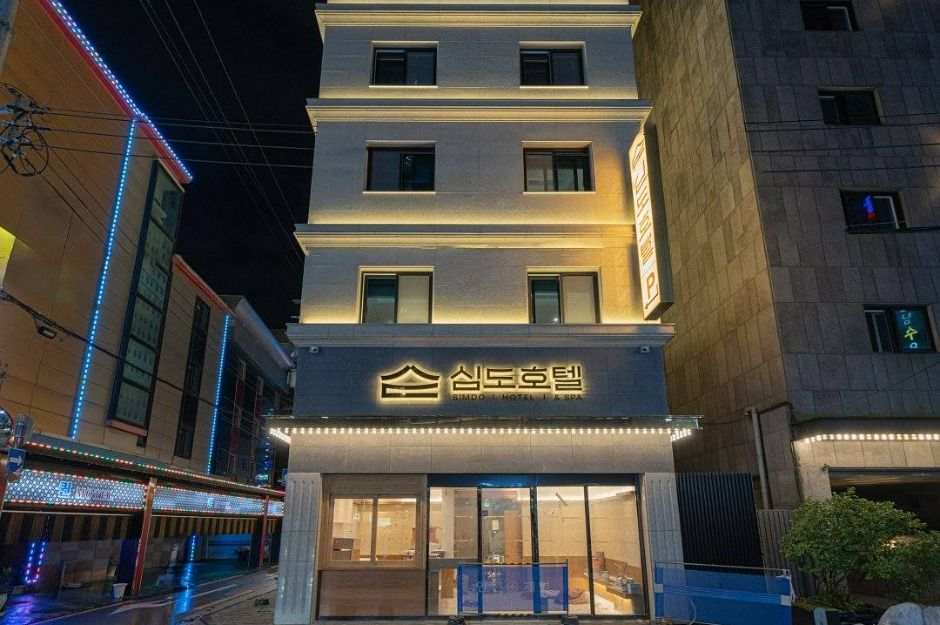
The hotel offers a variety of rooms to choose from, including standard rooms, a music room, a wellness room equipped with a premium massage bed, a movie room, a PC room with computers, four types of spa rooms, and a bunker room that can accommodate up to four people.
H+ Yangji Hospital (에이치플러스 양지병원)
10.3Km 2025-11-21
1636 Nambusunhwan-ro, Gwanak-gu, Seoul
We operate a one-stop medical service with 15 specialty centers and 21 departments, along with a 24-hour emergency room. As a certified training hospital for gastroenterology endoscopy specialists, we have been accredited as an Excellent Endoscopy Unit for three consecutive terms and are equipped with state-of-the-art endoscopy and liver-specialized systems.
Our world-renowned medical team, including SRC Master Surgeons (U.S.), provides efficient and safe personalized bariatric and metabolic surgeries. The Spine and Joint Center performs minimally invasive and minimal incision surgeries through close multidisciplinary collaboration.
We also operate Da Vinci robotic surgery and maintain a dedicated Department of Critical Care Medicine.
D-cube Arts Center (디큐브아트센터)
10.3Km 2023-11-15
662 Gyeongin-ro, Guro-gu, Seoul
D-cube Arts Center is a state-of-the-art theater dedicated to musicals in D-cube City in Sindorim built by Daesung Energy. It took eight years to complete the 1,242-seated theater with the cooperation of Korea's best music and construction engineers and expert stage technicians. It is the largest theater in southwestern Seoul and can accommodate all kinds of musical performances. Diverse musicals were held at this center, including Mamma Mia!, Man of La Mancha, Chicago, and Rent. The center also has necessary amenities like a rehearsal room and dressing room. Not only is D-cube Arts Center easy to reach by public transportation, but it is also easy to find thanks to the passageway that connects the center from and to Sindorim Station (Seoul Subway Lines 1 & 2). D-cube Arts Center aims to act as the centerpiece of cultural arts and contribute to artistic interaction in the Sindorim area in Seoul's southwest.
201Company (이공일컴퍼니)
10.4Km 2025-10-23
2F, 151 Dogok-ro, Gangnam-gu, Seoul
201 Company runs a full-service travel agency called 201 Medi Tour, which supports medical tourism, including attracting foreign patients, in a more efficient package format.
Customers can select services they want such as the hospital, tours, meals, accommodations, vehicles, medical interpretation, and tour guides. 201 Company partners with approximately 200 hospitals in various disciplines, including critical patients, rehabilitation, physical check-ups, plastic surgery, dermatology, dentistry, ophthalmology, and traditional Korean medicine. Additionally, the company offers various products including wellness programs (relaxation, retreat, healing) along with medical services. The company recommends, provides, and operates customized medical tourism packages through communication with customers.
 English
 한국어
한국어 日本語
日本語 中文(简体)
 Deutsch
 Français
 Español
 Русский


