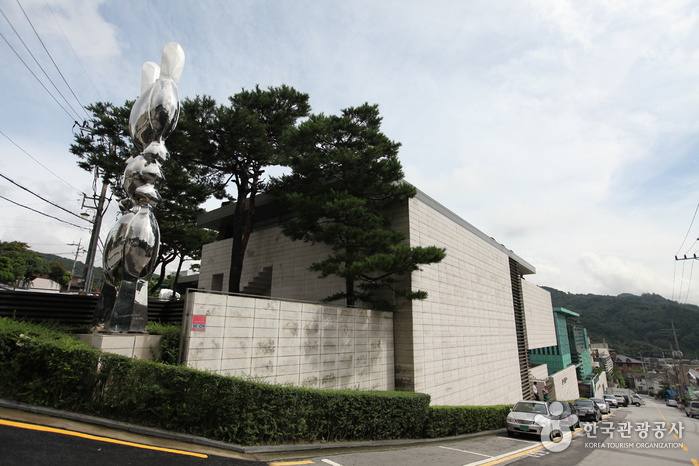
Gana Art Center (가나아트센터)
12.5Km 2024-03-18
28 Pyeongchang 30-gil, Jongno-gu, Seoul
The Gana Art Center located at the foothills of Bukhansan Mountain has been showcasing more than 300 exhibitions since its opening in 1983. Through both national and international exhibitions, the Gana Art Center is a recognized gellery. With numerous fairs and exhibitions, Gana Art Center not only invite internationally known artists, but also promotes other forms of art, such as music, theater, mime, etc. Through their flexibility in promoting all art forms, the visitors will surely be able to find the theme of their interest.
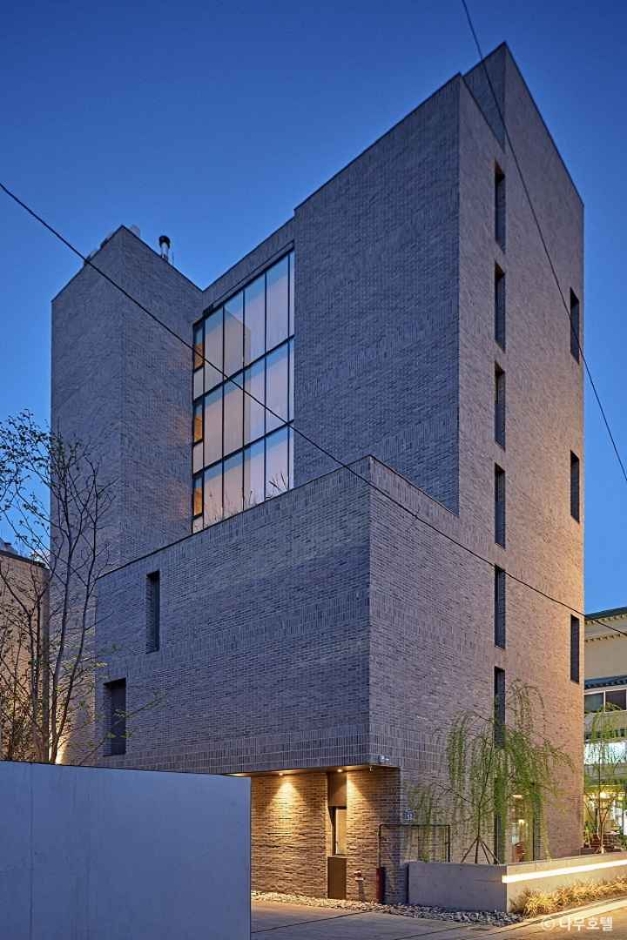
Namu Hotel (나무호텔)
12.6Km 2024-06-04
9 Achasan-ro 76ga-gil, Gwangjin-gu, Seoul
Namu Hotel, which received the Institute of Architects Award, is a hotel with a distictive design. Rather than having the main entrance on a main road, the hotel must be entered through the alley. Each room has its own unique style in terms of structure and furniture arrangement. Most rooms also feature a blacony that allows guests to be one with nature while also being protected from outside forces. Enjoy a soak in the outdoor bathtub to relax.
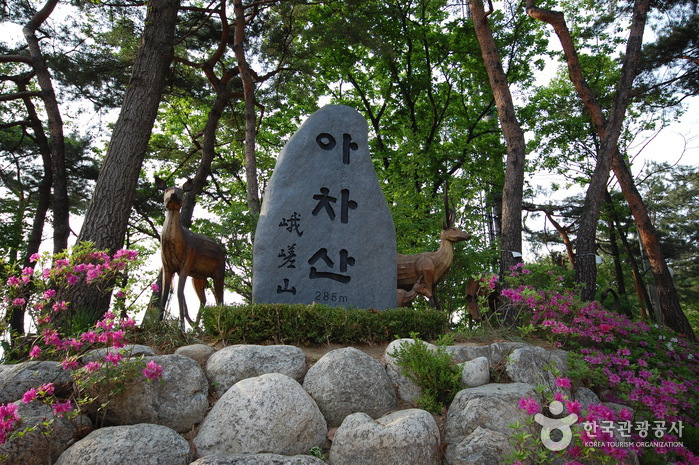
Achasanseong Fortress (아차산성)
12.7Km 2023-04-05
Gwangjang-dong, Gwangjin-gu, Seoul-si
Achasanseongseong Fortress boasts magnificent views of the Hangang River and skyline. The 200m-high mountain fortress wall was built to face southeast, towards the Hangang River. It is also called Janghan-seong or Gwangjang-seong. A fierce battle was once fought here among Gogury, Baekje and Silla because of its strategic location during the period of the Three Kingdoms. King Gae-Ro of Baekje (r. 455-475) died in the war by the Goguryeo forces sent by King Jang-Su (r. 413-491) and General Ondal of Goguryeo was also killed in a battle with the Silla army in 590.
Achasan Mountain is popular as a citizens’ resting place with a historical trail and a natural park including various facilities such as walkway, mountain walkway, a badminton court, a wrestling range, an archery range, various amusement facilities for children, benches, and pavilion.
![Volvik [Tax Refund Shop] (볼빅)](http://tong.visitkorea.or.kr/cms/resource/57/3314557_image2_1.jpg)

Yongma Falls Park (용마폭포공원)
12.9Km 2024-02-20
250-12 Yongmasan-ro, Jungnang-gu, Seoul
Yongma Falls Park is situated on the mid-slope of Yongmasan Mountain, established following the closure of an aggregate collection plant. The park showcases three artificial waterfalls: Cheongnyongpokpo Falls, Baengmapokpo Falls, and Yongmapokpo Falls. Each waterfall comprises two tiers, with x_heights ranging from 21m to 51.4m. The park is equipped with various amenities, including ponds, tennis courts, soccer fields, a wildflower garden, walking trails, and a barefoot walking trail.
Bumin Hospital Seoul (서울부민병원)
13.0Km 2025-10-23
1st Floor, International Healthcare Center, 389 Gonghang-daero, Gangseo-gu, Seoul
Seoul Bumin Hospital, a 300-bed general hospital that opened in April 2011, is a leader in medical culture with its exceptional medical staff, diagnostic equipment, and eco-friendly hospital practices. In particular, the Spine and Joint Center's medical staff, with their huge experience and expertise, provide Korea's highest level of medical services, including 3D navigation-assisted knee and hip surgery, stem cell therapy, robotic joint replacement surgery, hip endoscopic surgery, spinal deformity surgery, minimally invasive spinal surgery, and non-surgical treatments.
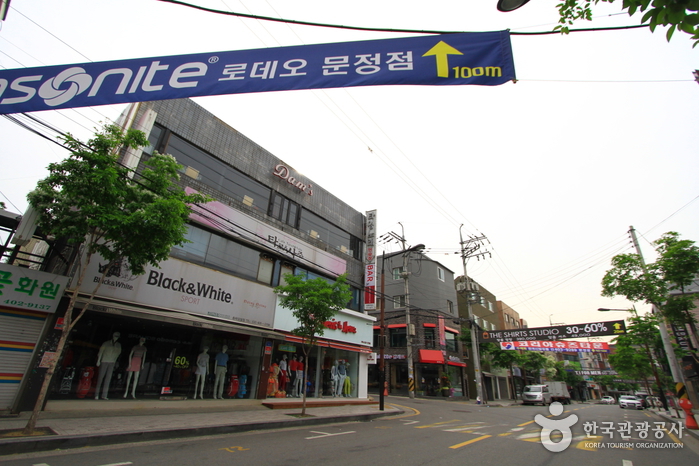
Munjeong-dong Rodeo Street (문정동 로데오거리)
13.0Km 2025-03-29
10, Dongnam-ro 4-gil, Songpa-gu, Seoul
Munjeong-dong Rodeo Street is a large shopping district containing over 200 brand-name discount stores. The street is T-shaped, with a 1-kilometer-long main street connected to a 400-meter-long alley, and the Munjeong 1-dong Resident Center located at the center. For shoppers’ convenience, there is a public parking lot (if visitors purchase goods at Rodeo Street, they can park here for free) and a parking lot for foreign tourists only (free of charge). Munjeong-dong Rodeo Street is one of Korea’s major shopping streets with customers ranging from teenagers to adults, since discount stores stocking sports wear, casual wear, shoes, men’s and ladies’ suits, and golf wear are all located on this street. Moreover, this is a great place to find deals on famous brands, at prices lower than at a department store. On some items you can get discounts of up to 70-80%.
Since most of the goods are stock from previous seasons, it might be better to purchase the more classic styles rather than the trendy fashions. In some cases, the goods might have been slightly crumpled or stained during the transfer from warehouse storage, but taking them to the dry-cleaners should fix most problems. However you should be careful when looking at the sewing quality, and check for missing buttons.
One more thing to bear in mind is the shopping season. Even discount stores have periods when stock runs low. The best time to shop is immediately after the stores in Rodeo Street restock their merchandise. This is done at about the same time as department stores. There is also an enormous variety of goods to choose from during the Rodeo Festivals in May and September. The purchased goods are exchangeable but non-refundable, so check the quality of the products carefully before purchasing.
In addition, Munjeong-dong Rodeo Street has a wide selection of restaurants and entertainment facilities. There are a number of pizza places, coffee shops, and food courts, as well as internet cafes and game rooms in the alleys behind the stores. Visitors can also relax in the surrounding parks. There’s a park with a 600-year-old zelkova tree right behind the Munjeong 1-dong Resident Center.
Munjeong Rodeo Street is not just a shopping district; it’s a cultural area. The ‘Munjeong-dong Cultural Festival’ takes place every year in May, and the ‘Munjeong-dong Rodeo Festival’ takes place in May every other year. During these festivals, visitors can watch traditional Korean performances, traditional wedding ceremonies, international fashion parades, hip-hop dancing, and more.
A charity sale is held on weekends and national holidays on the open-air stage of the Munjeong 1-dong Resident Center, and merchandise is sold for even bigger discounts.

Olympic Park (올림픽공원)
13.0Km 2023-10-19
424 Olympic-ro, Songpa-gu, Seoul
Olympic Park is an impressive leisure facility in which historic remains from the Baekje era share space with modern, state-of-the-art sports stadiums, an eco-friendly forest, and spacious grass fields. The legacy of the 1988 Seoul Olympics, the park not only houses the country’s largest sports arena, but has also become a place where Seoul residents come to relax and unwind.
Spread across approximately 1.45 million square meters, Olympic Park encompasses the land that was once Mongchontoseong Fortress and Mongchonhaeja (manmade lake) from the early Baekje period. The park is divided into several zones, including a leisure sports park, a cultural art park, an eco-park, and the History Experience Park dedicated to the area’s rich historic heritage.
Because Olympic Park is so large and takes over three hours to explore, visitors are advised to familiarize themselves with entrances and exits and travel routes before they start. To further save time, visitors can ride the Road Train (“Hodori Train”) located next to Peace Square.
Park Habio Water Kingdom Water Park & Jjimjil Spa (파크하비오 워터킹덤&스파)
13.1Km 2025-10-24
111 Songpa-daero, Songpa-gu, Seoul
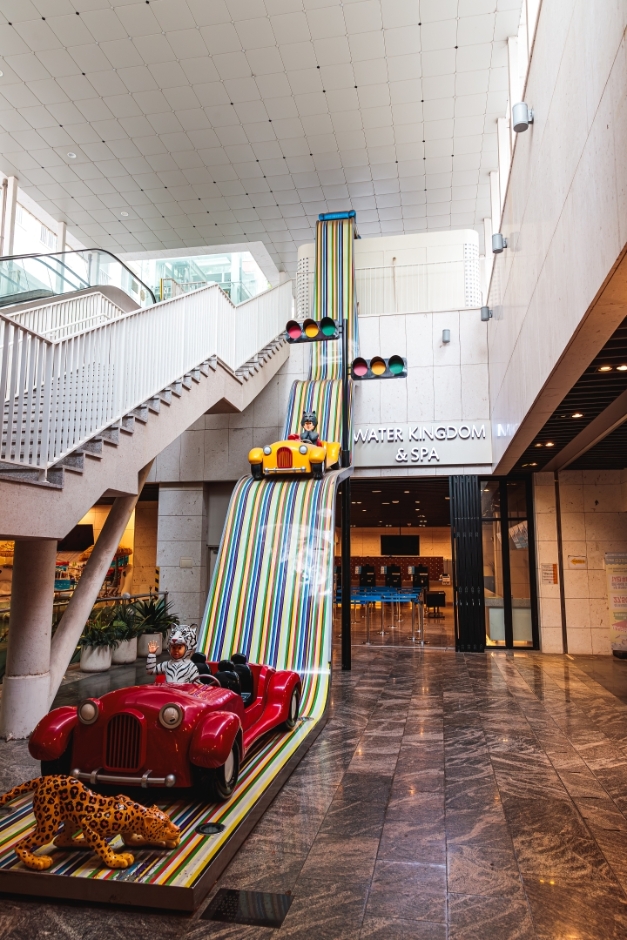
In the episode “Proxy Vacation,” where the members of Running Man take a summer vacation on behalf of the viewers, they are seen enjoying swimming and sliding in a cool pool. This refreshing vacation spot is the Water Kingdom & Spa in Songpa Park Habio. This indoor water park, open 365 days a year regardless of the weather, offers a variety of fun activities. If you get tired after playing in the water all day, you can also rest and recharge in the spa.
Soma Museum of Art (소마미술관)
13.1Km 2023-04-13
424, Olympic-ro, Songpa-gu, Seoul
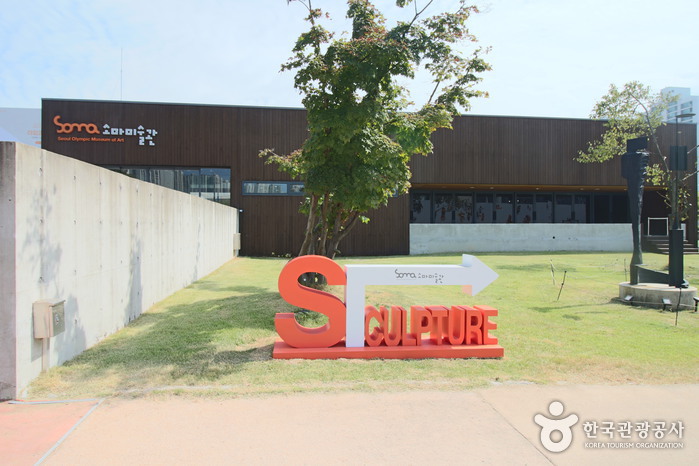
Soma Museum of Art was opened in September 2004 as a cultural space amid the nature of Seoul Olympic Park. The museum displays over 222 sculptures, and offers a variety of cultural and educational programs, including the nation's first drawing center and archive.
 English
 한국어
한국어 日本語
日本語 中文(简体)
 Deutsch
 Français
 Español
 Русский


