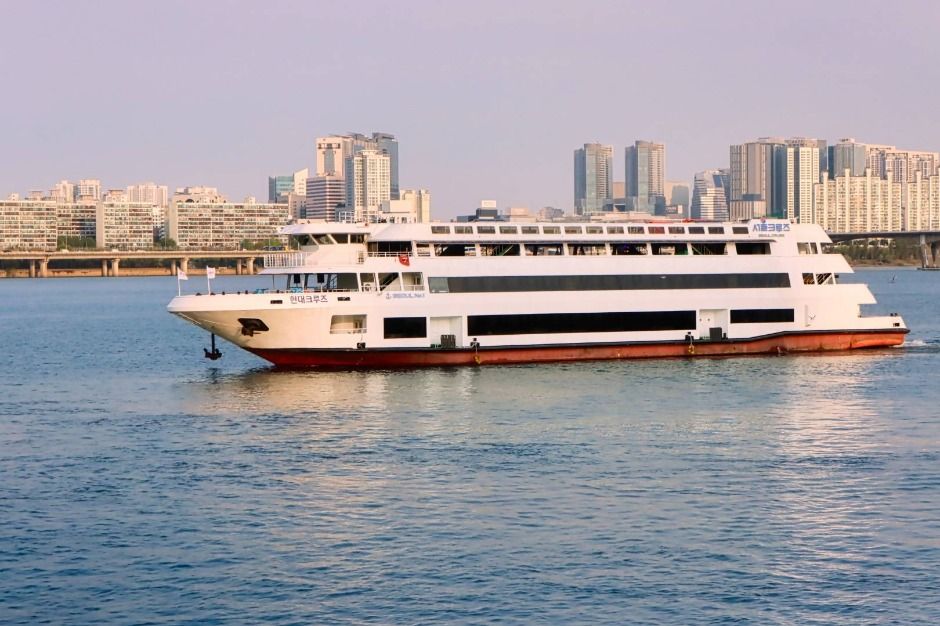
Seoul Cruise (서울크루즈)
6.0Km 2025-12-04
231 Yeouidohanganggongwon-gil, Yeongdeungpo-gu, Seoul
Hyundai Cruise Line, Korea's first marine tourism cruise operator, was founded in 1983 and renamed Seoul Cruise after building a new terminal in Yeouido. With Yeouido Ferry Terminal as its base, Seoul Cruise is the only passenger cruise operator that can travel from the Hangang River to the West Sea, passing through the Ara West Sea Lock. The company currently operates from two terminals: Yeouido Ferry Terminal and Ara Gimpo Terminal. In addition to offering tours that showcase the scenic beauty of the Hangang River, Seoul Cruise also provides other options, such as the Dinner Fireworks Cruise, which lets passengers enjoy a fireworks show along the Ara Waterway in Gimpo.

The 3.0 Clinic (더3.0피부과의원)
6.0Km 2025-10-23
(4th Floor, Cham Building, Sinsa-dong), 48 Apgujeong-ro 28-gil, Gangnam-gu, Seoul
The 3.0 Clinic has successfully developed a method to treat acne without using conventional acne dermatological treatments that have inevitably accompanying side effects, which require taking cumbersome medications with side effects, and require continuous management. We were invited to give a lecture at the American Academy of Dermatology and also gave lectures in China and Europe. We also developed a simple injection method to reduce sebum, which had no proper treatment. In addition, we developed a method to blur the shape of intractable scars and received an award at the Eastern Asia Dermatology Congress in Japan.
Our skin and body have incredible power. If you understand the reasons why our skin is like this, what changes, and results and take fundamental care of your skin, you can treat acne without taking medicine and atopic dermatitis without steroids.
Symptom relief for the 1.0 generation, fundamental cause and resolution for the 2.0 generation, and prevention for the 3.0 generation. We aim to help people improve the power of their skin!
Topface Plastic Surgery (탑페이스성형외과의원)
6.0Km 2025-10-23
(4th Floor, Apgujeong Building), 842 Nonhyeon-ro, Gangnam-gu, Seoul
Top Face Plastic Surgery is located at Exit 3 of Apgujeong Station and specializes in eyelid and nose revision surgeries as well as facelifts. The clinic’s medical team is committed to ensuring high safety and satisfaction with their extensive experience and expertise.
Top Face Plastic Surgery does not recommend unnecessary procedures and focuses on personalized surgeries tailored to individual needs rather than a one-size-fits-all approach. The clinic adheres to strict safety protocols and operates with various safety systems in place. All operating rooms are equipped with closed-circuit televisions, ensuring that every surgical procedure is recorded in real time, making the clinic transparent and free of shadow doctors or ghost surgeries.
The clinic is committed to achieving distinctive beauty through inner healing as its core philosophy.
Lee & Chaeum Skin Clinic (리앤채움의원)
6.0Km 2025-10-23
4F, 837, Nonhyeon-ro, Gangnam-gu, Seoul
Lee & Chaeum Skin Clinic offers medical semi-permanent makeup procedures through a collaboration between beauty technicians and experienced medical professionals.
We provide a range of treatments, including eyebrow, scalp, hairline, lip, and eyeliner tattoos, with personalized solutions and a comprehensive aftercare program.
The clinic holds a patented 3D micro needle technology for natural results, and our Chaeum Pigment has received Dermatest Seal and trademark registration from the Korean Intellectual Property Office, ensuring superior results for our clients.
As a designated hospital of the Korean Film Actors Association (KFAA), we contribute to the growth of K-beauty.

Spa Lei (스파레이)
6.0Km 2022-09-19
5, Gangnam-daero 107-gil, Seocho-gu, Seoul
Situated in Seocho-gu Jamwon-dong,
JK Plastic Surgery Center (제이케이성형외과의원)
6.0Km 2025-10-23
(JK Building), 835 Nonhyeon-ro, Gangnam-gu, Seoul
JK Plastic Surgery Center is the first hospital in Korea certified to serve international patients. (*permit number 0001).
and have treatment of foreign patients from 110+ countries, with more than 100,000 Cases.
We have Differentiated medical services and safety systems, resident of anesthesiologists.
Also, JK Plastic Surgery Center is the first and only Korean Plastic Surgery Center for Health and Welfare Ministry certified with 4 consecutive cycles of KHAF.
Some Sevit (세빛섬)
6.0Km 2022-12-16
2085-14, Olympic-daero, Seocho-gu, Seoul
Some Sevit is a culture complex made up of three man-made floating islands near the southern end of Banpo Bridge. The islands were created with the theme of "flowers of the Hangang River" and represent the view, life, and the earth, as well as a flower in various stages of life. The largest island, 'Some Gavit' symbolizes the view and takes the form of a flower in full bloom. It is a multi-functional cultural facility that can be used as a venue for performances, international conferences, exhibitions, and more. The second island, 'Some Chavit' looks like a flower bud, an image of life. A range of cultural experiences and event zones including Beat Square, Youth Woods, and restaurants using 3D to bring themes to life are located here. The third and smallest island, 'Some Solvit' takes the form of a seed planted in the earth. This island has water sports facilities and an outdoor garden from which you may enjoy the picturesque scenery of the Hangang River. Around the floating islands are LED lights that create a fantastic night view under the theme of "a gleaming light in the mist."
Faceline Plastic Surgery (페이스라인 성형외과의원)
6.1Km 2025-10-23
(1st Floor, Wonbang Plaza), 838 Nonhyeon-ro, Gangnam-gu, Seoul
Faceline Plastic Surgery has operated with an accident-free record for 20 years, adhering to the motto "A place where I and my family can safely undergo plastic surgery".
The medical team at Faceline Plastic Surgery includes Dr. Lee Tae-Hee and Dr. Lee Jin-Su, both alumni of Seoul National University College of Medicine, alongside Dr. Lee Shin-Jeong, a graduate of Seoul National University School of Dentistry. They have been working together since the clinic's establishment in Apgujeong in 2005. They regularly present their accumulated clinical experience and expertise at international conferences and have showcased numerous surgical cases through various makeover programs.
Clients of Faceline Plastic Surgery demonstrate unwavering trust over the years, returning for additional procedures. For instance, a client who underwent facial contouring surgery may return for a face lift after 10 years, or a child of a patient who had double jaw surgery might seek similar treatment 20 years later. Similarly, a parent of a patient who had ophthalmoplasty might return for upper blepharoplasty surgery.
In this manner, Faceline Plastic Surgery maintains long-term relationships based on client trust and satisfaction, continuously providing high-quality medical services. The clinic guarantees optimal results based on its extensive experience and skills accumulated over the years.
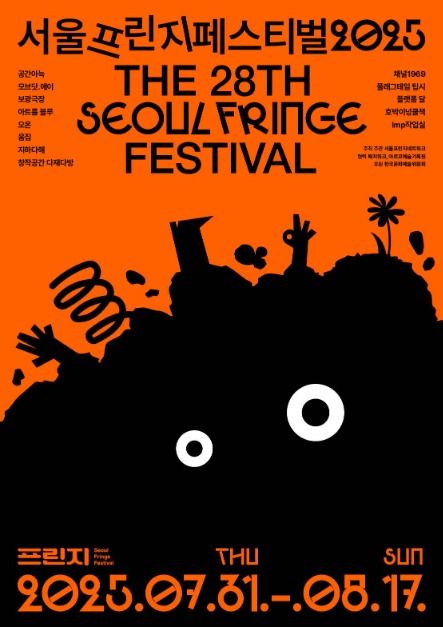
Seoul Fringe Festival (서울프린지페스티벌)
6.1Km 2025-07-24
84-3 Seongmisan-ro 13-gil, Mapo-gu, Seoul
+82-2-325-8150
Seoul Fringe Festival has been held every summer annually since 1998. The festival is open to artists of all genres, from dance to music and media art. Due to the open style and non-competitive element of the festival, artists and festival-goers alike are free to express themselves however they choose.
SNU Eye Clinic (에스앤유안과의원)
6.1Km 2025-10-23
(3rd,12th Floors, ICT Tower), 624 Gangnam-daero, Gangnam-gu, Seoul
SNU EYECLINIC provides personalized medical care, tried and true surgical expertise, and customer satisfaction.
We specialize in vision correction, presbyopia and cataract surgery, and our doctors personally diagnose and treat patients to manage the entire process of examination, surgery, and aftercare accurately.
Considering various factors such as the patient's eye condition and lifestyle, we provide treatment consulting catering to individual needs. Director Chung Ui-sang is the first doctor to introduce SMILE LASIK in Korea. He has led various surgeries and is a worldwide SMILE LASIK key doctor. With more than 20 years of clinical experience, he has been performing Implantable Collamer Lens (ICL) surgery since its introduction in Korea in 2002. He has also led clinical research projects and introduced ICL surgery for astigmatism correction in Korea.
SNU EYECLINIC offers years of experience and know-how to help you get your vision corrected in a way that is just right for you.
 English
 한국어
한국어 日本語
日本語 中文(简体)
 Deutsch
 Français
 Español
 Русский


