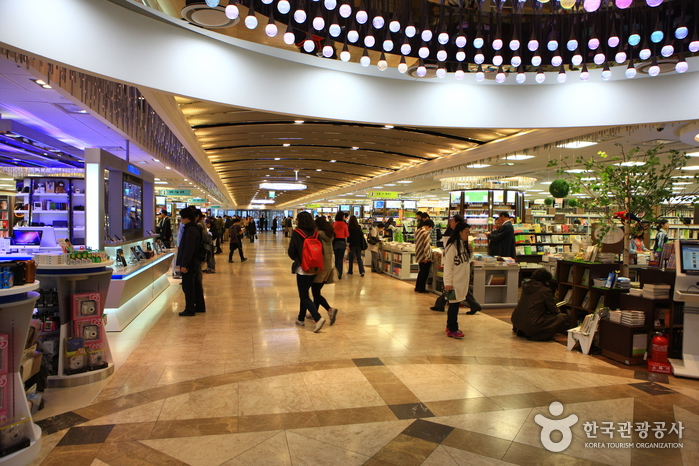
Kyobo Book Centre Gwanghwamun (교보문고)
715.1M 2024-12-04
1 Jong-ro, Jongno-gu, Seoul
Kyobo Book Centre is the first large-scale bookstore in Korea, and this particular store can be found next to Gwanghwamun Square. Kyobo Book Centre Gwanghwamun divides its internal area into 11 sections and organizes them in a way that allows readers to find books easily. The store also has specialized shops for stationery, digital devices, and accessories, as well as exhibition spaces and cafés.
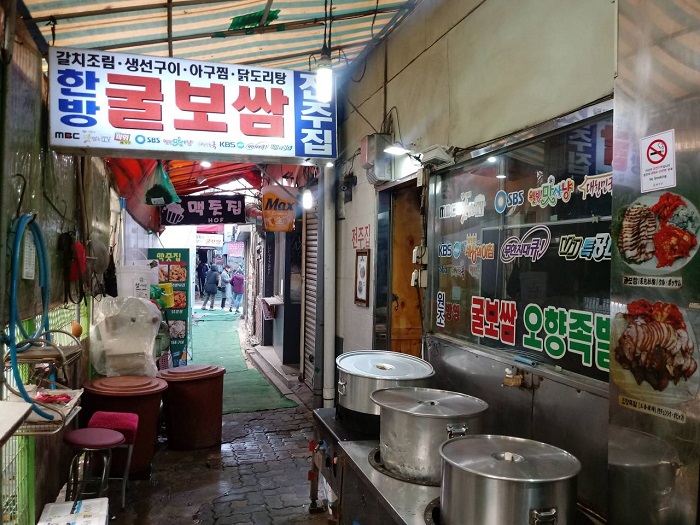
Jeonjujip (전주집)
725.2M 2024-10-15
16-15 Supyo-ro, 20-gil, Jongno-gu, Seoul
A store featured several times in Korean gourmet programs. This Korean dishes restaurant is located in Jongno-gu, Seoul. The most famous menu is kimchi cabbage wraps with pork and oysters.
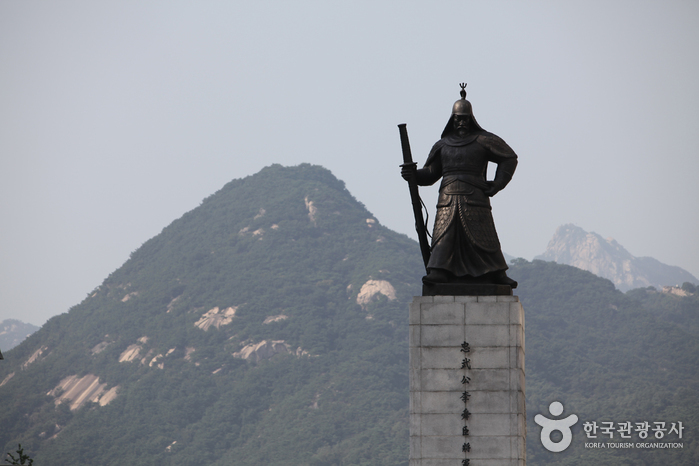
Statue of Admiral Yi Sun-Shin (충무공 이순신 동상)
735.0M 2024-03-04
175, Sejong-daero, Jongno-gu, Seoul
The Statue of Admiral Yi Sun-Shin can be found at Gwanghwamun Square in Seoul. Admiral Yi Sun-shin (1545-1598) was a naval commander who served during the Japanese invasion of Korea (also known as Imjin War: 1592-1598). The undefeated admiral achieved 23 victories against the Japanese navy using innovative tactics, and he is thus considered as one of the greatest generals in the history of Korea. Admiral Yi’s likeness can be found on the 100 won coin.
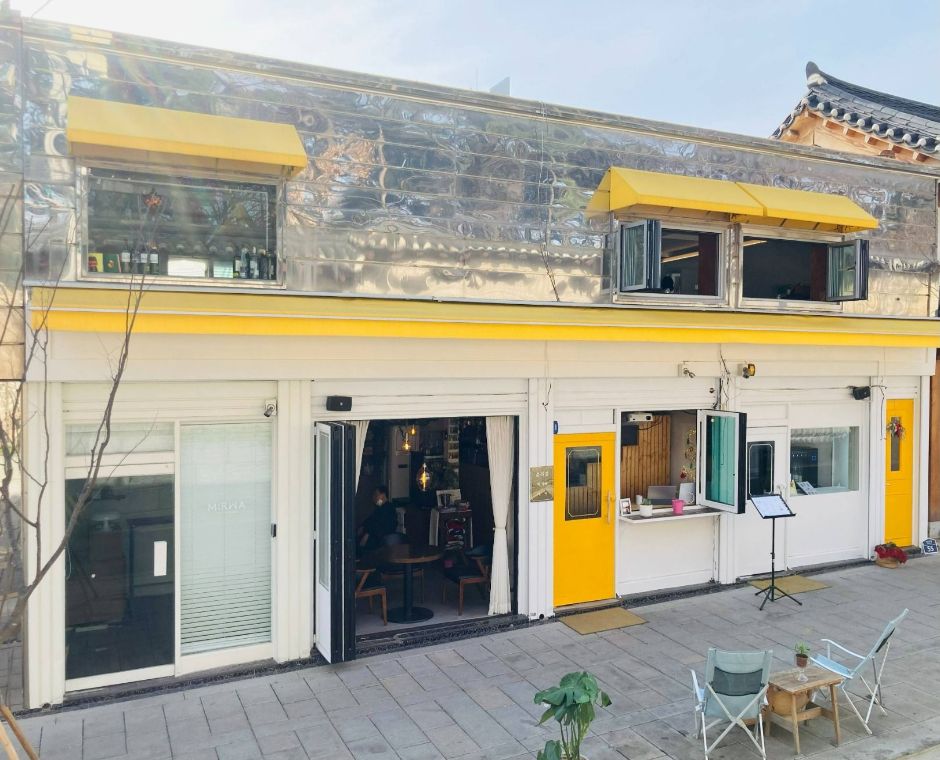
Sulla-gil Yeah Café & Bibi (순라길 예 & 비비)
738.9M 2025-01-23
55 Seosulla-gil, Jongno-gu, Seoul
Situated in Sulla-gil, the Sulla-gil Yeah Café & Bibi is a roaster café where each bean is handpicked. It also offers a range of wine selections. The café is a perfect place to relax after exploring downtown Seoul. The cozy atmosphere of the café with the added charm of the stone wall visible from café, makes visitors feel at ease and relaxed. The evenings here turn into a music and movie session, adding a lively atmosphere to the space.
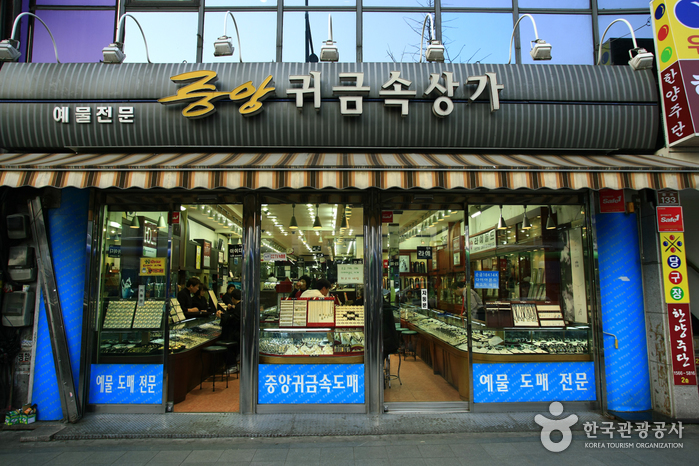
Jongno 3(sam)-ga Jewelry District (종로3가 귀금속 전문상가)
741.4M 2025-06-30
Jongno3-ga, Jongno-gu, Seoul-si
There is an enormous selection of wholesalers and retail jewelry stores in this district, spread throughout Jongno 3(sam)-ga and 4(sa)-ga. The glittering showcases here are especially popular amongst young people and foreign tourists looking to find fine jewelry at affordable prices. Stores in the jewelry district have a selection of designs that are extraordinarily diverse and prices that are 20 to 40% lower than at other jewelry outlets in Korea.
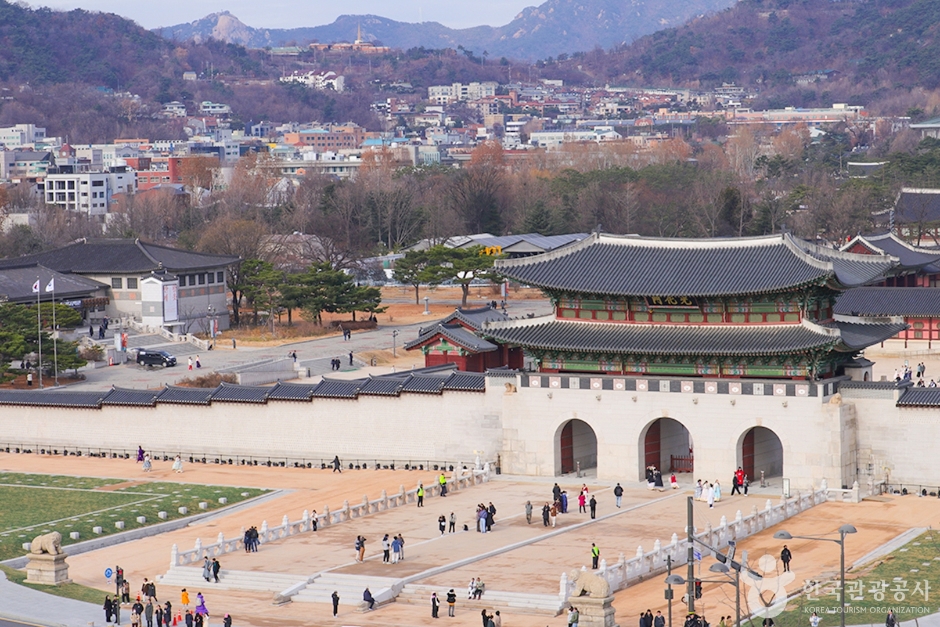
Gwanghwamun Gate (광화문)
743.1M 2024-12-04
161 Sajik-ro, Jongno-gu, Seoul
Built in 1395 under the reign of King Taejo, the first king of the Joseon dynasty, Gwanghwamun Gate is the southern gate of Gyeongbokgung Palace. It is also the main gate of the palace, therefore larger and fancier in comparison to the other gates. Gwanghwamun Gate consists of three arched gates; the center gate was used by the king, while the other two were used by the crown prince and royal officials. The tall granite walls of the gate serve as a platform for the wooden gate tower that watches over the city. The gate has a sign with its name written at the top center of the gate tower.
Gwanghwamun Gate went through several damages and restorations over the course of history. It was first severely damaged during the Imjin War (1592-1598) and was not restored until the reconstruction of Gyeongbokgung Palace in 1864. Under the Japanese administration, the gate was demolished and relocated to the north of the palace's eastern gate, followed by series of damages during the Korean War (1950-1953). In 1968, Gwanghwamun Gate was relocated back to the south of the palace and was rebuilt using concrete; however, the gate’s position was shifted a few meters away from its original location. In 2006, a major reconstruction project took place to restore Gwanghwamun Gate to its original state and location, disassembling the structure completely and replacing concrete with granite and wood. After three years and eight months of construction, Gwanghwamun Gate was fully restored to its original form and was open to the public on August 15, 2010.
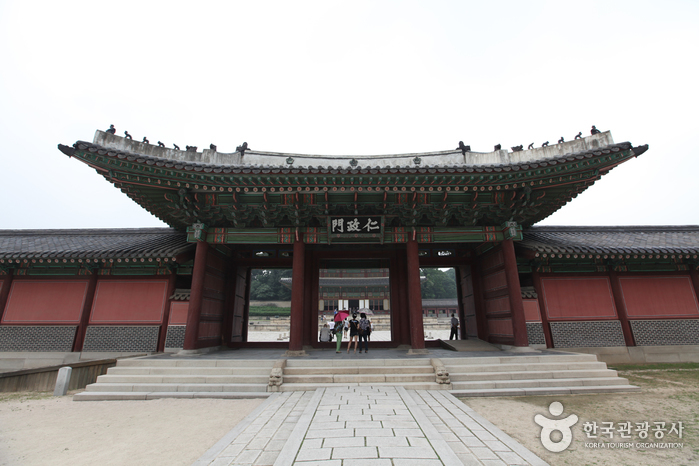
Changdeokgung Injeongmun Gate (창덕궁 인정문)
750.7M 2025-01-14
99, Yulgok-ro, Jongno-gu, Seoul
Serving as the main gate of Injeongjeon Hall, Injeongmun Gate was established in 1405 (5th year of King Taejo’s reign during the Joseon dynasty). Later on, the gate was destroyed by multiple fires during the Imjin War (Japanese invasion of Korea in 1592), therefore current form of the establishment displays designs that are more often seen in the late 19th century's. In addition, a lot
of subsidary marks and buildings are removed from the original places and relocated passing the time, however, still remains to represent prestigious ambience.
Injeongmun Gate served as the place for several coronation ceremonies of kings, prince's succession of throne, and many other national affairs celebrated by the royal members who gathered and aligned around this gate.
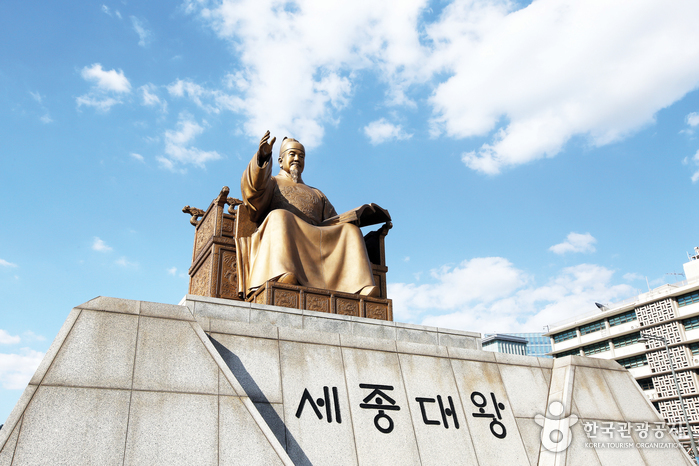
King Sejong Statue (세종대왕 동상)
752.0M 2024-03-04
175, Sejong-daero, Jongno-gu, Seoul
King Sejong Statue can be found at Seoul’s Gwanghawmun Square. The statue commemorates King Sejong the Great (1397-1450, reign 1418-1450), the fourth king of Joseon (1392-1897). He is thought to be the greatest king in Korean history, for he is credited with great developments in science and technology, expansion of Joseon’s territory, and the creation of the Korean script, [Hangeul]. King Sejong’s likeness can be found on the 10,000 won bill as well.
The Story of King Sejong (세종이야기)
753.4M 2022-09-13
jiha 175, Sejong-daero, Jongno-gu, Seoul
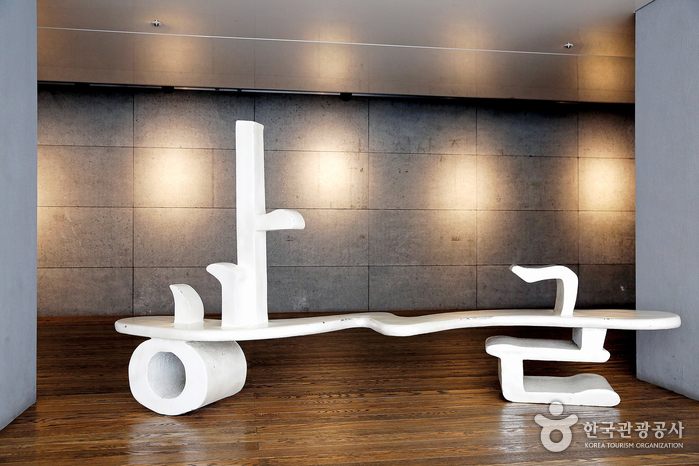
The Story of King Sejong comprises six different sections with a total area of 3,200 square meters. The museum consists of exhibition zones, an event space, video room, shop and more to display King Sejong’s scientific, artistic, military, and political contributions, including the theory of Minbon, which recognized the people as the base of politics. King Sejong, the 4th king of the Joseon dynasty (1397-1450, reigning from 1418-1450) was responsible for some of the most brilliant achievements in the history of Korea, including the creation of Hangeul (Korean alphabet) and great advancements in the areas of science, culture, art and politics.
Gwanghwamun Market (광화문 마켓)
775.7M 2025-12-05
B172 Sejong-daero, Jongno-gu, Seoul
+82-2-337-3692
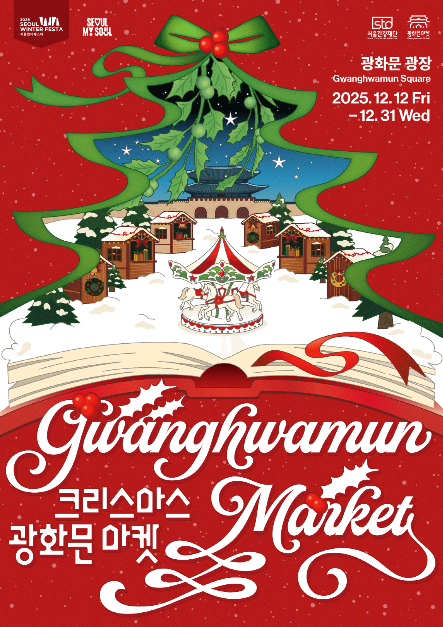
Gwanghwamun Market takes place along with the Seoul Lantern Festival to support local small businesses and promote Seoul night tourism. The market features local store owners and businesses that exhibit and sell seasonal decor, handcrafted items, and winter snacks.
 English
 한국어
한국어 日本語
日本語 中文(简体)
 Deutsch
 Français
 Español
 Русский


