
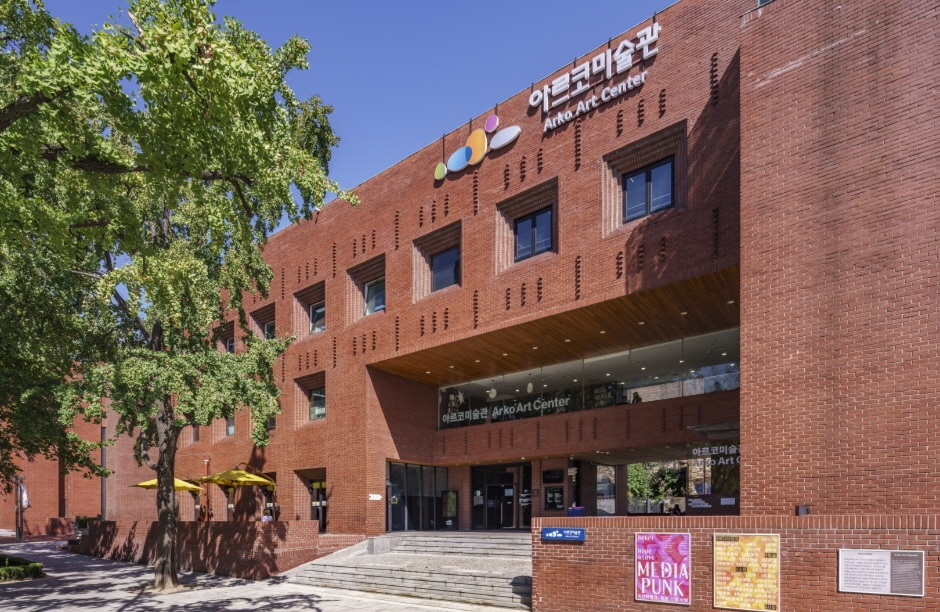
ARKO Art Center (아르코미술관)
1.6Km 2025-06-05
3, Dongsung-gil, Jongno-gu, Seoul
ARKO Art Center was founded in 1974 as Misulhoegwan in a building of former Deoksu Hospital in Gwanhun-dong, Jongno-gu to offer much-needed exhibition space for artists and arts groups. In 1979, Misulhoegwan moved to its present building, designed by preeminent Korean architect Kim Swoo-geun (1931-1986) and located in Marronnier Park, the former site of Seoul National University. The two neighboring brick buildings accommodating ARKO Art Center and ARKO Arts Theater are the major landmarks of the district of Daehakro.
As more public and private museums and commercial galleries came into the art scene in the 1990s, Misulhoegwan shifted to curating and presenting its own exhibitions. Renamed as Marronnier Art Center in 2002, ARKO Art Center assumed a full-fledged art museum system and played an increasingly prominent role as a public arts organization leading the contemporary art paradigm. When The Korea Culture and Arts Foundation was reborn as Arts Council Korea, Marronnier Art Center became ARKO Art Center named after the abbreviation for Arts Council Korea in 2005.
ARKO Art Center is committed to working as a platform where research, production, exhibitions and the exchange of creative activities grow and develop in connection with one another in addition to having a diversity of programs including thematic exhibitions addressing social agenda and public programs widely promoting various discourses in art.
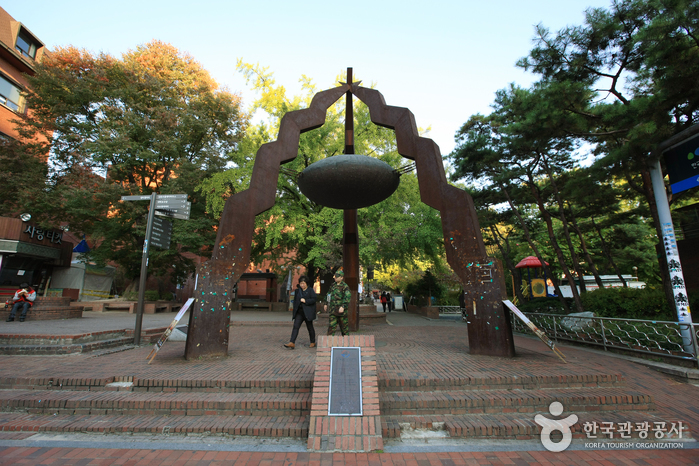
Marronnier Park (마로니에공원)
1.6Km 2021-07-14
104, Daehak-ro, Jongno-gu, Seoul
Marronnier Park was given its name due to the marronnier trees, or horse chestnut trees, growing within the area. The location where Seoul National University's College of Liberal Arts & Science and School of Law once stood, it is now a park dedicated to culture and arts open to the public. In addition to a variety of outdoor performances that take place throughout the area, exhibitions and cultural centers create a romantic atmosphere unique to the park.
Nuwa (누와)
1.6Km 2024-12-23
3-1 , Pirundae-ro 5na-gil, Jongno-gu, Seoul
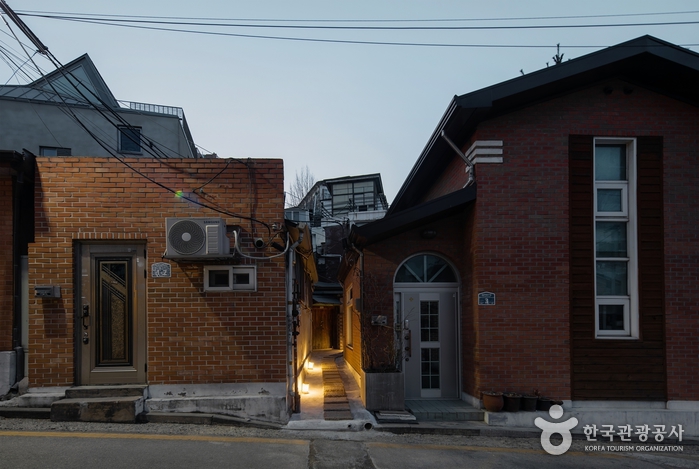
Nuwa is a small, tastefully-renovated private hanok in the Seochon Village residential area to the west of Gyeongbokgung Palace in Seoul. It gets the light through a window wall in the living room, which contains a walnut table where guests can take tea, and a bathtub: weary travellers will feel better after taking a foot bath or half-body bath. High-quality tea and bath salts are provided. The sleeping space has an unusual round window, like a full moon, facing the bed, through which guests can see the top of Inwangsan Mountain as they fall asleep.
Redtable Inc (주식회사 레드테이블)
1.6Km 2025-10-23
10F, SIGNATURE TOWER(WEST),100,Cheonggyecheon-ro, Jung-gu, Seoul
We are a Google partner in Korea that provides services for searching, inquiries, consultations, bookings, and payments related to hospitals, wellness centers, and aesthetic services on Google.
We focus on attracting global tourists from English-speaking countries, Japan, and other Asian regions.
Additionally, Redtable Inc is an official agency of Meituan-Dianping (the largest integrated platform in China), specializing in marketing and promotions for the Chinese market.
Bugeogukjip (북어국집)
1.6Km 2024-12-27
38, Eulji-ro 1-gil, Jung-gu, Seoul
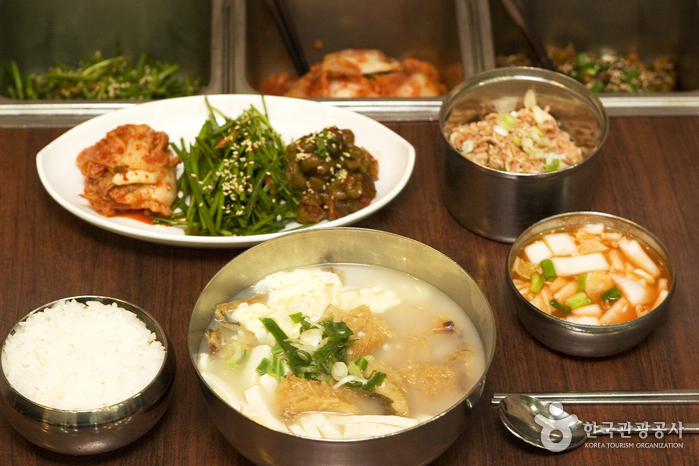
Bugeogukjip (formerly “Teojutgol”) is a restaurant behind City Hall in Seoul that has been serving up authentic dried Pollack soup since 1968. Despite a name change, the restaurant has proudly stood in this same location for decades, earning a strong reputation for its dried Pollack soup made using traditional cooking methods.
Since the restaurant only serves one thing—dried Pollack soup—there are few preparations to be made and the meal arrives on your table in minutes. Customers are free to serve themselves basic side dishes such as kimchi and can have as many servings of rice as they’d like, allowing diners to enjoy a hearty meal at a low price. While the restaurant’s design and menu may be simple, Bugeogukjip takes pride in its long history and the careful efforts that have earned it a reputation as one of the most notable restaurants in Seoul.
Daehakro Arts Theater (대학로예술극장)
1.6Km 2021-07-05
17, Daehak-ro 10-gil, Jongno-gu, Seoul
Daehakro Arts Theater is a venue for performing arts that is comprised of a main hall and small hall. The main hall fills the first and second floors and has a proscenium stage with seating arranged in fan-shape. In an effort to present a more contemporary theater experience, the seats here are placed closer to the stage than those of a standard theater, allowing the audience to experience performances more vividly.
Sewoon Plaza (세운상가)
1.6Km 2025-12-16
159 Cheonggyecheon-ro, Jongno-gu, Seoul
Makercity Sewoon is Korea's first comprehensive electronics market, established in 1968 and has a 40-year history. As a mecca in the urban electronics industry area located in Jongno, the center of Seoul, you can purchase various electronic products here.
Since 2014, Seoul's urban regeneration project has been underway, and a pedestrian overpass, rooftop observatory, plaza, and Makers Cube, where you can experience the 4th industrial revolution, have been created to provide unique attractions.
◎ Travel Information to Discover Hallyu’s Charm - K-Drama "Vincenzo (2021)"
"Vincenzo" depicts the story of Vincenzo (Song Joong-ki), an Italian mafia lawyer who teams up with the tenants of “Geumga Plaza” to protect a hidden stash of gold in the building from a powerful force. The building appearing as “Geumga Plaza” in the drama is none other than Seoul's Sewoon Plaza. Its retro-style aesthetic adds a unique ambience to the show and makes its scenes even more memorable.
 English
 한국어
한국어 日本語
日本語 中文(简体)
 Deutsch
 Français
 Español
 Русский


