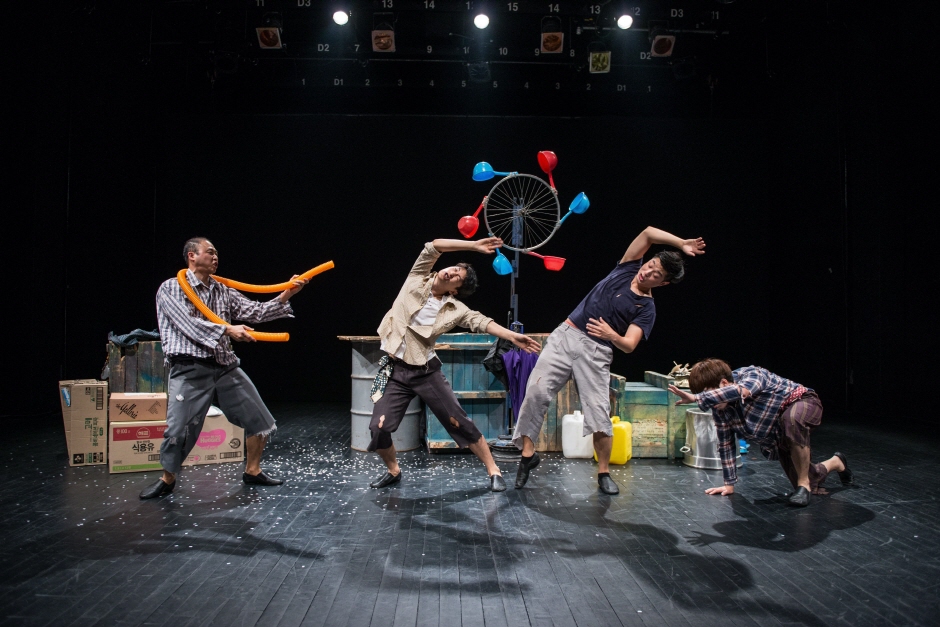
D. Festa: Daehakro Street Performance Festival (대학로 거리공연축제)
9.2Km 2025-06-16
1, Daehak-ro 8-gil, Jongno-gu, Seoul
• 1330 Travel Hotline: +82-2-1330 (Korean, English, Japanese, Chinese) • For more info: +82-2-741-4188
Started in 2015, Daehakro Street Performance Festival provides various performances including plays, dances, mimes and more. The festival aims to provide hope and changes in daily life through diverse performances.
![Tamiya - Hongdae Branch [Tax Refund Shop] (타미야(홍대점))](http://tong.visitkorea.or.kr/cms/resource/87/2890687_image2_1.jpg)
Tamiya - Hongdae Branch [Tax Refund Shop] (타미야(홍대점))
9.2Km 2024-04-16
7F YZ PARK, 176, Yanghwa-ro, Mapo-gu, Seoul
-
![Daiso - Hongdae Branch (No. 2) [Tax Refund Shop] (다이소 홍대2호)](http://tong.visitkorea.or.kr/cms/resource/94/2888394_image2_1.jpg)
Daiso - Hongdae Branch (No. 2) [Tax Refund Shop] (다이소 홍대2호)
9.3Km 2024-04-22
182, Yanghwa-ro, Mapo-gu, Seoul
-
![Kakao Friends Flagship Store - Hongdae Branch [Tax Refund Shop] (카카오프렌즈 플래그십 홍대)](http://tong.visitkorea.or.kr/cms/resource/36/2878336_image2_1.jpg)
Kakao Friends Flagship Store - Hongdae Branch [Tax Refund Shop] (카카오프렌즈 플래그십 홍대)
9.3Km 2024-04-18
B2-F3, 162, Yanghwa-ro, Mapo-gu, Seoul
-
![EW Folder - Hongdae Branch [Tax Refund Shop] (EW 폴더 홍대)](http://tong.visitkorea.or.kr/cms/resource/73/2888173_image2_1.jpg)
EW Folder - Hongdae Branch [Tax Refund Shop] (EW 폴더 홍대)
9.3Km 2024-04-22
152-6, Yanghwa-ro, Mapo-gu, Seoul
-

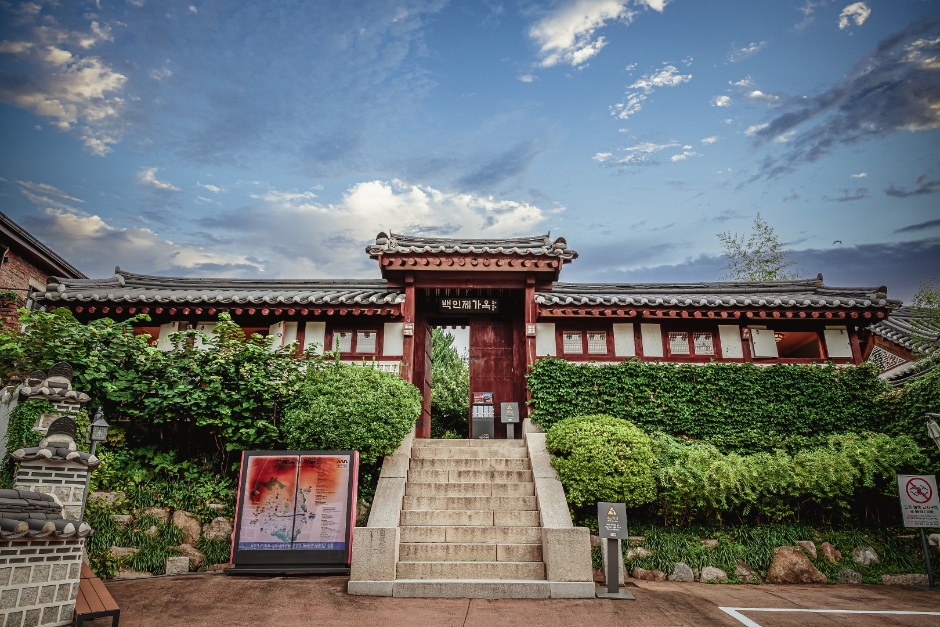
Baek In-je House (백인제가옥)
9.3Km 2025-10-24
16 Bukchon-ro 7-gil, Jongno-gu, Seoul
+82-2-724-0200
Baek In-je House, located in Bukchon Hanok Village, is a hanok built during the Japanese administration period that portrays modern hanok features. The structure consists of a main room offering a good view of the whole village, spacious bedrooms, a large garden, and annex buildings. As it maintains the beauty of a traditional hanok while incorporating the modern trend of its time, Baek In-je House is considered to be highly valuable in means of both architecture and history, representing the Bukchon Hanok Village together with Yun Bo-seon House.
Baek In-je House was built from black pine, which was first introduced in Seoul during the Gyeongseong Expo in 1907, distinguishing itself from other upper-class houses of its time. Unlike other traditional hanok designs that separate the main building from the other rooms, Baek In-je House connects the two with a hallway, allowing convenient access between the two structures. The house also consists of a Japanese-style hallway and floor mat rooms, reflecting the interior trends of that period. Baek In-je House is also unique in that the main room is partially built as a two-story structure, a style that was never seen in any traditional hanok built during the Joseon period.
![Aimerfeel - Hongdae Branch [Tax Refund Shop] (에메필 홍대점)](http://tong.visitkorea.or.kr/cms/resource/51/2887751_image2_1.jpg)
Aimerfeel - Hongdae Branch [Tax Refund Shop] (에메필 홍대점)
9.3Km 2024-04-16
#108, 156, Yanghwa-ro, Mapo-gu, Seoul
-
Olive Young - Hongik Univ. Station Branch [Tax Refund Shop] (올리브영 홍대입구역)
9.3Km 2024-04-16
156, Yanghwa-ro, Mapo-gu, Seoul
-
 English
 한국어
한국어 日本語
日本語 中文(简体)
 Deutsch
 Français
 Español
 Русский


