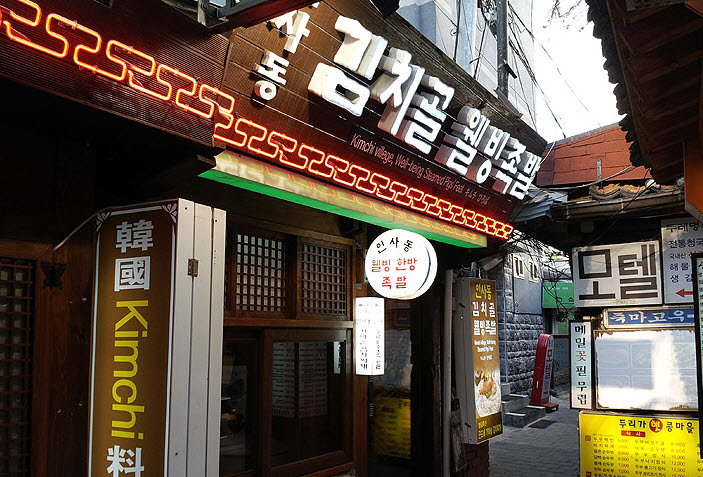
Kimchigol Well-being Bapsang(김치골웰빙밥상)
1.3Km 2024-10-14
22-5 Insadong-gil, Jongro-gu, Seoul
+82-2-720-6436
A restaurant where you can try kimchi, a Korean traditional dish, and meat. The representative menu is kimchi cabbage wraps with pork. This is a Korean cuisine located in Insa-dong, Seoul.
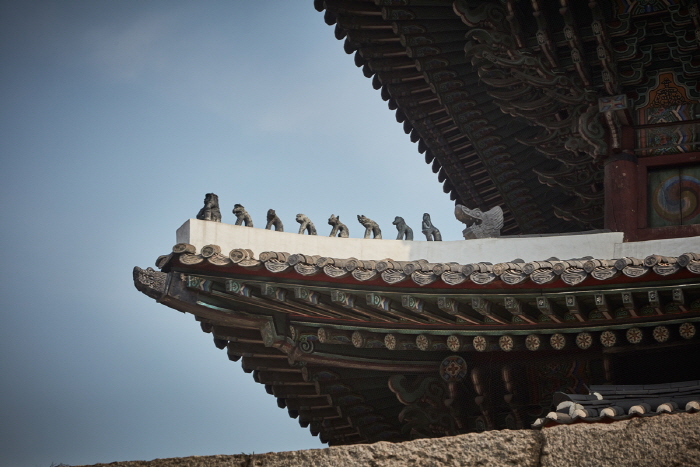
Heunginjimun Gate - Dongdaemun Gate (흥인지문)
1.3Km 2025-10-23
288, Jong-ro, Jongno-gu, Seoul
+82-2-2148-1842
Heunginjimun Gate was built to protect Hanseongbu, which historically housed essential government facilities. Heunginjimun Gate was the gate on the east side of the outer wall of Seoul Fortress among eight gates. It is referred to as Dongdaemun Gate as well. The gate was constructed during King Taejo’s 5th year in 1396, remodeled during the reign of King Danjong in 1453, and was newly built in 1869 during the sixth year of King Gojong’s reign in 1869.
The gate features a hipped roof with five front and two side compartments on a two-storied building. The thin and weak bracket system supports the eaves and is excessively decorated, reflecting the construction features of the late Joseon period. Also, outside of the fortress is the half-circle-shaped Ongseong, a small wall, to protect the gate.
One of the unique factors of Heunginjimun Gate is that it is the only gate among Seoul’s eight to have Ongseong, further exhibiting the style of construction used during the late Joseon period.
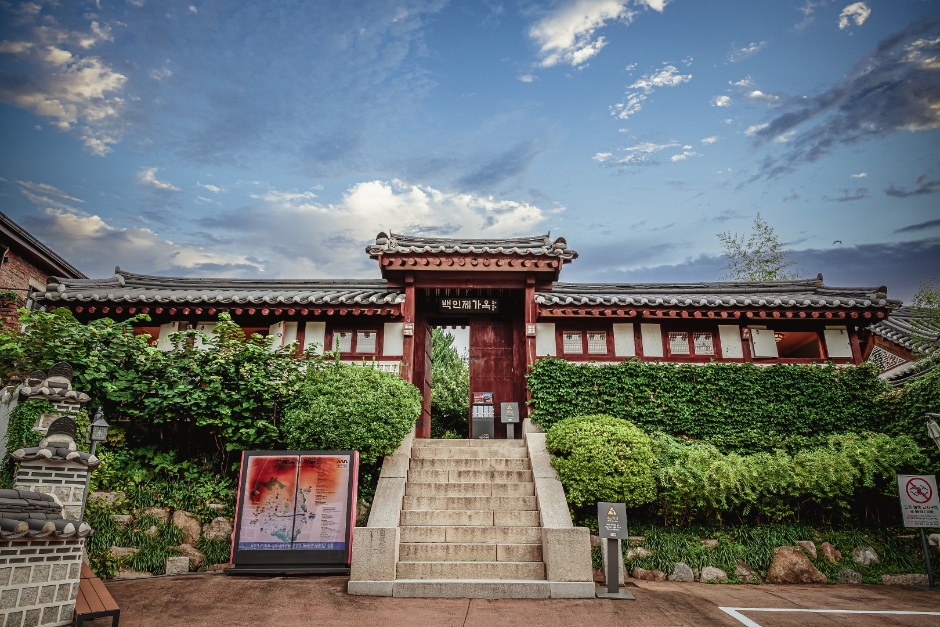
Baek In-je House (백인제가옥)
1.3Km 2025-10-24
16 Bukchon-ro 7-gil, Jongno-gu, Seoul
+82-2-724-0200
Baek In-je House, located in Bukchon Hanok Village, is a hanok built during the Japanese administration period that portrays modern hanok features. The structure consists of a main room offering a good view of the whole village, spacious bedrooms, a large garden, and annex buildings. As it maintains the beauty of a traditional hanok while incorporating the modern trend of its time, Baek In-je House is considered to be highly valuable in means of both architecture and history, representing the Bukchon Hanok Village together with Yun Bo-seon House.
Baek In-je House was built from black pine, which was first introduced in Seoul during the Gyeongseong Expo in 1907, distinguishing itself from other upper-class houses of its time. Unlike other traditional hanok designs that separate the main building from the other rooms, Baek In-je House connects the two with a hallway, allowing convenient access between the two structures. The house also consists of a Japanese-style hallway and floor mat rooms, reflecting the interior trends of that period. Baek In-je House is also unique in that the main room is partially built as a two-story structure, a style that was never seen in any traditional hanok built during the Joseon period.
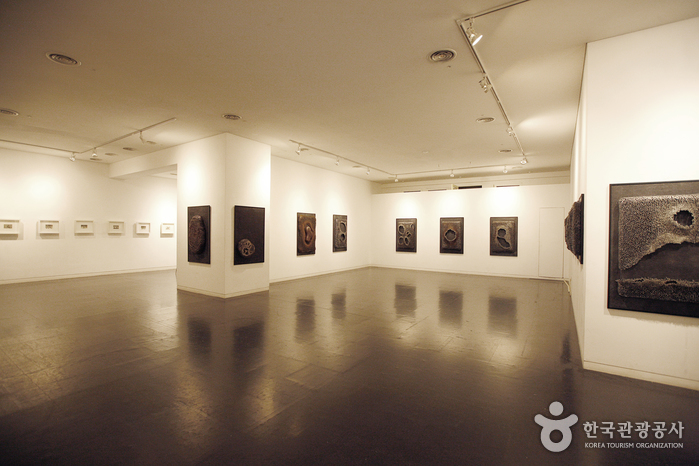
Seoul Art Center Gongpyeong Gallery (서울아트센터 공평갤러리)
1.3Km 2021-06-19
24, Insadong-gil, Jongno-gu, Seoul
+82-70-4214-0070
Opened in 1992, Seoul Art Center Gongpyeong Gallery is a 17,791㎡, two-story building with four exhibition halls. It is one of the main galleries of Insa-dong, displaying diverse artwork ranging from Western and Korean paintings to sculptures. Due to the great interest in Korean paintings, 2~3 of the annual long-term exhibitions focus solely on them.
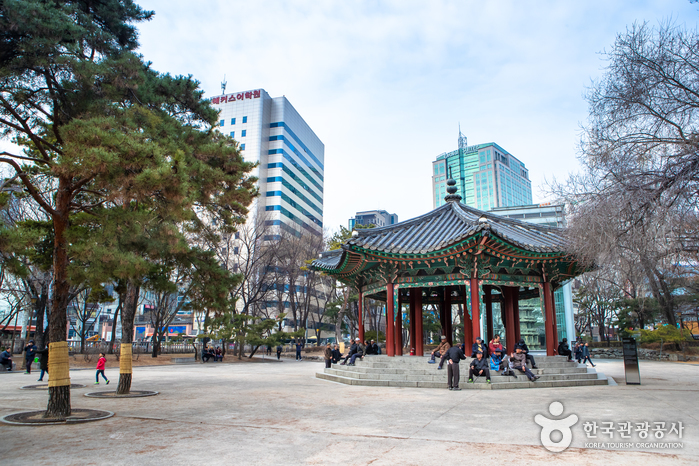
Tapgol Park (탑골공원)
1.4Km 2024-03-04
99, Jong-ro, Jongno-gu, Seoul
+82-2-731-0534
Tapgol Park is the first modern park in Seoul. Having been the site of the Buddhist temple of Wongaksa Temple since 1467, the land was turned into a park in 1897. The park has a significant presence in Korean history, being the place where the March 1 Independence Movement began in 1919. One can find historical sites that hearken back to the struggle, such as the Palgakjeong Pavilion, the center of the movement; cultural heritage sites such as the Ten-story Stone Pagoda of Wongaksa Temple Site and the Stele for the Construction of Daewongaksa Temple at Wongaksa Temple Site; and monuments such as the independence movement relief plate, murals, the statue of Son Byeong-hee, and the statue of Han Yong-un.
![Alive Museum (Insa-dong Branch) [박물관은 살아있다(인사동점)]](http://tong.visitkorea.or.kr/cms/resource/27/3109227_image2_1.JPG)
Alive Museum (Insa-dong Branch) [박물관은 살아있다(인사동점)]
1.4Km 2024-03-15
(B1 and B2, Daeil Building), 12, Insadong-gil, Jongno-gu, Seoul
+82-2-1544-8506
The Alive Museum is a media theme park located in Insa-dong. The exhibition here is made up of optical illusion art, large objet, and digital media pieces, which allow you to delve into the land of mystery. It is made up of different sections like the Insadong Photo Studio, Game Village, and the Toy Village.
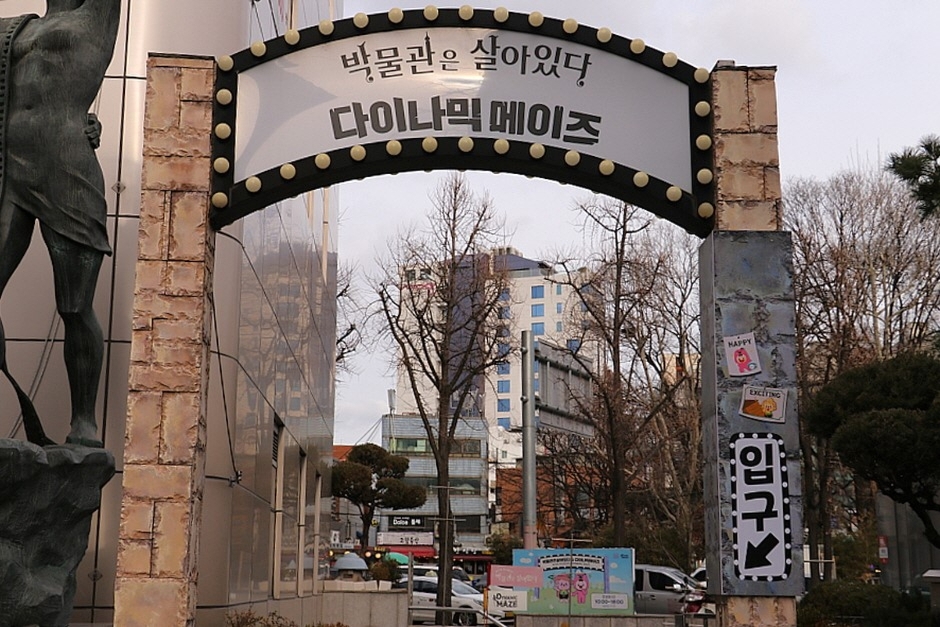
Dynamic Maze (Insa-dong) (다이나믹 메이즈 (서울 인사동점))
1.4Km 2024-03-15
12, Insadong-gil, Jongno-gu, Seoul
+82-1544-8506
Dynamic Maze is an indoor space in Insa-dong dedicated to an exciting adventure: A maze filled with obstacles, requiring participants to work together and overcome the barriers through quickness and focus. Go through the hall of mirrors, climb the wall, and cross the suspension bridge to finally escape from the maze.
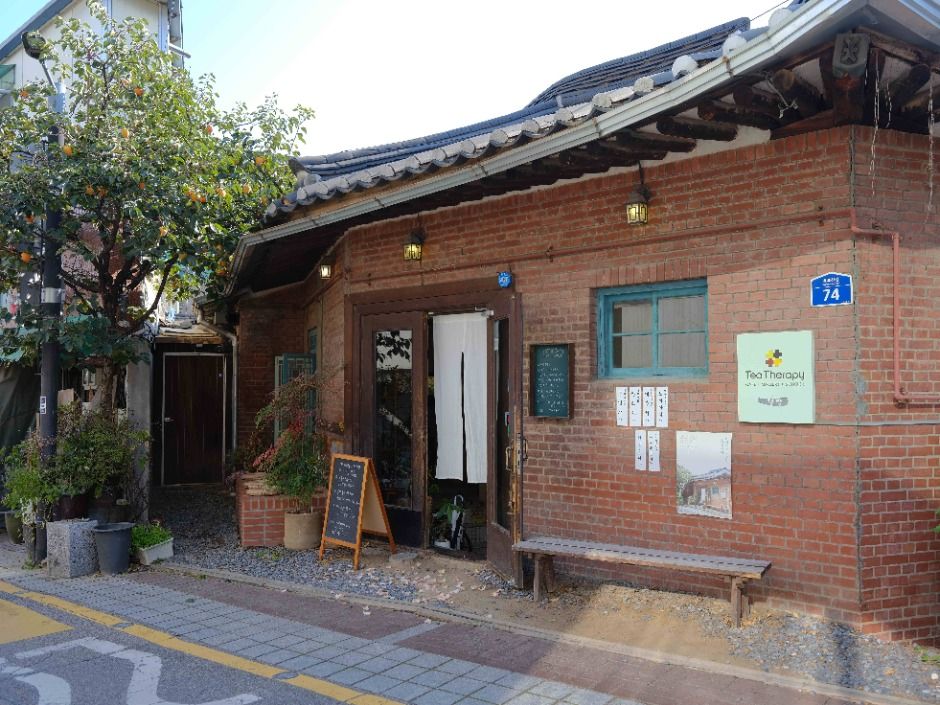
Tea Therapy (티테라피)
1.4Km 2025-10-23
74 Yunboseon-gil, Jongno-gu, Seoul
+82-2-730-7507
Located in Jongno-gu, Seoul, Tea Therapy can be of help to those who chronically feel unwell even though they do not have any serious diseases that need to be treated. It is a place where medicinal herbal teas, which once seemed difficult to enjoy, can be enjoyed without hassle and in a unique way. The teas found at Tea Therapy can be brewed within three minutes, similar to herbal teas found in other countries, and are both delicious and good for your health. Tea Therapy recommends tea through testing so even novices can have fun selecting teas that suit them. Tea products are sold here as well, allowing you to enjoy the same flavors at home.
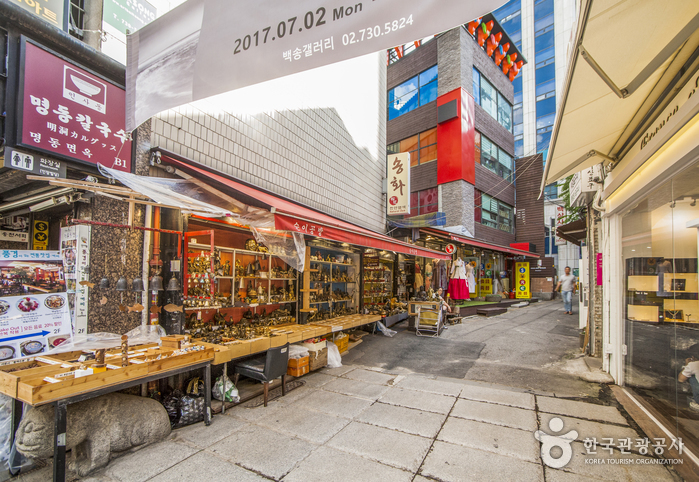
Insa-dong Antique Art Street (인사동 고미술거리)
1.4Km 2025-03-16
29 Insadong-gil, Jongno-gu, Seoul
+82-2-732-2235
As of today, there are approximately 70 shops in the Insa-dong area that sell antique arts. Some of the products they sell include antique artworks, porcelains, woodcrafts, and metalwork. Visitors may even find rare and valuable products such as earthenware from the Silla period or white porcelain used in the Joseon dynasty. Each shop is a specialty store, authorized to sell product types that are of their expertise, ranging from antique furniture and traditional artworks to handcrafted items.
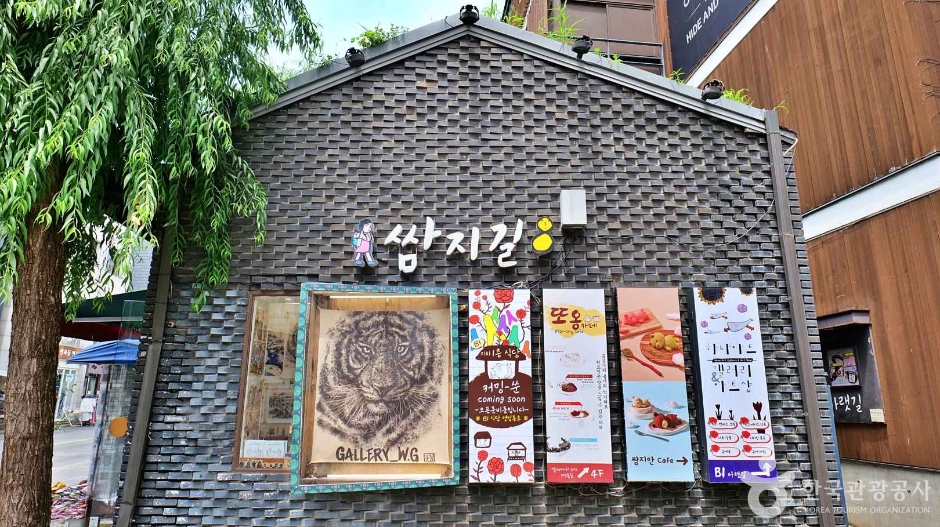
Ssamzigil (쌈지길)
1.4Km 2025-10-23
44 Insadong-gil, Jongno-gu, Seoul
Ssamzigil is an Insa-dong landmark and a shopping mall specializing in crafts. It is a place where the traditions of Korea come together with its present. Follow the paths that lead seamlessly from the lower floors to the upper floors and browse the small craft shops that inhabit the floors. You can find both works of traditional craft and contemporary craft here. Some craft shops also offer craft experiences, and one can also find restaurants and galleries within the complex.
 English
 한국어
한국어 日本語
日本語 中文(简体)
 Deutsch
 Français
 Español
 Русский


