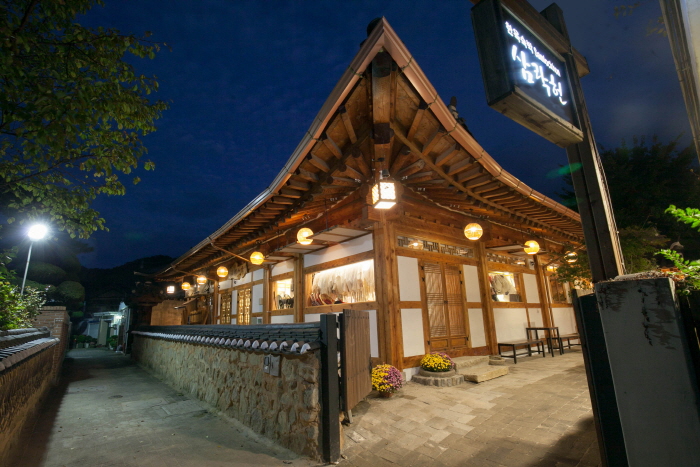
Samrockhon (삼락헌)
3.8Km 2024-12-23
47-8 , Eunhaeng-ro, Wansan-gu, Jeonju-si, Jeonbuk-do
Samrakheon is a traditional lodging in Jeonju Hanok Village, Jeollabuk-do, and sister hanok to Bukyeongdang. Samrakheon is a spacious old house containing duplex rooms equipped with toilets. In the shared mini-kitchen, simple breakfasts are provided, with coffee, tea, and toast. Guests can sample traditional crafts skills such as Korean paper-making, Injeolmi rice cake making and pottery - and can also get discounts on hanbok wearing and traditional bike riding experiences. Local tourist information is available.
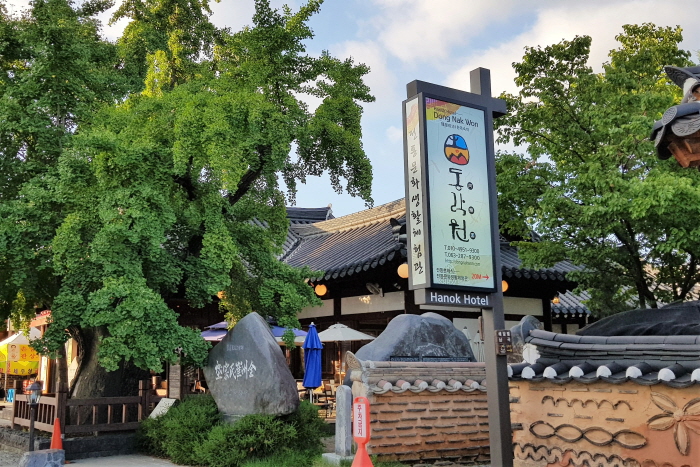
Dong Nak Won / 동락원
3.8Km 2025-03-05
33-6 , Eunhaeng-ro, Wansan-gu, Jeonju-si, Jeonbuk-do
Dongnagwon is a hanok hotel in Jeonju Hanok Village, Jeollabuk-do. It was built as a memorial hall for the missionary William Junkin, who founded a school mission in Jeonju in 1895. Now refurbished as a hotel and venue for traditional performances, wedding ceremonies and seminars, visitors will find old-style interiors with antique furniture and folding screens. Guests can play traditional games in the yard, and there is a red clay room to relieve the fatigue of travel, free of charge. Mountain bikes can be borrowed to ride around the Hanok Village or on the banks of the Jeonjucheon Stream.
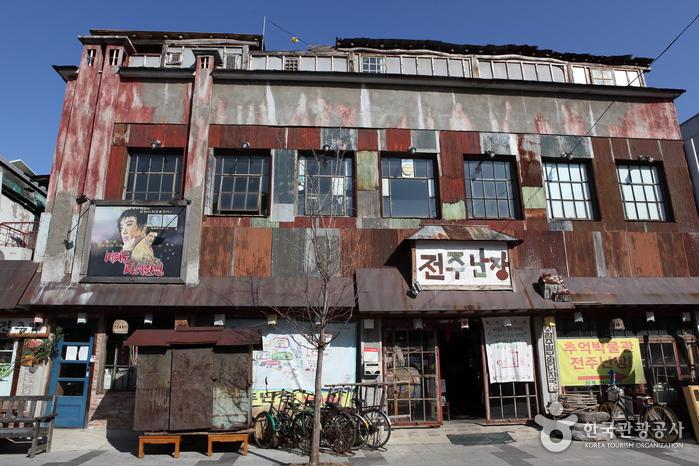
Jeonju Nanjang (전주난장)
3.8Km 2024-04-06
33-20 Dongmun-gil, Wansan-gu, Jeonju-si, Jeonbuk-do
Jeonju Nanjang is a theme park style museum with over 25 years of materials for an attraction within Jeonju Hanok Village perfect for photo shoot and experience programs. There are more than 70 theme zones as well as a water well that is over 110 years old. Visitors can enjoy the retro feel as they roam around a museum filled with history.
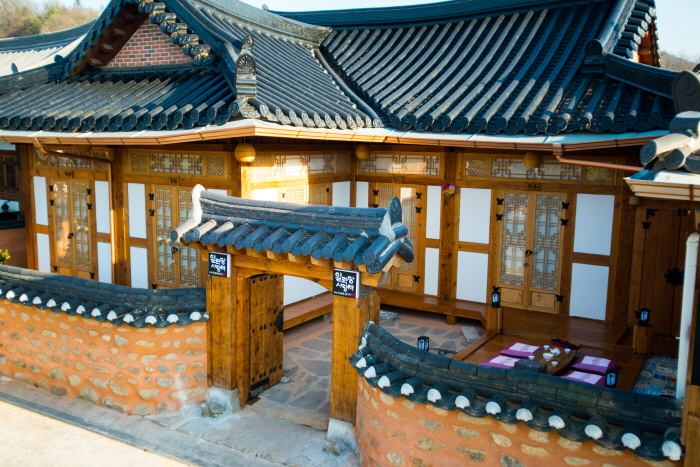
Ilrakdang sarangchae (일락당사랑채)
3.8Km 2024-12-23
15, Choemyeonghui-gil, Wansan-gu, Jeonju-si, Jeonbuk-do
A must visit place for tourists in Jeonju, Ilrakdang Sarangchae is located in the middle of the traditional Korean house village of Jeonju. The very first of three enjoyments for noble man, as indicated by Menicus, the existence of parents and brothers with no troubles is what the place is named after. Standing in the garden, you can easily see the stone walls of Gyeonggijeon and also you are within the range of walking distance to Jeondong catholic church, Omokdae, Southern market, Jeonju Hyanggyo, and the wall painting village of Jaman.
The rooms are called, Haengbokchae, Sarangbang, Mitum band, Monday, Tuesday, Wednesday, Thursday, Friday, Saturday, Sunday and so on. Haengbok room 1/2, a living room with furnace, a big sized attic above the living room are shared together, which makes it most suitable for big families or a small group of tourists. The Monday/Tuesday/Friday/Saturday/Sunday rooms all have a small, cozy attic and in every guest room’s wall, column and doors are mainly made of woods which makes them feel very warm. On every morning, in the shared kitchen, simple breakfasts mainly consisting of toasts, jams, coffee and juice are served. All guests are provided with discounts on Korean costume rental(30%), motor bikes(30%) and waengi bean sprout soup with rice (1000KRW). Besides, there are various services such as introduction to tasty restaurants in partnerships with traditional Korean house villages, as well as discounts, and try out of Korean rice cake making experiences and so on.
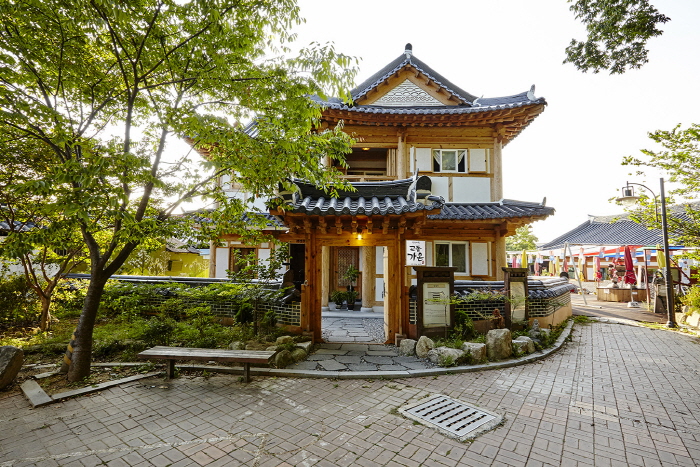
Gyodonggaon (교동가온)
3.8Km 2024-08-05
73-1 , Eunhaeng-ro, Wansan-gu, Jeonju-si, Jeonbuk-do
Gyodong Gaon is a two-story hanok stay on the main street of Jeonju Hanok Village, Jeollabuk-do. The yard contains a small garden, a jangdokdae (jar stand), a furnace and a mural that has become a popular place for photos. The upper floor guestroom Numaru (‘Loft’) offers a panorama of the village. The first floor Meomulda (‘Lodging’) guestroom has a door between bedroom and living room. Nanuda (‘Sharing’) on the 2nd floor is the largest room, while Damda (‘Contain’) and Ggumggu (‘Dreaming’) both have attics. Finally, Geurida (’Drawing’) is a room with a fine view. Traditional games such as Hoops and Tuho can be played without charge.
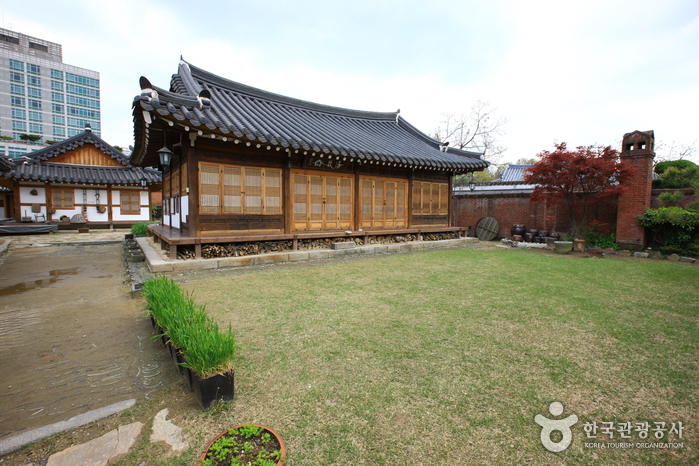
Dongnagwon House (동락원)
3.8Km 2025-03-20
33-6, Eunhaeng-ro, Wansan-gu, Jeonju-si, Jeonbuk-do
The Dongnagwon House in Jeonju Hanok Village provides a getaway to experience hanok stay and traditional Korean life. Affiliated with Jeonju Kijeon College, Dongnagwon is also a memorial hall dedicated to W. M. Junkin, who came to Korea as a missionary from the South Presbyterian Church of the United States in 1892. Dongnagwon is a reproduction of the old hanok houses in Jeonju from the time when W. M. Junkin was doing his missionary work in the area. It is
comprised of three buildings: Anchae (main hall), Sarangchae (guest house), and Haengnangchae (servants’ quarters).
Visitors to Dongnagwon can learn and experience traditional Korean culture such as music, crafts, and dance while inhabiting traditional lodging. In addition to providing accommodation for individual guests, Dongnagwon is also used for group accommodations or activities such as seminars, conferences, and family events. For groups of 30 or more, it is possible to rent out the entire venue (in addition to all facilities, including Seungdokdang, Seunghwadang, Cheongyuje, and the front yard).
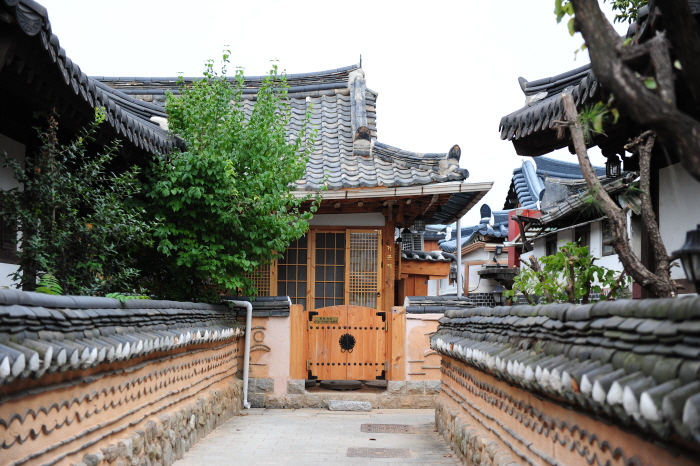
GaEunChae (가은채)
3.9Km 2024-12-23
68-13 , Hanji-gil, Wansan-gu, Jeonju-si, Jeonbuk-do
Gaeunchae is a hanok stay in Jeonju Hanok Village, Jeollabuk-do, constructed of wood in the traditional way without using nails. The location is ideal for local sightseeing as it’s close to Jeonju Craft Masters Hall, the Traditional Wine Museum, Seunggwangjae (home of the last Joseon prince Yi Seok), and Dakjong Hanji Doll Workshop. The exceptionally scenic alleyways around Gaeunchae are part of a Village tour. In the yard visitors will see different types of stone used as paving or decoration: granite, mica, and other local stones, all hand-trimmed by our ancestors.
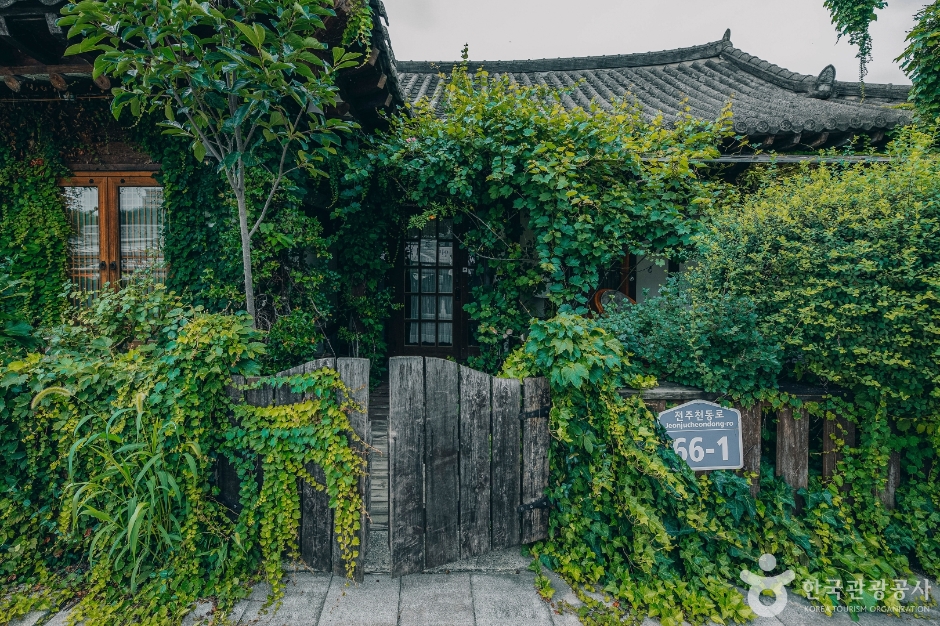
Gyo Dong Sal Rae (교동살래)
3.9Km 2024-12-23
66-1 , Jeonjucheondong-ro, Wansan-gu, Jeonju-si, Jeonbuk-do
Gyodongsallae Hanok stands close to the Namcheongyo Bridge over the Jeonjucheon Stream in Wansan-gu, Jeonju, Jeollabuk-do. The sarangchae (men’s house), anchae (women’s house) and an outbuilding provide a total of 10 guestrooms - some traditional ondol-heated rooms, some rooms with beds and one attic room. There are flower beds in the yard, and the cozy interiors are decorated with elegant fabrics and paintings. Two of the sarangchae rooms have terraces offering fine views.

Deokjin Park (덕진공원)
3.9Km 2024-04-07
390, Gwonsamdeuk-ro, Deokjin-gu, Jeonju-si, Jeonbuk-do
Deokjin Park is a representative city park of Jeonju. Officially designated a city park in April 1978, it is centered around a natural pond, which dates back to the Goryeo dynasty (918-1392). The park is such a landmark of the area that the lotus flowers blooming in the park’s large pond are considered one of the most impressive attractions of Jeonju. The park spans an area of 13,000 ㎡ with the pond covering about two thirds of the southern sector. An arch-shaped suspension bridge stretches across the middle of the pond, offering up-close views of the lotus blossoms.
Park designers created a traditional pavilion and a water iris garden in honor of the park’s historical background and added an artificial waterfall and wooden bridge for visual effect. The park also houses nine stone monuments including the Children’s Charter, engravings of Shin Seok-jeong and Kim Hae-gang’s poetry, and a statue of General Jeon Bong-jun.
The park is the site of the annual Dano Changpomul (Water Iris) Festival, a much-anticipated event held on the day of Dano (a Korean traditional holiday that falls on the fifth day of the fifth lunar month). During the celebration, women wash their hair in iris-infused water from the pond to wish for good health in the coming year.
GaEunChae2 (가은채2)
3.9Km 2024-12-23
100-20 , Hanji-gil, Wansan-gu, Jeonju-si, Jeonbuk-do
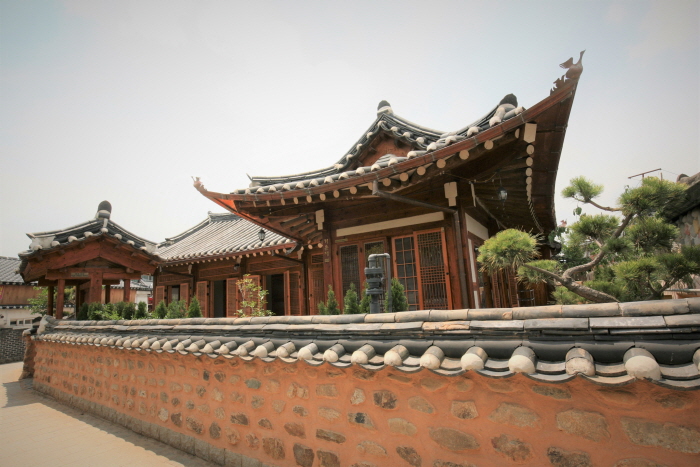
Gaeunchae 2 is the sister hanok of Gaeunchae in Jeonju Hanok Village, Jeollabuk-do. It’s a traditional red clay-walled hanok with ondol underfloor heating, exposed roof beams and hanji wallpaper and flooring - creating a beautiful and distinctive hanok interior. It has a small hallway which is good for storing luggage or just to sit and chat. In the garden are sculpted stone lanterns and tigers. Local attractions such as Jeondong Cathedral and Gyeonggijeon Shrine are a short walk away.
 English
 한국어
한국어 日本語
日本語 中文(简体)
 Deutsch
 Français
 Español
 Русский


