17.6Km 2024-04-07
Moak 15-gil, Geumsan-myeon, Gimje-si, Jeonbuk-do
Moaksan Mountain, embracing Geumsansa Temple, Gwisinsa Temple, Suwangsa Temple, and Daewonsa Temple, is 795.2 meters high and stands tall on the east side of the Gimje Plains, offering a panoramic view of the Honam Plains. It was designated as a provincial park in 1971 and is one of the four scenic views in the southern region, with outstanding scenery and many cultural properties, including national treasures. In particular, Geumsansa Temple, built in the first year of King Beop of Baekje (599) and with about ten major cultural properties, is located here, where you can see splendid Buddhist art. If you cross Moaksan Mountain, there are temples such as Daewonsa Temple and Suwangsa Temple on the southeastern slope. Gwisinsa Temple is on the west side. Geumpyeong Reservoir, located near the Geumsansa Temple entrance, is also a suitable fishing spot.
Moaksan Mountain has been considered the home of the Maitreya beliefs since ancient times, and along with the headquarters of Jeungsangyo, it also attracted attention as a gathering place for various new religions in the 30s and 40s. According to records, as many as 80 temples are at the foot of Moaksan Mountain. To hike, leave Geumsansa Temple and climb along the ridge behind Simwonam Hermitage. In spring, azaleas are in full bloom all the way to the top. From the summit, the Gimje Plains and the Mangyeonggang River come into view, as well as Jeonju and Unjangsan Mountain. The cherry blossom tunnel from the parking lot to Iljumun Gate is also spectacular.
17.7Km 2024-04-07
1 Moak 15-gil, Geumsan-myeon, Gimje-si, Jeonbuk-do
Geumsansa Temple, which stands tall at the entrance to Moaksan Provincial Park, was founded in the first year of King Beop of Baekje (599). It was rebuilt by Jinpyo in 776, leading to the appearance of a great temple. The precinct has about ten designated cultural heritages, including the Mireukjeon Hall, which is designated as a National Treasure. Many other annexed buildings make it one of the best ancient temples in the southern region. The wooden Mireukjeon Hall is Korea's only three-story Buddhist temple with a full-story interior. In spring, many tourists visit to see the spectacular sight of cherry blossom trees stretching from the mountain entrance to Geumsansa Temple. Even in the middle of winter, believers come to visit the Maitreya Bodhisattva statue in Mireukjeon Hall, bowing or circling the pagoda. The Maitreya Bodhisattva statue in Mireukjeon Hall is considered the world's largest indoor standing Buddha statue. Among the three Buddha statues, the middle Maitreya Bodhisattva statue is 11.82 meters tall, and the left and right Buddha statues are 8.8 meters tall. Various cultural events are held at the 1400th Anniversary Memorial Hall, built in 1999.
* Major cultural properties: Mireukjeon Hall (National Treasure), Stone Pillar (Treasure), Stone Lotus Pedestal (Treasure), Stele for Royal Preceptor Hyedeok at Geumsansa Temple (Treasure), Five-story Stone Pagoda of Geumsansa Temple (Treasure), Bangdeung Stairs at Geumsansa Temple (Treasure), Hexagonal Multi-story Stone Pagoda of Geumsansa Temple (Treasure), Flagpole Supports of Geumsansa Temple (Treasure), Three-story Stone Pagoda at Simwonam Hermitage of Geumsansa Temple (Treasure), Daejangjeon Hall of Geumsansa Temple (Treasure), and Stone Lantern of Geumsansa Temple (Treasure)
18.0Km 2024-04-07
94-34, Daeasumok-ro, Dongsang-myeon, Wanju_Gun, Jeonbuk-do
Daea Arboretum is located in Sancheon-ri, Wanju. Daea Arboretum has an extensive forest of 300,000 ornamental trees. The forest is equipped with spring water, an observatory, forest museum, and a forest classroom. The arboretum focuses on preserving the forest ecosystem, research and utilize domestic plants, and promote forest education to the public. Daea Arboretum has a total of 2,683 species of diverse plants.
18.3Km 2024-04-07
666, Gungseong-ro, Iksan-si, Jeonbuk-do
Archaeological Site in Wanggung-ri, designated as Historic Site No. 408 on September 17, 1998, has a surface area of 216,862 square meters. The site has various structures and artifacts from Baekje dynasty to unified Silla period. Artifacts were found within the rectangular-shaped fortress site that surrounds Wanggungri Five-story Stone Pagoda, National Treasure No. 289.
18.5Km 2023-04-18
13-7, Heomok-gil, Samcheok-si, Gangwon-do
Erected by Heo Mok, the governor of Samcheok during the second year of King Hyeonjeong's reign (1661), Cheokjudonghaebi Monument is 170 centimeters tall. It was originally built to protect the village on Mallido Island that had been frequently inundated by heavy rain and rough waves. It is believed that the mystical inscription, penned by Heo Mok, on the monument calmed the rough sea waves. Today, the monument stands to prove the wisdom and distinguished penmanship of the former Samcheok City Governor.
Pyeongsutochan-bi Monument is 145 centimeters tall. It was erected by Heo Mok's successor and former governor of Samcheok, Jung Un-cheol, in reverence for his wise forebear. The monument contains
48 ancient Chinese characters that describe many achievements of Heo Mok.
18.5Km 2024-04-07
San 80-1, Wanggung-ri, Wanggung-myeon, Iksan-si, Jeonbuk-do
The Wanggung Five-story Stone Pagoda is located on a hill about 2 kilometers south of Wanggung-myeon in Iksan, which is believed to have been the capital of the nation during the Mahan Era. The pagoda stands tall at 8.5 meters and was officially designated as a National Treasure. Relics from the Goryeo dynasty that were found inside the pagoda were designated as a National Treasure and are currently housed in the National Museum of Korea. Of the excavated relics, the most famous; the Sarijangeomgu, a magnificent container of Buddha’s Sarira; the green glass Sarira bottle topped with a lotus-shaped stopper; and the Sungeumgeumganggyeongpan, which contains the 19 golden plates of the Diamond Sutra.
19.2Km 2024-04-07
Donggodo-ri, Geumma-myeon, Iksan-si, Jeonbuk-do
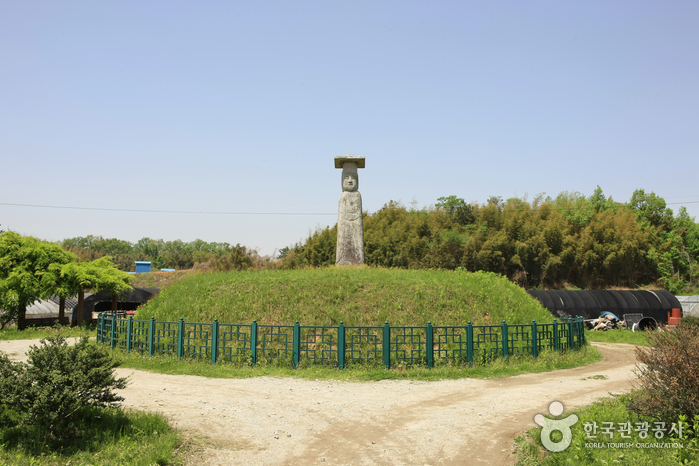
Iksan Godori Standing Stone Buddha is Treasure No. 46. The two Buddha statues (each measuring 424 cm) stand face-to-face at a distance of 200 meters apart and tell the story of an eternal, but unrequited love.
According to legend, the two Buddhas (one male, one female) are lovers that can only meet for one night in the twelfth month of the lunar calendar. After the sunset on that special day, the lovers are allowed to meet, but must return to their respective positions before the rooster crows at dawn.
The two statues are very representative of the Goryeo era, which produced many stone statues with minimal expression of the physical body. True to the era, each Buddha has almost no curves and is depicted with plain clothing and barely distinguishable arms.
On their heads, the Buddhas wear a crown topped with another square hat. With their square faces, small eyes, pug noses, and small lips, the Buddhas are reminiscent of guardian deities typically placed at the entrance of villages.
19.5Km 2025-10-23
419-12 Bonghak-ro, Jeongcheon-myeon, Jinan-gun, Jeonbuk-do
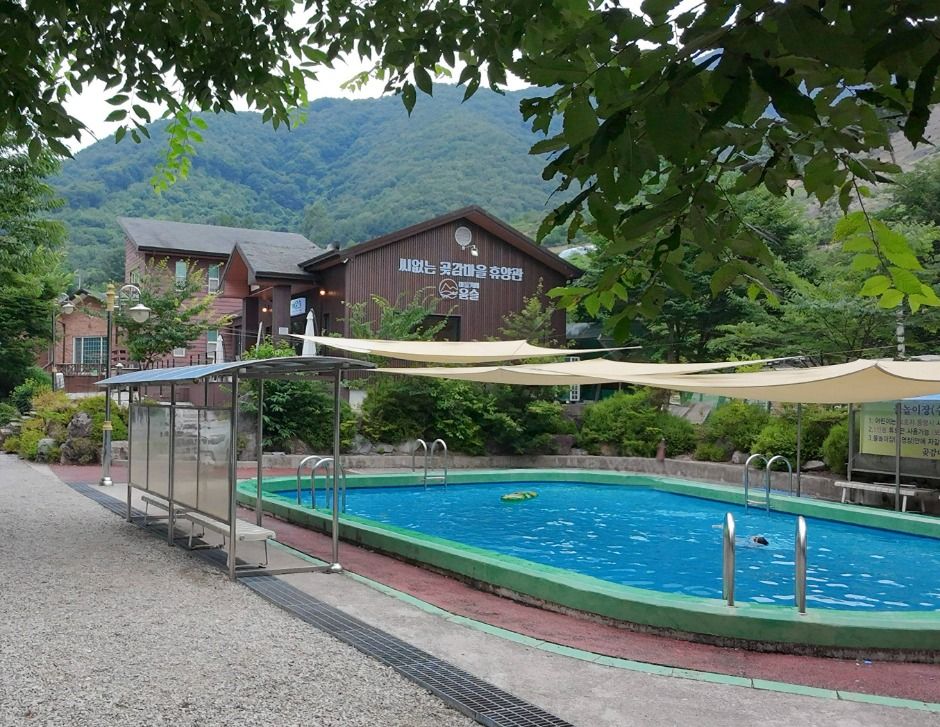
Hakdong Village was designated as a Farming Village in 2016 following a project to create a Mountain ecological village in 2004. Its representative experiences include making seedless dried persimmon, collecting freshwater snail, making persimmon tart, ecological garden programs, and various seasonal activities. The Seedless Persimmon Village Recreation Center provides accommodation and operates a restaurant managed by the women's association of Hakdong Village and a village cafe. Thanks to the clean natural environment, exciting seasonal activities can be enjoyed year-round, and a sense of community has been formed through the community village project.