Baemsagol Jirisan Sikdang (뱀사골 지리산식당) - Area information - Korea travel information

Baemsagol Jirisan Sikdang (뱀사골 지리산식당)

15.2Km    2024-04-07

271 Jirisan-ro, Sannae-myeon, Namwon-si, Jeonbuk-do
+82-63-626-8800

Baemsagol Jirisan Sikdang specializes in baeksuk (whole chicken soup) and heukdwaeji gui (grilled black pork). They prepare healthy dishes using wild vegetables and traditional Korean medicinal ingredients collected from Jirisan Mountain. In addition to bibimbap and acorn jelly salad, they also offer dishes like grilled deodeok. Visitors can also enjoy their meals on the outdoor tables set up by Dalgunggyegok Valley.

Jirisan Chilseongyegok Valley (칠선계곡(지리산))

Jirisan Chilseongyegok Valley (칠선계곡(지리산))

15.3Km    2022-07-29

Chuseong-ri, Hamnyang-gun, Gyeongsangnam-do
+82-55-970-1000

Chilseongyegok Valley is the most beautiful valley in Jirisan Mountain, and is one of the top three valleys in the nation, along with Cheonbuldonggyegok Valley in Seoraksan Mountain and Tamnagyegok Valley in Hallasan Mountain. The 16-kilometer valley stretching from Uitan of Macheon-myeon to Cheonwangbong Peak is characterized by very tough topography but beautiful scenery and is the only remaining primeval forest of Jirisan Mountain. It is also dotted with seven waterfalls and 33 ponds. The hike becomes more difficult as the trail enters the valley. Because the valley has taken many lives, some people call it "The Valley of Death." For that reason, visitors must apply in advance and hike with a guide. The trail in Chilseon Valley is a 9.4-kilometer course from Chuseong Village in Macheon-myeon to Cheonwangbong Peak, which does not follow the natural valley, due to the valley's steep and dangerous features. Starting from Chuseong Village, the trail passes Yongso Pond, Jujiteo Site, Chuseongmang Rock, Seonnyeotang Pond, Ongnyeotang Pond, Biseondam, Chilseonpokpo Falls, Daeryukpokpo Falls, Samcheungpokpo Falls and Mapokpo Falls, all before reaching Cheonwangbong Peak.

Gurye Cheoneunsa Temple (천은사(구례))

15.9Km    2021-10-02

209, Nogodan-ro, Gurye-gun, Jeollanam-do
+82-61-781-4800

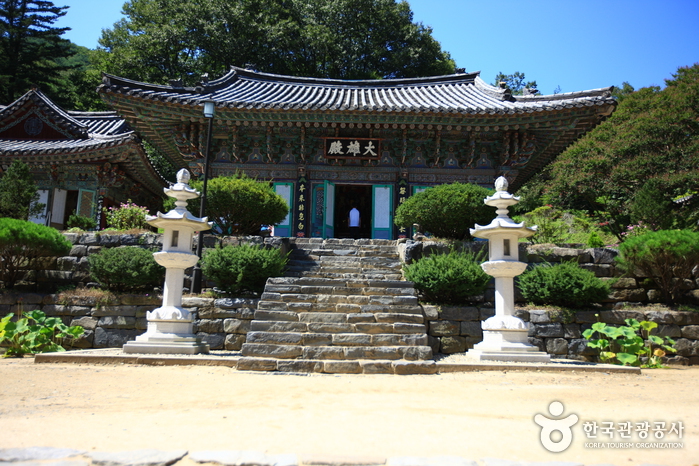
Located north of Gurye on Jirisan Mountain, and built during the Unified Silla Period, Cheoneunsa Temple is one of the three great Buddhist temples of Jirisan Mountain. Cheoneunsa Temple is believed to have been built by Monk Deokun and Monk Seru from India in AD 828 during the 3rd year of King Heungdeok. Because it initially laid next to spring water as clean and cold as a morning dew, the temple was also called Gamrosa, meaning Sweet Dew Temple. The spring water was rumored to clean one’s body and soul, leading to crowd of Buddhist monks to visit the temple. During King Chungryeol’s reign, the temple was named the Best Temple in the south.

The temple was burned down during the Imjin War (1592-1598) and then later rebuilt and renamed Cheoneunsa. Legend has it that while the temple was being rebuilt, a large serpent often came out of the spring. When the serpent was finally captured and killed, the spring waters suddenly dried up. Hence the name Cheoneunsa, meaning Disappearance of Spring Water, was given.

Dalgunggyegok Valley (달궁계곡)

Dalgunggyegok Valley (달궁계곡)

16.2Km    2024-04-07

Jirisan-ro, Sannae-myeon, Namwon-si, Jeonbuk-do

Dalgunggyegok Valley is a valley located within the Jirisan National Park. It spans 6 kilometers from Dalgung Village to Simwon Village. Surrounded by dense primeval forests, it showcases the pristine beauty of an untouched valley where human hands have yet to reach. The combination of the valley and cliffs creates stunning scenery. Nearby Dalgung Village also preserves remnants of ancient Mahan palaces.

Saseongam Hermitage (Gurye) (사성암(구례))

16.3Km    2024-02-19

303 Saseongam-gil, Muncheok-myeon, Gurye-gun, Jeollanam-do

Saseongam Hermitage is a hermitage located at the peak of Osan in Gurye (elevation 531m). It is estimated to have been built during the Baekje period (B.C. 18-A.D. 660). Many people visit it to see the sanctuary where the 53 statues of the Buddhist Avatamsaka Sutra are enshrined. The view of the Seomjingang River and the village from the temple is magnificent, and the refreshing breeze feels as if it penetrates through one's body, leading to its designation as a scenic spot in August 2014.

Gurye Seomjingang Cherry Blossom Trail (구례 섬진강 벚꽃길)

Gurye Seomjingang Cherry Blossom Trail (구례 섬진강 벚꽃길)

17.2Km    2022-10-25

Muncheok-myeon, Gurye-gun, Jeollanam-do
+82-61-780-2227

The Seomjingang Cherry Blossom Trail in Gurye follows National Roads 17 and 19 along the pristine Seomgjingang River. Stretching over 3 kilometers, the trail is lined with cherry blossom trees planted in 1992. As well as being a popular drive course, the trail can also be enjoyed on foot, and is even used as a marathon course. The trail has received recognition as one of the "100 Most Beautiful Roads in Korea." Restaurants along the trail serve local foods such as euneo hoe (sliced raw sweetfish) and minmul maeuntang (spicy freshwater fish stew).

Seoamjeongsa Temple (서암정사(함양))

17.9Km    2024-02-21

27-79 Gwangjeom-gil, Macheon-myeon, Hamyang-gun, Gyeongsangnam-do

Seoamjeongsa Temple belongs to Byeoksongsa Temple, which is at the entrance of the Chilseongyegok Valley of Jirisan Mountain. Monk Woneung rebuilt Byeoksongsa Temple, which had been damaged during the Korean War in 1950. This hermitage features the Buddha statues Woneung carved into the natural bedrock, a grotto sanctuary with statues of the Pure Land, Daebanggwangmun Gate, and Sajagul Cave.

Gwangyang Maehwa Village (광양 매화마을)

Gwangyang Maehwa Village (광양 매화마을)

18.4Km    2025-01-08

1563-1 Seomjingangmaehwa-ro, Gwangyang-si, Jeollanam-do
+82-61-772-9494

Following the Seomjingang River flowing down the outskirts of Jirisan Mountain is a village filled with plum trees. This village, Seomjin Village, is also known as the Maehwa (plum) Village for its abundant number of plum trees. Instead of crops and grains, plum trees are cultivated on farmlands, boasting white snow-like blossoms in March and bearing ripe plums in June. The annual Plum Blossom Festival takes place in the village every March when the plum blossoms are in full bloom.

Baegunsan Mountain Donggokgyegok Valley (백운산 동곡계곡)

Baegunsan Mountain Donggokgyegok Valley (백운산 동곡계곡)

18.8Km    2021-04-23

154, Yaksujedan-gil, Okryong-myeon, Gwangyang-si, Jeollanam-do
+82-61-797-3333

Donggokgyegok Valley is one of four large valleys on Baegunsan Mountain. The valley opens up towards Gwangyang, with the waters of Dongcheon Stream flowing into Gwangyangman Bay. Donggokgyegok Valley is wide, making it convenient for transportation, and perfect for a family getaway during the holidays. Located along Hanjae Pass between the mountain summit and Ttoaribong Peak on the west side, the valley is also sometimes called Dapgoksimni. The valley stretches a distance of 10 kilometers and is especially beautiful in fall when surrounded by vibrant autumn foliage. Donggokgyegok Valley is a protected nature reserve with over 900 various species of vegetation.

Cheong Maesil Farm (홍쌍리 청매실농원)

Cheong Maesil Farm (홍쌍리 청매실농원)

18.9Km    2024-02-01

55 Jimak 1-gil, Daap-myeon, Gwangyang-si, Jeollanam-do

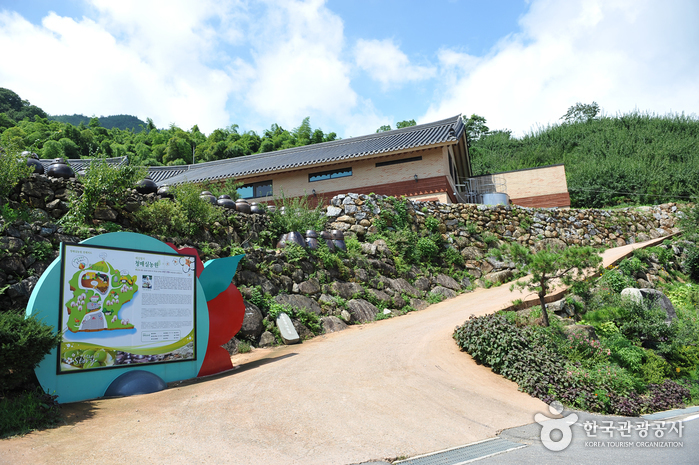
Cheong Maesil Farm sprawls across an expansive area of over 165,000 m2 at the foothills of Baegunsan Mountain, which rises to an elevation of 1,217 meters. The farm has been lovingly tended to by the renowned Plum Blossom Doctor, Hong Ssang-ri, for decades, drawing visitors from all over the country. In March, Cheong Maesil Farm transforms into a breathtaking canvas of colors—with blue and red plums, the delicate lily trees and the vibrant cornelian cherries all blossoming in unison. For photo enthusiasts, the farm boasts a dedicated photo zone, while the Pavilion Observatory offers panoramic views that are a favorite among visitors. From this spot, one can marvel at the picturesque scenery of Gwangyang Maehwa Village, Seomjingang River, and Hadong Village on the river’s other side. Visitors in spring are recommended to attend the annual plum festival centered around Cheong Maesil Farm. Moreover, the nearby Gwangyang Plum Culture Center makes for an enriching stopover.