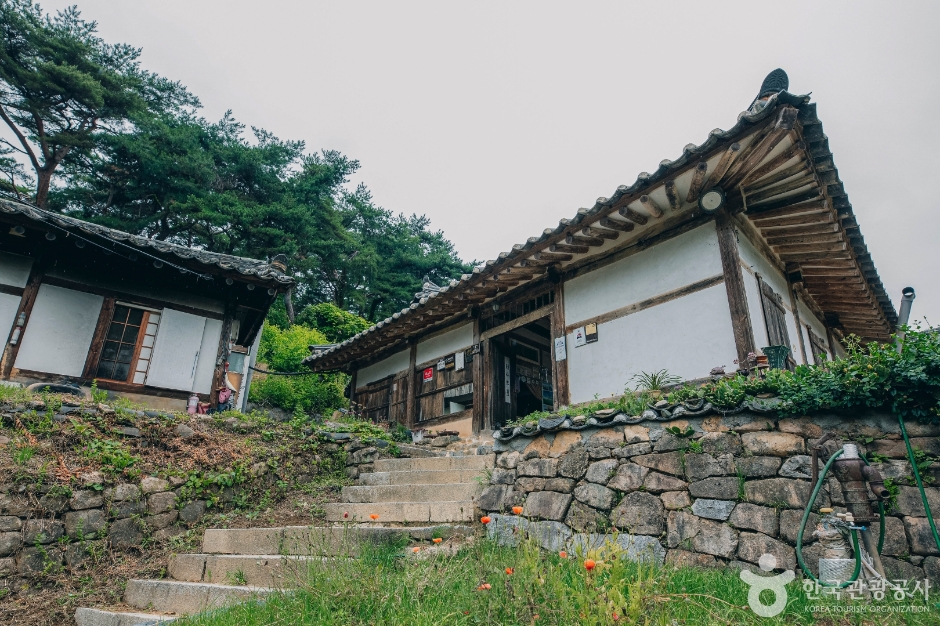
An dong gotak Esanru (안동고택 이상루)
15.4Km 2024-12-20
3193-6 , Pungsantaesa-ro, Andong-si, Gyeongsangbuk-do
Andong Old House Lee Sangnu stands at the foot of Cheondeungsan Mountain in Andong, Gyeongsangbuk-do. The house has a 250-year history and is still used for family rituals commemorating the founder of the Andong Kim Clan. Lee Sangnu is a dignified two-story wooden pavilion with an attic, while at Yisangru visitors can set a fire in the fire pit in the winter or sleep in a tent or mosquito net in the summer. Cultural programs are available: tea ceremonies, knot craft, the mask dance, natural dyeing, Korean paper craft, and learning about filial piety. The Old House’s location between Andong Hahoe Village and Dosan Seowon makes it convenient for local site-seeing.
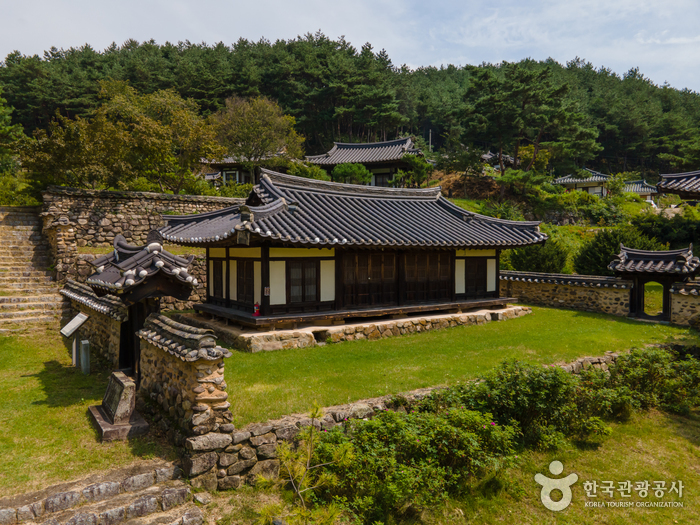
Andong Gunja Village (안동 군자마을)
15.7Km 2024-02-23
29 Gunjari-gil, Waryong-myeon, Andong-si, Gyeongsangbuk-do
Andong Gunja Village, established 600 years ago, was relocated 2 kilometers from its original site due to submergence during the construction of Andong Dam. The village's tradtional houses and pavilions were meticulously moved to preserve their historic value. Known as Gunja Village, it derives its name from a remark by the Joseon-era civil servant Jeong Gu, who noted, "There is no one in the village who is not a Gunja (gentleman)". The village is home to over 20 ancient houses, including the Hujodang Head House and Takcheongjeong Pavilion, maintained in their original state. Moreover, the village archives over 1,000 documents detailing adoption, property ownership, and labor distribution.
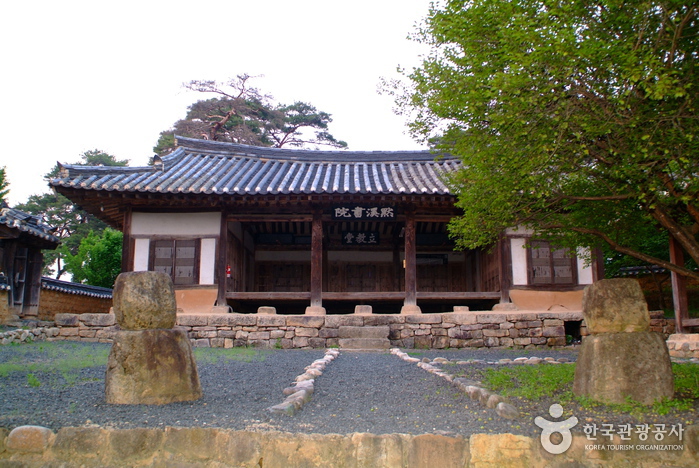
Mukgyeseowon Confucian Academy & Mukgye Head House of Andong Kim Clan (묵계서원 및 안동김씨 묵계종택)
16.6Km 2024-05-29
1736-5 Chunghyo-ro, Giran-myeon, Andong-si, Gyeongsangbuk-do
Mukgyeseowon Confucian Academy was founded in 1687, but was mostly destroyed in 1869, leaving just the lecture hall behind. Recently, these removed buildings have slowly been rebuilt to restore the academy to its former glory.
Mukgye Head House of the Andong Kim Clan is located near the Confucian academy and features a shrine to Bobaekdang, the founder of the academy. The house was built in a square shape with an open courtyard in the middle and has been maintained in good condition.
![Bongjeongsa Temple [UNESCO World Heritage] (봉정사 [유네스코 세계문화유산])](http://tong.visitkorea.or.kr/cms/resource/16/2654216_image2_1.jpg)
Bongjeongsa Temple [UNESCO World Heritage] (봉정사 [유네스코 세계문화유산])
18.3Km 2023-05-18
222, Bongjeongsa-gil, Andong-si, Gyeongsangbuk-do
Bongjeongsa Temple is believed to have been built in 672 by the Great Buddist Monk Uisang. However, other documents seem to state that Neungin Daedeuk, a disciple of Monk Uisang, established the temple. During the Korean War, many documents related to the temple were destroyed, so much of the history has been lost. In 1972, while reconstruction work was being done on Geungnakjeon Hall, records were discovered stating the hall was repaired in 1363. This discovery gave concrete evidence that Geungnakjeon Hall is the oldest wooden building in the nation.

Yekki Village (예끼마을)
18.6Km 2024-05-30
14 Seonseong-gil, Dosan-myeon, Andong-si, Gyeongsangbuk-do
Yekki Village is an artistic village in Andong. The alleyways are decorated with colorful murals, the galleries feature work from local artists, and visitors can experience a hanok experience. The biggest charm of the village is the Sunseong Susang-gil Waterway, a floating path across the lake.
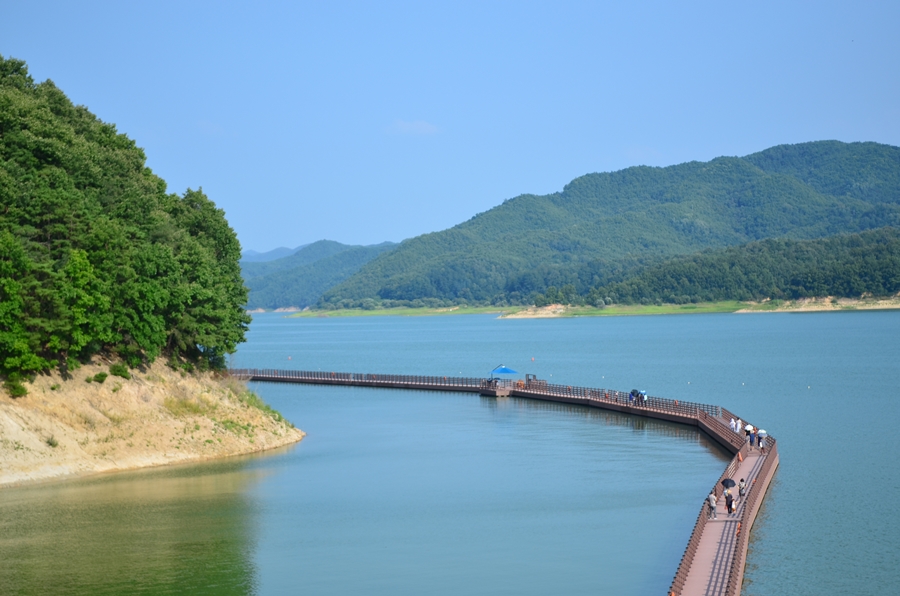
Sunseong Susang-gil Waterway (선성수상길)
18.6Km 2024-05-30
14 Seonseong-gil, Dosan-myeon, Andong-si, Gyeongsangbuk-do
Sunseong Susang-gil Waterway is a 1-kilometer-long floating pathway that connects Sunseonghyeon Culture Complex with Andong Lakeside Park. Because the pathway floats on the water, it rocks with each step one takes, creating the feeling of truly walking on water. At the halfway point of the waterway is an exhibition of black-and-white photos and materials from Yean Elementary School, lost to the formation of the lake following the construction of Andong Dam in 1974.
 English
 한국어
한국어 日本語
日本語 中文(简体)
 Deutsch
 Français
 Español
 Русский


