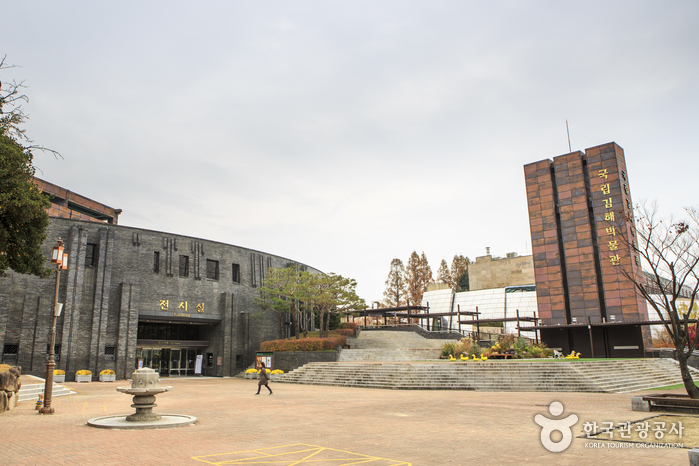
Gimhae National Museum (국립김해박물관)
15.7Km 2024-01-23
190 Gayaui-gil, Gimhae-si, Gyeongsangnam-do
The Gimhae National Museum was opened on July 29, 1998, in order to research and preserve the cultural heritage of the ancient kingdom of Gaya. The museum is at the foot of Gujibong Peak in Gimhae-si, the spot where the kingdom is believed to have been founded. The museum exhibits the cultural assets of Gaya, as well as cultural relics from the prehistoric age in the Busan and Gyeongsangnam-do areas, and the cultural heritage of Byeonhan, which was the foundation for the growth of Gaya.
The exterior of the museum is made using black bricks representing iron ore and charcoal famous during the Gaya Kingdom. There are two exhibition halls, while the walkway to the halls have approximately 1,300 artifacts in display.
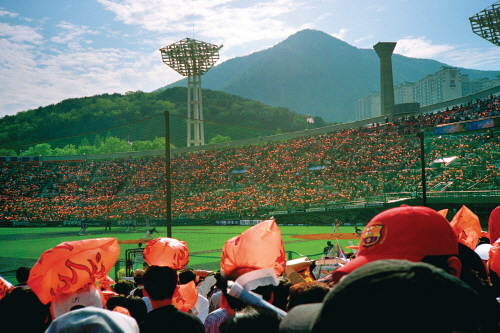
Busan Sports Complex (부산종합운동장)
15.8Km 2021-07-22
344, World cup-daero, Yeonje-gu, Busan
+82-51-504-8001
Established in 1986, the Busan Sports Complex features the main stadium, Sajik indoor swimming pool, an indoor gymnasium, Sajik Baseball Ground, and an athletes' training center. The main stadium was the venue for the 2002 Asian Games and several matches during the 2002 FIFA World Cup. The Busan Sports Complex regularly hosts international sporting and cultural events, while providing excellent facilities for personal as well as group training.

Busan Asiad Main Stadium (부산 아시아드주경기장)
15.8Km 2024-03-15
344 World cup-daero, Yeonje-gu, Busan
+82-51-500-2123
Busan Asiad Main Stadium, completed in 2001, was constructed to host the 2002 World Cup and the 2002 Busan Asian Games. Its design, closer to a circle than a straight line, offers both grandeur and comfort. It serves as the home stadium for the Busan IPark football club and hosts various events including track and field competitions and K-pop performances. Adjacent to it are a baseball stadium and an indoor gymnasium.
![Mh Modern House - Homeplus Gimhae Branch [Tax Refund Shop] (MH 모던하우스 홈플러스김해)](http://tong.visitkorea.or.kr/cms/resource/56/2885956_image2_1.jpg)
Mh Modern House - Homeplus Gimhae Branch [Tax Refund Shop] (MH 모던하우스 홈플러스김해)
16.0Km 2024-04-23
2078, Gimhae-daero, Gimhae-si, Gyeongsangnam-do
-
Gimhae Arts and Sports Center (김해문화의전당)
16.0Km 2022-12-29
2060, Gimhae-daero, Gimhae-si, Gyeongsangnam-do
+82-55-320-1234
The Gimhae Arts and Sports Center is a performance hall for high-class performances. Maru Hall is a multi-purpose theater that also contains a moving orchestra shell with a sound reflection board for a smaller concert hall inside the theater. Nuri Hall is an experimental theater for performances in a variety of themes. The center also features the outdoor theater Aedureum Madang, Yunseul Art Gallery, Media Center, Sports Center, and Aram Learning Center, as well as a café and restaurants.
Tomb of King Suro (수로왕릉)
16.0Km 2024-01-23
26 Garak-ro 93beon-gil, Gimhae-si, Gyeongsangnam-do
+82-55-332-1094
King Suro founded the Garak Kingdom in AD 42 and married Heo Hwang-ok, a princess from the Indian country of Ayuta, in AD 48. He was the founder of the Gimhae Kim family. Heo Yeop, a Yeongnam governor, gave the tomb its current look in the 13th year of the reign of King Seonjo (1580). The tomb compound includes various buildings, including the Sungseonjeon (where the ancestral tablets of King Suro and his queen are kept), Anhyanggak, Jeonsacheong, and Jegigo, as well as stone structures, such as a sindobi (tombstone) and gongjeokbi (monument established to pay homage the deceased). The tombstone in front of the royal tomb was built in the 25th year of the reign of King Injo (1647) of the Joseon dynasty. The name Sungseonjeon was bestowed on the tomb by King Gojong in the 21st year of his reign (1884).
![Gimhae Korean-style house [Korea Quality] / 김해한옥체험관 [한국관광 품질인증]](http://tong.visitkorea.or.kr/cms/resource/81/3016981_image2_1.jpg)
Gimhae Korean-style house [Korea Quality] / 김해한옥체험관 [한국관광 품질인증]
16.1Km 2023-10-25
40 , Wangneung-gil, Gimhae-si, Gyeongsangnam-do
+82-55-322-4735~6
The Hanok Experience Center in Gimhae, Gyeongsangnam-do, offers guests a taste of old-time hanok life. Rooms are furnished with traditional items, while the spacious wooden floor can be used as a meeting room. Rooms in the sarangchae are on the small side but have an upper floor with scenic views. The room in the annexe building has a traditional sleeping mat surrounded by a large folding screen, and feels like a scene from a historical drama. Each room has a modern bathroom, There is a traditional experience program, and information services in English and Japanese.
Sureungwon Garden (수릉원)
16.1Km 2024-01-23
35 Bunseong-ro 261beon-gil, Gimhae-si, Gyeongsangnam-do
Sureungwon Garden is a place themed around the meeting between King Suro, the founder of Gaya, and Queen Heo, who was the princess of Ayuta Kingdom, known as India. The name Sureungwon Garden also contains the meaning of an elegant forest where King Suro and Queen Heo walked together. An ecological park measuring 39,600 m2 has been created along a low ridge that connects the Tomb of King Suro, an important cultural heritage of the Gaya period; the Ancient Tombs in Daeseong-dong, the tombs of the Gaya kings; and the Bonghwang-dong Historic Site. It was created by representing the maritime kingdom of Gaya, imagining a pond of the garden where King Suro and Queen Heo used to walk, and planting prickly waterlilies and yellow floating hearts that are believed to have inhabited wetlands in the Gaya period. Trails along the cozy forest and pond make it easy to look around comfortably.
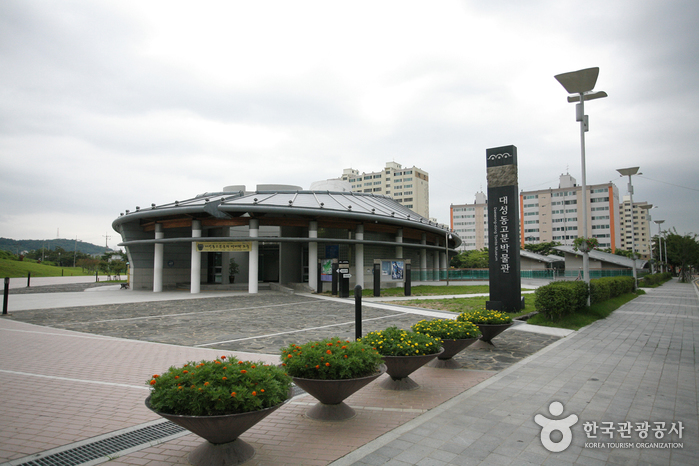
Museum of the ancient tombs in Daseong-dong (대성동고분박물관)
16.2Km 2023-01-02
126, Gayaui-gil, Gimhae-si, Gyeongsangnam-do
+82-55-350-0401
The Museum of the ancient tombs in Daseong-dong displays artifacts unearthed from the four excavations of the Daeseongdong Tumuli. Highlighting often overlooked relics of the Geumgwan Gaya, the museum has three ground-floor exhibit halls and several underground auxiliary facilities. The main exhibits include a life-sized statue of a mounted soldier and a warrior statue, both recreated based on bones excavated from the tumuli of Yean-ri. The museum relies heavily on videos and dioramas to help visitors explore all the museum has to offer.
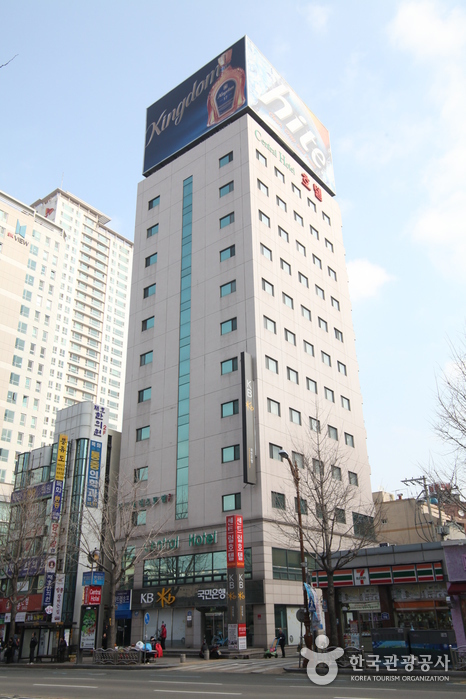
Central Hotel (부산 센트럴호텔)
16.7Km 2024-08-01
1122 , Jungang-daero, Yeonje-gu, Busan
+82-51-866-6525
The Central Hotel in Yeonje-gu, Busan is conveniently located for travellers just 50m away from Yeonsan-dong subway station, while and Busan Station, Gimhae Airport, and Busan Port Passenger Terminal just 30 minutes away by car. The first floor lobby is equipped with bank, coffee shop, and restaurant facilities. Pay-for breakfast is available, and English, Japanese and other foreign languages are spoken.
 English
 한국어
한국어 日本語
日本語 中文(简体)
 Deutsch
 Français
 Español
 Русский


