F1963
19.0Km 2025-11-17
20 Gurak-ro 123beon-gil, Suyeong-gu, Busan
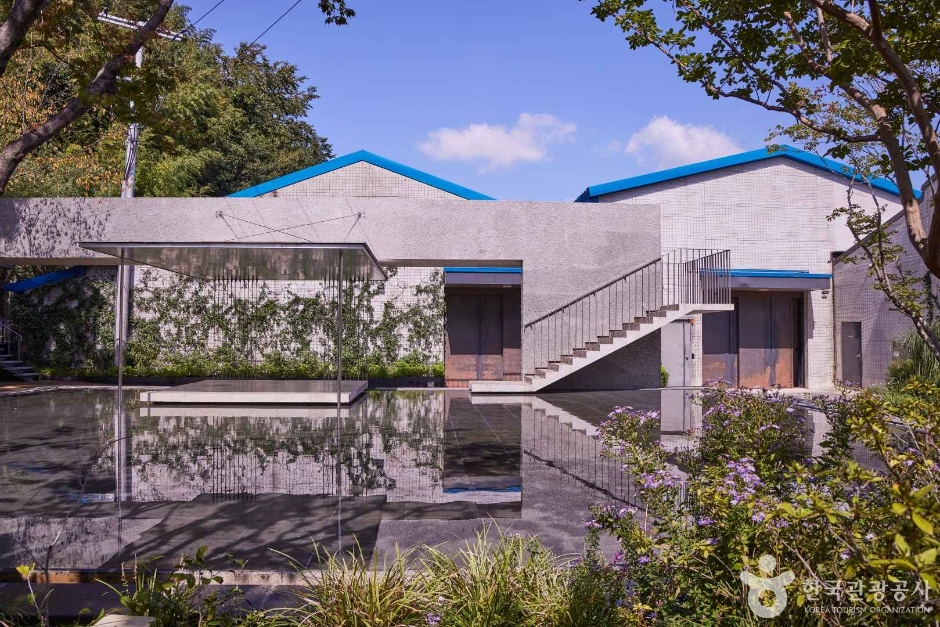
F1963 is a representative cultural complex and an emerging landmark in Busan. This factory produced wires in the past for about 45 years from 1963 to 2008. 2016 Busan Biennale was a turning point for this building as the building was transformed into a space for art and culture; various cultural events take place and it has an art library, exhibition hall, and concert hall. The base design and framework from the old factory were preserved during the renovation, leaving traces of the old building that give its unique atmosphere. Regenerated architecture and walking trails outside the space are designed to offer a pleasant walk. Visitors can also enjoy food, drinks, and activities inside the building from renowned branch stores such as Terarosa, a famous cafe in Gangneung; Boksoondoga, where one can taste the essence of traditional Korean fermented makgeolli (unrefined rice wine), and Hwasumok Flower & Garden, where visitors can take gardening and flower classes.

line-up dental hospital (라인업치과병원)
19.1Km 2025-11-28
3rd–4th Floors, 26 Seomyeonmunhwa-ro, Busanjin-gu, Busan
Line-up Dental Hospital is a hospital-level medical institution that has been operating in Seomyeon, Busan for 14 years since its opening in 2012. Three medical staff, including Director Hong Hoon-pyo, a specialist in oral facial surgery and integrated dentistry, and oral surgery, orthodontics, preservation, and prosthetics, will cooperate. It is a hospital where all dental treatments, from cavity treatment to implants, correction, facial contour, and bilateral surgery, are available in Busan, Gyeongnam, and Ulsan
Seomyeon Underground Shopping Center (서면지하도상가)
19.1Km 2024-12-02
737 Jungang-daero, Busanjin-gu, Busan
+82-51-713-8261
If
you walk through the busy area of Seomyeon in Busan, it's easy to see that this
underground shopping area has a greater number of clothing and accessory
shops than other places. Starting with its statue of Oryukdo Islands, one of
the symbols of Busan, Seomyeon Underground Shopping Center is a great place
to find various brands at more affordable prices.
![Olivia Hassler - Seomyeon Branch [Tax Refund Shop] (올리비아하슬러 서면)](http://tong.visitkorea.or.kr/cms/resource/53/2885353_image2_1.jpg)
Olivia Hassler - Seomyeon Branch [Tax Refund Shop] (올리비아하슬러 서면)
19.1Km 2024-04-17
Na-10, Lotte World Underground Shopping Center, 35, Bujeon-ro 95beon-gil, Busanjin-gu, Busan
-
Himart - Centum Branch [Tax Refund Shop] (하이마트 센텀점)
19.1Km 2024-04-18
207, Haeun-daero, Haeundae-gu, Busan
-
BGN Eye Hospital (밝은눈안과병원)
19.2Km 2025-10-23
729 Gaya-daero, Busanjin-gu, Busan
BGN EYE HOSPITAL is a first-generation ophthalmology hospital that performs vision correction surgery. Since its opening in 2001, it has grown steadily and become a leading ophthalmology hospital in Busan.
In addition to 1:1 personalized surgeries such as presbyopia correction/cataract surgery, SMILE PRO, SMILE/LASIK/LASEK/intraocular lens implantation, we also provide treatment for retinal diseases, glaucoma, and dry eyes through systematic examinations and systems.
With state-of-the-art examination, surgical equipment at the level of university hospitals, and skilled medical staff in each field, we are always making all efforts to provide a bright vision to our customers.
All floors from the basement level to the 8th floor of our hospital building are for ophthalmic treatment, so you can receive more specialized ophthalmic treatment.
Kim Byoung Joon Ledas Varicose Vein Clinic (김병준 레다스 흉부외과의원)
19.2Km 2025-10-23
(11th-13th Floors, Youngkwang Bookstore Building), 10 Seomyeonmunhwa-ro, Busanjin-gu, Busan
With more than two decades of dedicated research and over 25,000 clinical cases, Dr. Kim Byoung Joon, a distinguished cardiothoracic surgeon, continually strives to provide a comfortable and safe medical environment for his patients.
At Kim Byoung Joon LEDAS Varicose Vein Clinic, we deliver world-class medical services, having earned Joint Commission International (JCI) accreditation three times in a row, Korean Accredited Hospitals for Serving Foreign Patients (KAHF) certification three times consecutively, and the distinction of being the first in the Gyeongsang region to achieve Global Health Accreditation (GHA).
Our commitment to excellence has been recognized with the Prime Minister's Commendation for Global Healthcare Merit, and in 2023, we were honored as an excellent medical tourism destination by the Ministry of Justice.
Kim Byoung Joon LEDAS Varicose Vein Clinic is dedicated to treating varicose veins with a focus on preventing recurrence through a comprehensive approach that covers every step from examination to treatment and management. Utilizing minimally invasive and non-incision techniques, we aim for a complete and lifelong cure of varicose veins, ensuring our patients receive the most advanced care modern medicine has to offer.
Design Plastic Surgery Clinic (디자인성형외과의원)
19.2Km 2025-11-26
10F, 785, Gaya-daero, Busanjin-gu, Busan
"Plastic surgery is ultimately about design!"
Located in Seomyeon, Busan, Design Plastic Surgery Clinic features two board-certified plastic surgeons who provide personalized one-on-one care throughout the entire process, from consultation to surgery and post-operative management. Specializing in breast surgery, the clinic also offers a wide range of procedures, including facial rejuvenation, lifting, eye and nose surgery, fillers, and skincare treatments, helping clients achieve their ideal look. For breast surgery consultations, we offer detailed discussions using a 3D virtual simulation program, pre- and post-operative ultrasound examinations, private recovery rooms, shampoo services, and a comprehensive aftercare process lasting up to six months. With years of seamless collaboration, our plastic surgeon duo is dedicated to crafting natural beauty.
B-Con Ground (비콘그라운드)
19.3Km 2025-11-17
49-1 Mangmibeonyeong-ro, Suyeong-gu, Busan
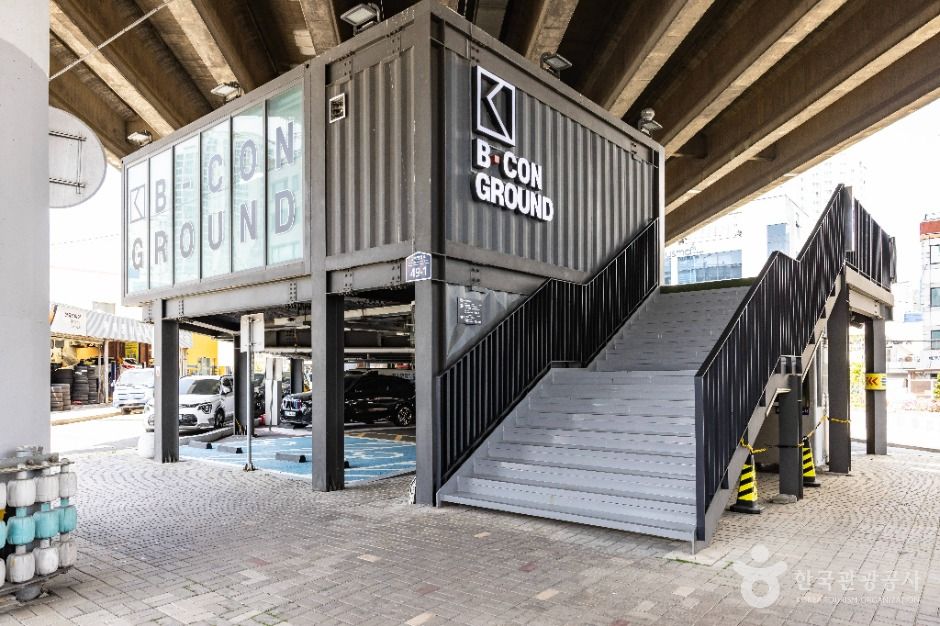
B-Con Ground is a cultural complex in Busan, built by utilizing the empty space under an overpass. The complex is a cultural hub offering various exhibitions, cultural events, activities, and creative spaces for visitors. From playground and shopping ground to cafes, restaurants, art galleries, and a family deck, it truly offers all under one roof. Moreover, it provides a space for exhibition for disabled artists, as well as a venue for social entrepreneurs to hold exhibitions, cultural events, and sell artwork.
![AK Golf - Lotte Busan Branch [Tax Refund Shop] (에이케이골프 롯데부산)](http://tong.visitkorea.or.kr/cms/resource/21/2889521_image2_1.jpg)
AK Golf - Lotte Busan Branch [Tax Refund Shop] (에이케이골프 롯데부산)
19.3Km 2024-04-16
772, Gaya-daero, Busanjin-gu, Busan
-
 English
 한국어
한국어 日本語
日本語 中文(简体)
 Deutsch
 Français
 Español
 Русский


