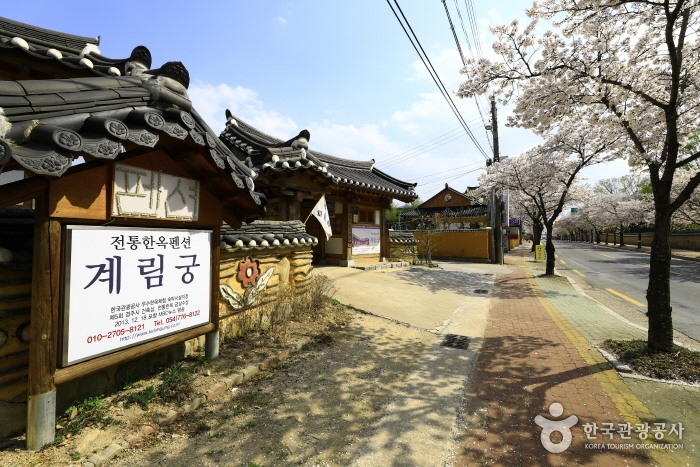
KELIMGUNG (계림궁)
12.1Km 2024-08-01
932 , Poseok-ro, Gyeongju-si, Gyeongsangbuk-do
Gyerimgung is a comfortable hanok pension near the Oreung tombs in, Gyeongju, Gyeongsangbuk-do; the name derives from Gyerim, the forest birthplace of Kim Alji who helped found the ancient Silla kingdom. The main building has four rooms and a shared kitchen, and there are two guest rooms in the yard, where barbecues can be held; reservations are required. Residents can experience traditional activities such as Gamasot cooking and Neolttwigi, and enjoy strolling in the nearby Oreung. Other nearby attractions include Banwolseong, Cheomseongdae, and Daereungwon.

Gyeongjuhyanggyo Local Confucian School (경주향교)
12.1Km 2025-06-12
27-20 Gyochonan-gil, Gyeongju-si, Gyeongsangbuk-do
Gyeongjuhyanggyo Local Confucian School is located near Gyochon Hanok Village in Gyeongju. The surrounding areas, Gyochon, Gyori, and Gyodong, derive their names because of this school. Although the exact date of its original construction is unknown, Gyeongju Hyanggyo was renovated during the reign of King Seongjong of the Joseon Dynasty, modeled after Seoul’s Seonggyungwan National Academy. The buildings follow the typical Confucian layout of “hall in the front, shrine in the back.” While seowon were private academies, hyanggyo were public institutions. Although it no longer serves the educational purpose, every spring and autumn it hosts traditional Confucian rituals. It also offers cultural programs such as tea ceremonies, rice-cake pounding, and archery. From April to October it hosts traditional Korean-style demonstration weddings, where visitors can participate in the ceremonies for free.
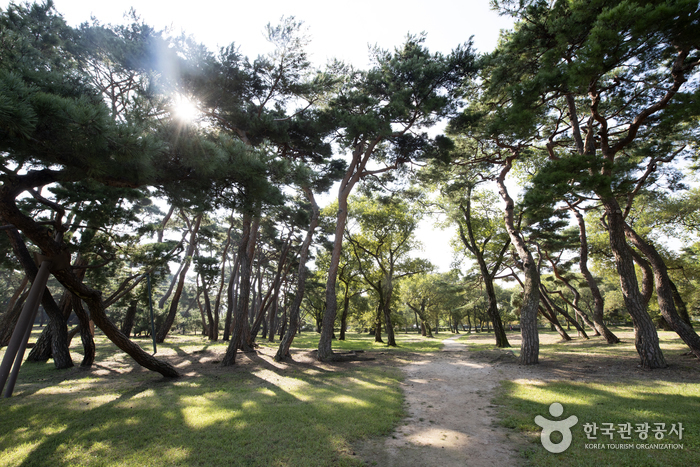
Gyeongju Five Royal Tombs (경주 오릉)
12.1Km 2025-06-13
38-9 Geumseong-ro, Gyeongju-si, Gyeongsangbuk-do
The Five Royal Tombs (called Oreung in Korean) have been officially designated Historic Site No. 172 and are the final resting places of four kings of the Park clan—King Park Hyeokgeose (founder of the Silla Kingdom), King Namhae, King Yuri, and King Jabi—and one queen (Queen Aryeong, wife of King Park Hyeokgeose).
To the east of the royal tombs lies Sungdeokjeon Shrine, which holds the ancestral tablet of King Park Hyeokgeose. Behind the shrine is the Aryeongjeong Well, said to be the birthplace of Queen Aryeong.
Gyeongju Gyochon Traditional Village (경주 교촌마을)
12.2Km 2025-05-21
39-2 Gyochon-gil, Gyeongju-si, Gyeongsangbuk-do
At Gyeongju Gyochon Village, visitors can see the House of the Gyeongju Choi Clan (Important Folklore Material No. 27) and try some Gyeongju Gyodong Beopju Liquor (Important Intangible Cultural Asset No. 86-3). The village centers around the Gyeongju Choi Clan, a family known to have maintained their wealth for over 12 generations, producing many important people. Visitors can learn about the lifestyle and spending habits that enabled the family to do this. The village is also home to the site of Yoseokgung, the house of Silla Princess Yoseok. Nearby attractions include Gyerim Forest, Naemulwangneung Royal Tomb, and Gyeongjuhyanggyo Local Confucian School.
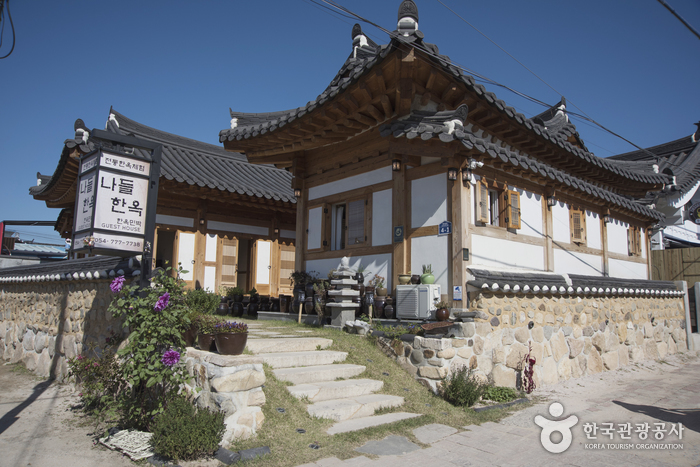
Nadul Hanok (나들한옥)
12.4Km 2024-12-19
4-1 , Jjoksaem-gil, Gyeongju-si, Gyeongsangbuk-do
Nadeul Hanok is a newly-built hanok stay in Gyeongju, Gyeongsangbuk-do, which combines traditional hanok style with modern convenience. All rooms come with bed, toilet and bathroom, and thermostat-controlled ondol underfloor heating. In the shared lounge is an automatic coffee machine, a water purifier, toaster, electric range and electric kettle - plus emergency medical kit - all of which are free of charge to residents. Breakfast is also provided without charge. Nadeul Hanok is just a minute's walk from Gyeongju Cheomseongdae, with other famous Gyeongju sites also within walking distance.
Woljeonggyo Bridge (월정교)
12.4Km 2025-06-13
274 Gyo-dong, Gyeongju-si, Gyeongsangbuk-do
Woljeonggyo Bridge, located in Gyo-dong, Gyeongju, was built during the Unified Silla period (AD 676-935), but was burnt down during the Joseon dynasty. Through historical research, the bridge was rebuilt in April 2018 to become the largest wooden bridge in Korea. According to Samguk Sagi (History of the Three Kingdoms), the bridge was built during the 19th year of King Gyeongdeok’s reign (AD 760), connecting Wolseong and Namsan together. The historical research to rebuild the bridge lasted from November 26, 1984 to September 8, 1986, finding that the bridge was made with wood for the first time. The first rebuilding of the bridge was from 2008 to 2013 and the finishing touches were added from April 2016 to April 2018. Through this research and rebuilding process, future restoration of historical buildings have a better reference to use.
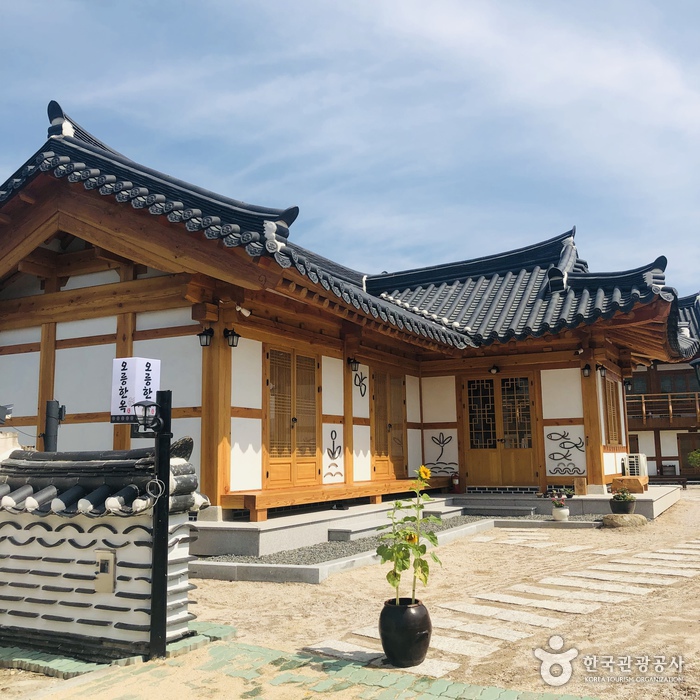
Gyeongju Oreung Hanok (경주오릉한옥)
12.4Km 2024-12-19
12-17 , Gukdang 2-gil, Gyeongju-si, Gyeongsangbuk-do
Oreung Hanok in Gyeongju, is a guesthouse just across Namcheon Stream from Gyeongju’s Five Royal Tombs (‘oreung’ in Korean). The guesthouse’s location gives it a panoramic view not only of the tomb complex but over much of the 1,000 year old city of Gyeongju. The cozy rooms have double doors to block drafts and noise, and clean white bedding; while the spacious yard outside is a good spot for taking photos. The bustling Hwangnidan Street is a 15-minute walk away, while must-see sites Cheomseongdae, the Daereungwon tomb complex, Donggung Palace and Wolji Pond are 10 minutes away by car.
Wiyeonjae Hanok Stay (위연재)
12.4Km 2024-12-19
7 , Jjoksaem-gil, Gyeongju-si, Gyeongsangbuk-do
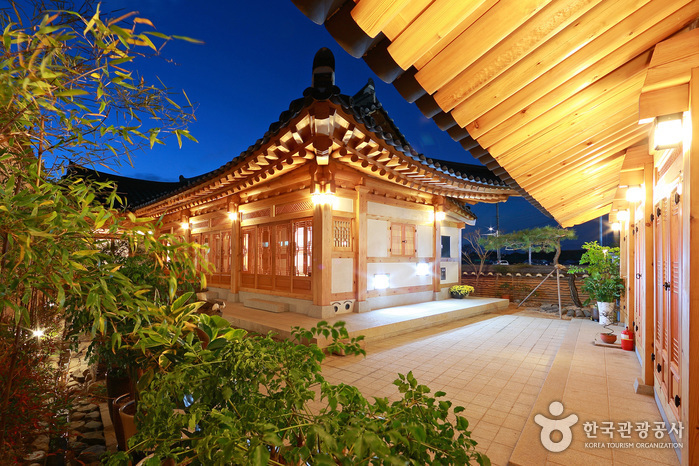
Wiyeonjae hanok stay stands on the edge of the Gyeongju Historic Area, so that from here Cheomseongdae, Daereungwon, Donggung Palace, Wolji Pond and the other historic sites can be reached on foot. It’s a place where Silla period relics were excavated during construction, and you can still feel the 1,000 year history of the Silla capital. All rooms are ondol-style, and all have bathrooms. One room, Munmu, has a numary(raised floor) which is a great spot for taking photos. A free breakfast is provided and parking space is available.
SOSEOLJAE (소설재(첨성대점))
12.5Km 2024-08-01
46 , Poseok-ro 1050beon-gil, Gyeongju-si, Gyeongsangbuk-do
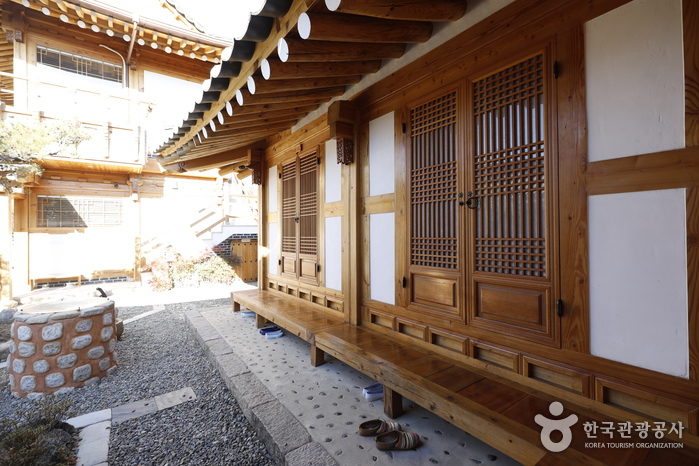
Located on a side street in Cheomseongdae in Gyeongju, Gyeongsangbuk-do, Soseoljae is a hanok stay combining traditional charm with modern facilities.The larger stand-alone guestroom has its own tea room, while 11 other rooms accomodate 2 or 3 people. All rooms are equipped with a toilet/bathroom and air conditioning/heating, and there is a small cafe at the hanok entrance. Soseoljae is close to Gyeongju Station and Gyeongju Express Bus Terminal and tourist attractions such as Cheomseongdae, Daereungwon, and Hwangnyongsaji are also nearby.
Hanokinn (한옥人(한옥인))
12.7Km 2024-12-19
19 , Poseok-ro 1050beon-gil, Gyeongju-si, Gyeongsangbuk-do
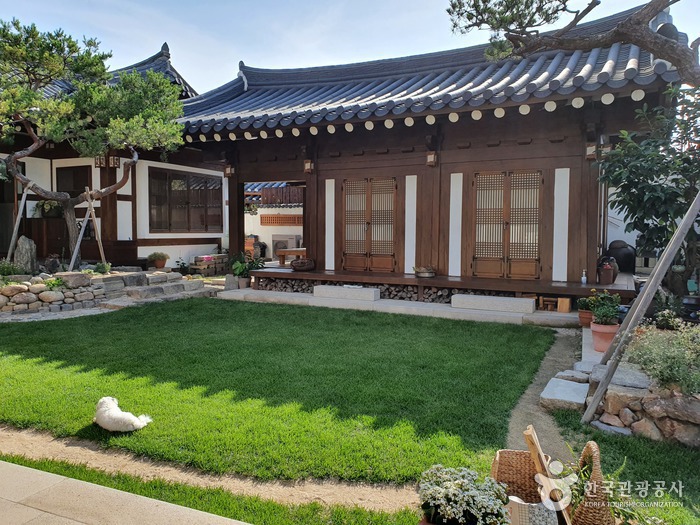
The Hanok Inn is a hotel-class traditional guesthouse in Sansu-dong, Gyeongju, Gyeongsangbuk-do, which consists of 4 separate buildings. The sarangchae - a two-story hanok with a hipped roof - contains a double room and a large family room, finished with red clay and hanji paper; both rooms have toilets. The annex building is a one-storey gable-roofed hanok with a raised wooden patio where guests can drink tea and relax. In the main building there’s a hanok experience room and a friendly cafe-restaurant where breakfast is served. The hanok’s back gate gives onto an alley leading to Hwangnidan-gil, Cheomseongdae Observatory, and the Daereungwon tomb complex; this alley is a favorite photo spot.
 English
 한국어
한국어 日本語
日本語 中文(简体)
 Deutsch
 Français
 Español
 Русский


