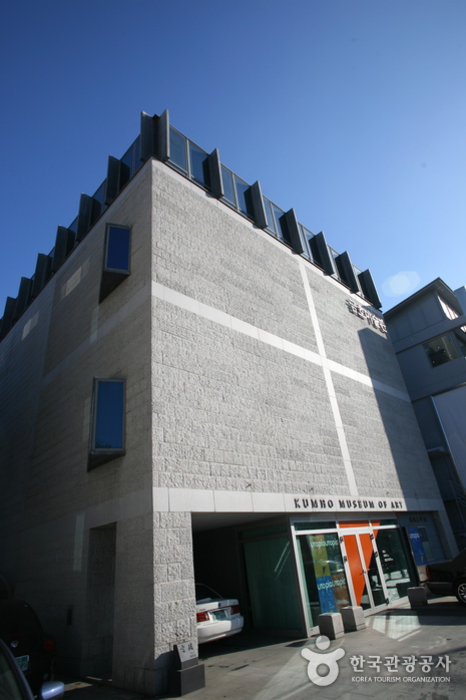
Museo de Arte Kumho (금호미술관)
434.5M 2023-02-22
Samcheong-ro 18, Jongno-gu, Seúl.
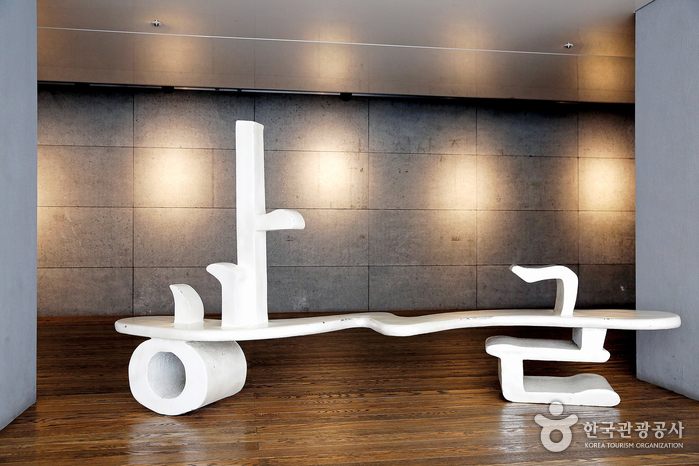
El Museo de Arte Kumho fue inaugurado el 10 de mayo de 1989, con el objetivo de proporcionar espacio para la exposición de obras de los nuevos artistas y de esta manera desarrollar, capacitar y beneficiar el sector de la cultura artística. Luego, en octubre de 1999, con la llegada de Park Gang-ja, la nueva titular del museo, se transformó en un complejo artístico y cultural.

Museo del Hanbok de Lee Rhee-za (이리자 한복전시관)
448.5M 2022-06-30
Samcheong-ro 20, Jongno-gu, Seúl.
Este museo, en lugar de representar simplemente los hanbok (trajes tradicionales), demuestra de manera simple los ritos de paso que debe atravesar una persona, desde su nacimiento hasta la muerte, y, en su conjunto, presenta la vestimenta y sus accesorios correspondientes. Los trajes tradicionales son obra de la famosa diseñadora de hanbok Lee Rhee-za, los cuales también se pueden utilizar en la actualidad. Además de los trajes, también podrá conocer la gran variedad de accesorios y adornos tradicionales.
Plaza Gwanghwamun (광화문광장)
451.6M 2022-07-25
Sejong-daero 172, Jongno-gu, Seúl.
+82-2-120
Inaugurada el 1º de agosto del 2009, la plaza ha sido remodelada como un espacio turístico y recreativo en los alrededores de la Sejong-daero, que se sitúa en el centro de Seúl. El área tiene una historia que data de 600 años.
Durante un largo tiempo, esta calle fue exclusiva para los vehículos, pero con esta última remodelación, ofrece un ambiente especial para las personas. Desde esta plaza se podrá observar el magnífico paisaje del palacio Gyeongbokgung, el monte Bukhansan, etc., y también se ha restaurado la antigua calle Yukjo, para transmitir un ambiente histórico y cultural a los ciudadanos y turistas que la visitan.
La plaza tiene una longitud de 550 m y una anchura de 34 m, se encuentra localizada en el corazón de Seúl. Está clasificada en varios rubros históricos y culturales para el entretenimiento de los visitantes: está el sector de restauración del paisaje de la calle Yukjo, el sector que representa la historia del antiguo Gwanghwamun, el sector cultural para la participación de los ciudadanos, el sector que conecta con el arroyo Cheonggyecheon, etc. Entre las esculturas y establecimientos artísticos famosos están: la estatua del Haetae (criatura mítica coreana), representación del paisaje histórico de la calle Yukjo, la estatua del Gran Rey Sejong, pantallas acuáticas que reflejan los imágenes de la escritura coreana “Hangeul”, etc., entre otras instalaciones tecnológicas y culturales.
Las dos estatuas de grandes dimensiones que representan esta plaza son la del almirante Yi Sun-sin y el Gran Rey Sejong. En los alrededores también se han instalado un estanque y una fuente de agua. La zona que conecta con el arroyo Cheonggyecheon permite el acceso cómodo al palacio Gyeongbokgung y al arroyo. Las aguas subterráneas que brotan de las estaciones de metro de Gyeongbokgung y Gwanghwamun son emitidas hacia el arroyo Cheonggyecheon por medio de un acueducto, y, como la estación de metro está conectada con la parte posterior de la estatua del almirante Yi Sun-sin, los visitantes pueden llegar a la plaza con facilidad. Normalmente, las calles de la plaza son utilizadas para la circulación de los vehículos, pero en caso de festivos nacionales, se restringe el tráfico para disponerlo como área de festivales.
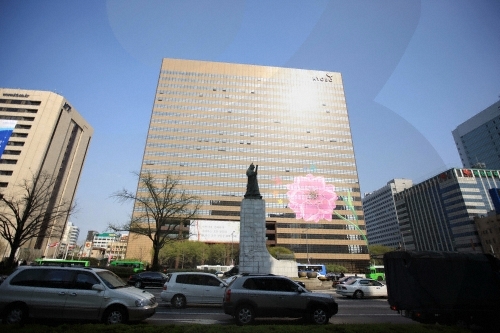
Librería Kyobo (교보문고)
469.7M 2021-04-22
Jong-ro 1, Jongno-gu, Seúl.
La librería Kyobo es una librería emblemática de Corea. Se encuentran clasificados por temas aproximadamente 2,3 millones de libros para que todos puedan encontrar el libro que necesitan con facilidad. Este lugar está siempre lleno de gente leyendo y buscando libros. Los fines de semana, personas de todas las edades visitan este lugar. Siendo la librería más grande de Corea, también realiza varios eventos, uno de ellos es el encuentro del público con los autores del “libro del mes”. La librería Kyobo también cuenta con una tienda de productos con personajes animados, una disquería donde podrá comprar y escuchar sus discos favoritos y tienda de artículos de escritorio donde encontrará todo lo que necesita. La sección de libros extranjeros es muy popular, ya que se encuentran variadades de libros escritos en muchos idiomas y puede hacer pedidos de libros que no estén disponibles en el momento.
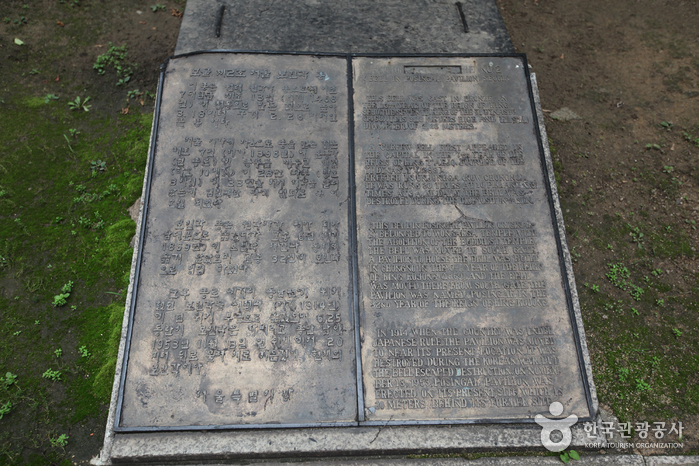
Campanario Bosingak (보신각 터)
475.9M 2025-06-25
Jong-ro 54, Jongno-gu, Seúl
El campanario Bosingak es el lugar en donde se encontraba la campana que daba la señal de la hora, tanto para las áreas del interior y exterior de la muralla de la ciudad capital. Fue construido en el 13º año (1468) del reinado de Sejo de la época Joseon, y en aquel tiempo, se fundó también el templo Wongaksa, pero fue trasladado al sitio actual, durante el reinado de Gwanghaegun (1619). En la antigüedad, la campana se tocaba 33 veces a las 04:00, y 28 veces a las 22:00, y era utilizada para dar la señal de la hora, y como símbolo de la apertura y cierre del portón de la muralla. Es un patrimonio cultural de gran valor para los estudios académicos. Siendo el Tesoro, la pieza original se encuentra en el Museo Nacional de Corea.
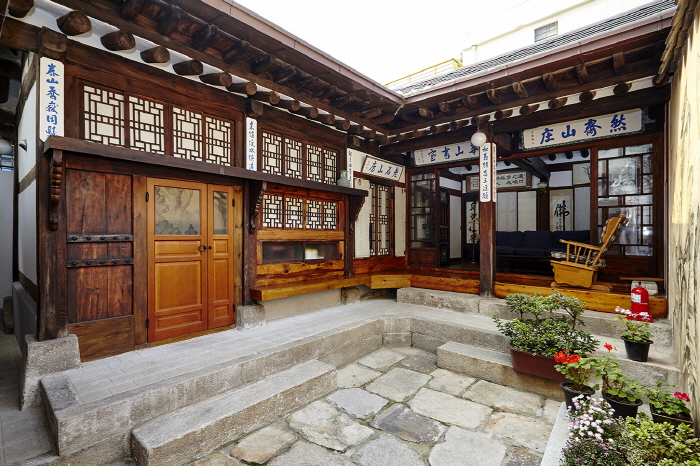
Sieunjae / 시은재
481.4M 2025-08-13
439, Samil-daero, Jongno-gu, Seoul
+82-10-5355-3029
Located in Gyeongun-dong, Jongno-gu at the very heart of Seoul, Sieunjae is a hanok with a longstanding tradition. It has three guestrooms including the anbang (main room), byeolchae (detached building), and jakeunbang (small room). The anbang is the only room with a living room, where various items of old furniture, including a comfortable sofa, create an antique atmosphere. The communal bathroom and toilets are supplied with toiletries, while the communal kitchen is equipped with cooking equipment and a washing machine.
The house can be rented either as individual accommodations or in its entirety. As it is situated in Jongno-gu, at the very heart of Seoul, guests can easily reach many nearby major tourist attractions. Car users are advised to use the public parking lot as the house has no parking spaces. Entering by a small gate, the little flowerbed comes into sight. This old hanok shows traces of repair works on the tiled roof.
Sala de la Historia del Rey Sejong y del Almirante Yi Sun-shin (세종충무공이야기)
485.6M 2022-09-19
Sejong-daero 175 (subsuelo), Jongno-gu, Seúl.
El Gran Rey Sejong (“世宗”, 1397-1450, reinado: 1418-1450), 4º soberano de la dinastía Joseon, fue una figura crucial en la historia de Corea, por la creación del alfabeto coreano hangeul y por los brillantes desarrollos que logró en los sectores de la ciencia, cultura y arte, política militar, etc.
Detrás de la estatua de bronce del Rey Sejong ubicada en la Plaza Gwanghwamun está la entrada a la Sala de la Historia del Rey Sejong, donde se exponen material informativo y piezas culturales relacionadas a este gran personaje de la Historia. Consta con una superficie de 3.200 ㎡, distribuidos en 9 espacios temáticos; la cronología del Rey Sejong, el Minbon Sasang (ideología política centrada en el pueblo), la Creación del Hangeul, la Ciencia y el Arte, la Política Militar de Sejong, entre otros. Los visitantes podrán aprender aquí la historia del hangeul. Además, hay otras instalaciones anexas: sala de exposición especial, sala audiovisual, textos informativos, tienda de suvenires, espacio para descansar, etc.
Por otra parte, una estatua de Yi Sun-shin, el mejor comandante naval de la historia de Corea, fue inaugurada en la Plaza Gwanghwamun, ante la del Rey Sejong el Grande, para celebrar el 465 aniversario de su nacimiento. El 28 de abril de 2010 se inauguró la Sala de la Historia del Almirante Yi Sun-shin, en el subsuelo del Centro Cultural Sejong, para conmemorar su vida y sus logros. La exposición abarca temas relacionados con la vida del almirante Yi, que van desde la determinación y la devoción a la lealtad del país y los compatriotas. El museo utiliza lo último en tecnología digital para dar vida a este gran héroe. Otra gran atracción del museo es el barco acorazado geobukseon (buque con forma de tortuga), que Yi utilizó en sus batalals navales, a una escala de 55% del tamaño real. A pesar de ese tamaño, el barco todavía es lo suficientemente grande como para que los huéspedes suban y remen con los remos, y tiene una pantalla digital de las olas del océano jugando con monitores para una experiencia 4D.
Puerta Gwanghwamun (광화문)
509.9M 2025-08-08
Sajik-ro 161, Jongno-gu, Seúl.
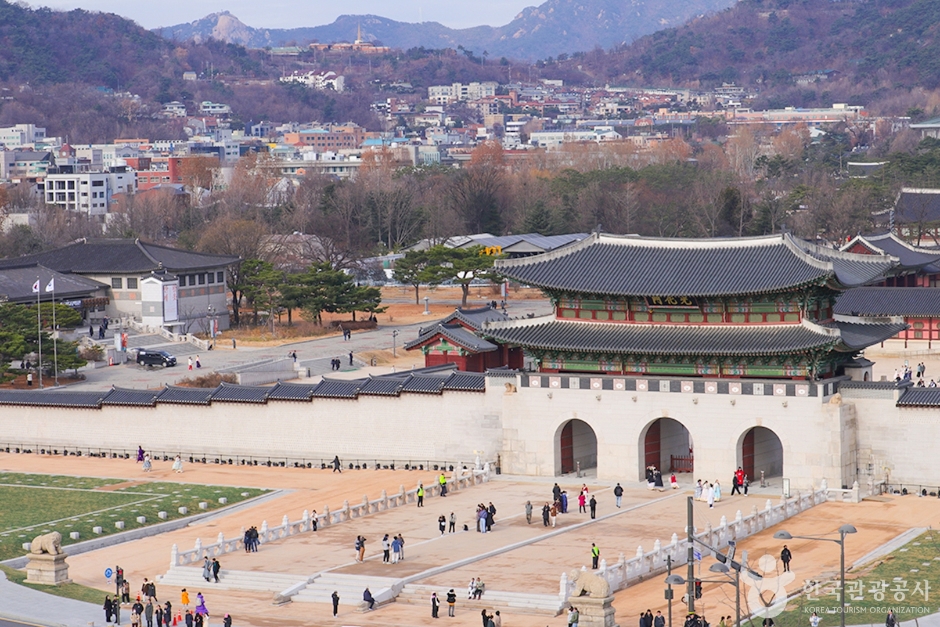
La puerta Gwanghwamun es la entrada principal del palacio Gyeongbokgung, levantada en 1395 por Taejo, el primer rey de la dinastía Joseon. Es la puerta sur de las cuatro puertas de la antigua ciudad de Hanyang (Seúl), levantadas sobre los cuatro puntos cardinales. Su nombre significa “la luz de la civilización iluminará el mundo”, y contiene los altos propósitos que la dinastía Joseon tuvo al ser establecida. Gwanghwamun había sido construida de granito. En el centro se halla una entrada que se asemeja al arco iris, denominado Hongyemun, y arriba está la torre del portal. Gwanghwamun guarda un recuerdo amargo de la historia de Corea. Durante la ocupación de Corea por los japoneses (1910-1945), el gobierno de ocupación destruyó la puerta con el objetivo de suprimir la nación coreana, y en su emplazamiento levantó el Edificio de la Gobernación de Corea. Hacia el año 1968, el gobierno coreano construyó de nuevo la puerta Gwanghwamun, pero usando concreto. Sin embargo, en el año 2010 se completaron los trabajos de restauración total en madera, que es la que se ve actualmente.
Parque Sejongno (세종로공원)
514.4M 2024-09-10
Sejong-daero 189 (subsuelo), Jongno-gu, Seúl
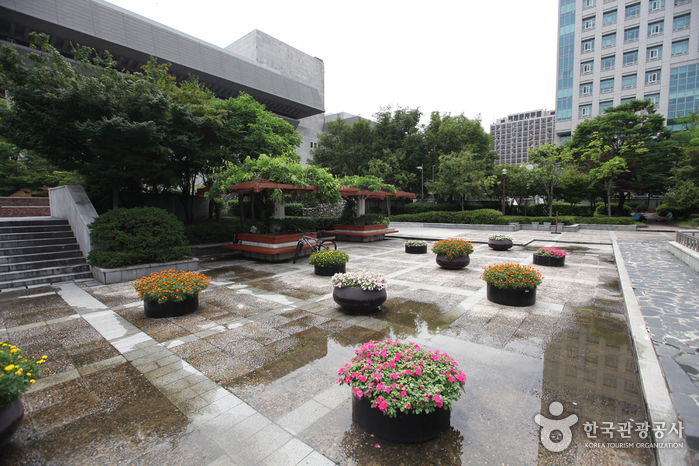
El Parque Sejongno está localizado cerca del Centro Cultural Sejong de Seúl. Dentro del parque hay bancos de madera y zonas con sombra para que la gente pueda sentarse y relajarse. También hay fuentes de agua, un escenario exterior y varias esculturas. Entre semana, el parque se llena de oficinistas que lo visitan a la hora de la comida, y durante los fines de semana incluso se realizan bodas al aire libre.
Tour bajo las Estrellas del Palacio Gyeongbokgung (경복궁 별빛야행)
515.7M 2025-10-23
Sajik-ro 161, Jongno-gu, Seúl
1522-2295
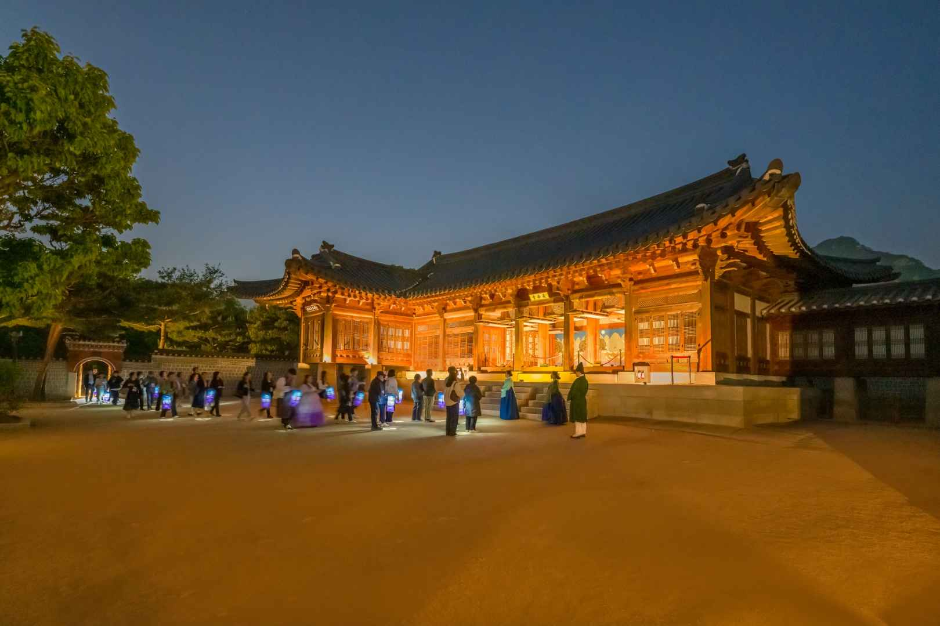
Es un tour nocturno por el palacio Gyeongbukgung que se realiza en la temporada de otoño. Los visitantes reciben la guía de un experto y tienen ocasión de disfrutar de un espectáculo en el área de la antigua cocina del palacio y degustar platillos de la cocina real, los que se le servían al rey como parte de la mesa surasang.
 Español
 한국어
한국어 English
 日本語
日本語 中文(简体)
 Deutsch
 Français
 Русский


