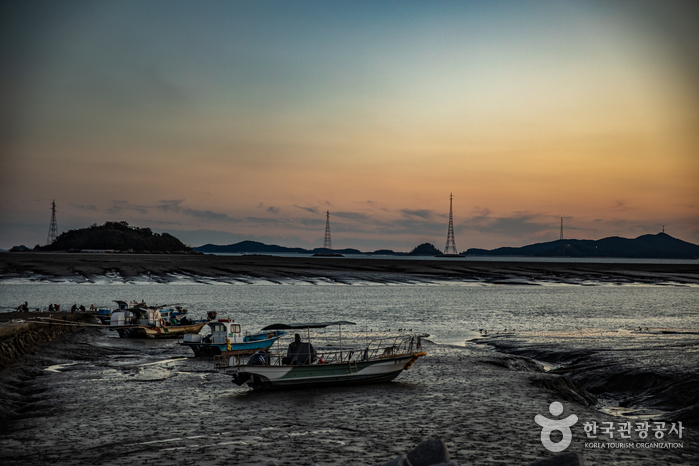
Seongmodo Island (석모도)
18.6Km 2021-05-28
9, Samsanbuk-ro, Ganghwa-gun, Incheon
+82-32-934-7500
Seongmodo Island, located 1.2 kilometers west of Ganghwado Island, is a popular destination for families and those looking for relaxation. The island has various mountains as well as a 41.8 kilometer coastal road.
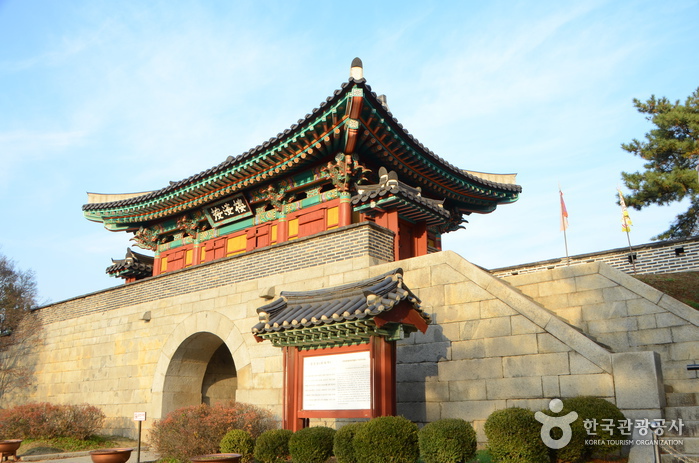
Gwangseongbo Fortress (광성보)
18.6Km 2022-07-25
27, Haeandong-ro 466beon-gil, Ganghwa-gun, Incheon
+82-32-930-7070
Gwangseongbo Fortress’s outer wall from the Goryeo era was mended in 1618. The fortress was built in 1656 and the outpost was constructed in 1679. It was completely remodeled into
a masonry castle with gates in 1745. During Sinmiyangyo (the American invasion in 1871), Gwangseongbo was the fiercest battle ground in Ganghwa. On April 24, 1871, a
fleet with 1,230 American naval forces led by Rear Admiral John Rodgers landed on Ganghwado Island to demand the
opening of Korea's ports and commerce. The armed forces attacked Chojijin Fortress
and Deokjinjin Camp, then marched to Gwangseongbo Fortress, where they engaged in close combat with the warriors of Joseon. Although General Eo Jae-yeon and the other warriors were poorly equipped with far inferior weapons, they bravely fought to the
death against the invading forces.
The battlefield ruins of the fortress and the gate towers such as Anhaeru, Gwangseongdon, Sondolmokdon, and Yongdudon were repaired
in 1977. The twin tombs of General Eo Jae-Yeon and his brother Eo Jae-seon, along with the anonymous tombs of warriors who died on the battlefield were
also honorably arranged at the same time. Furthermore, a stone monument commemorating the restoration of Ganghwa Battlefield was erected on Yongdudondae Post.
In 1988, an extensive rest area was created toward the shore for visitors’ convenience. Gwangseongbo Fortress is presently designated as Historical Relic No. 227. A religious service known as Gwangseongje is held annually to commemorate the patriotic spirits of General Eo Jae-yeon and other unnamed warriors. This service takes place at 11 a.m. on every April 24th of the lunar calendar.
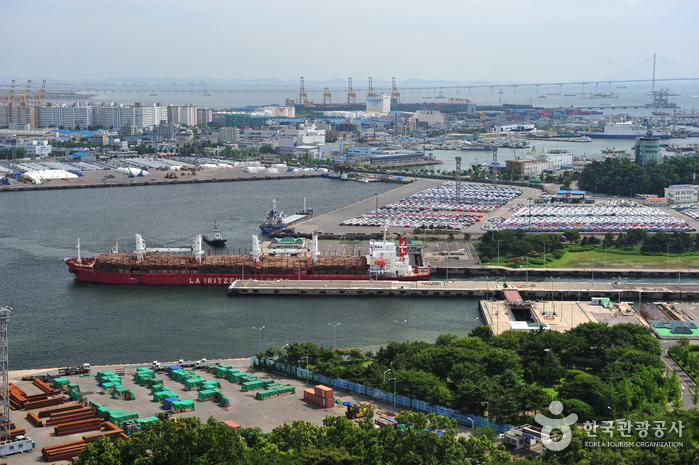
Incheon Port Floodgate (인천항 갑문)
18.8Km 2021-06-01
376, Wolmi-ro, Jung-gu, Incheon
+82-32-890-8000
Incheon Port Floodgate is located between the beautiful Wolmisan Mountain and Sowolmido Island. Surrounding the floodgate is a large 66,000 square meter garden covered with grass, pine trees, ginko trees, and cherry blossom trees, creating a beautiful scene. Especially in the spring, azaleas, royal azaleas, cherry blossoms, and magnolia blossoms are blooming, adding to the beauty of the garden.
If you visit when the floodgate opens, you will witness giant cargo ships and cruise ships passing through the gate to enter and leave the port. Also, at the situation room of the floodgate management office, an introductory video of Incheon Port is played to offer more information on the facility.
There are two floodgates at Incheon Port. One floodgate is 36 meters wide by 363 meters long. The other is 22.5 meters wide by 202 meters long. The larger one can accommodate vessels up to 50,000DWT and the smaller one can dock ships up to 10,000DWT. Per day, up to 20 vessels can enter and leave the port.

Incheon Baendaengi Street (연안부두 밴댕이회무침거리)
19.2Km 2021-07-22
24-1, Yeonanbudu-ro, Jung-gu, Incheon
+82-32-765-4169
The Gwanghwado and Incheon areas are known for their plentiful catches of baendaengi (large-eyed herring). After a little street started specializing in serving baendaengi some 30 years ago, the fish has continued to grow in popularity.
Located in Guwol-dong, across from the Incheon Culture & Arts Center, Baendaengi Street has expanded, and so has the variety of dishes served. Visitors can try baendaengi prepared sashimi-style, roasted, or in a spicy soup. For this particular species of herring, locals believe the flavor is best in March and April when they grow to their largest size. Salted Baendaengi also makes an excellent side-dish for Korean meals.
* Baendaengi is one of many types of small prey fish referred to as ‘Soeo’ for their fierce struggle in fishing nets. Soeo have internal organs that are proportionally smaller than other species of fish and are known for their feisty nature. These attributes are thought to signify a stress-filled life, which is why many Koreans refer to narrow-minded or hot-tempered people as ‘baendaengi.’
Ganghwa Bomunsa Temple (보문사 (강화))
19.3Km 2025-06-30
44 Samsannam-ro 828beon-gil, Ganghwa-gun, Incheon
+82-32-933-8271
Bomunsa Temple is located on Seongmodo Island in the Gangwondo Island district. The temple is on Sangbongsan Mountain, one of three mountains that make up the Samsan-myeon area. Like many temples in Korea, the foundation date is unknown but it is believed to have been founded in 635 during the reign of Silla Queen Seondeok. The temple faces out to the ocean, with the sound of waves reaching all the way to the main building.
The main courtyard is fragrant with the scent of an aromatic tree, designated Incheon Natural Monument No. 17. Beyond the tree is a gathering of Buddhist scuptures and a large grotto.
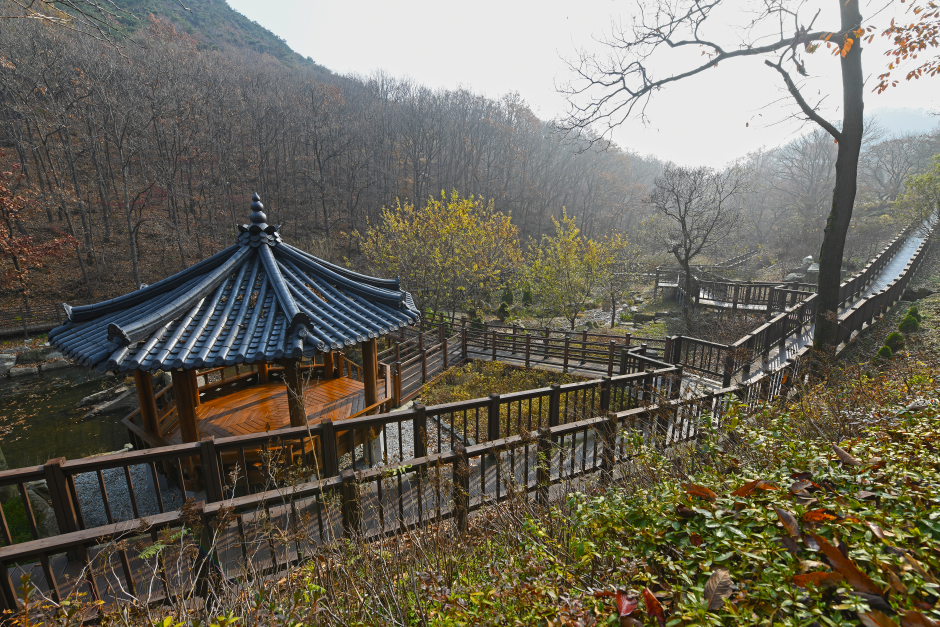
Seongmodo Island Arboretum (석모도 수목원)
19.3Km 2023-02-09
161, Samsanbuk-ro 449beon-gil, Ganghwa-gun, Incheon
+82-32-932-5432
Seongmodo Island Arboretum was established on Seongmodo Island in recognition of its suitability for research on plants native to the Nothern Limit Line and marine plants in preparation for gloabl warming. In addition, it is built along the valley of the Seongmo-ri area and boasts a pollution-free natural environment. It is a tourist destination where the mountains and the sea coexist and conveys values and benefits of forests, allowing visitors to commune with nature.
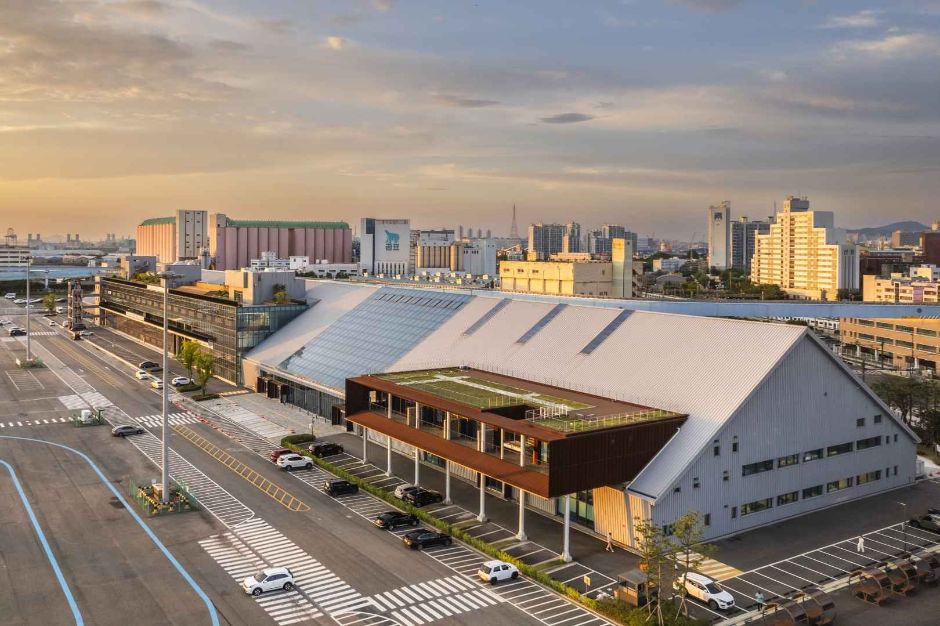
Sangsang Platform (상상플랫폼)
19.4Km 2025-10-23
33 Wolmi-ro, Jung-gu, Incheon
When the Incheon port opened in 1883, the Wolmi-ro area became the gateway to Korea, welcoming vistiors from overseas countries via sea route. Before transforming into the cultural and art complex of today, Sangsang Platform located by the Incheon Open Port used to be Asia's largest granary. Sangsnag Platform is remodeld to preserve the old granary structure while adding a contemporary touch that matches modern-day aesthetics. As the building once connected Incheon to the world, it now serves connect Incheon's past and the future as a multipurpose cultural tourism complex.
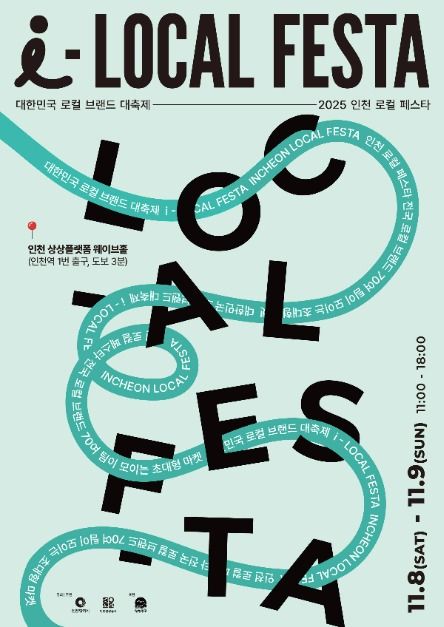
Incheon Local Festa (Jemulpo Wave Market) (인천 로컬 페스타 (제물포 웨이브 마켓))
19.4Km 2025-10-23
33 Wolmi-ro, Jung-gu, Incheon
+82-10-2258-9475
Jaemulpo Wave Market is a special festival where one can explore the many different local brands in Incheon. Approximately 70 Incheon-based brands are participating to promote handmade products, home decor items, lifestyle goods and more. During the festival period, Jemulpo Wave Vintage Market also takes place with 20 vintage sellers showcasing timeless products. Entertaining events are also planned, such as a DJ show, vintage auction, beer drinking contest, and more.
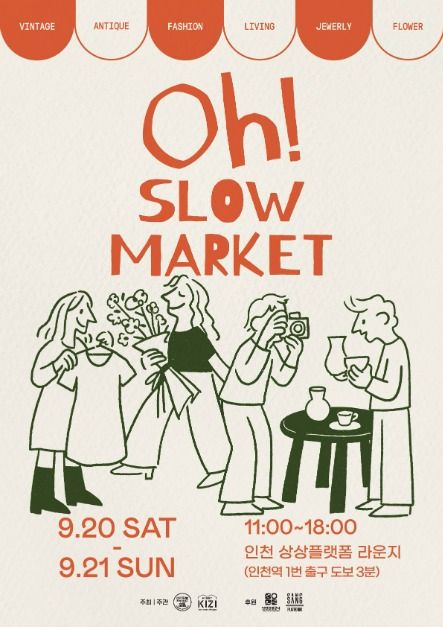
Oh Slow Vintage Market (오슬로우 빈티지 마켓)
19.4Km 2025-11-06
33 Wolmi-ro, Jung-gu, Incheon
+82-10-2258-9475
Oh Slow Vintage Market is the largest vintage market in Korea for those who pursue a slow life, with numerous teams participating in the market, including vintage, antique, second-hand, flower, and small items that align with the values of "slow life." The market is characterized by vintage items and furniture that have been around for a long time and have their own unique value, as well as rare antique items that have their own history and timeless beauty. Quality second-hand clothing and miscellaneous goods provide opportunities to purchase brand products or items in good condition at reasonable prices, going beyond just low prices. The flower section includes fresh flowers and pots for adding a personal touch. Additionally, there are stylish design items and beautifully crafted handmade crafts that enrich lifestyles. Visitors can enjoy an exciting atmosphere with DJ performances and can learn about participating vintage businesses and rare vintage products in detail through a vintage docent tour.
Oepo-ri Kkotgejip (외포리꽃게집)
19.6Km 2024-03-20
1206 Jungang-ro, Naega-myeon, Ganghwa-gun, Incheon
Oepo-ri Kkotgejip is a restaurant dedicated to traditional blue crab delicacies, including kkotge tang (spicy blue crab stew), kkotge jjim (steamed blue crab), and ganjang gejang (soy sauce marinated crab). Positioned near Oepo-ri Quay, en route to Seongmodo Island, the restaurant provides a delectable experience of blue crab dishes complemented by a stunning sea view. Visitors can also take pleasure in the scenic Korean coastal landscape, explore the salted seafood market, and observe the fishing boats in the vicinity.
 English
 한국어
한국어 日本語
日本語 中文(简体)
 Deutsch
 Français
 Español
 Русский


