
Suwon Jidong Mural Village (수원 지동벽화마을)
980.1M 2025-11-05
75-5 Changnyongmun-ro, Paldal-gu, Suwon-si, Gyeonggi-do
A friendly alley with Kuk Yeonsoo’s house
Jidong Mural Village is a neighborhood with many winding alleys where Kuk Yeonsoo lived. Murals with seven themes are painted on the 6km-long road, so just walking along the pictures is as fun as a treasure hunt. As you walk, you will see a familiar green gate next to Jidong Supermarket, which is the house of Kuk Yeonsoo in the drama. As rainbow murals often appeared on the opposite side in the drama, there are many fans who take proof shots here.
Suwon Hwaseong Cultural Festival (수원화성문화제)
986.4M 2025-07-09
825 Jeongjo-ro, Paldal-gu, Suwon-si, Gyeonggi-do
+82-31-228-3920
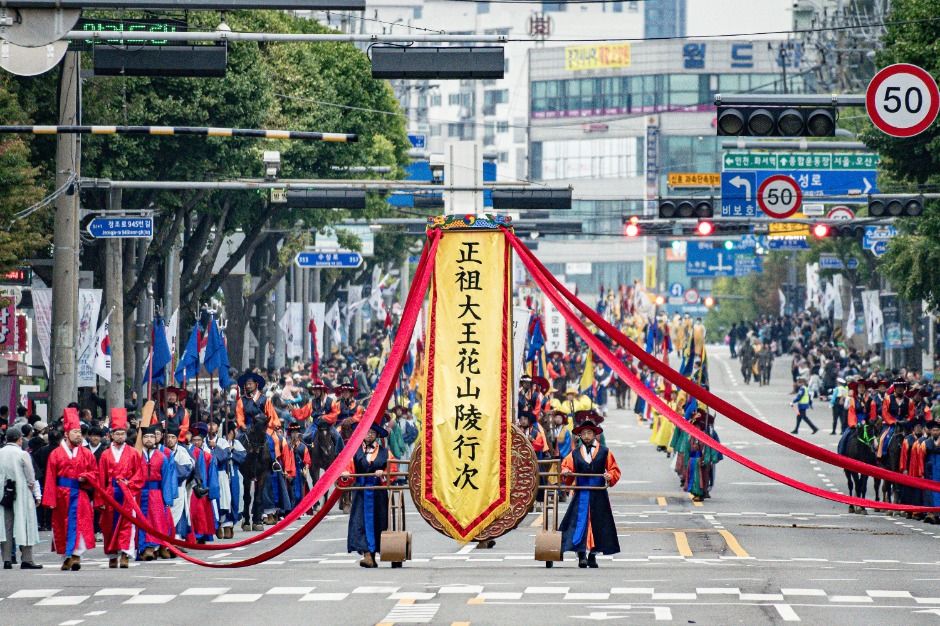
Hwaseong Fortress, a UNESCO World Heritage Site, hosts the Suwon Hwaseong Cultural Festival every autumn. The festival’s main event is the “King Jeongjo’s Royal Parade,” a reenactment of King Jeongjo’s procession to pay respects to his father Crown Prince Sado’s tomb. This spectacular event features over 4,000 participants in traditional Joseon-era costumes marching along a 59km route. The “King Jeongjo’s Dasobangwa” program, offering a taste of royal court cuisine served for the Banquet of Lady Hyegyeong-Gung Hong, is especially popular among international tourists. Additionally, the festival includes fortress-building experiences, night tours, and various reenactment events and performances, all linked to Hwaseong Fortress, Suwon.
◎Hwaseong Fortress, Suwon
This planned city was built by King Jeongjo during the Joseon Dynasty. It is considered a pinnacle of Korean fortress culture, incorporating the advanced technologies of its time.
Yeonpo Galbi (연포갈비)
987.6M 2024-12-02
56-1, Jeongjo-ro 906beon-gil, Paldal-gu, Suwon-si, Gyeonggi-do
+82-31-255-1337
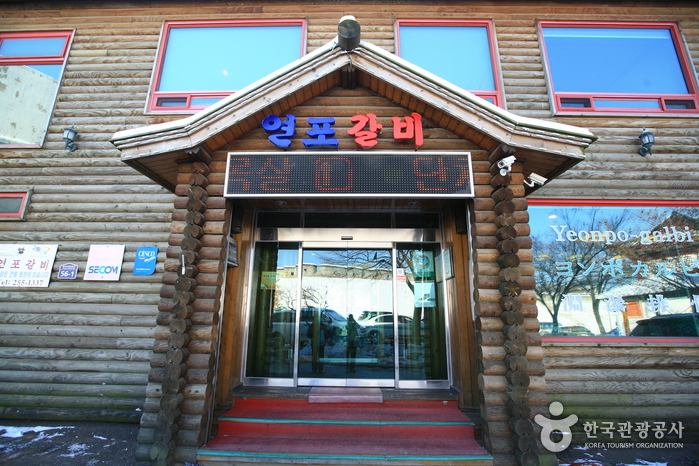
This restaurant occupies a remodeled public bath and inn, preserving the original chimney from its bathhouse days. Known for offering Suwon wanggalbi at relatively affordable prices, it also serves galbitang (galbi soup) exclusively during lunchtime on weekdays. Due to limited availability, galbitang often sells out quickly.
![Suwon Hwaseong Fortress [UNESCO World Heritage] (수원 화성 [유네스코 세계유산])](http://tong.visitkorea.or.kr/cms/resource/36/2613036_image2_1.jpg)
Suwon Hwaseong Fortress [UNESCO World Heritage] (수원 화성 [유네스코 세계유산])
999.3M 2025-08-06
Yeonghwa-dong, Jangan-gu, Suwon-si, Gyeonggi-do
+82-31-290-3600
Suwon was one of four main regional government centers during the Joseon dynasty. Hwaseong Fortress, built to protect the city, was designated as a UNESCO World Cultural Heritage Site on December 12, 1997 for its historical value. The fortress offers various performances daily as well as the Suwon Hwaseong Cultural Festival every fall. The walls stretch for 5,700 kilometers, with Paldalsan Mountain at the center. The fortress, constructed from 1794 to 1796, was built as a display of King Jeongjo’s filial piety towards his father and to build a new pioneer city with its own economic power.
Banghwasuryujeong Pavilion (방화수류정(동북각루))
1.0Km 2025-05-22
44-6 Suwoncheon-ro 392beon-gil, Paldal-gu, Suwon-si, Gyeonggi-do
+82-31-228-4672
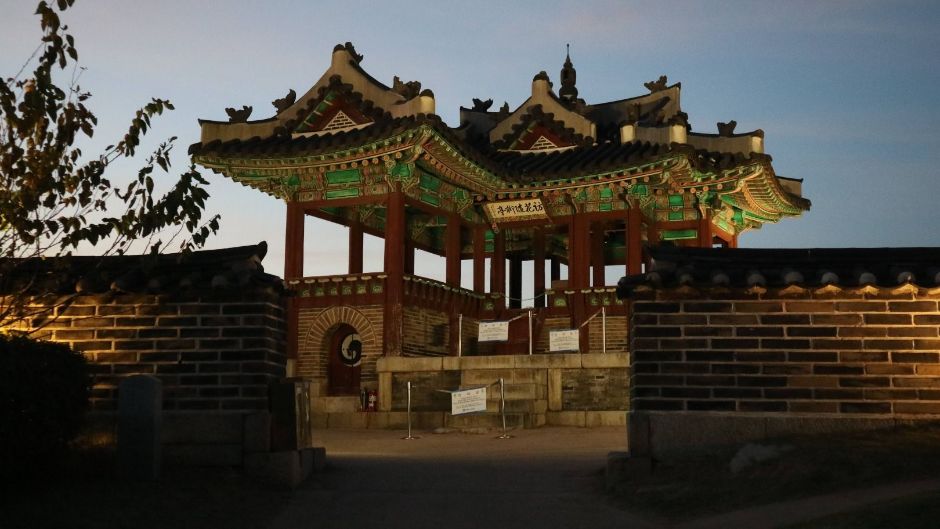
Banghwasuryujeong Pavilion, officially called Dongbukgangnu Pavilion, was built in 1794 during the construction of Suwon Hwaseong Fortress. It sits atop a hill east of Hwahongmun Gate and offers beautiful views of the surrounding scenery. For this reason, the pavilion received the nickname Banghwasuryujeong, meaning a pavilion where one can "find flowers and stroll among willow trees." The pavilion was once damaged due to flooding and reconstructed in 1848, followed by continuous recovery and preservation efforts. In 2011, the pavilion was designated as Treasure No. 1709. Banghwasuryujeong Pavilion is evaluated as one of the most original architectures in Hwaseong for its unique composition and roof design that offer a different look depending on the viewer's angle. Known to be the spot where King Jeongjo would stop by to rest on his way to Hwaseong Fortress, the pavilion offers a bird's-eye-view of Yeonmudae Post to the east and Janganmun Gate to the west with Paldalsan Mountain in the background.
Hwaseong Fortress Tourist Trolley (화성어차)
1.3Km 2025-07-01
8 Changnyong-daero 103beon-gil, Paldal-gu, Suwon-si, Gyeonggi-do
+82-31-228-4686
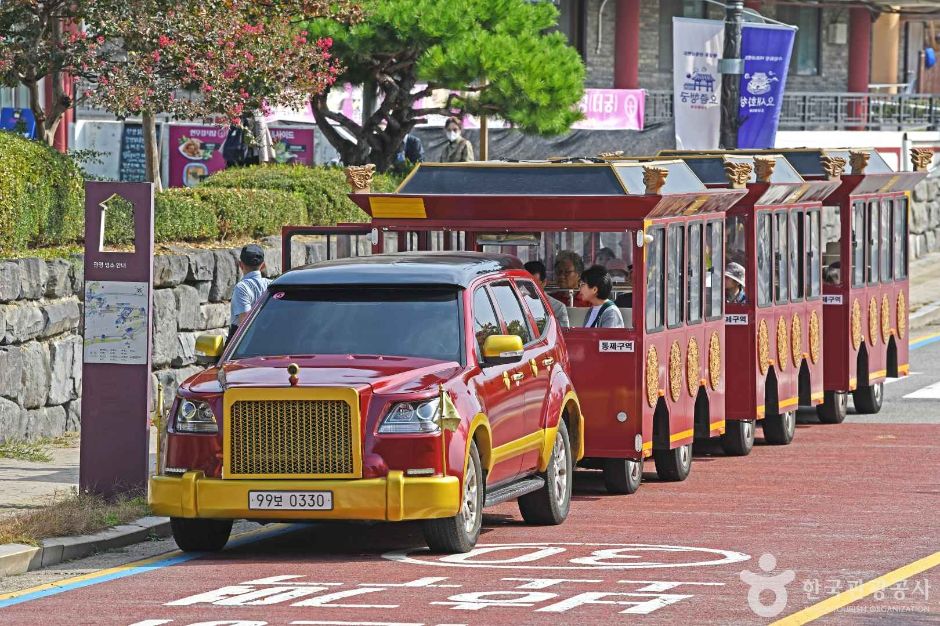
With a design inspired by the royal vehicle used by King Gojong and palanquins of the Joseon dynasty, Hwaseong Fortress Tourist Trolley provides visitors with a comfortable tour around the main attractions of Suwon Hwaseong Fortress. It is divided into a sightseeing course that starts at Hwaseong Temporary Palace and visits the main gates, and a circular course that starts at Yeonmudae Post and visits the main military facilities. Reservations are required on the website. All seats are equipped with an earphone jack offering an audio guide of Suwon Hwaseong Fortress in English, Chinese and Japanese.
Yeonmudae (Dongjangdae) (연무대 (동장대))
1.3Km 2025-10-23
20, Changnyong-daero 103beon-gil, Paldal-gu, Suwon-si, Gyeonggi-do
+82-31-228-4686
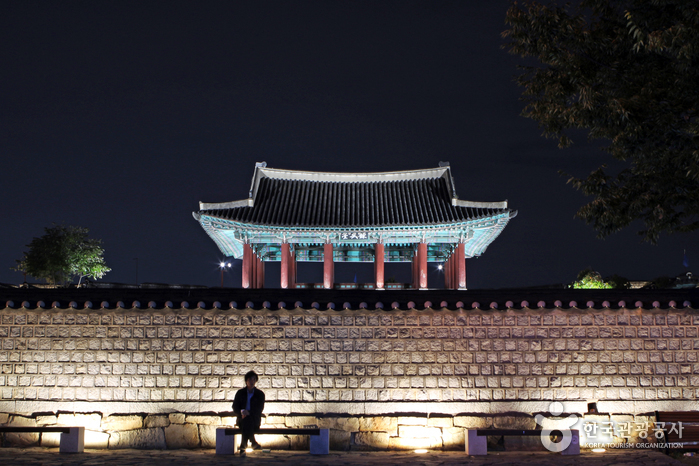
Yeonmudae located inside Suwon's Hwaseong Fortress, a UNESCO World Heritage site. Situated on a relatively high hill between Changnyongmun (the east gate of the fortress) and Hwahongmun (a north floodgate), Yeonmudae is an excellent military observation post with sweeping views of the inside of the fortress. After the fortress was completed in 1796, Yeonmudae was used as a training ground for troops for over two centuries, where they learned fighting skills involving swords, spears and arrows.
At Yeonmudae, visitors can learn archery while wearing traditional military attire; the fortress also offers a wide array of performances for visitors to appreciate traditional Korean culture. Yeomudae is included in the Suwon City Tour course.
Kabojung (가보정)
1.3Km 2024-02-21
282 Jangdari-ro, Paldal-gu, Suwon-si, Gyeonggi-do
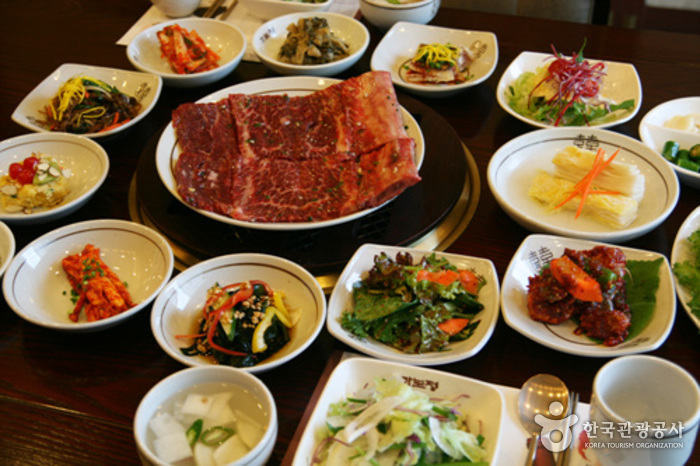
Kabojung, listed among Suwon's top three galbi restaurants, is celebrated for its selection of saenggalbi (galbi) and yangnyeom galbi (grilled marinated galbi). This spacious restaurant features three sections dedicated to grilling meats. Kabojung is famed for its tender saenggalbi, sweetly seasoned yangnyeom galbi, and doenjang jjigae (soybean paste jjigae). To conclude the dining experience, mini yakgwa (honey cookie) and sujeonggwa (cinnamon punch) are served as a delightful dessert to cleanse the palate.

GS25 - Suwon Parkville Branch [Tax Refund Shop] (GS25수원파크빌점)
1.3Km 2024-06-26
52, Hyanggyo-ro, Paldal-gu, Suwon-si, Gyeonggi-do
-
Flying Suwon (플라잉 수원)
1.3Km 2024-12-24
255-4 Ji-dong, Paldal-gu, Suwon-si, Gyeonggi-do
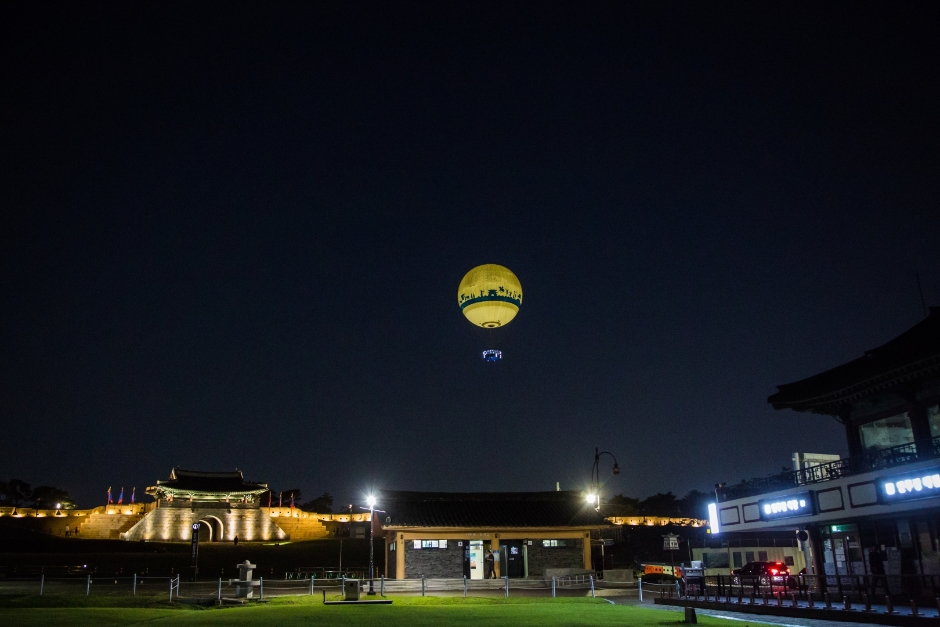
Flying Suwon is a unique moored helium ballon facility to view the entire Hwaseong Fortress from up to 150 m in the air. You can enjoy Hwaseong Fortress, which has new charms every season, right up against the sky. Create wonderful and special memories with your family, friends, or loved ones. The helium balloon can accommodate up to 30 people and is accompanied by a well-trained pilot to ensure passenger safety. In addition, its safety was proven by passing the European Aviation Safety Agency (EASA) regulations, receiving a safety certification from the French Department of Public Health, etc. Boarding time is approximately 10 minutes, including ascending, viewing, and descending.
 English
 한국어
한국어 日本語
日本語 中文(简体)
 Deutsch
 Français
 Español
 Русский


