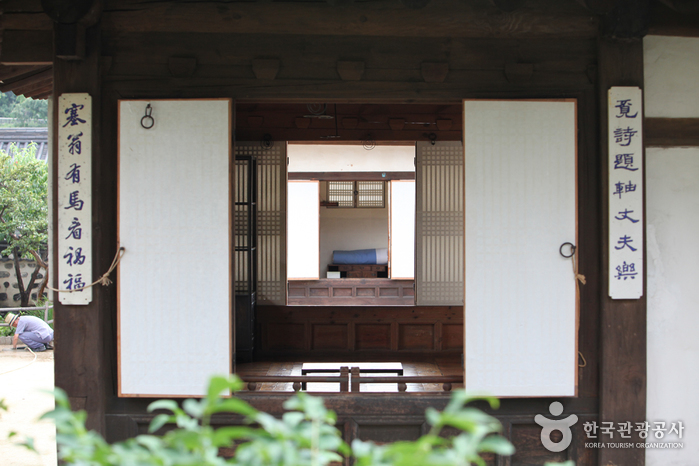
Haepungbuwongun Yun Taekyeong's Jaesil (해풍부원군윤택영댁재실)
5.0Km 2021-11-10
28, Toegye-ro 34-gil, Jung-gu, Seoul
+82-2-3396-5882
Haepungbuwongun Yun Taekyeong's Jaesil is a shrine house built by the father-in-law of King Sunjong of Joseon dynasty in 1906 when his daughter was proclaimed the crowned princess of Joseon and entered Changdeokgung Palace to later become Queen Sunjeong. Red pine trees salvaged from the demolition of Gyeongungung Palace were used to construct the house. It was originally located in Jegi-dong, Dongdaemun-gu, but was later restored and moved to its present location. The shrine of the house that was destroyed in 1960 was also restored.
Because the house is more of a shrine rather than residential living quarters, it has many unique features. For example, unlike other houses, it has the anchae (women’s quarters) located across from sarangbang (men’s quarters) with daecheong (living room) positioned between them.
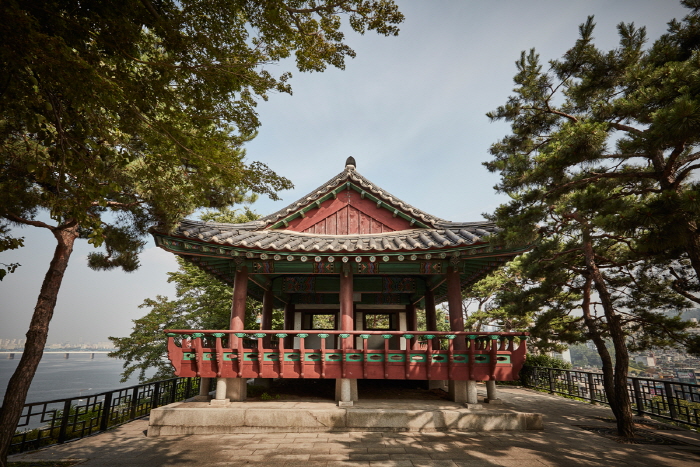
Hyosajeong Pavilion (효사정)
5.0Km 2025-01-13
55, Hyeonchung-ro, Dongjak-gu, Seoul
+82-2-820-9848
Hyosajeong Pavilion is where Nohan, the second vice premier of the Joseon dynasty during King Sejong and King Sejo’s reign, stayed. After he lost his mother, he built the pavilion to mourn at her grave while still being able to see his father’s grave in Gaeseong to the North. His brother-in-law, then Minister of the Interior, Gang Sa-deok named the pavilion “Hyosajeong,” which means pavilion of filial piety.
In order to find the original location of the pavilion, poems by Jeong Inji and Seo Geojeong and an old map of Korea were referenced, but the pavilion was not found because the surrounding landscape had changed too much. As a result, a location was selected and the pavilion was reconstructed at its current location. The house is 3 kan* in the front and 2 kan* on the side. The roof is a hip-and-gable roof. The pavilion has one room with under floor heating and a railing around the pavilion
(* kan: a traditional measurement that corresponds to the space between two columns)
![Iris Eyewear - Konkuk Univ. Branch [Tax Refund Shop] (아이리스안경 건대)](http://tong.visitkorea.or.kr/cms/resource/53/2878853_image2_1.jpg)
Iris Eyewear - Konkuk Univ. Branch [Tax Refund Shop] (아이리스안경 건대)
5.1Km 2024-04-18
Store #105, 220, Achasan-ro, Gwangjin-gu, Seoul
-
![Look Optical - Hanyang Univ. Branch [Tax Refund Shop] (룩옵티컬 한양대)](http://tong.visitkorea.or.kr/cms/resource/74/2878774_image2_1.jpg)
Look Optical - Hanyang Univ. Branch [Tax Refund Shop] (룩옵티컬 한양대)
5.1Km 2024-04-17
1F, 17, Majo-ro, Seongdong-gu, Seoul
-
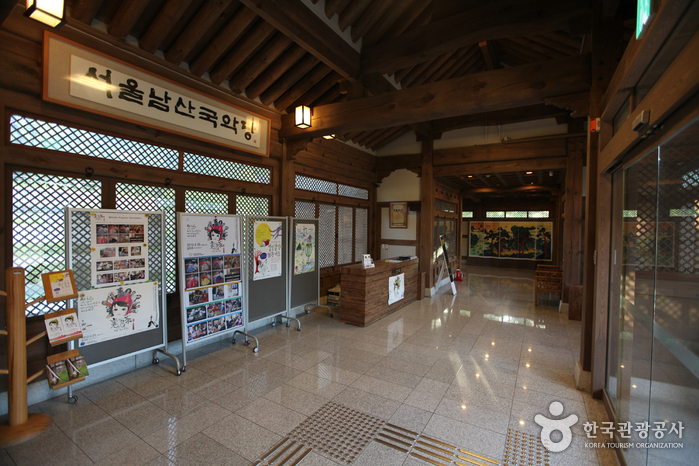
Seoul Namsan Gugakdang (서울 남산국악당)
5.1Km 2021-08-02
28, Toegye-ro 34-gil, Jung-gu, Seoul
+82-2-2261-0500
Seoul Namsan Gukakdang was established by Seoul Metropolitan Government as a representative traditional art-centered performance hall in 2007. It is comprised of one ground and two basement levels. The performance hall is located on the basement floor with 300 seats, equipped with facilities that deliver pansori sounds and gayageum music to every seat. Visitors can make a reservation at the Namsangol Hanok Village website.
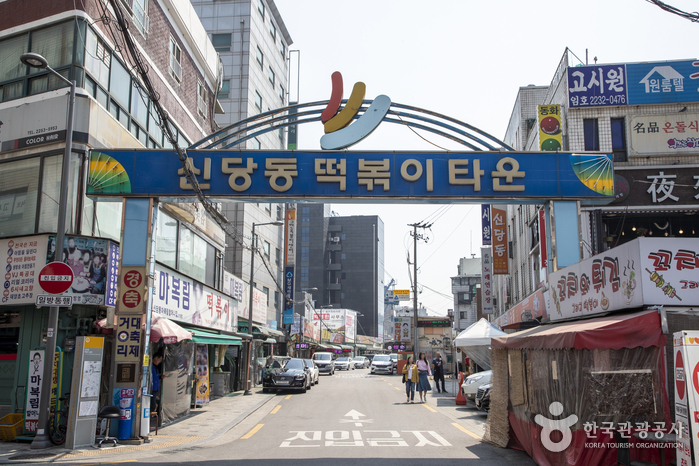
Sindang-dong Tteokbokki Town (신당동떡볶이골목)
5.1Km 2022-10-25
10-18, Dasan-ro 33-gil, Jung-gu, Seoul
+82-2-2236-9135
Sindang-dongTteokbokki Town started in the late '70s, although the alley did not become famous until the '80s. At that time, each restaurant had its own DJ booth, with the image of the "cool DJ" who played the music becoming a symbol of Sindang-dong Tteokbokki Town. In addition, this period also marked the prime time of high school baseball where students would crowd the streets on days when Duksoo Commercial High School and Sunrin Commercial High School (now Sunrin Internet High School) played against one another. Although these high school students have aged, they continue to visit the area, reliving their youth and continuing to indulge in the specialty tteokbokki.
However, some claim the history of this alley began in the 1950s. The owner of Mabongnim Halmeoni Tteokbokki restaurant says tteokbokki was being sold as early as 1953 as the area used to be home to Donga Theater and she sold tteokbokki, corn and potatoes to those visiting the theater. At first, tteokbokki was simply made with gochujang (red chili paste) but as time went by, cooks decided the dish could be more than just a snack. By adding ingredients like eggs, cellophane noodles, fish cakes, instant noodles and more recently squid, prawn and cheese, tteokbokki can be made more delicious and turns this beloved snack into a full meal.
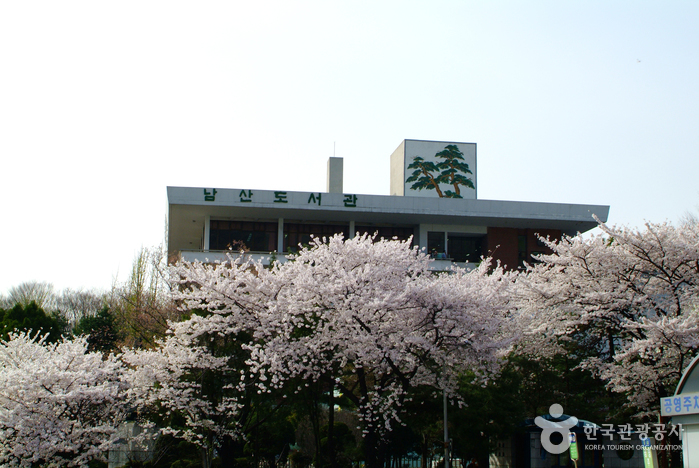
Namsan Library (서울특별시교육청 남산도서관)
5.1Km 2021-07-07
109, Sowol-ro, Yongsan-gu, Seoul
+82-2-754-7338
Namsan Library opened as Kyeongseong Prefectural Library in 1922 as a public library in Myeong-dong, Jung-gu, Seoul. The library was moved to the current site in 1964 with a newly built building and its name changed to Namsan Library in 1965. This concrete building was built in 1964 and was designed by architect Lee Haeseong. It was designated as Seoul Future Heritage in 2013, credited for its preservation value.
It is comprised of 19 rooms and educational areas including the Humanity and Social Science Hall, Nature Science Hall, Language and Literature Hall, Electronic Information Room and more. Since opening, the library has collected nearly 500,000 books, 16,000 non-book materials, 700 continuing resources, and other special materials like old books, oriental books (including Japanese books), and more. Namsan Library also operates a reading treatment program unique to this library that began in 2005. The program includes remodeling of reading consultation room, training for people in charge of reading treatment, workshops, programs for individuals and groups. Also, various exhibitions, lectures, shows, cultural classes and other events are available all year long to enhance lifelong education.
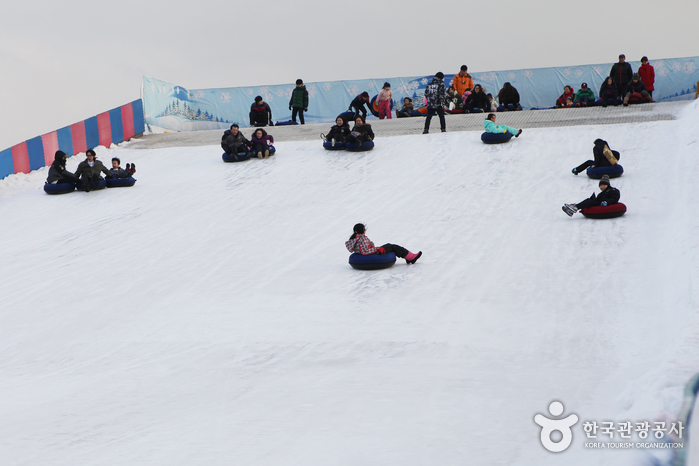
Ttukseom Hangang Park Sledding Hill (한강공원 뚝섬 눈썰매장)
5.1Km 2023-11-02
139, Gangbyeonbuk-ro, Gwangjin-gu, Seoul
+82-2-453-3028
Ttukseom Hangang Park Sledding Hill is comprised of large and small slopes as well as a snow hill, rides, smelt-fishing and other hands-on program venues.

Ttukseom Hangang Park (뚝섬한강공원)
5.1Km 2024-07-09
139 Gangbyeonbuk-ro, Gwangjin-gu, Seoul
+82-2-3780-0521
Ttukseom Hangang Park was a famous resort site even before its rebirth as part of the greater Hangang Park. The park consists of various amenities: music fountains, a riverside square, a rose garden, playground, and a nature learning center.
The park boasts an exquisite cultural complex called Jabeolle (J-Bug), offering plenty of art and rest facilities as well as a magnificent view of the Hangang River. Conveniently located near Ttukseom Resort Station, Jabeolle houses a café, tea house, and gift shop, as well as exhibitions by media artists.
Ttukseom Hangang Park is open all year round and has a variety of attractions that change with each season. During the summer season, visitors can enjoy the thrill of windsurfing, waterskiing, and motor boating. During spring and fall, the park has a number of seasonal flower exhibitions. In winter, sledding and skating await.
In addition, the park offers facilities for X-Games, artificial rock climbing, cruise ships, a Saturday Flea Market, a nursing mothers’ rooms, and women's lounges, making the park a popular place for Seoul citizens.
Songkang Canoe School - Seoul branch (송강카누학교 서울분교)
5.1Km 2023-10-06
139, Gangbyeonbuk-ro, Gwangjin-gu, Seoul
+82-33-461-1659
Songkang Canoe School has a variety of services and equipment that enables visitors to experience the joys of kayaking worry-free. Kayak lessons, rentals, tours and equipment storage services are available. Make new friends and enjoy the beauty of the Hangang River with a visit to the Gangnam Canoe Club.
Kayaking at the Songkang Canoe School is taught with a methodical system that aims at giving more people a safe and enjoyable kayaking experience, regardless of level. The club staff love nature and have a passion for paddle sports. Using a dynamic teaching approach, staff members see teaching paddle sports as their mission in life, not just a job. With a pleasant, supportive staff that is always in pursuit of new experiences, participants are sure to create their own adventures.
 English
 한국어
한국어 日本語
日本語 中文(简体)
 Deutsch
 Français
 Español
 Русский


