![Ave Sports - Dapsimni Branch [Tax Refund Shop] (아베스포츠 답십리)](http://tong.visitkorea.or.kr/cms/resource/11/2889011_image2_1.jpg)
Ave Sports - Dapsimni Branch [Tax Refund Shop] (아베스포츠 답십리)
12.5Km 2024-04-23
209, Dapsimni-ro, Dongdaemun-gu, Seoul
-
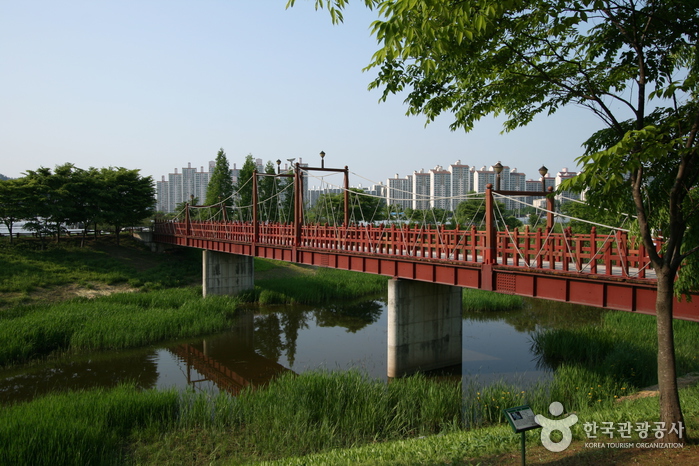
Jangja Lake Park (장자호수공원)
12.5Km 2022-01-01
878, Topyeong-dong, Guri-si, Gyeonggi-do
+82-31-550-2472
Guri City worked to improve the water quality of Jangja Lake in order to form the Jangja Lake Park and in the process an ecological zone was created. A 3.6 km tree-lined walking trail runs through the park and is frequently used by people enjoying an outing or getting some light exercise. Concerts, exhibitions, and other events are held on the outdoor stage on weekends and the park is widely used as a place to relax by local residents.
* Size - Area 107,385 m², average water depth 2.2 m (0.2 m~4.7 m), and walkway 4.6 km

Bukjeong Village (북정마을)
12.6Km 2024-02-15
132-3 Seongbuk-ro 23-gil, Seongbuk-gu, Seoul
Bukjeong Village, situated along the slopes of Seongbuk-dong, offers a glimpse into Korea's old alleyways. The village expanded as refugees from the Korean War (1950–1953) and people from various regions settled, building houses under the collapsed walls of Hanyang doseong (Seoul City Wall). Presently, the village is home to young artists, and the broad street in front of the village bus stop hosts various community events.
![Innisfree - Sinseol-dong Station Branch [Tax Refund Shop] (이니스프리 신설동역)](http://tong.visitkorea.or.kr/cms/resource/30/2888030_image2_1.jpg)
Innisfree - Sinseol-dong Station Branch [Tax Refund Shop] (이니스프리 신설동역)
12.8Km 2024-04-17
1F, 20, Wangsan-ro, Dongdaemun-gu, Seoul
-
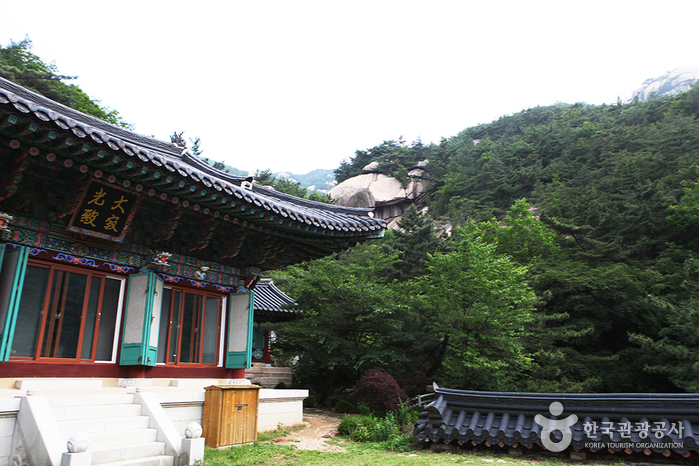
Seoul Geumseonsa Temple (금선사(서울))
12.8Km 2021-08-17
137, Bibong-gil, Jongno-gu, Seoul
+82-2-395-9911
Geumseonsa Temple is located within Bukhansan National Park, just behind Cheong Wa Da (The Blue House) and Gyeongbokgung Palace. The entrance to the temple is just off the hiking path to Bibong Peak.
After passing Banyajeon Hall, where Buddhist services are held, visitors will see a pine tree over 200 years old, and beyond that, a staircase with 108 steps leading up to Daejeokgwangjeon Hall in the temple's main area. To the right is Samseonggak House and Hongyegyo Bridge over the clear waters flowing down from the mountain.
Additional temple buildings include Mitajeon Hall and Yeonhwadang Hall, built in 2004 by Monk Beopan; and Jeokmukdang Hall, built using traditional construction techniques.
Iryeong Station (일영역)
12.9Km 2025-12-16
25 Iryeong-ro 647beon-gil, Jangheung-myeon, Yangju-si, Gyeonggi-do
Iryeong Station is a train station that once served the Gyooe Line north of Seoul.
Passenger services ceased in 2004, and after the station master retired in 2013, it saw only occasional freight traffic before closing. In 2025, plans to reopen the line led to the restoration and reopening of the original station building, which now also houses a tourist information center displaying artifacts that showcase the railway line's past.
With its weathered signs and grass growing along the tracks, Iryeong Station has become a memorable tourist destination accessible from Seoul and a filming location for many movies, commercials, and music videos. One notable example is the 2001 film "My Sassy Girl (2001)," in which The Girl (Jun Ji-hyun) and Gyeon-woo (Cha Tae-hyun) bury a time capsule together at the station before going their separate ways.
 English
 한국어
한국어 日本語
日本語 中文(简体)
 Deutsch
 Français
 Español
 Русский


