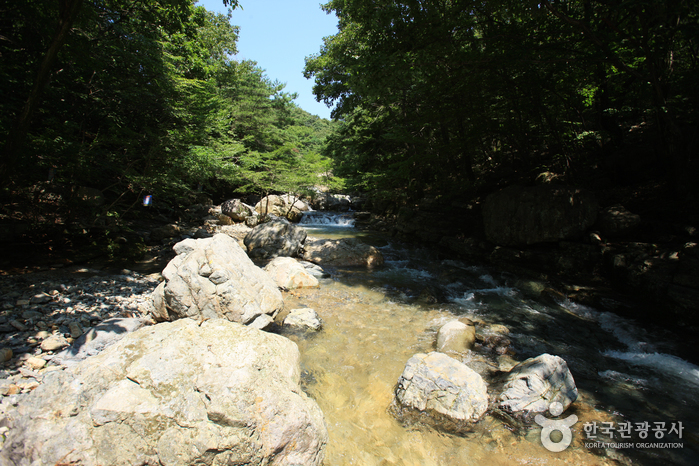
Jangyu Daecheonggyegok Valley (장유대청계곡)
13.2Km 2022-08-12
Wolsan-ro, Gimhae-si, Gyeongsangnam-do
+82-55-350-1931
The 6-kilometer-long Jangyu Daecheonggyegok Valley is located at the foot of Bulmosan Mountain, where the water flowing into the valley divides into two principal streams. Lush trees and clean water make up the area’s beautiful natural landscape. A 30-minute hike along the valley will take hikers to Jangyuam Hermitage where they will find the stupa of Jangyuhwasang, who is said to have spread Buddhism for the first time in Korea.
Visitors flock to Jangyu Daecheonggyegok Valley not only to enjoy the scenery, but also to taste the delicious duck, chicken, and baeksuk (chicken soup with rice) dishes sold around the area. In 1984, the valley was integrated into Jangyupokpo Recreational Park where bridges were built and water supply facilities were placed at two locations. Sangjeolgyo Bridge at the entrance to the valley is 30 meters, while Bonpogyo Bridge is 4 meters. A 1,720 meter-long forest trail was also created. The rugged mountain terrain offers a challenging, yet highly interesting climb up the mountain.
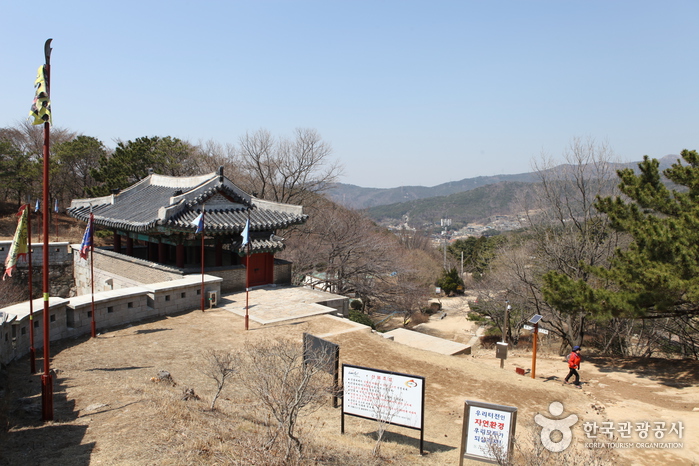
Geumjeongsanseong Fortress (금정산성)
13.6Km 2024-03-05
78-5 Bungmun-ro, Geumjeong-gu, Busan
+82-51-519-4092
Geumjeongsanseong Fortress, with a circumference of 18,845 meters along the ridges and valleys of Geumjeongsan Mountain, is a large-scale fortress built during the Joseon dynasty between 1701 and 1703. The fortress is accompanied by Geumjeongsanseong Village and is known for producing Sanseong makgeolli (unrefined rice wine), a traditional Korean alcoholic beverage. Additionally, there are numerous restaurants, cafés, and attractions, making it a place where nature, history, cuisine, and sightseeing coexist.

Birthplace of the16th President of Korea, Roh Moo-hyun (진영 봉하마을과 노무현 대통령 생가)
14.1Km 2022-12-29
129, Bongha-ro, Gimhae-si, Gyeongsangnam-do
+82-1688-0523
Bongha Village is located 4.5km to the east of Jinyeong-eup, on the foot-slopes of Bonghwasan mountain. It is a typical farming village, and its major produce is Jinyeong sweet persimmons and rice. Its name comes from the mound above it on Bonghwasan mountain, where in the past beacons were lit as a method of communication. Bonghwasan mountain is home to Bonghwasa temple and two famous valleys: Doduk (thief) valley on the east side, named because of the many thieves that used to operate in the area, and Yasi (fox) valley on the west side, which looks like a fox lying on its front, looking back at its tail.
Birthplace of the former President of Korea, Roh Moo-hyun
The birthplace of the former President of Korea, Roh Moo-hyun, is a brick house with a slate roof that consists of two small rooms and a kitchen. Although it is a shabby house, everything in it seems rare and precious to visitors. The earth, stones, and water, as well as household items, are popular with visitors. Some visitors even take stones and soil from the garden home with them in plastic bags, and some take water, believing that water from the ex-president’s birthplace is almost sacred.
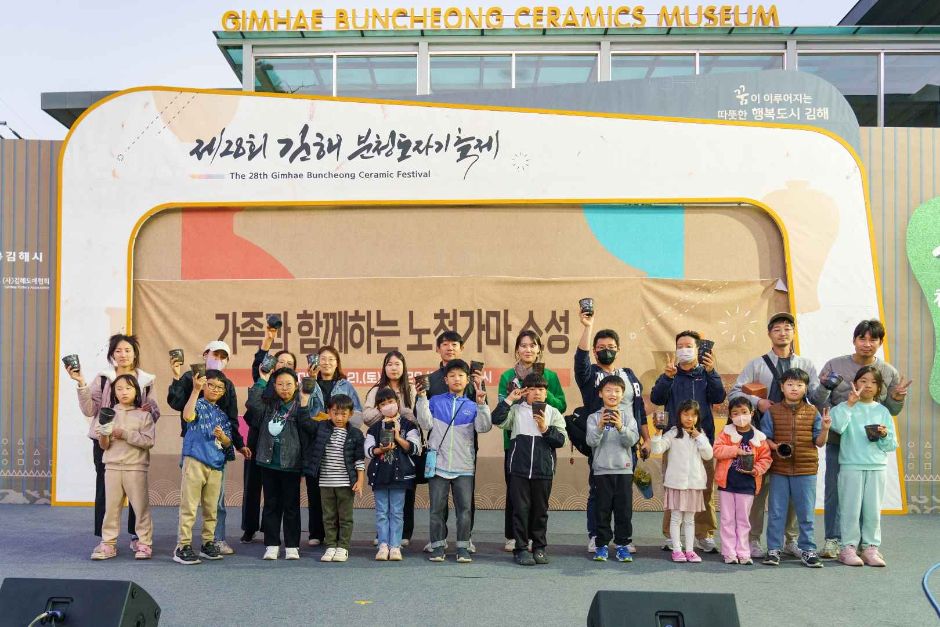
Gimhae Buncheong Ceramics Festival (김해분청도자기 축제)
14.1Km 2025-07-11
17 Buncheong-ro, Jillye-myeon, Gimhae-si, Gyeongsangnam-do
+82-55-330-3245
The Gimhae Buncheong Ceramics Festival highlights the excellence of Buncheong ceramics and their everyday appeal. The festival offers a chance to see a wide variety of ceramics and participate in hands-on activities such as traditional kiln firing.
Clayarch Gimhae Museum (클레이아크 김해미술관)
14.2Km 2022-12-29
275-51, Jillye-ro, Jillye-myeon, Gimhae-si, Gyeongsangnam-do
The name “Clayarch” is a compound word of clay and arch, short for“architecture.” It embodies the basic spirit of the museum, which is to pursue development in the field of architectural ceramics through working with science, art, education, and industry.
Clayarch Gimhae Museum aims to play a leading role in the development of architectural ceramics, which are now spreading across the globe. It intends to do so by rediscovering the relationship between ceramics and architecture – a matter that has been relatively ignored – as a new direction for ceramic art. This reflects the pluralism of this time, which seeks to pursue something creative and new and to overcome the limitations of specific fields through working with different genres. The museum seeks to actively lead this artistic attempt, and make aesthetic and scientific achievements in this field with theoretical backing gained through academic activities, lectures, and research.
![Lotte Mart - Sasang Branch [Tax Refund Shop] (롯데마트 사상점)](http://tong.visitkorea.or.kr/cms/resource/14/2887814_image2_1.jpg)
Lotte Mart - Sasang Branch [Tax Refund Shop] (롯데마트 사상점)
14.3Km 2024-04-22
733, Nakdong-daero, Sasang-gu, Busan
-
CU - Dongseo University Branch (No. 2) [Tax Refund Shop] (cu동서대2호점)
14.4Km 2024-06-27
89, Gaya-daero 330beon-gil, Sasang-gu, Busan
-
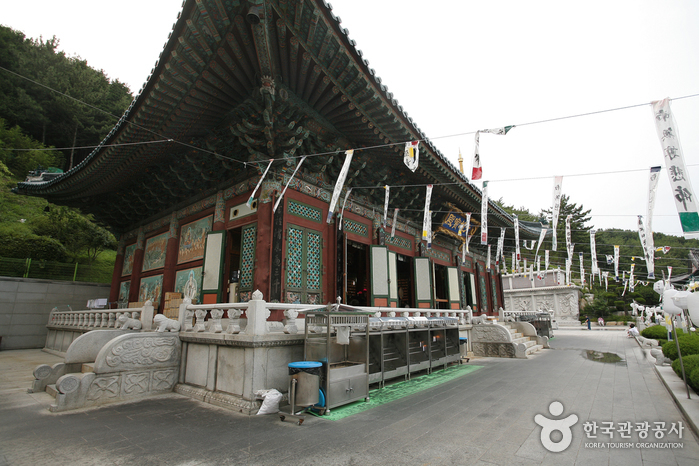
Samgwangsa Temple (삼광사)
14.6Km 2025-02-06
77 Choeupcheon-ro 43beon-gil, Busanjin-gu, Busan
+82-51-808-7111
Samgwangsa Temple is a Buddhist temple located on the slopes of Baegyangsan Mountain in downtown Busan. It houses various structures including the Daeungbojeon Hall, Bell Pavilion, and the Daebotap Tower, which stands at a x_height of 30 meters. The Daebotap Tower enshrines Buddha's relic brought from Tibet, Myanmar, and India. The temple offers different types of temple stays such as one-day, relaxation-oriented, and experiential stays. Visitors can participate in temple etiquette, tea ceremony experiences, 108 prostrations and meditation, Buddhist services, formal meal, and traditional cultural experiences tailored for foreigners.
![E-Mart - Yangsan Branch [Tax Refund Shop] (이마트 양산)](http://tong.visitkorea.or.kr/cms/resource/68/2888468_image2_1.jpg)
E-Mart - Yangsan Branch [Tax Refund Shop] (이마트 양산)
14.9Km 2024-04-23
12, Yangsanyeok 6-gil, Yangsan-si, Gyeongsangnam-do
-
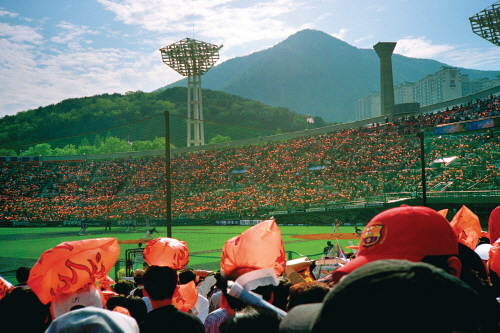
Busan Sports Complex (부산종합운동장)
15.0Km 2021-07-22
344, World cup-daero, Yeonje-gu, Busan
+82-51-504-8001
Established in 1986, the Busan Sports Complex features the main stadium, Sajik indoor swimming pool, an indoor gymnasium, Sajik Baseball Ground, and an athletes' training center. The main stadium was the venue for the 2002 Asian Games and several matches during the 2002 FIFA World Cup. The Busan Sports Complex regularly hosts international sporting and cultural events, while providing excellent facilities for personal as well as group training.
 English
 한국어
한국어 日本語
日本語 中文(简体)
 Deutsch
 Français
 Español
 Русский


