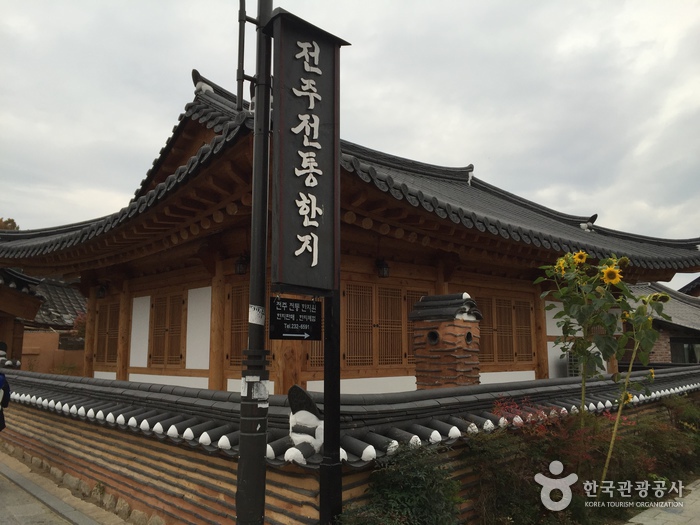
Centro Tradicional del Hanji en Jeonju (전주전통한지원)
3.3Km 2024-04-07
Hanji-gil 100-10, Wansan-gu, Jeonju-si, Jeonbuk-do
Jeonju ha sido el mayor productor de papel tradicional hanji durante más de cien años. Aún mantiene esta orgullosa tradición y el Centro Tradicional del Hanji pretende preservar las técnicas tradicionales de fabricación de papel y ser el centro de la industria del hanji. Más del 80 por ciento del papel producido en el centro es exportado a Japón, y el resto se usa en Corea. El centro produce, expone y vende hanji para caligrafía, pinturas orientales y otros elementos artesanales.
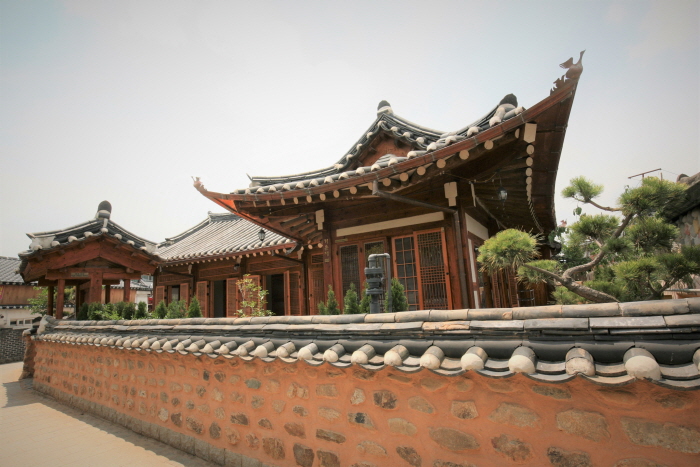
Gaeunchae 2 (가은채2)
3.3Km 2025-07-18
100-20, Hanji-gil, Wansan-gu, Jeonju-si, Jeonbuk-do
Gaeunchae 2 is the sister hanok of Gaeunchae in Jeonju Hanok Village, Jeonbuk-do. It’s a traditional red clay-walled hanok with ondol underfloor heating, exposed roof beams and hanji wallpaper and flooring - creating a beautiful and distinctive hanok interior. It has a small hallway which is good for storing luggage or just to sit and chat. In the garden are sculpted stone lanterns and tigers. Local attractions such as Jeondong Cathedral and Gyeonggijeon Shrine are a short walk away.
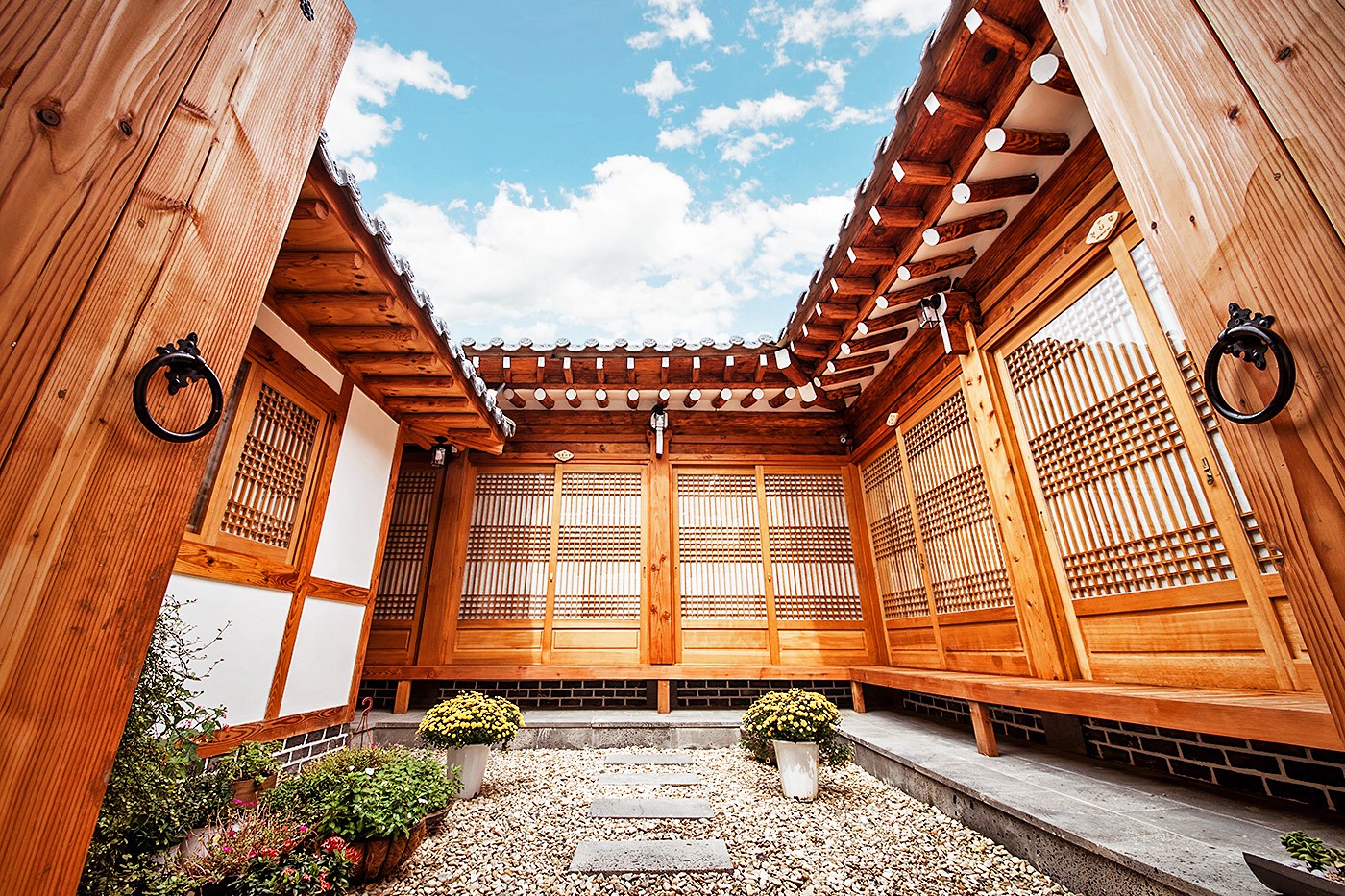
Jeonggahanog / 정가한옥
3.3Km 2025-03-05
78-3, Girin-daero, Wansan-gu, Jeonju-si, Jeonbuk-do
+82-10-9934-1300
Jeongga Hanok is a space where the traditional beauty of hanok and the modern comfort co-exists. The newly built Hanok is neat and pleasant. When you enter the small cobbled yard, the porch and the eaves will welcome you, and you’ll find that the rooms are filled with delicate wood fragrance. The interior is furnished with Korean cypress trees and red clay. In particular, the Cypress Tree room is all made of cypress trees, from the walls to the ceiling, making guests feel like they are lying in a forest. Maple Room and Ginkgo Tree Room, meanwhile, have attics.
Jeongga Hanok faces Jeonju Hanok Village with the Girin-daero in the middle. Hanok Village is just across the road. Major attractions such as Gyeonggijeon, Jeondong Catholic Cathedral, and Jeonjuhyanggyo Confucian School are all within walkable distance. Omokdae, which offers an unhindered view of Hanok Village, is located over the pedestrian overpass. Jaman Mural Village, famous for colorful mural and cozy cafes, is about 300 meters away and a great spot for selfie lovers.
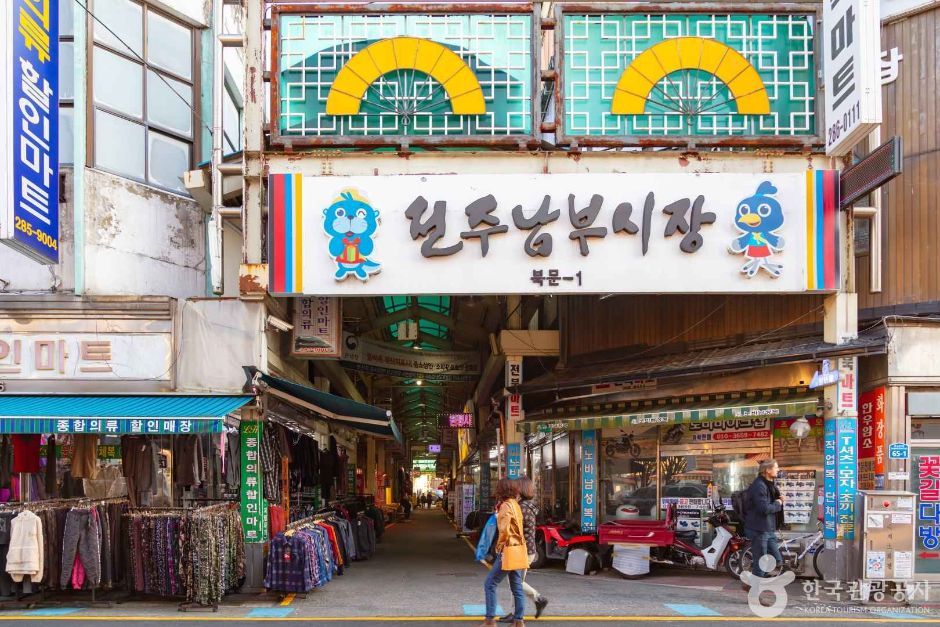
Mercado Nambu de Jeonju (전주 남부시장)
3.3Km 2025-07-09
Pungnammun 1-gil 19-3, Wansan-gu, Jeonju-si, Jeonbuk-do
Establecido en 1905, el Mercado Nambu de Jeonju es hasta la actualidad un importante punto de comercio, de economía y de transporte para los habitantes de la ciudad de Jeonju. Desde finales de los 60 hasta los años 70, el precio del arroz en general se determinaba en este mercado, mostrando así su gran influencia en los mercados de Corea. Actualmente, unas 800 tiendas se encuentran en el predio. Todos los viernes y sábados hay un mercado nocturno donde se pueden probar platos para picar como morcillas, tortitas y rollitos.
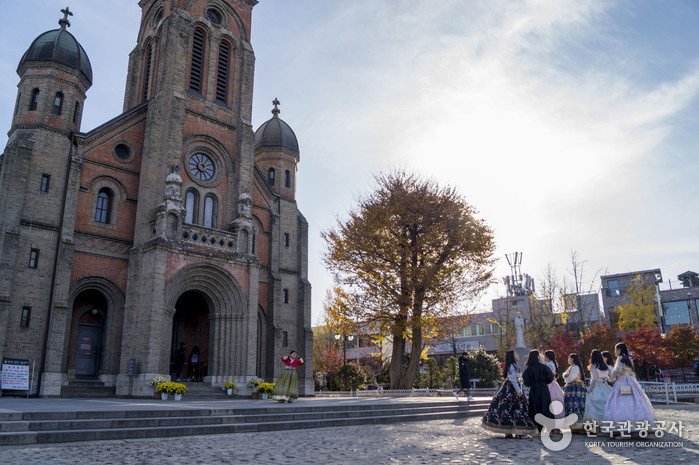
Catedral Católica de Jeon-dong en Jeonju (전주전동성당)
3.3Km 2024-10-15
Taejo-ro 51, Wansan-gu, Jeonju-si, Jeonbuk-do.
La Catedral Católica de Jeon-dong fue construida en 1914 al estilo occidental y fue designada como Sitio Histórico. Es la estructura del estilo occidental más grande de las provincias de Jeollanam-do y Jeollabuk-do. La catedral es elegante con sus paredes de ladrillos y lo más encantador es la entrada y la torre de campana. La entrada de la iglesia tiene una forma arqueada que le da un toque bizantino, mientras que la pequeña torre de campana ubicada en el centro agrega una belleza singular. Desafortunadamente, algunas partes de la catedral fueron destruidas por un incendio en 1988.

Veteran Kalguksu (베테랑칼국수)
3.4Km 2025-07-14
135, Gyeonggijeon-gil, Wansan-gu, Jeonju-si, Jeonbuk-do
Veteran Kalguksu, located in Jeonju Hanok Village, has been operating since 1977, attesting to the great taste of their broth, made using sesame, meal, and eggs. The noodles are also cut much thinner than other restaurants, while maintaining their chewy texture. Another popular menu at the restaurant is their kongguksu.
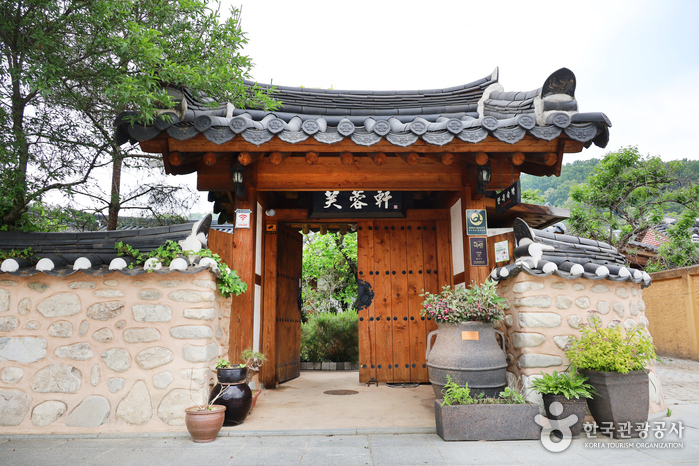
Bu Yong Heon (부용헌)
3.5Km 2025-06-17
149-3, Hyanggyo-gil, Wansan-gu, Jeonju-si, Jeonbuk-do
Buyongheon is located in Jeonju Hanok Village. Precisely speaking, Buyongheon is the very next door to Jeonju Hyanggyo (Confucian Temple and School). Across the alley are Jeonju Hyanggyo Culture Center and Wanpanbon Culture Center. If you walk a few more steps, you will reach Jeonju Hanbyeok Culture Center where you can see various performances and experience the culture and foods of Jeonju. Omokdae can be seen from the garden of Buyongheon. Across the Jeonjucheon Stream is the National Intangible Heritage Center.
The beginning of Buyongheon is deeply related with Jeonju Hyanggyo. In around 1935, the local bureaucrats lived around the Hyanggyo after building 12 houses one after another. Most of them came from rich families. These collective houses were called Buyong Houses, which meant rich houses. The name Buyongheon originated from Buyong Houses. The rooms of Buyongheon are composed of Toenmaru Bang, Daecheong Maru Bang, Large Daecheong Maru Bang and Big Sarangchae. The interior of the rooms looks neat with the beauty of blank space as they excluded unnecessary decorations. Carefully prepared breakfast is served upon request made in advance. Visitors can also experience traditional culture such as traditional etiquette education and Korean paper art.
In fall, the yellow leaves of the ginkgo tree in the garden of Jeonju Hyanggyo lights up the roof of Buyongheon. It is recommendable to walk along the Jeonjucheon Stream and take pictures of the colorful murals and the cafes in the Jaman Mural Village located on the left sie of the Hanok Village. It takes 15 minutes from Jeonju Station and 10 minutes from Jeonjuu Express Bus Terminal to Buyongheon by taxi.
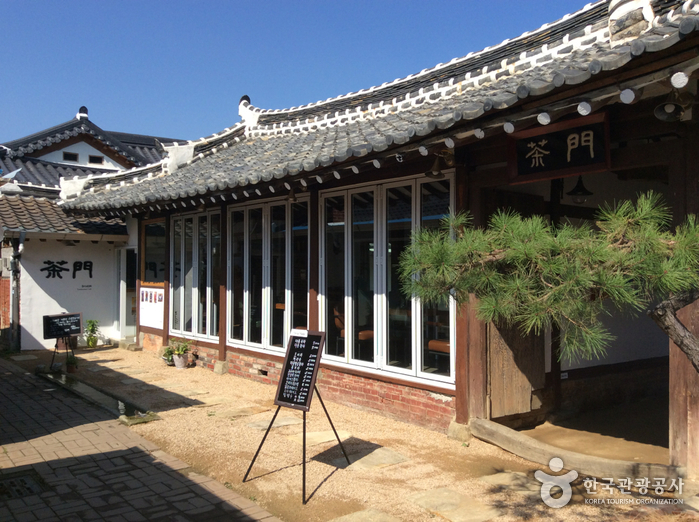
Damun (다문)
3.5Km 2024-04-07
74-8, Eunhaeng-ro, Wansan-gu, Jeonju-si, Jeonbuk-do
+82-63-288-8607
Situated in Jeonju Hanok Village, Gyo-dong, Jeonju-si, Damun serves Korean table d’hote in a restaurant divided into large and small rooms within a hanok building structure.
Omokdae e Imokdae (오목대와 이목대)
3.5Km 2025-07-10
Girin-daero 55, Wansan-gu, Jeonju-si, Jeonbuk-do.
Omokdae está situado en la cima de una colina y se trata de uno de los lugares donde Yi Seong-gye (quien se convirtiera más tarde en el rey Taejo, el primero de la dinastía Joseon) hizo una parada para celebrar su victoria de camino a casa tras la guerra contra los invasores japoneses, al final de la era Goryeo. Enfrente de Omokdae está Imokdae, situado cerca de los pies del monte Seungamsan, donde se encuentra Chimyeongjasan, un monumento católico. En este lugar, Mokjo (antepasado del rey Taejo) solía jugar con sus amigos a representar guerras de niño, una acción muy simple que aparecería después en 'Yongbieocheonga', una balada del siglo XV que narra los logros culturales de la nación.
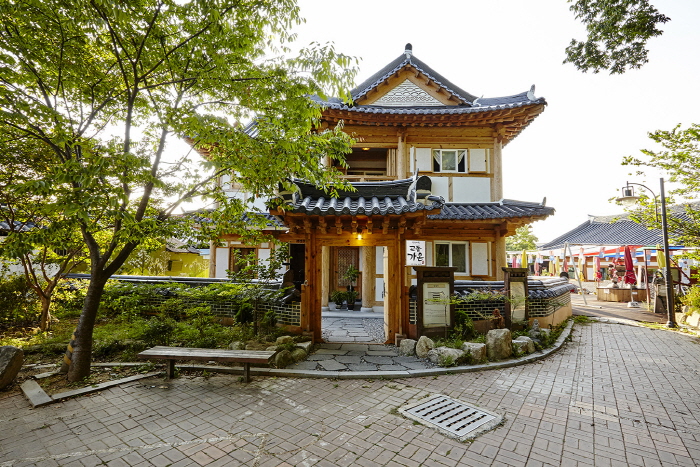
Gyodonggaon / 교동가온
3.5Km 2025-08-12
73-1, Eunhaeng-ro, Wansan-gu, Jeonju-si, Jeonbuk-do
+82-10-5106-3355
Gyodong Gaon is located right in the middle of the main street of Jeonju Hanok Village. The word "gaon" means "middle" in Korean. It's a two-story traditional Korean house that stands out among the rest of the traditional Korean houses in the alley leading to Omokdae. Just inside the gate is a yard with colorful flower trees, jars of sauces, and furnace. The mural on one of the walls is popular among the guests as a place to take photos.
The "numaru", or "loft" in Korean, overlooks the Hanok Village, and is one of the best places in the village to get a closer look at the 500 year old zelkova tree and the foot of the mountain nearby. Open to all the guests, the "numaru" is very popular during the winter as well as the summer. It's an open space with a wooden floor, so it's very cool during the summer, and it also serves as an observatory to enjoy the view of all the snow-covered trees and roofs in the Hanok Village during the winter while having a hot cup of tea.
The owner of the guesthouse has been living here for 37 years. He rebuilt his house and turned it into a hanok guesthouse in 2014 while making sure the rooms are well insulated and comfortable to stay.
He built a two-story building to make an efficient use of the space, and focused on making all the rooms look different. The house has five rooms, and only the “Meomulda Room” on the first floor is the only rooms with a living room separated from the bedroom. All you have to do is open the door to enjoy the view of the yard, Hanok Village, and Omokdae. The “Nanuda Room” on the second floor is the largest one that can accommodate more than five people, making it the most popular choice among families. The "Damda Room" and "Kkumkkuda Room" both have an attic that can be reached by a ladder. The attic is big enough to sleep two adults, and some guests actually sleep there for a unique experience. One of the walls of the attic is finished with cypress wood which has a pleasant scent. The “Geurida Room” has the best view through the two windows on the either side of the room, in addition to warm sunlight and cool wind that come through the window. Modern, not traditional, doors are installed in all the rooms for better sound proofing and insulation.
Gyodong Gaon offers a number of experience programs, such as traditional games like “gulleongsoe”, “tuho", and “Korean top”, As well as “sabang chigi”, “sampalseon”, and “ttangttameokgi”.
Many Korean adults are familiar with these games, while children and foreigners can find these games interesting. All these traditional Korean games are free to play.
 Español
 한국어
한국어 English
 日本語
日本語 中文(简体)
 Deutsch
 Français
 Русский


