![Golfzon Market - Magok Branch [Tax Refund Shop] (골프존마켓 마곡 [사후면세점])](http://tong.visitkorea.or.kr/cms/resource/01/2880101_image2_1.jpg)
Golfzon Market - Magok Branch [Tax Refund Shop] (골프존마켓 마곡 [사후면세점])
7.0Km 2024-04-22
1-2F, 376, Yangcheon-ro, Gangseo-gu, Seoul
-

Leeum, Samsung Museum of Art (삼성미술관 리움)
7.1Km 2022-12-15
60-16, Itaewon-ro 55-gil, Yongsan-gu, Seoul
+82-2-2014-6901
Leeum, Samsung Museum of Art, exhibits traditional and modern art works by Korean and international artists. The museum itself is just as fascinating as the art works on display, since the museum's three buildings were designed by internationally renowned architects Mario Botta, Jean Nouvel, and Rem Koolhaas.
MUSEUM 1 houses traditional Korean art, such as calligraphy, paintings, ceramic arts, and metal craftwork, while MUSEUM 2 displays modern and contemporary art by both Korean and international artists.
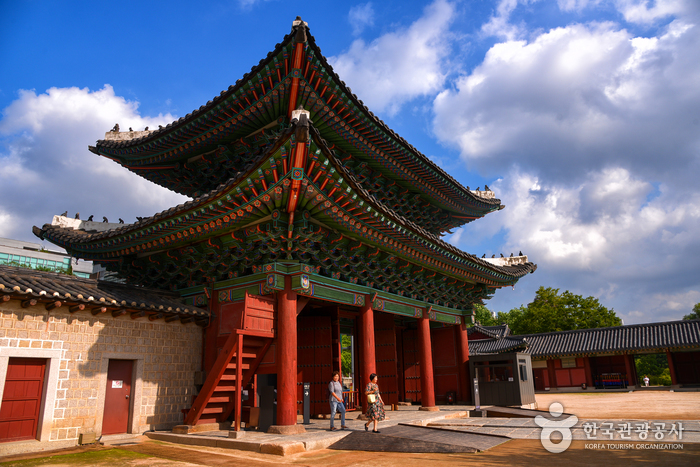
Changgyeonggung Palace Honghwamun Gate (창경궁 홍화문)
7.1Km 2021-05-27
99, Yulgok-ro, Jongno-gu, Seoul
+82-2-762-4868
Honghwamun Gate is the main gate of Changgyeonggung Palace. It has three opening gates in the front and two to the side with a sophisticated locking mechanism.
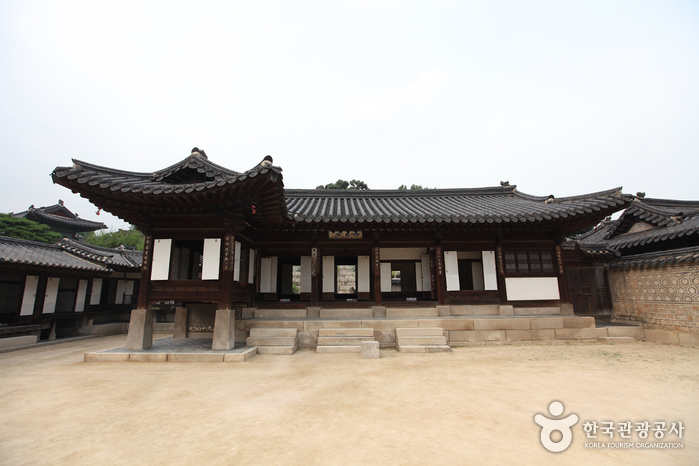
Nakseonjae Hall (낙선재)
7.1Km 2021-09-30
99, Yulgok-ro, Jongno-gu, Seoul
+82-2-2148-1822
Located inside Changdeokgung Palace, Nakseonjae Hall is a one-story structure built in ikgong style (bird wing-shaped eaves placed on top of the pillars) with a hip tiled and gable roof. It has 6 kan in the front and 2 kan (traditional unit of measurement of the space between pillars) to the sides. It originally belonged to the nearby Changgyeonggung Palace, but came to be considered a part of Changdeokgung Palace in more recent years.
The hall was constructed in 1846 (12th year of King Heonjong’s reign) and it is collectively called Nakseonjae together with the adjacent Seokbokheon Hall and Sugangjae Hall.
Behind the building is a flower garden made of stacked large stones. The chimney, the flowers, and the oddly shaped stones harmoniously blend into one another to create an outstanding landscape gardening.
![Rawrow - Kwangjang Market Branch [Tax Refund Shop] (로우로우 광장시장)](http://tong.visitkorea.or.kr/cms/resource/29/2878229_image2_1.jpg)
Rawrow - Kwangjang Market Branch [Tax Refund Shop] (로우로우 광장시장)
7.2Km 2024-04-19
Store #239, Gwangjang Market, 88, Changgyeonggung-ro, Jongno-gu, Seoul
-
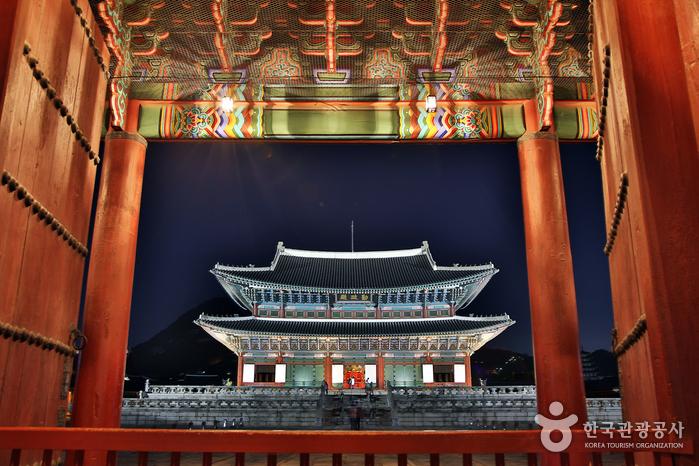
Jongno Cheonggye Special Tourist Zone (종로 청계 관광특구)
7.2Km 2021-12-30
99, Yulgok-ro, Jongno-gu, Seoul
+82-2-2148-1861
Jongno Cheonggye Special Tourist Zone stretches from Seorin-dong to Changsin-dong between Cheonggyecheon Stream and Jong-ro. It includes Youth Street, Gwangjang Market, Sewoon Electronics Department Store, lighting stores, pharmacy & medical device stores, badge stores, Stamp Street, Stationery · Toy Market, Aquarium Street, Shoes Market, and other markets totalling to approximately 14,000 shops. Nearby attractions include modern high-story buildings as well as Gyeongbokgung, Changdeokgung, Changgyeonggung, Deoksugung, and Unhyeongung Palaces, Jongmyo Shrine, and Insa-dong, merging traditions, modernism, culture, and markets alike.
Thought to be at the heart of Seoul, Cheonggyecheon Stream is located in the dense cultural area of Seoul where various press networks, organizations, bookstores and other major corporations are situated. Walking along Cheonggyecheon Stream is a famous activity for tourists. Also, the area is the venue for the Seoul Lantern Festival every winter. Keeping its traditional scene including narrow alleys, old-fashioned hanok buildings and various stores still fully intact, the tourist zone has enough fun places for sightseeing as well as tasty restaurants in every corner for a more enjoyable visit.
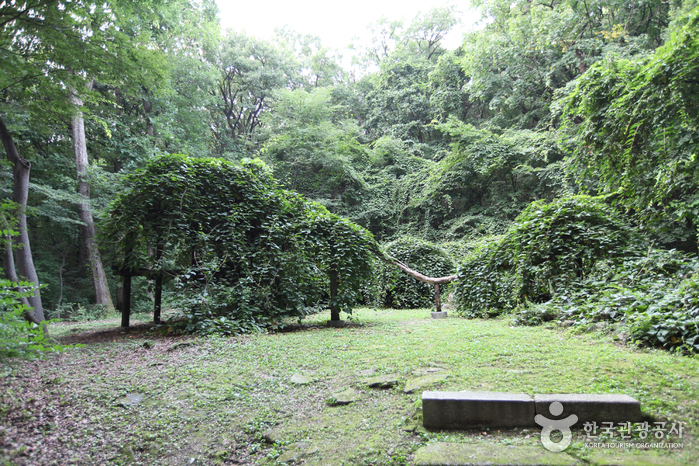
Daraenamu Tree in Changdeokgung Palace (창덕궁 다래나무)
7.2Km 2025-01-13
99, Yulgok-ro, Jongno-gu, Seoul
+82-2-3668-2300
Daraenamu Tree in Changdeokgung Palace is estimated to be 600 years old, meaning it had likely been planted before the palace was built. The tree stands 19m in x_height, and has six separate trunks sprawling in all directions. It is the biggest and the oldest in Korea. It is designated and protected as a National Natural Monument.
![ABC-Mart - NC Gangseo Store Branch [Tax Refund Shop] (ABC마트 NC 강서점)](http://tong.visitkorea.or.kr/cms/resource/26/2890326_image2_1.jpg)
ABC-Mart - NC Gangseo Store Branch [Tax Refund Shop] (ABC마트 NC 강서점)
7.2Km 2024-04-18
17, Gangseo-ro 56-gil, Gangseo-gu, Seoul
-
![Paraboot - Hannam Branch [Tax Refund Shop] (파라부트 한남)](http://tong.visitkorea.or.kr/cms/resource/43/2889643_image2_1.jpg)
Paraboot - Hannam Branch [Tax Refund Shop] (파라부트 한남)
7.2Km 2024-04-23
228-1, Itaewon-ro, Yongsan-gu, Seoul
-
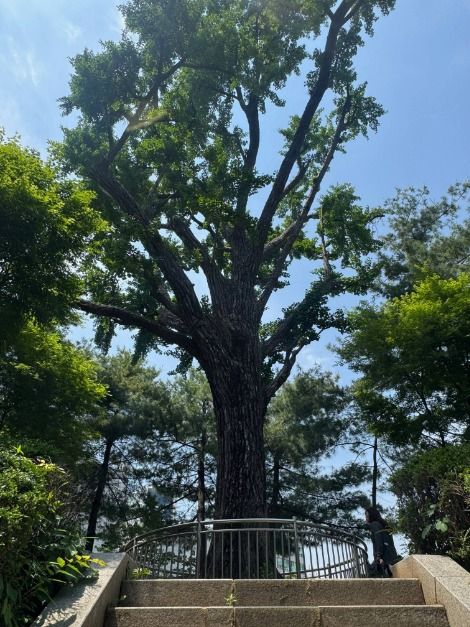
Ginkgo Tree at the Fortress Well Site (성주우물터 은행나무)
7.2Km 2025-09-15
Gayang-dong, Gangseo-gu, Seoul
Ginkgo Tree at the Fortress Well Site refers to the old ginkgo tree, which have been designated as a protected tree in 1988, located in Gayang-dong, Gangseo-gu in Seoul. Until the Gayang apartment complex was built, the area where the ginkgo tree is located was a historic place with a beautiful landscape and many anecdotes and legends. Before the Goryeo dynasty, its location served as an important strategic point along the lower part of the Hangang River, where it had a ferry dock with boats that bypassed Haengju and Paju as a shortcut for commuting between Kaeseong and Pyongyang, and is associated with many legends of historical figures who had used the dock. The ginkgo tree also appears in a painting drawn by Gyeomjae Jeongseon, a historic painter of the Joseon dynasty.
 English
 한국어
한국어 日本語
日本語 中文(简体)
 Deutsch
 Français
 Español
 Русский


