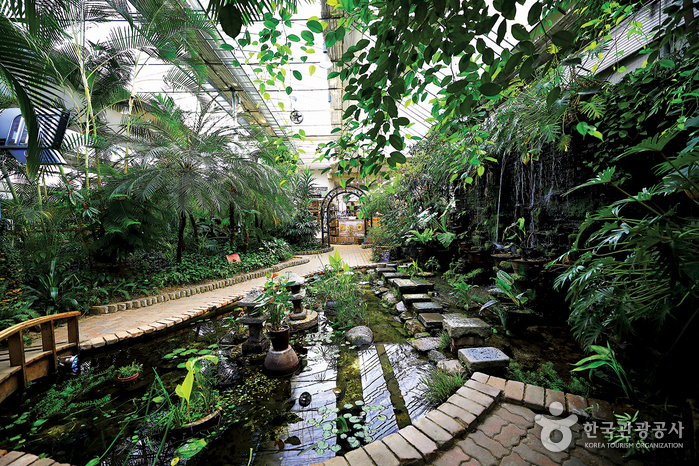
Garden of Sky (하늘물빛정원)
.0M 2024-06-03
156 Geomhan 1-gil, Chubu-myeon, Geumsan-gun, Chungcheongnam-do
A garden filled with wild flowers, exotic plants, and rare trees, Garden of Sky is nestled by Jangsanhosu Pond located at the foothills of Meodeullyeong Pass. The garden also has a wide variety of facilities that cater to visitors' convenience and needs such as a jjimjilbang (Korean sauna), seminar rooms, restaurants, herbal souvenir shop, cafes local food stores, forests, and photo zones.
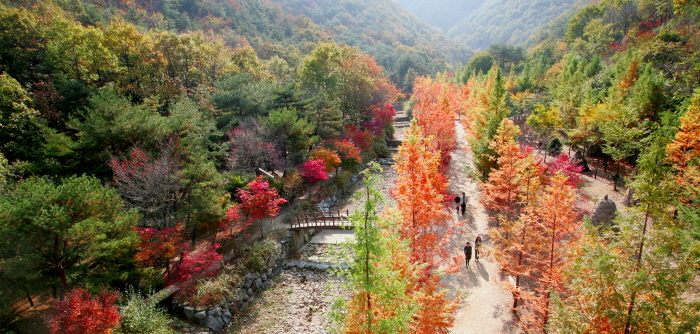
Sangso-dong Forest Park (상소동 산림욕장)
1.4Km 2022-12-26
San 1-1, Sangso-dong, Dong-gu, Daejeon
Sangso-dong Forest Park is located at the point where the foothills of Maninsan Mountain and Sikjangsan Mountain meet. The road to the park is beautifully lined with sycamore trees. The park offers various facilities for enjoying nature and in particular, the stone pagodas placed throughout the park are a must-see. Visitors can stack their own rocks and make wishes relating to family, health, relationships, and more. The park is great for walks, hikes, or even just to relax as wild flowers bloom all throughout spring to fall.

Maninsan Recreational Forest (만인산 자연휴양림)
3.4Km 2023-02-09
106, Sannae-ro, Dong-gu, Daejeon
Maninsan Recreational Forest sits on the border between Daejeon and Geumsan-gun, Chungcheongnam-do, and is located approx. 17 kilometers away from Daejeon Station on National Route 17. It consists of Maninsan, the main peak, as well as Bongsuregol, Keunbaegol, and Jageunbaegol, and, because of its beautiful landscape, it even enshrined the figures of King Taejo and his princes during the Joseon Dynasty. Pure water constantly flows in the valleys and broadleaf trees form a thickly wooded forest. This recreational forest located close to the city has utilized natural ridges and is divided into the family recreation district, youth district, and picnic district to provide a pleasant resting area for citizens. Maninsan Service Area is a convenience facility of the recreational forest built with private capital in 1990 and, at the time of its construction, it utilized the natural valleys as they were without damaging any part of the forest. Decks were installed in the valleys, and the structure itself was built with one semi-underground floor and two ground floors. The main framework was made of reinforced concrete and wood was used as the primary material for construction. Also, a pond was created in front of the rest area to harmonize with the natural landscape. As a result, it is widely praised by experts as the most beautifully constructed rest area in Korea, and it is becoming a place that citizens frequently visit to relax. There are comfortable benches and resting spots situated throughout for visitors to relax while enjoying the views and, in particular, Manillugak is a symbolic recreational facility of Maninsan and a representative pavilion structure. It was built in the architectural style of Segeomjeong Pavilion located on Bugaksan in Seoul while employing reinforced concrete for the main framework. It applies a two-story, wooden tile roof to maintain as much beauty of Korean traditional architecture as possible with the consideration of maintenance.
Yetteo Folk Museum (옛터민속박물관)
3.9Km 2025-02-04
321-35 Sannae-ro, Dong-gu, Daejeon
The Yetteo Folk Museum showcases traditional folk artifacts that reflect the daily life of the Daejeon region. Inside the exhibition hall, visitors can view items such as knives, tray tables, water droppers, cups, and oil lamps. The outdoor exhibition area features stone mortars, troughs, and grinding stones. The museum also includes a traditional jar exhibition hall, a Korean restaurant, and a traditional teahouse. Visitors can engage in hands-on experiences like natural dyeing, hanji paper crafts, and knot-making, or relax and enjoy a campfire.
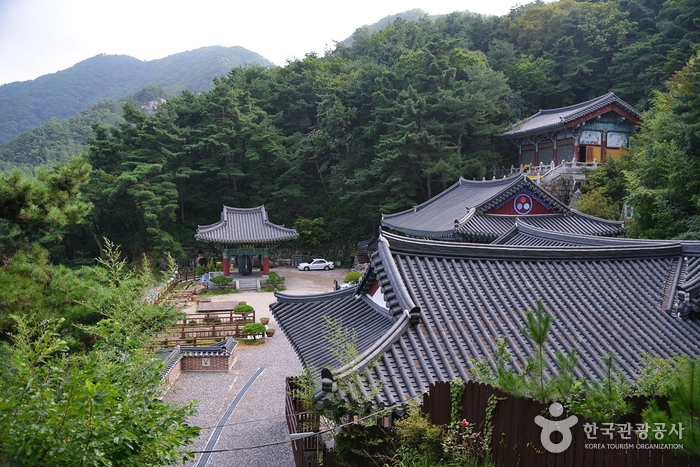
Okcheon Yongamsa Temple (용암사(옥천))
8.3Km 2022-12-27
400, Samcheong 2-gil, Okcheon-gun, Chungcheongbuk-do
Yongamsa Temple, located in the mid-slope of Jangyongsan Mountain, is a branch of Beopjusa Temple. It was built during the Silla period. Unlike the more common temple arrangements, the stone pagoda in Yongamsa is uniquely situated on a low peak in the north with a view on all sides. The East and West Three-story Stone Pagodas of Yongamsa Temple, a designated Treasure, can be found here, as well as Rock-caved Buddha, and Wooden Seated Amitabha Buddha in Daeseongjeon Hall.
Sikjangsan Cultural Park (Sunrise Observatory) (식장산 문화공원(해돋이전망대))
8.8Km 2023-02-09
32-834, Secheongongwon-ro, Dong-gu, Daejeon
Sikjangsan (623.6 meters) is a mountain spanning three regions - Dong-gu of Daejeon, Gunbuk-myeon and Gunseo-myeon of Okcheon-gun. As the tallest peak in the city located in the southeastern part of Dong-gu, Daejeon, it stands proudly next to great mountains in neighboring regions such as Seodaesan, the tallest peak in Chungcheongnam-do (904 meters), and Daeseongsan, the tallest in Okcheon (705 meters). Home of a 4.82 million-square-meter large, natural ecosystem preservation forest designated by the city, Sikjangsan is an ecological repository featuring plants of 224 species, 45 varieties, 187 genera, and 78 families; 45 kinds of mammals such as roe deer, squirrels, wildcats, raccoons and bats; over 100 types of birds; reptiles; and amphibians.
Sikjangsan Cultural Park is an ecological park that continues from Secheon Park to Sikjangsan Sunrise Observatory. The cultural park was established at the peak of the mountain, which had been regarded as one of the best nightscape viewpoints in Daejeon. A traditional tower built inside the cultural park adds a sense of classical dignity. An observatory from which the entire city can be seen in a single view is also located here. People of all ages and genders visit the tower and observatory to enjoy the expansive view of Daejeon.
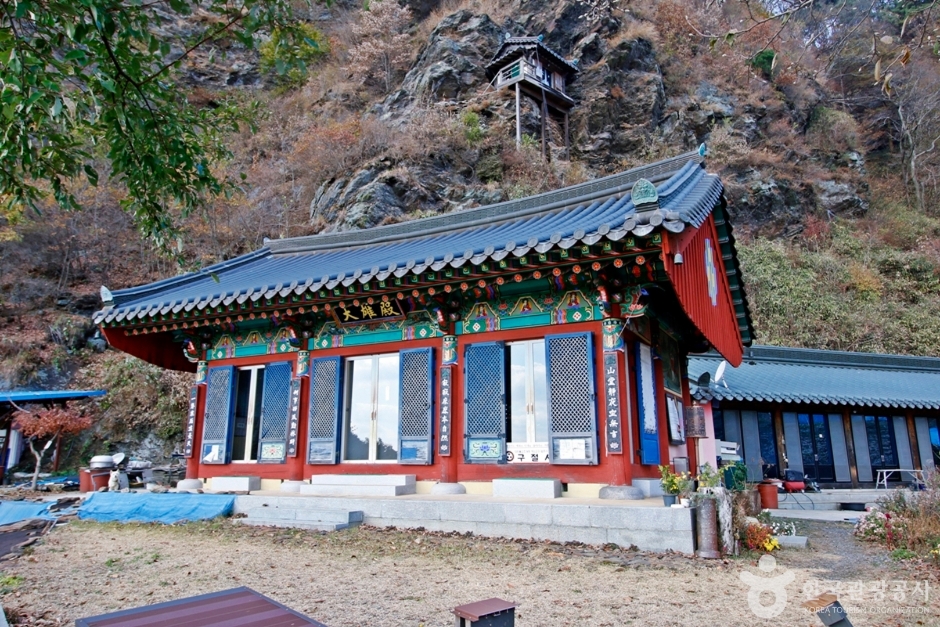
Gujeolsa Temple (구절사)
9.2Km 2024-02-26
226, Sangjung-gil, Gunseo-myeon, Okcheon-gun, Chungcheongbuk-do
Gujeolsa Temple is a Buddhist temple located deep within the Sikjangsan Mountain in Okcheon. It was founded in 1393 and was rebuilt in 1933 to its present appearance. The road from the radio tower fork to Gujeolsa Temple in Sikjangsan Mountain’s hiking trails is lush with acacia trees, which are in full bloom in May. Another sight that should not be missed is the fog shrouding the foot of the mountain in spring and fall.
Daejeon O-World (대전오월드)
10.3Km 2022-12-27
70, Sajeonggongwon-ro, Jung-gu, Daejeon
Daejeon O-World was established when the Daejeon Zoo and Joy Land, an amusement park, were integrated under the supervision of the Daejeon City Corporation. The project cost a whopping 40 billion won and resulted in the construction of Flower Land (100,000㎡) in addition to the renamed Zoo Land and the preexisting Joy Land. It opened on May 1, 2009 to the public.
The three main sections of Daejeon O-World are Zoo Land, Joy Land, and Flower Land. Zoo Land is currently home to a total of 600 animals of 130 different species including American black bears, Bengal tigers, lions, elephants, giraffes, zebras, and ostriches. Amusement rides, waterslides, and four-season sledding are housed at Joy Land. Flower Land boasts a number of smaller sections such as Rose Garden, Four Season Garden, Herb Garden, and Maze Garden and is home to a total of 150,000 tress of 100 different species and 200,000 flowers of 85 different species. An outdoor stage and concert hall are also located in the area.
There are plenty of things to see and enjoy in every corner of Daejeon O-World. Just beyond Festival Street, visitors will find a large (3,000㎡) pond with a fountain.
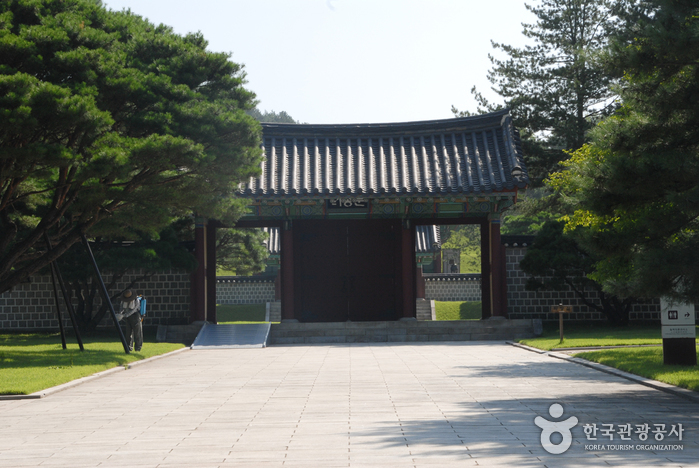
Tomb of Seven Hundred Patriotic Martyrs (Geumsan) (금산 칠백의총)
10.4Km 2022-09-13
50, Uichong-gil, Geumsan-gun, Chungcheongnam-do
The Tomb of Seven Hundred Patriotic Martyrs is a renowned historical attraction located in Geumsan, Chungcheongnam-do. This holy site is interred with 700 patriots who died in a battle against 15,000 Japanese soldiers in Geumsan during the Imjin War in 1592. Among the deceased is the leader, Jo Heon.
Shrines and monuments were built in memory and respect of the patriotic spirit of those who died in the battle. The site is especially popular among families with children as an attraction as visitors can learn a valuable history lesson as well as enjoy a relaxing walk around the area. In addition, the Cultural Heritage Administration of Korea hosts an annual ceremonial rite every year on September 23 at 15:00, offering more to see for visitors.
Ppuri Park (뿌리공원)
10.9Km 2021-08-18
79, Ppurigongwon-ro, Jung-gu, Daejeon
Ppuri Park was created under the theme of filial piety, one of the overriding values of Korean society. Opened on November 1, 1997, the park occupies a plot of land measuring 109,091 m² and is filled with unique sculptures and art pieces that remind visitors of their family ties. Other main points of interest at Ppuri Park include the Deep-rooted Spring (symbolizing the 12 jisin/gods of the earth), a waterfront stage, grass square, observation deck, and recreational forest. Another must-visit attraction is the Samnam Memorial Tower, which represents the harmony and cooperation between the Honam and Yeongnam regions of Korea.
 English
 한국어
한국어 日本語
日本語 中文(简体)
 Deutsch
 Français
 Español
 Русский


