
Uihang Beach (의항해수욕장)
15.5Km 2024-02-26
Uihang-ri, Sowon-myeon, Taean-gun, Chungcheongnam-do
Uihang Beach, situated in Taean, gets its name from "Uihang," meaning the neck of an ant, alluding to the area's narrow and elongated terrain. The beach features a gentle slope with both sands and pebbles. Fishing is available on the breakwater, and the vicinity offers various accommodations, including a campground, pensions, lodgings, and a hanok resort.
Baeksajang Beach (백사장해수욕장)
15.9Km 2021-07-01
Changgi-ri, Taean-gun, Chungcheongnam-do
+82-41-670-2691
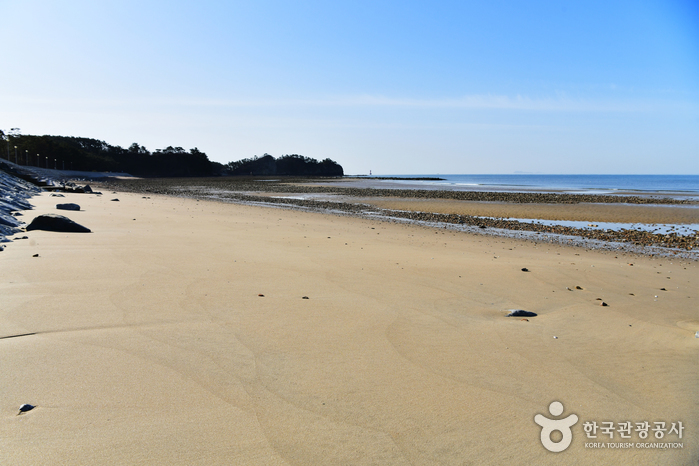
Baeksajang Beach is located near Baeksajangpogu Port which is just 4 kilometers southwest of Anmyeon-do Yeonyukgyo Bridge, the bridge connecting the mainland to the island. The beach has a long stretch of shimmering white sand and the ebbing tide creates a different view of the horizon. Though the water level has a large tidal range, the beach's moderate water temperature makes it suitable to swim even in late summer. The beach is 1.2 kilometers long and 300 meters wide, and is made up of fine silica sand.
Baeksajang Beach and the nearby Sambong Beach is one of the major sources of jumbo shrimp. During autumn, crowds come to enjoy the taste of fresh jumbo shrimp. The beach even holds a prawn festival every fall when jumbo shrimp production peaks.
Sinduri Coastal Sand Dune (태안 신두리 해안사구)
16.1Km 2021-03-27
Sindu-ri, Taean-gun, Chungcheongnam-do
+82-41-670-2544
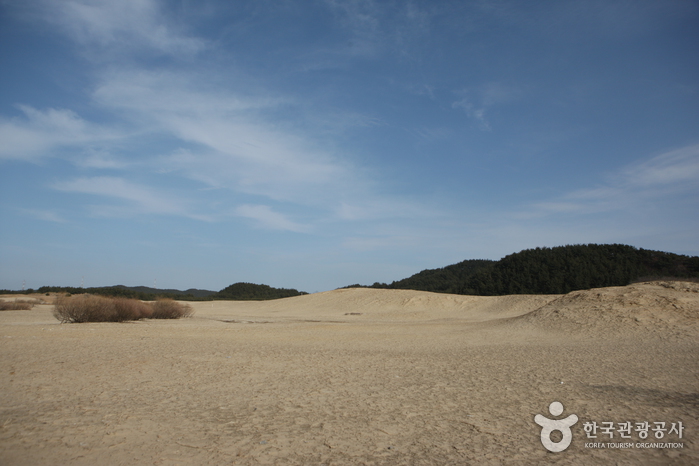
Located on Sinduri Beach in Taean, Sinduri Coastal Sand Dune is the only sand dune in Korea and one of Eight Tourist Attractions in Taean. It was believed to have been formed approximately 15,000 years ago after the Ice Age when strong winds gradually carried sand from the sea to the current area. The dune has all the qualities of a typical dunelnd, as well as being a buffer between the coast and inland.
Sambong Beach (삼봉해수욕장)
16.7Km 2022-07-29
Anmyeon-eup, Taean-gun, Chungcheongnam-do
+82-41-670-2691
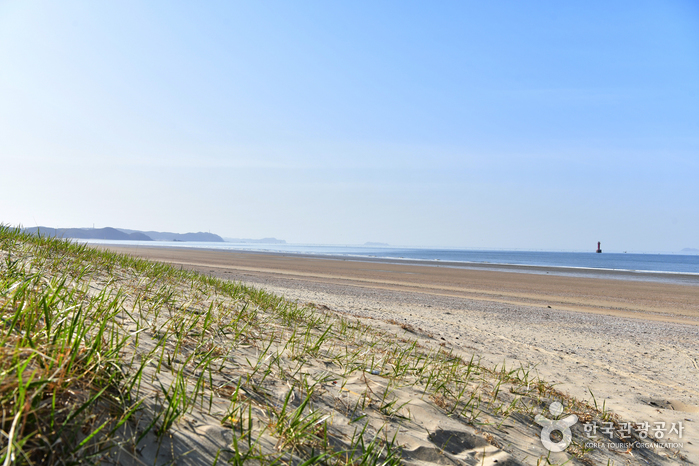
Sambong Beach is located to the south of the bridge that connects Nammyeon and Anmyeon-eup. The beach stretches 3.8 kilometers and has a x_width of 300 meters. The beach gently slopes down at a 6° angle and has an average water depth of 1.5 meters with a temperature of 22° C. The three Sambong Rocks, the Haedanghwa flower (plena) and the rich pine forests are just a few of the beautiful and magnificent features of this beach. Also, the beach attracts many visitors during summer because it has convenient transportation making it easily accessible.
Cheonsuman Bay - Migratory Bird Sanctuary (천수만(철새도래지))
17.5Km 2021-05-21
Buseok-myeon & Gobuk-myeon, Seosan-si, Chungcheongnam-do
+82-41-661-8054
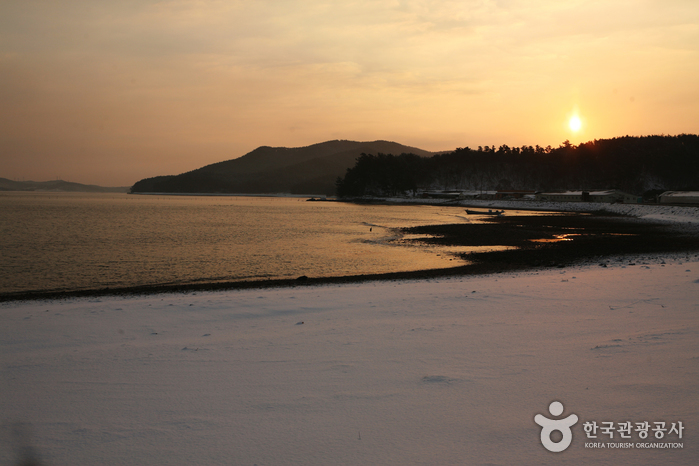
Cheonsuman Bay emerged as a habitat for migratory birds as a result of a reclamation project that was undertaken in 1984. A breakwater was built around this area, which created Ganwolho Lake and Bunamho Lake. Moreover, a vast agricultural land spanning 6,400 hectares was formed on what used to be a mud flat. The monthly average temperature of Cheonsuman Bay area between October and March is about 1.2 degree Celsius higher than inland areas at the same latitude because of its oceanic climate. Such geographical conditions have made Cheonsuman Bay an ideal wintering site for migratory birds.
Cheonsuman Bay is located midway along the migration route of birds migrating from northern Siberia or Manchuria to Southeast Asia. As a result, Cheonsuman Bay has become home to nearly 200 different species of migratory birds that can be watched all year round. In winter, the area becomes a wintering site for over 300 thousand ducks and wild geese, as well as a wide variety of endangered species like storks, spoonbills, mute swans, and white-naped cranes. Lucky birdwatchers might be able to witness the great spectacle created by tens of thousands of migratory birds flying in a flock over the Cheonsuman Bay area.
Seosan Buseoksa Temple (부석사(서산))
18.3Km 2024-12-03
243 Buseoksa-gil, Seosan-si, Chungcheongnam-do
+82-41-662-3824
Located on Dobisan Mountain in Seosan, Chungcheongnam-do, Buseoksa Temple was built by the Great Monk Uisang in 677, the 17th year of King Munmu of Silla, and was later rebuilt by Great Monk Muhak during the Joseon dynasty. The temple houses eight seated Buddha statues and attracts many visitors due to its magnificent surrounding scenery.
Seosan Palbongsan Mountain (팔봉산(서산))
19.4Km 2021-04-30
Yanggil-ri, Seosan-si, Chungcheongnam-do
+82-41-662-2004
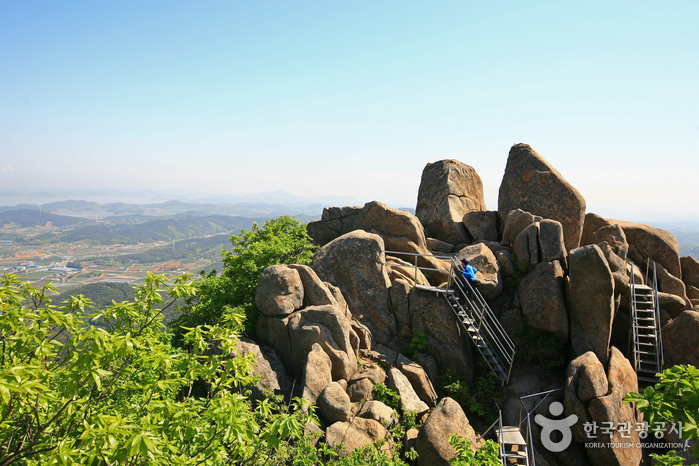
Palbongsan Mountain stretches out like a folding screen and stands high with great spirit. It is known that the mountain was named Palbong (“eight peaks” in Korean) because of its eight peaks standing in a row. There are actually nine peaks, but the smallest was not included. Legend says the smallest weeps over its exclusion at the end of every December. The third peak is the highest, standing at 362 meters with a beautiful view and crisp air, making it ideal for hiking (3-hour course) and resting at the top. There is another mountain of the same name in Hongcheon, so this mountain is usually referred to as “Seosan Palbongsan.”
Anmyeon Beach (안면 해수욕장)
19.4Km 2021-06-30
Jeongdang-ri, Taean-gun, Chungcheongnam-do
+82-41-670-2691
Anmyeon Beach is a 10-minute drive away from Yeonyukgyo Bridge, located in southern Taean. The way to the beach is led by sceneries of mountains and rice paddies. Upon arrival, the view gets replaced with a wide-open sandy beach with small islets scattered across the ocean. Anmyeon Beach is also a popular site for rock fishing and catching clams and baby crabs at low tide.
 English
 한국어
한국어 日本語
日本語 中文(简体)
 Deutsch
 Français
 Español
 Русский


