Tongilho (통일호)
5.3Km 2024-03-20
7-6 Eoryujeong-gil 212beon-gil, Samsan-myeon, Ganghwa-gun, Incheon
+82-32-934-8001
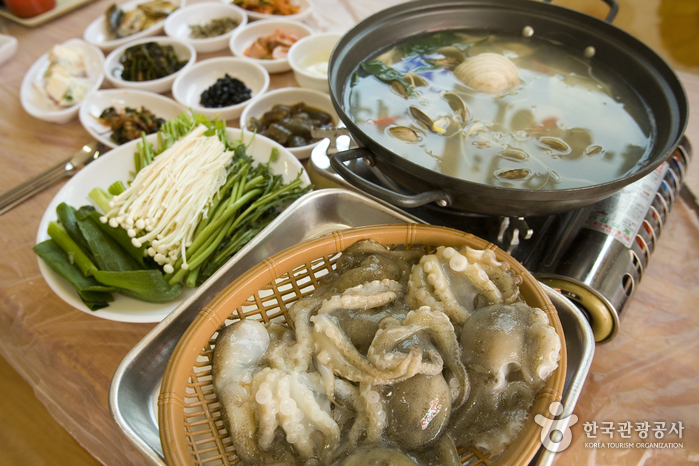
Tongilho is a picturesque hwareo hoe (sliced raw fish) restaurant situated on a hill with sweeping views of Minmeoru Beach in Seongmodo Island. The restaurant sources the freshest catch of the day directly from Janggot Harbor. Popular selections include sliced flatfish, rockfish, and sea bass, while the hearty saeng ureok tang (rockfish soup) stands out as a delightful option. The homemade Ganghwa sunmu kimchi (Ganghwa turnip kimchi) served as a side dish adds a special touch to the dining experience.

Minmeoru Beach (민머루해변)
5.3Km 2023-01-13
Eoryujeong-gil 212beon-gil, Ganghwa-gun, Incheon
+82-32-930-3515
Minmeoru Beach is a beach on Seongmodo Island, a small island to the west of Ganghwado Island. Visitors can enjoy sea bathing on the vast stretch of sandy beach and watch beautiful sunsets over the West Sea. When the tide goes out, a mud flat of approximately one kilometer in length appears. The mud flat is very smooth and is home to marine life including clams, crabs, and more. It is recommended for visitors to wear rubber boots or shoes when walking on the mud flat to prevent injuring their feet. The Eoryujeonghang Harbor and Janggothang Harbor are located nearby, so visitors can also enjoy sea fishing. Popular tourist attractions in the vicinity include Maaekseokbul (a Buddha image carved on a cliff) and Bomunsa Temple, which is said to have been constructed by Queen Seondeok during the Silla period.
Seongmodo Island (석모도)
6.2Km 2021-05-28
9, Samsanbuk-ro, Ganghwa-gun, Incheon
+82-32-934-7500
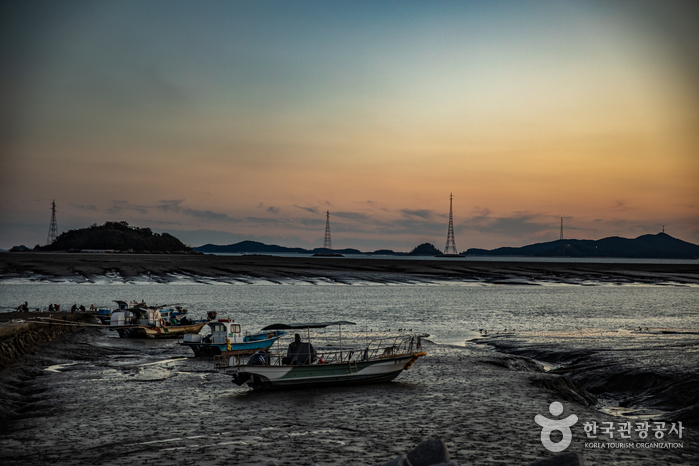
Seongmodo Island, located 1.2 kilometers west of Ganghwado Island, is a popular destination for families and those looking for relaxation. The island has various mountains as well as a 41.8 kilometer coastal road.
Hamheodongcheon Campground (함허동천야영장)
6.4Km 2024-02-15
13 Haeannam-ro 1196beon-gil, Hwado-myeon, Ganghwa-gun, Incheon
032-930-7066
Hamheodongcheon Campground is a camping site nestled in the Hamheodongcheon valley on the northern slope of Manisan Mountain in Ganghwa-do, inaugurated in 1987. Enveloped by lush forests, it provides a picturesque setting and is especially favored as a summer retreat destination. The first campground accommodates electricity usage and operates through an internet reservation system, whereas the second to fourth campgrounds operate on a first-come, first-served basis without prior reservations.
Oepo-ri Kkotgejip (외포리꽃게집)
7.1Km 2024-03-20
1206 Jungang-ro, Naega-myeon, Ganghwa-gun, Incheon
Oepo-ri Kkotgejip is a restaurant dedicated to traditional blue crab delicacies, including kkotge tang (spicy blue crab stew), kkotge jjim (steamed blue crab), and ganjang gejang (soy sauce marinated crab). Positioned near Oepo-ri Quay, en route to Seongmodo Island, the restaurant provides a delectable experience of blue crab dishes complemented by a stunning sea view. Visitors can also take pleasure in the scenic Korean coastal landscape, explore the salted seafood market, and observe the fishing boats in the vicinity.
Yackseokwon (약석원)
7.1Km 2025-10-23
56-53, Jungang-ro 787beon-gil, Yangdo-myeon, Ganghwa-gun, Incheon
Ganghwa Sajabalssuk, a type of mugwort native to Ganghwado Island, is known for its rich aroma and high vitamin A content. Yackseokwon offers immunity-strengthening programs using this special herb believed to help prevent chronic illnesses. “Raise Your Body Temperature by 1°C Project” is a signature course, which involves yoni steaming (mugwort steam sitting bath) and thermal moxibustion to gradually warm the body. Just an increase of 1 degree in body temperature is said to boost immune function, increase basal metabolism, and improve blood circulation. The program is offered by reservation only and accommodates up to 25 people per session. The 100-minute experience begins with 40 minutes of yoni steaming, followed by 30 minutes of abdominal heat therapy and 30 minutes of lower back heat therapy. Participants are also served a rich herbal tea brewed with Ganghwa Sajabalssuk.
Dongmak Beach (강화 동막해변)
7.9Km 2024-11-08
1481 Haeannam-ro, Ganghwa-gun, Incheon
+82-32-937-4445
Dongmak Beach is a pristine attraction with white sands surrounded by a forest of pine trees. During high tide, visitors can enjoy sun bathing, while during low tide, a large mud flat opens up for visitors to observe various sea life such as clams, crabs and more. There are many attractions nearby to see and enjoy.
Seongmodo Island Arboretum (석모도 수목원)
8.0Km 2023-02-09
161, Samsanbuk-ro 449beon-gil, Ganghwa-gun, Incheon
+82-32-932-5432
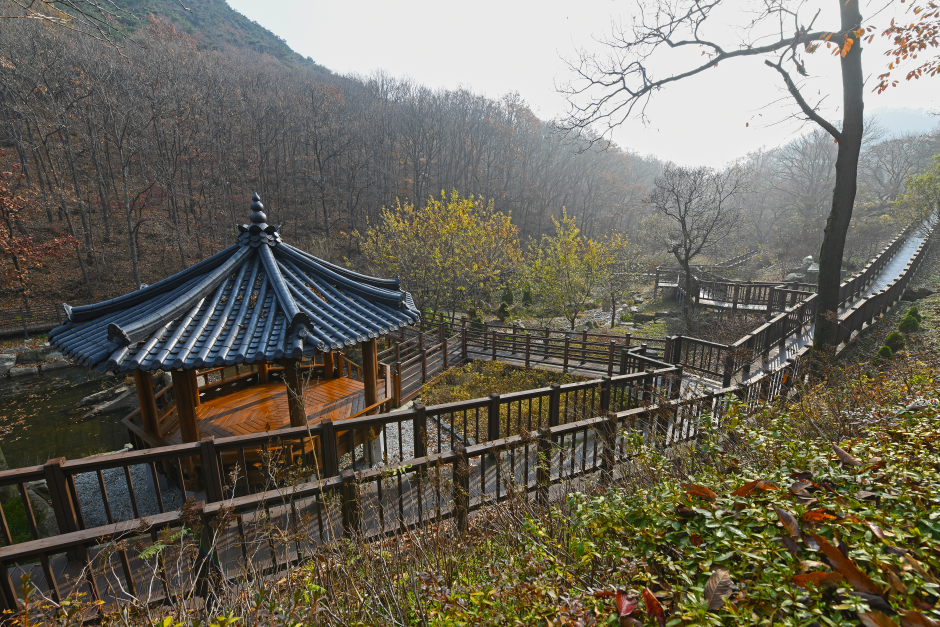
Seongmodo Island Arboretum was established on Seongmodo Island in recognition of its suitability for research on plants native to the Nothern Limit Line and marine plants in preparation for gloabl warming. In addition, it is built along the valley of the Seongmo-ri area and boasts a pollution-free natural environment. It is a tourist destination where the mountains and the sea coexist and conveys values and benefits of forests, allowing visitors to commune with nature.
Ganghwa Bomunsa Temple (보문사 (강화))
8.2Km 2025-06-30
44 Samsannam-ro 828beon-gil, Ganghwa-gun, Incheon
+82-32-933-8271
Bomunsa Temple is located on Seongmodo Island in the Gangwondo Island district. The temple is on Sangbongsan Mountain, one of three mountains that make up the Samsan-myeon area. Like many temples in Korea, the foundation date is unknown but it is believed to have been founded in 635 during the reign of Silla Queen Seondeok. The temple faces out to the ocean, with the sound of waves reaching all the way to the main building.
The main courtyard is fragrant with the scent of an aromatic tree, designated Incheon Natural Monument No. 17. Beyond the tree is a gathering of Buddhist scuptures and a large grotto.
Ganghwa Jeondeungsa Temple (강화 전등사)
8.2Km 2025-10-23
37-41 Jeondeungsa-ro, Ganghwa-gun, Incheon
+82-32-937-0125
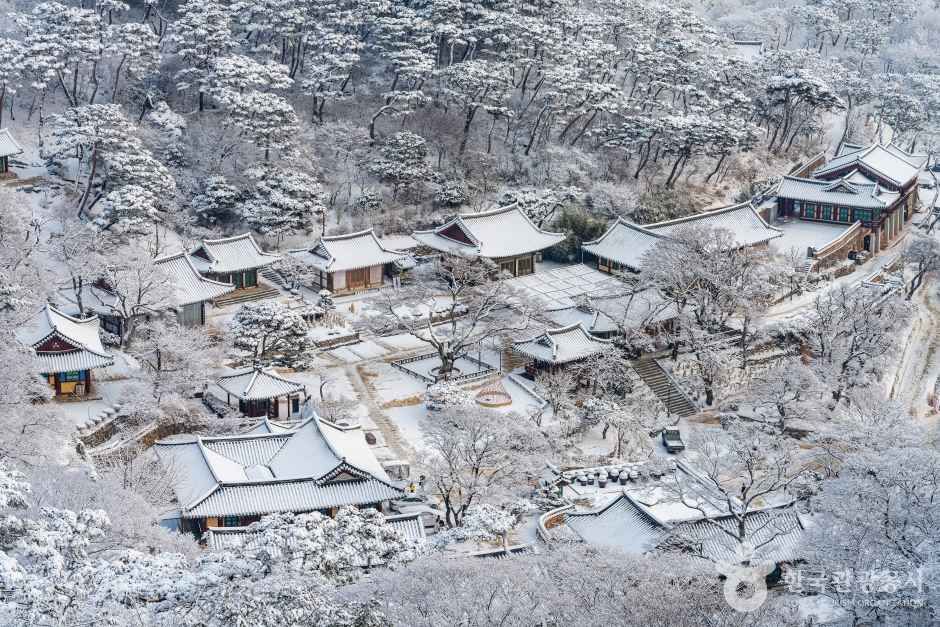
Jeondeungsa Temple is located in Samnangseong Fortress, which is said to have been built in 381 by the three sons of Dangun, the founder of Korea. The temple was originally called Jinjongsa Temple, but changed to the current Jeondeungsa Temple during the Goryeo period.
Jeondeungsa Temple contains significant architectural works. Decorated with delicate carvings, the temple buildings are superlative examples of the architecture of the mid-Joseon dynasty. Visitors can see names of soldiers written on the walls and columns of Daeungjeon Hall. These soldiers fought against the French Navy and wrote their names in Jeondeungsa to pray to Buddha for good luck in war.
There are ten other structures of historical significance at the temple including Yaksajeon Hall, Beomjong Bell, and Yangheonsu Victory Monument. The compound is also home to many ancient trees.
 English
 한국어
한국어 日本語
日本語 中文(简体)
 Deutsch
 Français
 Español
 Русский


