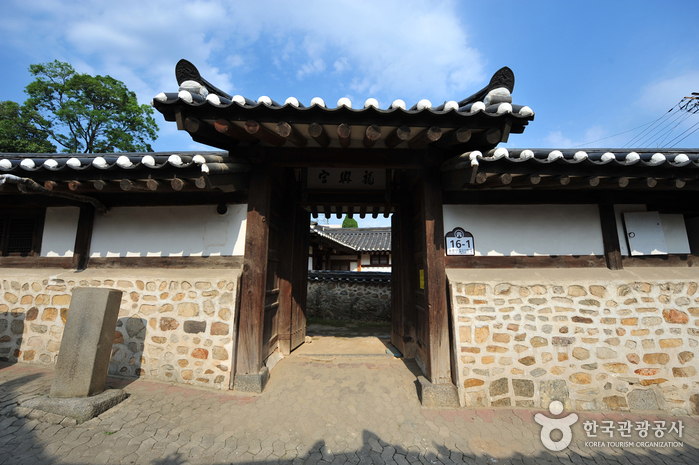
Yongheunggung Palace (용흥궁)
14.6Km 2022-07-27
16-1, Dongmunan-gil 21beon-gil, Ganghwa-gun, Incheon
+82-32-930-3515
Yongheunggung Palace is where King Cheoljong (r. 1849-1863) used to live before his ascension to throne. The chief of Ganghwa County, Jeong Gi-se, enlarged the original residence and named it Yongheunggung (meaning palace of the rising dragon) in the 4th year of King Cheoljong’s reign. Its architectural features include a paljak (traditional Korean half-hipped roof) and supporting columns rendered in Jusimpo style, the column brackets placed only on top of the columns. The palace was built in the tradition of dwelling houses such as the Yeongyeongdang and Nakseonjae houses in Changdeokgung Palace, so the palace buildings give off a simple and plain atmosphere. Within the precincts of the palace are a memorial stone and a monument house indicating that the palace used to be the old home of King Cheoljong.
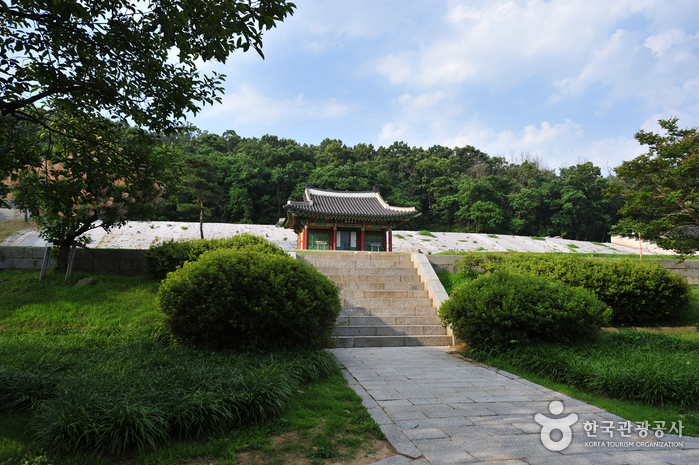
Goryeogung Palace Site (고려궁지)
14.8Km 2021-06-01
394, Ganghwa-daero, Ganghwa-gun, Incheon
+82-32-930-7078
Goryeogung Palace Site on Ganghwado Island is the site of the royal palace where the people of the Goryeo dynasty (918-1392) resisted the Mongolian invasion for 39 years. In the 19th year of his reign, King Gojong moved the capital to Ganghwa on account of its natural and strategic advantages. During the Byeongjahoran (Chinese invasion of Korea) in 1637, the palace was lost by force to the Qing dynasty of China. Later, Joseon Dynasty palace building and Ganghwa Yusubu (Ganghwa governor’s office) buildings existed in the Goryeo palace site but were destroyed by the French army during the Byeonginyangyo (French Campaign against Korea). Nowadays, the only structures that remain are the Dongheon main office (built in 1638) and Ibangcheong administration office (built in 1654). The palace and its subsidiary buildings were restored in 1977. It has historical lessons of the spirit of independence and overcoming national crisis.

Gimpo Munsusanseong Fortress (김포 문수산성)
15.1Km 2022-12-20
Ponae-ri, Gimpo-si, Gyeonggi-do
+82-31-980-2485
Munsusanseong Fortress was built on Munsusan Mountain in 1694, during the 20th year of the reign of King Sukjong, the 19th king of the Joseon dynasty. The fortress as designed to defend Gwanghwado Island from marine invasion. At the time, the fortress had north, west, and south gates, but they were destroyed in a fire during the Byeong-in Yangyo (1866). The north gate was restoryed in 1995 and the south gate in 2002. The fortress walls span 6 kilometers in length, 4 kilometers of which remain unrestored. Surrounded by beautiful scenery, the top of the fortress commands a spectacular view spanning from North Korea to the Hangang River inlet, and from Samgaksan Mountain to the sea off Incheon in the distance. It is often referred to as the Geumgangsan Mountain of Gimpo as it boasts superb scenery throughout all four seasons. The mountain is home to Munsusa Temple, established during the reign of Silla King Jinseong.
![[Ganghwa Nadeul-gil Course 2] Homeland Fortification Trail ([강화 나들길 제2코스] 호국돈대길)](http://tong.visitkorea.or.kr/cms/resource/05/1895205_image2_1.jpg)
[Ganghwa Nadeul-gil Course 2] Homeland Fortification Trail ([강화 나들길 제2코스] 호국돈대길)
15.2Km 2021-08-11
24, Cheonghadong-gil, Ganghwa-gun, Incheon
+82-32-934-1906
The Ganghwa Nadeul-gil Trails are a collection of walking paths along the coast of Ganghwa Island that connect the watchtowers and and walls of Ganghwasanseong Fortress, as well as royal tombs and other historically significant sites from the Goryeo dynasty that dot the island.
[Ganghwa Nadeul-gil Course 2] Homeland Fortification Trail
Course 2 stretches over a 17 kilometer area between Gapgotdon Watchtower and Chojijin Fort. This trail showcases the history of the island and the changes that happened before and after the opening of the port. The course follows a coastal road that is particularly beautiful in spring and fall.
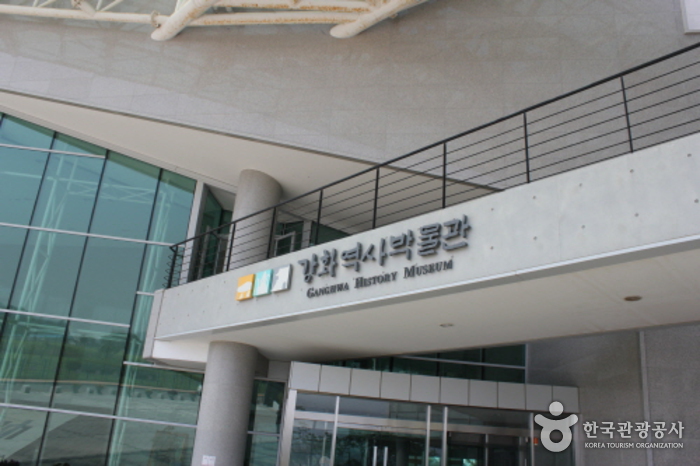
Ganghwa History Museum (강화역사박물관)
15.3Km 2021-08-13
994-19, Ganghwa-daero, Ganghwa-gun, Incheon
+82-32-934-7887
Ganghwa History Museum opened in 2010 with aims to exhibit, preserve and educate visitors about the history and culture of Ganghwa from prehistoric ages to modern times based on artifacts from the area.
![Dolmen in Bugeun-ri [UNESCO World Heritage] (강화 고인돌 유적 [유네스코 세계문화유산])](http://tong.visitkorea.or.kr/cms/resource/77/1876577_image2_1.jpg)
Dolmen in Bugeun-ri [UNESCO World Heritage] (강화 고인돌 유적 [유네스코 세계문화유산])
15.3Km 2023-11-10
Bugeun-ri, Ganghwa-gun, Incheon
+82-32-933-3624
Dolmen in Bugeun-ri is a dolmen site in Ganghwa that was designated as a Historic Site for its historical value representing the funeral customs of the Bronze Age. The main stone used to create the tomb is 710 centimeters long, 550 centimeters wide, and 260 centimeters high. The dolmen is an example of the northern dolmen customs, serving as a subject of further research in the field of ancient history. The Dolmen in Bugeun-ri is also registered as a UNESCO World Heritage along with other significant dolmen sites.
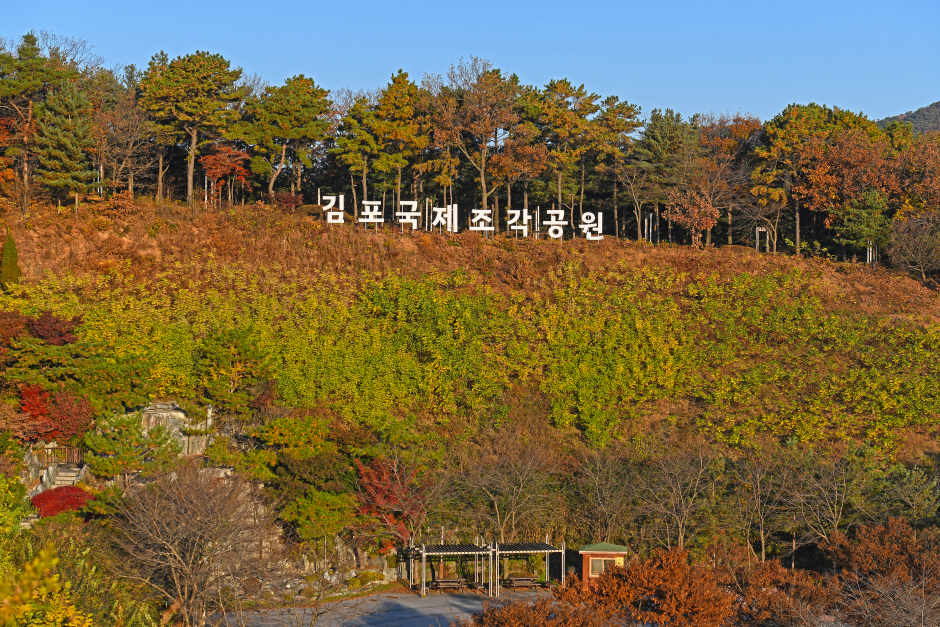
Gimpo International Sculpture Park (김포국제조각공원)
17.0Km 2025-03-22
38, Yonggang-ro 13beon-gil, Gimpo-si, Gyeonggi-do
+82-31-984-5167
Gimpo Sculpture Park is situated in a large forest and is decorated with 30 sculptures: 14 by international artists and 16 by Korean artists. Since the site is located near the DMZ, the only divided country in the world, each sculpture expresses the overarching theme of unification. A favorite spot for weekend picnicking families and couples on dates, the park is expected to be included in a large tourist complex in the near future along with nearby Reports Park and the youth training center.
Café de Chelsea (카페 드 첼시)
17.5Km 2024-02-21
107-20 Gimpo-daero 2435beon-gil, Tongjin-eup, Gimpo-si, Gyeonggi-do
0507-1368-7780
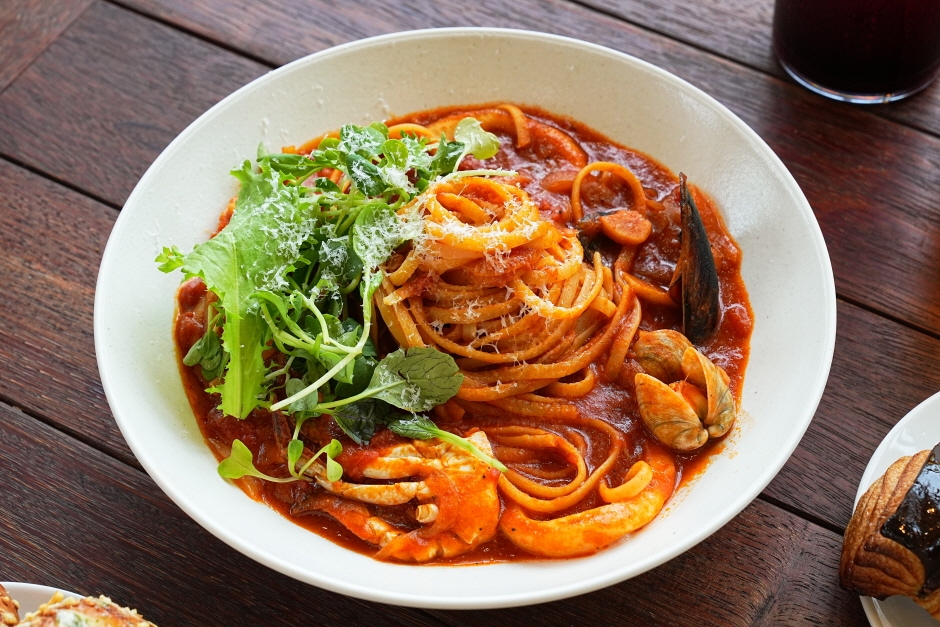
Café de Chelsea is a brunch and bakery café inspired by the Chelsea Physic Garden, a secret garden in England. Its impressive indoor space and outdoor garden are captivating, featuring vibrant seasonal interior designs that change regularly, making it a popular spot for photography. They offer a range of beverages including espresso, milk tea latte, Chelsea spänner (Chelsea einspänner), and various bakery items. The tea room on the first floor offers specialty teas and a tea vin chaud.
Yeonmijeong Pavilion (연미정)
18.0Km 2022-08-30
242, Wolgot-ri, Ganghwa-gun, Incheon
+82-32-930-3124
Yeonmijeong Pavilion is Incheon's Tangible Cultural Asset No. 24 (designated on March 1, 1995).
While the exact date of construction is unknown, the pavilion was greatly damaged and then rebuilt afterwards due to the Japanese Invasion of Korea in 1592, the Byeongja Chinese Invasion in 1636, and the Korean War on June 25, 1950.
The name Yeonmi comes from the swallow tail-shape of Imjingang River and Yeomhagang River ('yeon' means swallow and ‘mi’ means a tail). As the pavilion stands on top of Wolgotdondae, visitors can see Paju-si, Gimpo-si, Gaepung-gun in Hwanghae-do (North Korea) at a glance.
Boreumdo Island (Spoonbill Eco Village) (볼음도(저어새 생태마을))
18.0Km 2024-02-15
595-1 Boreumdo-ri, Seodo-myeon, Ganghwa-gun, Incheon
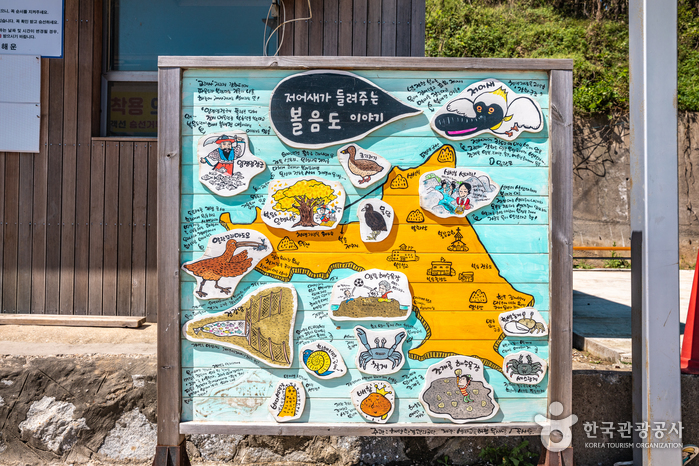
Boreumdo Island, situated in Seodo-myeon, Ganghwa-gun, is renowned as a habitat for spoonbills. The spoonbill, a rare migratory bird with a global population of around 3,000 individuals, finds refuge on this island. Since 2012, Boreumdo Island has been designated as a protected habitat for spoonbills, offering various experiential programs aimed at fostering an understanding of the tidal flat ecosystem. Key experiences include clam digging, net usage, and mudskipper fishing.
 English
 한국어
한국어 日本語
日本語 中文(简体)
 Deutsch
 Français
 Español
 Русский


