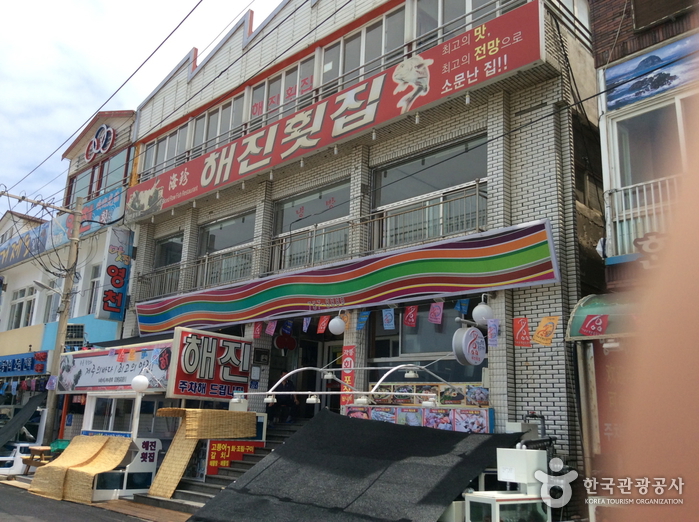
Haejin Hoetjip (해진횟집)
5.7Km 2024-03-18
22-1 Seobudu-gil, Jeju-si, Jeju-do
+82-64-722-4584
Haejin Hoetjip is a restaurant located on the breakwater of the western pier at Jeju Port. Its signature dish is gumunjaengi (also known as neungseongeo or sea bass), a delicacy unique to Jeju. In addition to this, the restaurant offers a variety of fresh hoe (sliced raw fish) including chamdom (sea bream) and dageumbari (sawedged perch). Diners on the second and third floors can enjoy views of the Jeju sea. Haejin Hoetjip is a popular spot for both locals and visitors.
![Olive Young - Jeju Hagwi Branch [Tax Refund Shop] (올리브영 제주하귀)](http://tong.visitkorea.or.kr/cms/resource/97/2886997_image2_1.jpg)
Olive Young - Jeju Hagwi Branch [Tax Refund Shop] (올리브영 제주하귀)
5.8Km 2024-04-18
1F, 121, Hagwi-ro, Aewol-eup, Jeju-si, Jeju-do
-
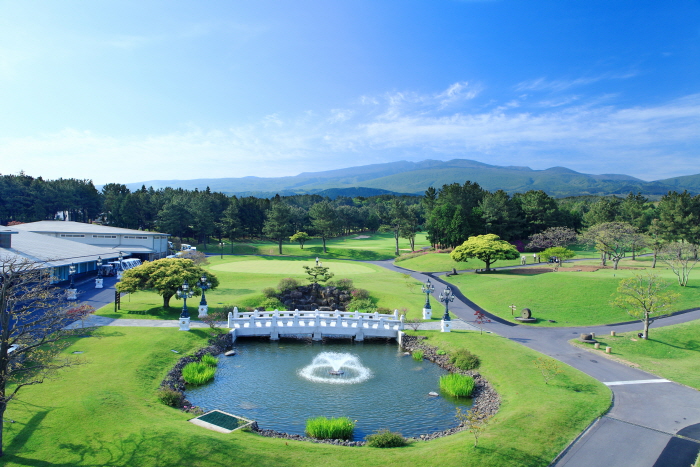
Ora Country Club (오라컨트리클럽)
6.1Km 2025-01-06
130-16, Oranam-ro, Jeju-si, Jeju-do
+82-64-747-5100
Ora Country Club was founded along a valley of Hallasan Mountain particularly praised for its splendid beauty. The country club has a 36-hole course designed according to the international standards. The club is designed to provide an unforgettable game surrounded by Jeju Island's natural beauty.

Olive Young - Jeju Ildo-2dong Branch [Tax Refund Shop] (올리브영 제주일도이동점)
6.3Km 2024-06-27
81, Goma-ro, Jeju-si, Jeju-do
-
Jeju National University Hospital (제주대학교병원)
7.0Km 2025-10-23
15 Aran 13-gil, Jeju-si, Jeju-do
Jeju National University Hospital is the only national university hospital in Jeju Island. We serve as the center of public healthcare in the region through education, research, and diagnosis. We are also contributing to the improvement of healthcare and leading the development of the medical industry. In other words, we are a pivotal institution responsible for the island's healthcare.
We are committed to achieving both quantitative and qualitative growth as a leading smart hospital. For example, we are attracting various specialized centers, introducing state-of-the-art equipment, recruiting excellent medical staff, and building a future medical information system.
In addition, Jeju Island has a beautiful natural environment and many places to see, so patients can freely enjoy sightseeing after receiving treatment.
Sarabong Peak (사라봉)
7.1Km 2021-05-24
61, Sarabongdong-gil, Jeju-si, Jeju-do
+82-64-728-3602
Situated to the east of Jejuhang Port, Sarabong Peak is the main oreum (volcanic cone) that separates the city from the sea. The peak offers views of the ocean to the north and magnificent Hallasan Mountain to the south. It is recommended to reach the top in the late afternoon to catch the reddish glow of the sunset glittering off the ocean.
![Olive Young - Jeju National University Hospital Branch [Tax Refund Shop] (올리브영 제주대학병원)](http://tong.visitkorea.or.kr/cms/resource/02/2889502_image2_1.jpg)
Olive Young - Jeju National University Hospital Branch [Tax Refund Shop] (올리브영 제주대학병원)
7.1Km 2024-04-18
#102, 616, Jungang-ro, Jeju-si, Jeju-do
-
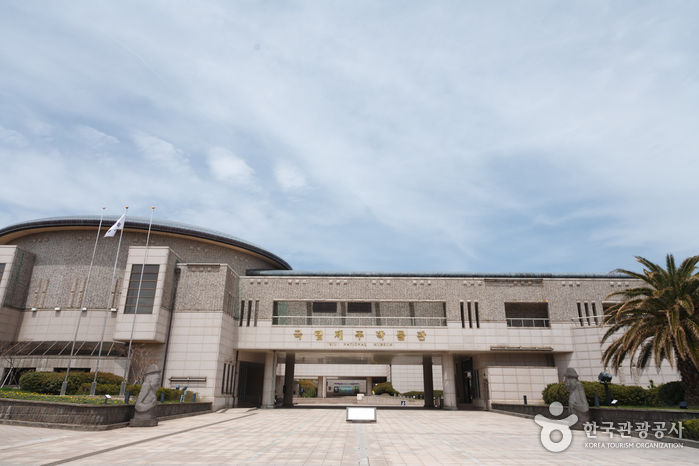
Jeju National Museum (국립제주박물관)
7.2Km 2021-08-06
17, Iljudong-ro, Jeju-si, Jeju-do
+82-64-720-8000
Opened on June 15, 2001, Jeju National Museum is a history museum that displays, preserves and studies Jeju Island’s historical and cultural assets. Jeju National Museum houses various remains excavated from ruins, including meaningful relics from the prehistoric age through to the Joseon dynasty. It boasts unique traditional culture and holds special exhibitions each year.
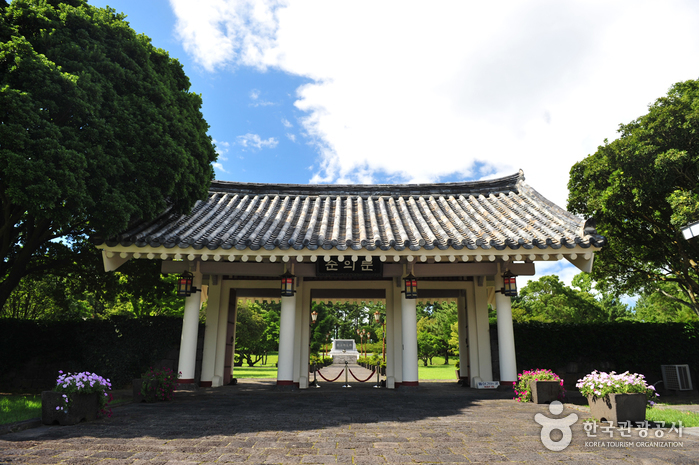
Historic Site of Anti-Mongolian Struggle in Hangpadu-ri, Jeju (제주 항파두리 항몽 유적)
7.2Km 2022-08-18
50, Hangpaduri-ro, Jeju-si, Jeju-do
+82-64-710-6721
Historic Site of Anti-Mongolian Struggle in Hangpadu-ri is where the Sambyeolcho military unit of the Goryeo dynasty resisted the invasion of Mongolia until the last possible moment. The site houses an
exhibition hall, a monument, and a unique mud fortress. Nearby is Jangsumul Spring (Jangsu means general) which flowed from the footprints of General Kim Tong-jeong. Today, water from the spring
cannot be used as drinking water.
Sambyeolcho was a military unit of the Goryeo dynasty. When the Goryeo dynasty made peace with the Mongolian forces in February 1270 (the 11th year of King Wonjong), the Sambyeolcho special defense unit opposed it and launched a resistance movement. They moved their base to Jindo in Jeollanam-do, but after suffering a huge defeat, they moved to Jeju-do and built Hangpaduseong Fortress. They continued to fight against the Mongolian forces for two more years there. However, all the members were killed in April 1273 (the 14th year of King Wonjong).
This independent anti-Mongolian movement was born out the deeply patriotic belief in the need to safeguard the nation from foreign invasion. In 1977, the government invested 745 million won to restore part of the fortress and build a monument in commemoration of those who died in the war. The work was completed in June 1978.
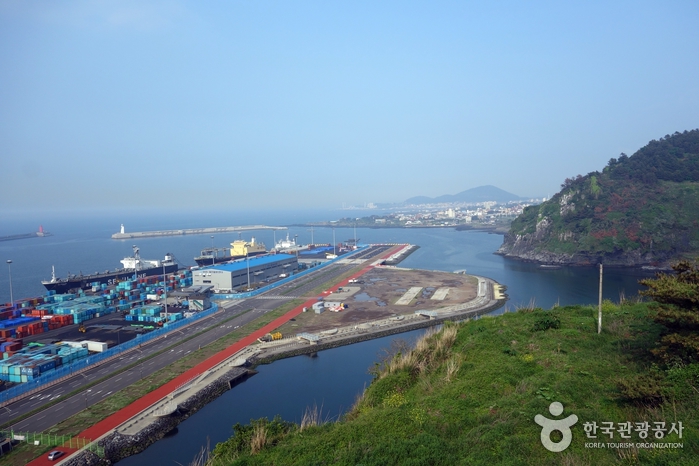
Sanji Lighthouse (산지 등대)
7.2Km 2021-03-18
108-1, Sarabongdong-gil, Jeju-si, Jeju-do
+82-64-740-6000
The name Sanji derives from the area being recorded as Sanjichon Village, literally translated as the mountainous village, in Tamna Sullyeokdo, a book of paintings showing life in Jeju. This record was created in 1702 by painter Kim Nam-gil, under the command of the Jeju Province governor, Lee Hyeong-sang.
Sanjicheon Stream originates from Hallasan Mountain and empties itself into the sea. Sitting halfway up Sarabong Peak, one of the signature parks on Jeju-do island, Sanji Lighthouse overlooks the port of Jeju.
 English
 한국어
한국어 日本語
日本語 中文(简体)
 Deutsch
 Français
 Español
 Русский


