![[Ganghwa Nadeul-gil Course 3] Royal Tomb Trail ([강화 나들길 제3코스] 고려왕릉 가는 길)](http://tong.visitkorea.or.kr/cms/resource/11/1895211_image2_1.jpg)
[Ganghwa Nadeul-gil Course 3] Royal Tomb Trail ([강화 나들길 제3코스] 고려왕릉 가는 길)
3.8Km 2021-06-02
24, Cheonghadong-gil, Ganghwa-gun, Incheon
+82-32-934-1906
The Ganghwa Nadeul-gil Trails are a collection of walking paths along the coast of Ganghwa Island that connect the watchtowers and and walls of Ganghwasanseong Fortress, as well as royal tombs and other historically significant sites from the Goryeo dynasty that dot the island.
[Ganghwa Nadeul-gil Course 3] Royal Tomb Trail
Course 3 stretches over a 16.2 kilometer area between Onsu Parking Lot and Gareung Tomb. This trail showcases the royal tombs of the Goryeo dynasty. The trail passes through forested areas between tombs and temples.
![[Ganghwa Nadeul-gil Course 1] Simdo History & Culture Trail ([강화 나들길 제1코스] 심도역사문화길)](http://tong.visitkorea.or.kr/cms/resource/97/1895197_image2_1.jpg)
[Ganghwa Nadeul-gil Course 1] Simdo History & Culture Trail ([강화 나들길 제1코스] 심도역사문화길)
3.8Km 2022-09-27
24, Cheonghadong-gil, Ganghwa-gun, Incheon
+82-32-934-1906
The Ganghwa Nadeul-gil Trails are a collection of walking paths along the coast of Ganghwa Island that connect the watchtowers and and walls of Ganghwasanseong Fortress, as well as royal tombs and other historically significant sites from the Goryeo dynasty that dot the island.
[Ganghwa Nadeul-gil Course 1] Simdo History & Culture Trail
Course 1 stretches over an 18-kilometer area between Ganghwa Bus Terminal and Gapgot Fortification. The trail includes sites such as Yongheunggung Palace, Ganghwahyanggyo Local Confucian School and an Anglican church. The course is an easy walk, with plenty of areas to stop and explore, as well as restaurants and convenience facilities for an enjoyable stroll.
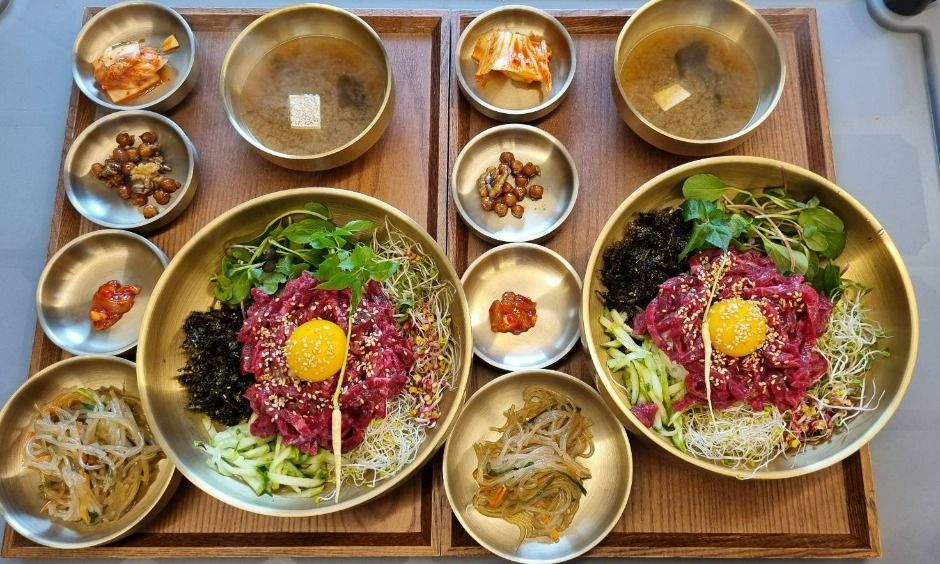
Maeheon 1935 (매헌1935)
3.9Km 2025-10-23
25 Sinmun-gil, Ganghwa-eup, Ganghwa-gun, Incheon
Maeheon 1935 is a restaurant in Gangwha-gun, Incheon that serves Korean dishes. The restaurant uses a renovated hanok built in 1935, and has a garden that blooms with plum blossoms. It is also located to many representative attractions of Ganghwa. The restaurant is characterized by serving a neat Korean food table for each person. Its representative menu items consist of bibimbap, hanu yukjeon (beef pancake), beef bulgogi, and more, made with fresh local ingredients that are produced in Ganghwa.
![[Ganghwa Nadeul-gil Course 2] Homeland Fortification Trail ([강화 나들길 제2코스] 호국돈대길)](http://tong.visitkorea.or.kr/cms/resource/05/1895205_image2_1.jpg)
[Ganghwa Nadeul-gil Course 2] Homeland Fortification Trail ([강화 나들길 제2코스] 호국돈대길)
4.2Km 2021-08-11
24, Cheonghadong-gil, Ganghwa-gun, Incheon
+82-32-934-1906
The Ganghwa Nadeul-gil Trails are a collection of walking paths along the coast of Ganghwa Island that connect the watchtowers and and walls of Ganghwasanseong Fortress, as well as royal tombs and other historically significant sites from the Goryeo dynasty that dot the island.
[Ganghwa Nadeul-gil Course 2] Homeland Fortification Trail
Course 2 stretches over a 17 kilometer area between Gapgotdon Watchtower and Chojijin Fort. This trail showcases the history of the island and the changes that happened before and after the opening of the port. The course follows a coastal road that is particularly beautiful in spring and fall.
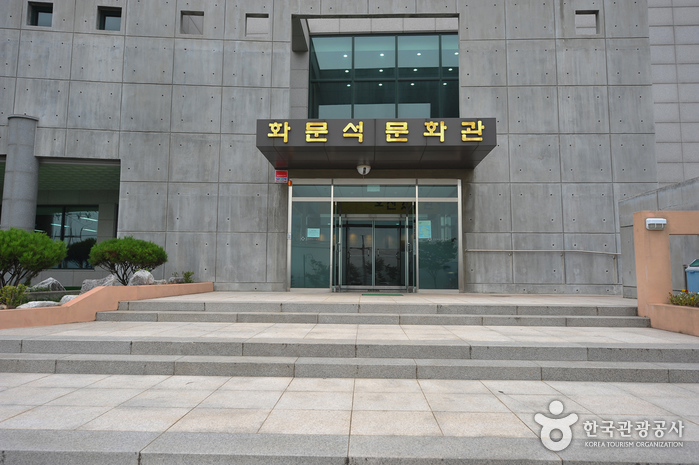
Hwamunseok Cultural Center (강화화문석문화관)
5.8Km 2021-11-11
413, Jangjeongyango-gil, Ganghwa-gun, Incheon
+82-32-930-7060
Ganghwa Hwamunseok, Korea's only rush-weaving handicraft, is a cultural legacy inherited from the Goryeo period, and is a product that is exclusively produced in Ganghwa-gun. To preserve and develop its historic rush-weaving handicrafts, Ganghwa-gun constructed Hwamunseok Cultural Center at Yango-ri in Songhae-myeon, the craft's place of origin. Visitors to the cultural center will be able to view the individual features and transformations of Hwamunseok in addition to the past, present and future of rush-weaving handicrafts.
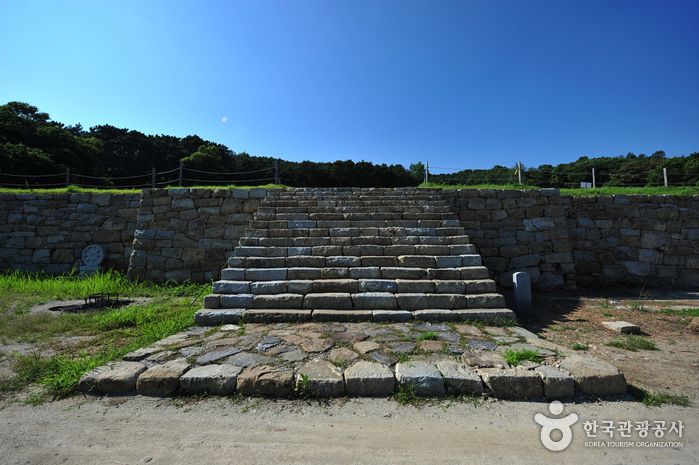
Ganghwa Seonwonsa Temple Site (강화 선원사지)
6.0Km 2022-09-19
222, Seonwonsaji-ro, Ganghwa-gun, Incheon
+82-32-933-8234
Ganghwa Seonwonsa Temple Site was first discovered in 1976 during a surface examination around Ganghwado Island undertaken by the Ganghwado Island Academic Research Team of Dongguk University. The site was designated as Historic Site No. 259 in 1977. Seonwonsa Temple was built by General Choi Wu in 1245 (the 32nd year of King Gojong’s reign during the Goryeo dynasty), which was right after the transfer of the capital to Ganghwado during resistance against the Mongolian invasion.
The temple was meant to be a spiritual mainstay in fighting against Mongolia. It used to be one of the two largest temples in Korea along with Songgwangsa Temple. However, the temple was completely destroyed during the early Joseon era, leaving only the site itself. The famous wood blocks of Palman Daejanggyeong (the Tripitaka Koreana), currently housed in Haeinsa Temple at Hapcheon, are said to have been originally stored in Seonwonsa Temple. It is believed that the carved wood blocks were taken from Seonwonsa to Heungcheonsa Temple during the Joseon era and again moved to Haeinsa Temple during the reign of Sejo.
Located on a mountain slope, the presumed location of the building site extends 250 meters from south to north and 170 meters from east to west.

Gimpo Munsusanseong Fortress (김포 문수산성)
6.2Km 2022-12-20
Ponae-ri, Gimpo-si, Gyeonggi-do
+82-31-980-2485
Munsusanseong Fortress was built on Munsusan Mountain in 1694, during the 20th year of the reign of King Sukjong, the 19th king of the Joseon dynasty. The fortress as designed to defend Gwanghwado Island from marine invasion. At the time, the fortress had north, west, and south gates, but they were destroyed in a fire during the Byeong-in Yangyo (1866). The north gate was restoryed in 1995 and the south gate in 2002. The fortress walls span 6 kilometers in length, 4 kilometers of which remain unrestored. Surrounded by beautiful scenery, the top of the fortress commands a spectacular view spanning from North Korea to the Hangang River inlet, and from Samgaksan Mountain to the sea off Incheon in the distance. It is often referred to as the Geumgangsan Mountain of Gimpo as it boasts superb scenery throughout all four seasons. The mountain is home to Munsusa Temple, established during the reign of Silla King Jinseong.
![Dolmen in Bugeun-ri [UNESCO World Heritage] (강화 고인돌 유적 [유네스코 세계문화유산])](http://tong.visitkorea.or.kr/cms/resource/77/1876577_image2_1.jpg)
Dolmen in Bugeun-ri [UNESCO World Heritage] (강화 고인돌 유적 [유네스코 세계문화유산])
6.6Km 2023-11-10
Bugeun-ri, Ganghwa-gun, Incheon
+82-32-933-3624
Dolmen in Bugeun-ri is a dolmen site in Ganghwa that was designated as a Historic Site for its historical value representing the funeral customs of the Bronze Age. The main stone used to create the tomb is 710 centimeters long, 550 centimeters wide, and 260 centimeters high. The dolmen is an example of the northern dolmen customs, serving as a subject of further research in the field of ancient history. The Dolmen in Bugeun-ri is also registered as a UNESCO World Heritage along with other significant dolmen sites.
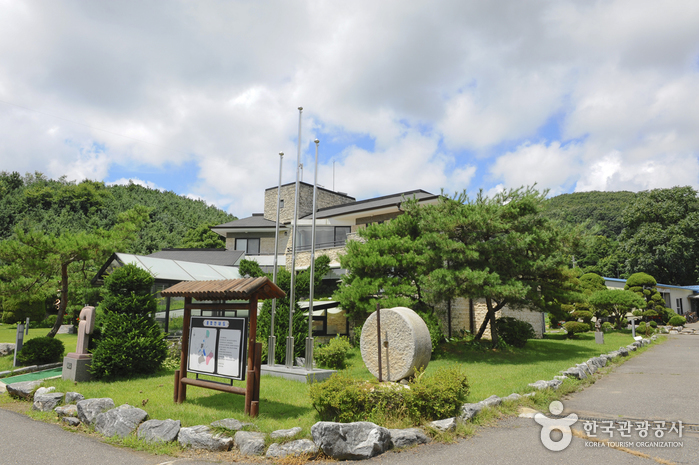
Gimpo Tea Etiquette Museum (다도박물관)
6.7Km 2021-04-02
187-49, Aegibong-ro 275beon-gil, Gimpo-si, Gyeonggi-do
+82-31-998-1000
The Gimpo Tea Etiquette Museum is a private museum where visitors can learn about the history of Korea’s tea culture, dado, meaning tea ceremony in Korea. Approximately 3,000 tea ceremony utensils are on display within the museum, and outside lies a sculpture park and an open-air installation art museum. The museum also has various auxiliary facilities for holding cultural events and performances. There is a pond, a spacious lawn, and a pavilion where visitors can learn about Korea’s traditional culture and ethics in a natural setting.
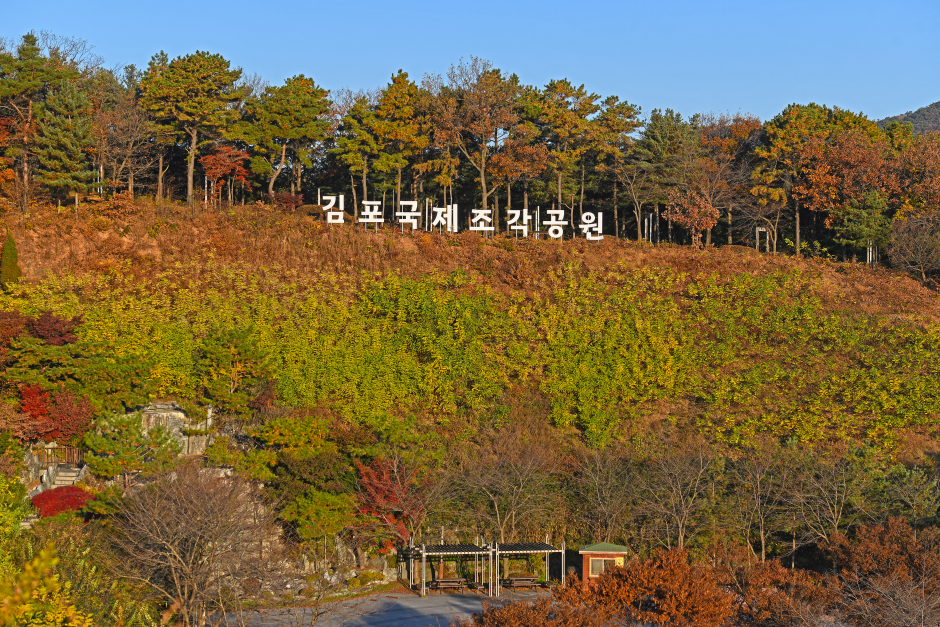
Gimpo International Sculpture Park (김포국제조각공원)
6.7Km 2025-03-22
38, Yonggang-ro 13beon-gil, Gimpo-si, Gyeonggi-do
+82-31-984-5167
Gimpo Sculpture Park is situated in a large forest and is decorated with 30 sculptures: 14 by international artists and 16 by Korean artists. Since the site is located near the DMZ, the only divided country in the world, each sculpture expresses the overarching theme of unification. A favorite spot for weekend picnicking families and couples on dates, the park is expected to be included in a large tourist complex in the near future along with nearby Reports Park and the youth training center.
 English
 한국어
한국어 日本語
日本語 中文(简体)
 Deutsch
 Français
 Español
 Русский


