![MLB - Lotte Mall Gunsan Branch [Tax Refund Shop] (MLB 롯데몰군산)](http://tong.visitkorea.or.kr/cms/resource/52/2889452_image2_1.jpg)
MLB - Lotte Mall Gunsan Branch [Tax Refund Shop] (MLB 롯데몰군산)
18.2Km 2024-04-23
B1F, 124, Singomae-ro, Giheung-gu, Yongin-si, Gyeonggi-do
-
![Beanpole - Lotte Mall Gunsan Branch [Tax Refund Shop] (빈폴 롯데몰 군산점)](http://tong.visitkorea.or.kr/cms/resource/47/2890547_image2_1.jpg)
Beanpole - Lotte Mall Gunsan Branch [Tax Refund Shop] (빈폴 롯데몰 군산점)
18.2Km 2024-04-23
130, Jochon-ro, Gunsan-si, Jeollabuk-do
-
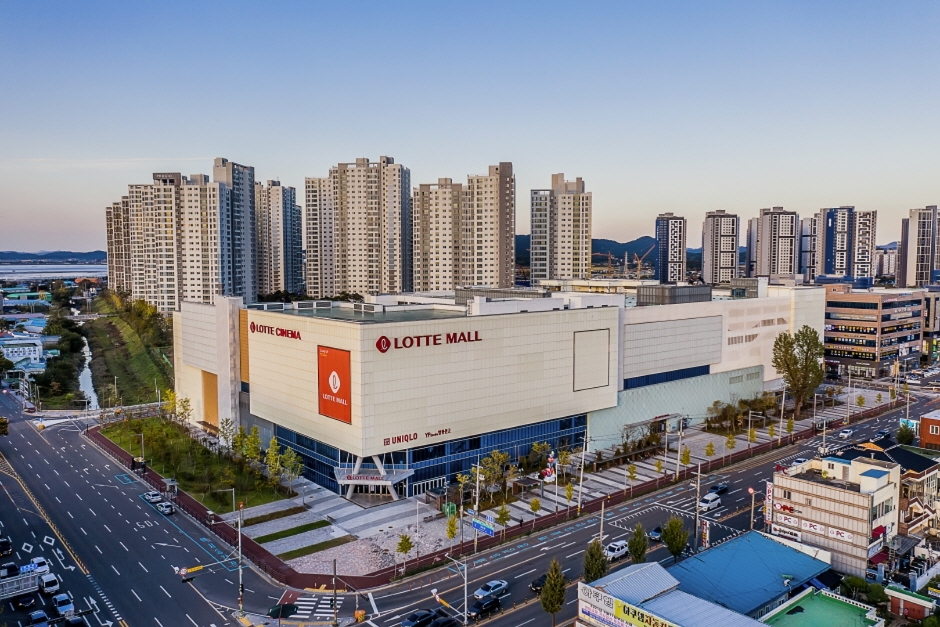
LOTTE Shopping Mall – Gunsan Branch (롯데몰 군산점)
18.2Km 2024-04-06
130 Jochon-ro, Gunsan-si, Jeonbuk-do
It is a shopping town where visitors can enjoy shopping, culture, and entertainment together, and it is the largest and first complex shopping mall in Jeonbuk State.
LOTTE Shopping Mall Gunsan Branch is full of fun 365 days with various events and performances for children.

Seonyudo Beach (Myeongsasimni Beach) (선유도해수욕장 (명사십리 해수욕장))
18.2Km 2024-04-07
Okdo-myeon, Gunsan-si, Jeonbuk-do
+82-63-454-7280
Seonyudo Beach, is a natural coastal sand dune beach with a vast white sand area as transparent and beautiful as glass beads, which is why it is also known as Myeongsasimni Beach. At Seonyudo Beach, the depth of the water is only waist-high even if you go some 100 meters into the sea, and there are no high waves so you can play in the water safely.
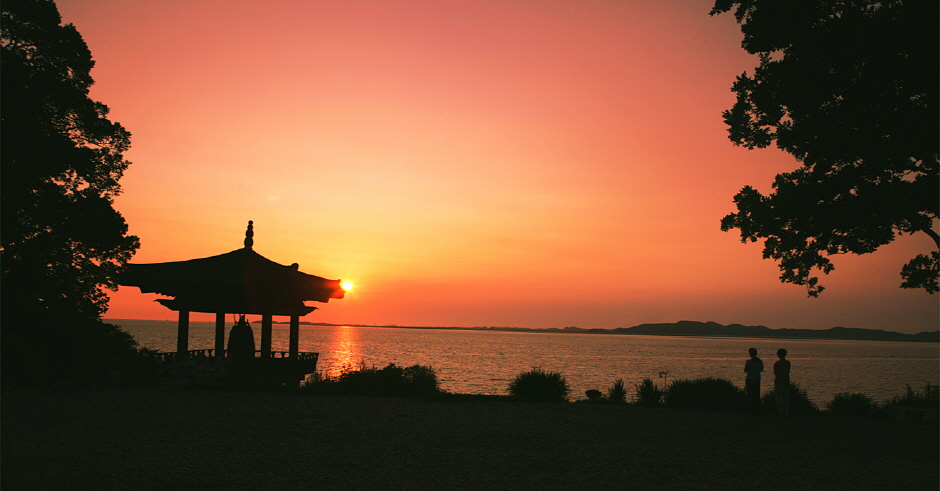
Manghaesa Temple (망해사)
18.3Km 2024-04-07
94, Simpo 10-gil, Gimje-si, Jeonbuk-do
+82-63-540-3324
Manghaesa Temple is located at the edge of the Gimje Plains before the sea. The temple stands at the summit of Jinbongsan Mountain. The temple was named for the view of the ocean and the fields of rice. The temple was established by the great monk Buseol Geosa during the 2nd year of King Uija of Baekje (AD 642). Years later, Dobeopsa (a Chinese monk from the Tang dynasty) renovated the temple. The temple was altered again during the reign of King Injo of the Joseon dynasty when the great monk Jinmuk Daesa built Nakseojeon Hall in 1589. Bogwangjeon Hall and Chilseonggak Pavilion were built much later in 1933. Manghaesa Temple is unique in that it is the only temple where the distant horizon is visible over both land and sea. Nearby attractions include a walking path through a field of reeds by Mangyeonggang River and views of the sunset over the sea.
Seonyudo Island (선유도)
18.6Km 2024-04-07
34-22, Seonyunam-gil, Gunsan-si, Jeonbuk-do
+82-63-454-7280
Seonyudo Island, one of the most popular tourist destinations on the west coast during the summer, lies in the heart of the Gogunsan Archipelago. The island has an area of 2.12 ㎢, which is only about 1/4 of Yeouido in Seoul. The island's coastal shore is around 12.8 kilometers long and the highest point is Namaksan Mountain, which reaches about 155.6 meters in altitude. Seonyudo is the central point of Gogunsan Archipelago and has even served as the headquarters for the naval army during the Joseon dynasty. It played a vital role during the Imjin War as Admiral Yi spent days on the islands to prepare for the next battle after his victory in the Battle of Myeongnyang.
Visitors can enjoy the island in three ways. First is to look around the neighboring islands. Seonyudo, Munyeodo, Jangjado, and Daejangdo islands are all connected by a bridge, allowing one to move between the islands on foot or a bicycle. Other ways to enjoy the island is to take a walk along the Myeongsa-simni Shore, one of the Eight Scenes of Seonyudo, and to try the clam collecting program at a mudflat.
Munyeodo Island & Seonyudo Island (무녀도‧선유도)
18.8Km 2024-04-07
Okdo-myeon, Gunsan-si, Jeonbuk-do
+82-63-454-7280
Munyeodo Island is located approximately 50.8 kilometers southwest of Gunsan-si, and forms the Gogunsan Islands together with Seonyudo, Sinsido, Jangjado, and other islands. Its total area occupies 1.75 square kilometers and its coastline is 11.6 kilometers long. Today, with Seonyudo in the middle, there are bridges installed between Munyeodo and Seonyudo, Seonyudo and Jangjado, and Jangjado and Daejangdo, so visitors are able to walk around as if they are on a single island. Other than Munyeobong Peak (131 meters) on the southwestern part of the island, the region is vast but lacks any tall mountains.
Seonyudo Island is located in the center of the Gogunsan Islands, which consist of about 20 islands, and is approximately 50 kilometers away from Gunsan Port. It is also one of the most popular vacation spots on the entire West Coast.
The location that serves as a basecamp when travelling to Seonyudo and the nearby islands is Jin-ri Village on Seonyudo. It neighbors Seonyudo Beach, which is famously known as ""Myeongsasimni,"" and faces Mangjubong Peak that stands tall like Maisan mountain. The island is crowded with schools, inns, restaurants, bike rental shops, stores, karaokes and campgrounds, which is why the area is a bit boisterous during the vacation seasons. If you wish to escape from such noise, it would be a good idea to rent a bicycle and bike to Munyeodo, Jangjado or Jinwol-ri over Mangjubong Peak.
Seonyudo Island is the home of the 8 Scenic Spots of Seonyu, but the most gorgeous scenery of them all is Mangjubong Peak, which is practically the symbol of the island. Once you climb up to the top, the nearby islands and the sea come together in a cool panoramic view, which also includes the neatly sprawling Myeongsasimni Beach as well as Pyeongsanagan that resembles a seagull landing over the water. The splendid sunset on Seonyudo Island is incredible no matter where you are, whether it'll be atop Mangjubong Peak or Seonyudo Beach.
Jangjado Island (장자도)
19.4Km 2024-04-07
26-2 , Jangjado 1-gil, Gunsan-si, Jeonbuk-do
+82-63-454-7280
Jangjado Island is one of the Gogunsan Islands, and it is called Jangjado because the legend has it that a strong man was born here. Locals say that, when a fishing boat runs into a storm in the sea, it is safe to take shelter on this island, which is why it is also known as a refuge harbor. Jangjado Island is connected to Seonyudo Island by Jangjagyo Bridge.
Jangjado Island is located in the very center of all Gogunsan Islands and once you climb up to Daejangbong Peak, the 63 Gogunsan Islands unfold before your eyes like a panorama, making it a popular filming spot chosen by the three broadcasting companies as well as the Corean Alpine Club and the Photo Artists Society of Korea. It offers various leisure activities from a mud flat experience and sea fishing to hiking Daejangbong Peak, which is a famous sunrise and sunset watching spot, and cruise tour of the Gogunsan Islands. There are an abundance of delicious dishes including sliced raw fish, spicy braised seafood, noodle soup with clams and stone crabs, and is home to many other tourist attractions such as Jangjadaegyo Bridge with spectacular sunset view, Jangjahalmeonibawi Rock and Daejangdo Dangje, a type of ritual, which is why it is great to visit anytime of the year.
Deoksugung Haemul Kalguksu (덕수궁해물칼국수)
19.4Km 2024-02-28
5, Jangsan-ro 855beon-gil, Maseo-myeon, Seocheon-gun, Chungcheongnam-do
041-956-7066
Located near the Geumgang Estuary Embankment, Deoksugung Haemul Kalguksu serves haemul kalguksku (noodle soup with seafood) full of clams and vegetables. Kalguksu (noodle soup) is made by rolling out a thin flour dough, slicing it into thin strips, and then boiling them in a soup. There’s a variety of kalguksu (noodle soup) dishes on offer, along with wangmandu (jumbo mandu). The broth is clean, thanks to shrimp and fresh vegetables. Don’t miss yeolmu kimchi (young summer radish kimchi), which is served as a side dish in the restaurant and goes perfectly with kalguksu (noodle soup).
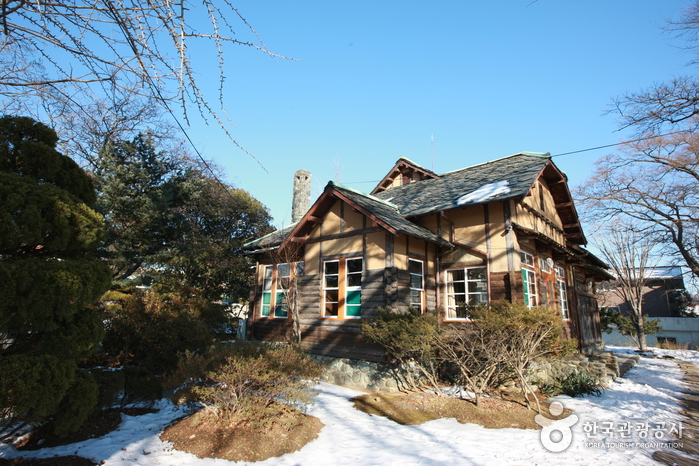
House of Lee Young-choon (이영춘가옥)
19.9Km 2024-04-07
7, Donggaejeong-gil, Gunsan-si, Jeonbuk-do
+82-63-454-3922
The House of Lee Young-choon was constructed by
a Japanese landlord named Kumamoto during the Japanese colonial era. The house combined Western, Korean, and Japanese into one structure. After Korean liberation, Dr. Lee Young-choon, the first medical doctor, lived in the house. From that time, the house was referred to as the
House of Lee Young-choon.
Thanks to its beautiful exterior, the house was used as a backdrop for films such as Bingjeom, Sandglass, and Yain Shidae, etc.
The doctor was considered the Korean "Albert Schweitzer", and his
pen name of "Ho", referring to ssangcheon,
means "two branches of spring water, represents one for healing physical disease and the other for healing the
spirit. He was born in Yonggang-gun, Pyeongannam-do in October 1903. In 1935,
through a connection by his professor at Pyeongyanggobo School, he took a position
as the head of Jahye Hospital to take care of 20,000 people. In addition, he was the first person
in Korea to implement the policy of school nurses as well as the medical insurance union.
 English
 한국어
한국어 日本語
日本語 中文(简体)
 Deutsch
 Français
 Español
 Русский


