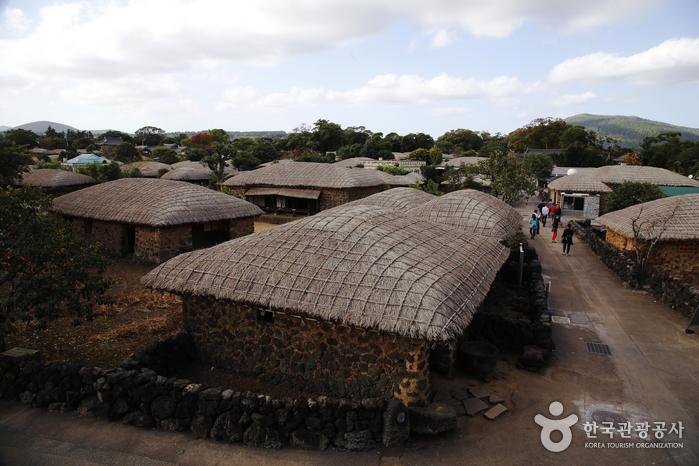
Seongeup Folk Village (성읍민속마을)
14.3Km 2024-03-11
3294, Seongeup-ri, Pyoseon-myeon, Seogwipo-si, Jeju-do
+82-64-710-6797
Seongeup Folk Village has been designated and protected as a folk village, preserving the characteristics of Jeju's old private houses. Various tangible cultural heritage and intangible cultural heritage such as folk songs and games, local foods and craftmanship, and Jeju dialect are being passed down. The village offers traditional culture and traditional house experiences, and holds cultural events every October and November.
![Gwandeokjeong Pavillion (Jeju) [관덕정(제주)]](http://tong.visitkorea.or.kr/cms/resource/75/2513575_image2_1.jpg)
Gwandeokjeong Pavillion (Jeju) [관덕정(제주)]
14.4Km 2024-03-15
19 Gwandeok-ro, Jeju-si, Jeju-do
+82-64-740-6000
One of the oldest buildings in Jeju, Gwandeokjeong Pavilion was established in 1448 by the magistrate of Jeju with the purpose of training local soldiers. This historical edifice is renowend for its intricately painted girders, adorned with murals depicting the ten symbols of longevity, scenes from the Battle of Red Cliffs, and hunting imagery. Additionally, the pavilion's signboard is reputed to feature the handwriting of Prince Anpyeong, a notable figure from the Joseon era. Gwandeokjeong Pavillion is part of the Jeju-mok Government Office complex.
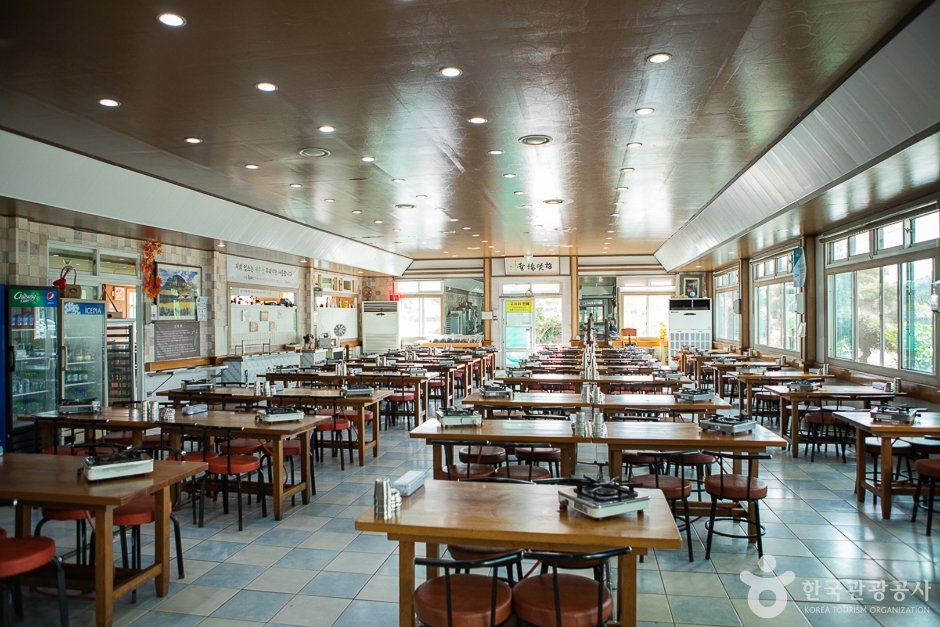
Wang Ilbeonji Sikdang (왕일번지식당)
14.4Km 2024-02-20
4610 Jungsangandong-ro, Pyoseon-myeon, Seogwipo-si, Jeju-do
Wang Ilbeonji Sikdang specializes in black pork bulgogi. Their dwaeji bulgogi (pork bulgogi) is marinated in a spicy sauce and served with Jeju bracken and shiitake mushrooms. Accompanied by seaweed soup and a variety of side dishes, the meal also features juicy and thick black pork belly. It offers a plentiful meal at a reasonable price and is only open for lunch.
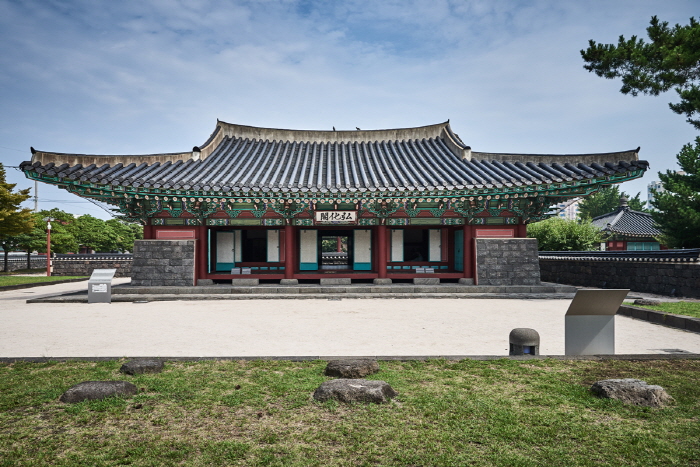
Jeju-mok Government Office (제주목관아)
14.4Km 2024-03-15
25 Gwandeok-ro, Jeju-si, Jeju-do
+82-64-710-6714
The Jeju-mok Government Office was a gwana, or regional government office, that historically served as the center of Jeju Island’s political, administrative, and cultural activities, spanning from its early days as the State of Tamna through the Joseon period. A significant portion of the structure was destroyed in a fire in 1434, leading to subsequent rebuilding efforts. From 1991, archeological excavations were conducted in four stages, enabling the meticulous restoration of several key buildings within the complex. These include the Honghwagak Pavilion, Yeonhuigak Pavilion, Uyeondang Pavilion, Gyullimdang Pavilion, and Gwandeokjeong Pavillion, all of which were restored by December 2002. Additionally, the complex is known for hosting annual nighttime events.
![Himart - Jeju Branch [Tax Refund Shop] (하이마트 제주점)](http://tong.visitkorea.or.kr/cms/resource/78/2889978_image2_1.jpg)
Himart - Jeju Branch [Tax Refund Shop] (하이마트 제주점)
14.4Km 2024-04-18
15, Seosa-ro, Jeju-si, Jeju-do
-
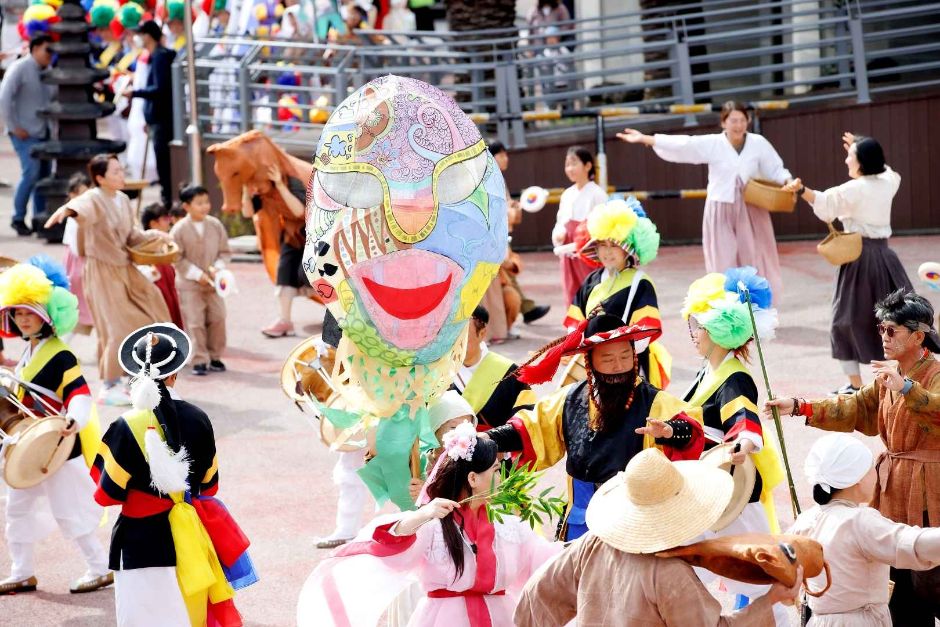
Tamna Culture Festival (탐라문화제)
14.4Km 2025-07-11
2 Jungang-ro, Jeju-si, Jeju-do
+82-64-753-3287
The Tamna Cultural Festival is a celebration of Jeju’s unique cultural heritage, including folklore, mythology, history, and daily life. The festival’s highlight is the 1.7 km street parade with over 1,500 participants, showcasing active community involvement. The event also features high-quality performances that attract many visitors.

Ujin Haejangguk (우진해장국)
14.4Km 2024-03-27
11 Seosa-ro, Jeju-si, Jeju-do
+82-64-757-3393
Ujin Haejangguk, located near Seomun Sageori (intersection) in Jeju City, specializes in haejangguk (hangover soup). It is so popular that visitors often line up to secure a seat. The restaurant's signature dish is gosari haejangguk (bracken hangover soup), made with bracken and pork. Other favorites on the menu include sagol haejangguk (beef bone hangover soup) and momguk (seaweed soup).
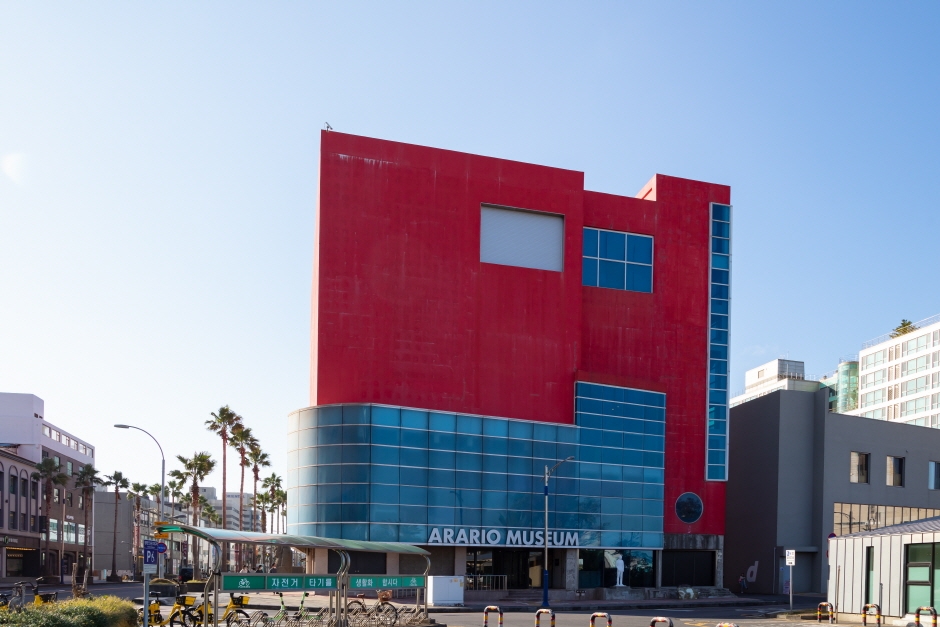
Arario Museum Tapdong Cinema (아라리오 뮤지엄 탑동 시네마)
14.5Km 2023-05-05
14, Tapdong-ro, Jeju-si, Jeju-do
+82-64-720-8201
Arario Museum Tapdong Cinema was created by Kim Chang-il, a famous artwork collector in Korea, who reused an abandoned building to make a contemporary art museum. The building did not go through extreme renovation, allowing visitors enjoy the building's original features along with the artworks. The underground floor and four ground floors hold exhibits where visitors can take photographs (flash photography not allowed), and the fifth floor houses a souvenir shop and a cafe where visitors can relax and enjoy panoramic views of the old city center and Tap-dong.
![Olive Young - Jeju Tapdong Branch [Tax Refund Shop] (올리브영 제주탑동)](http://tong.visitkorea.or.kr/cms/resource/85/2887285_image2_1.jpg)
Olive Young - Jeju Tapdong Branch [Tax Refund Shop] (올리브영 제주탑동)
14.5Km 2024-04-16
15-1, Tapdong-ro, Jeju-si, Jeju-do
-
 English
 한국어
한국어 日本語
日本語 中文(简体)
 Deutsch
 Français
 Español
 Русский


