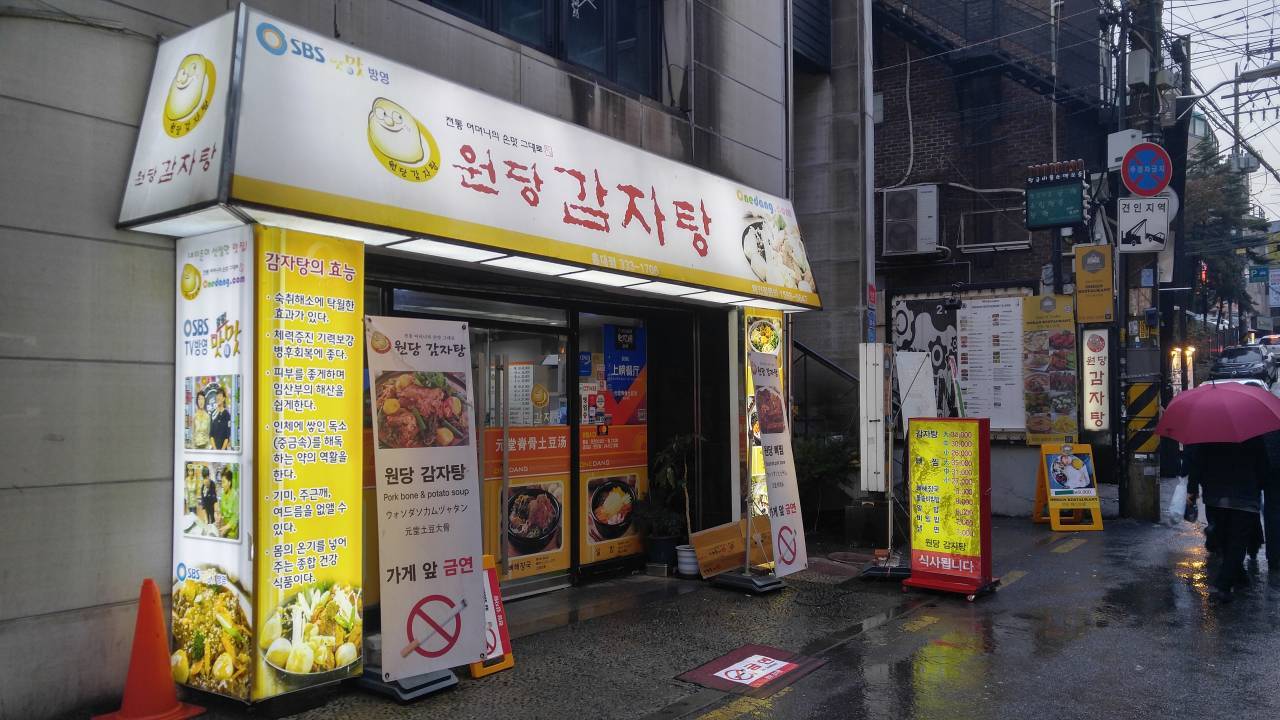
Wondang Gamjatang Hongdae (원당감자탕 홍대)
10.1Km 2024-03-19
Hana building, 20-6, Wausan-ro, 21-gil, Mapo-gu, Seoul
+82-2-333-1706
Located near Hongik University, Wondang Gamjatang specializes in gamjatang (pork backbone stew). Gamjatang is a thick and spicy soup made with pork backbone, potatoes, kimchi cabbage, ground perilla seeds, green onions, garlic, and other vegetables and seasonings. Customers have the option to rolled omelet, hot stone pot rice, and beef and rice soup. 7-minute walk from Exit 9 of Hongik Univ. Station, it is easily accessible.

Goobne Playtown (굽네 플레이타운)
10.1Km 2025-01-16
23 Jandari-ro 2-gil, Mapo-gu, Seoul
Goobne Playtown is a culture and experience center operated by Goobne, one of Korea's chicken franchises that specializes in oven-roasted chicken instead of the standard fried chicken. Visitors can taste the latest products in a relaxing space, as well as enjoy media art and changing items in the pop-up zone.
Olive Young - Hongik University Entrance Branch [Tax Refund Shop] (올리브영 홍대정문점)
10.1Km 2024-06-26
1F, 4, Hongik-ro, Mapo-gu, Seoul
-
![Mizuno - Hongdae Branch [Tax Refund Shop] (미즈노 홍대)](http://tong.visitkorea.or.kr/cms/resource/30/2889430_image2_1.jpg)
Yonsei University (연세대학교)
10.1Km 2023-07-04
50, Yonsei-ro, Seodaemun-gu, Seoul
+82-1599-1885
Yonsei University, which opened in 1885, is a prestigious university that boasts a beautiful campus. In particular, it is famous for its wooden trails, antique buildings covered with ivy, and Cheongsongdae Forest, a popular dating spot among couples. Yonsei University also has a Korean language institute for foreigners interested in learning Korean.
![Olive Young - Hapjeong Café Street Branch [Tax Refund Shop] (올리브영 합정카페거리)](http://tong.visitkorea.or.kr/cms/resource/28/2888628_image2_1.jpg)
Olive Young - Hapjeong Café Street Branch [Tax Refund Shop] (올리브영 합정카페거리)
10.1Km 2024-04-22
13, Dongmak-ro, Mapo-gu, Seoul
-
![Hongdae EyeWorld Eyewear [Tax Refund Shop] (홍대아이월드안경원)](http://tong.visitkorea.or.kr/cms/resource/22/2887922_image2_1.jpg)
Hongdae EyeWorld Eyewear [Tax Refund Shop] (홍대아이월드안경원)
10.1Km 2024-04-16
1F, 93, Wausan-ro, Mapo-gu, Seoul
-
![Stylenanda - Hongdae Branch [Tax Refund Shop] (스타일난다 홍대)](http://tong.visitkorea.or.kr/cms/resource/86/2888386_image2_1.jpg)
Stylenanda - Hongdae Branch [Tax Refund Shop] (스타일난다 홍대)
10.1Km 2024-04-17
23, Wausan-ro 29da-gil, Mapo-gu, Seoul
-
Unplugged Hongdae Branch(언플러그드)
10.1Km 2025-11-05
26 Wausan-ro 33-gil, Mapo-gu, Seou
IU ‘Sleepless Rainy Night’
As the name suggests,it is a cafe with an analog charm. Old wooden floors and furniture, pianos and guitars, and turntables are old and more stylish. In a space full of LPs and CDs, you can feel the warmth and coziness you felt in the music video. A variety of menus are available, from drinks to beer and pretty cocktails named after musicians. There is a performance hall in the basement, where performances are often held.
Seodaemun Independence Park (서대문독립공원)
10.1Km 2022-12-15
251, Tongil-ro, Seodaemun-gu, Seoul
+82-2-3140-8305
Seodaemun Independence Park was built on the former Seoul Detention Camp. It was used to imprison thousands of Korean independence activists until the liberation from the Japanese occupation on August 15, 1945, as well as the political prisoners during the political turmoil in the 1960s. When the prison was moved to Uiwang-si, Gyeonggi-do in November 1987, the area was restored and turned into a memorial park in August 15, 1992 to honor the sacrifices of the martyrs. The park preserves seven prison buildings, an execution ground, underground women’s prison, and the March 1st Movement Monument that has been moved from Tapgol Park in Jongno.
One of the most significant monuments of the Seodaemun Independence Park is Dongnimmun Gate (Independence Gate), which has been designated a Historic Site. Nearby is Dongnipgwan (Independence Hall), originally called Mohwagwan, which was used to greet Chinese envoys during the Joseon dynasty. Today, the hall enshrines 2,327 tablets inscribed with the names of Koreans who died for the cause of national independence. Standing right next to Dongnimmun Gate are the remnants of Yeongeunmun Gate, another Historic Site. Other sights inside the park include the Patriotic Martyr Monument, Declaration of Independence Monument, and Statue of Dr. Seo Jae-pil, who was an independence activist and publisher of Korea’s first independent newspaper. The main highlight of the park is the Seodaemun Prison History Hall, a former prison building that was renovated into a history museum.
 English
 한국어
한국어 日本語
日本語 中文(简体)
 Deutsch
 Français
 Español
 Русский


