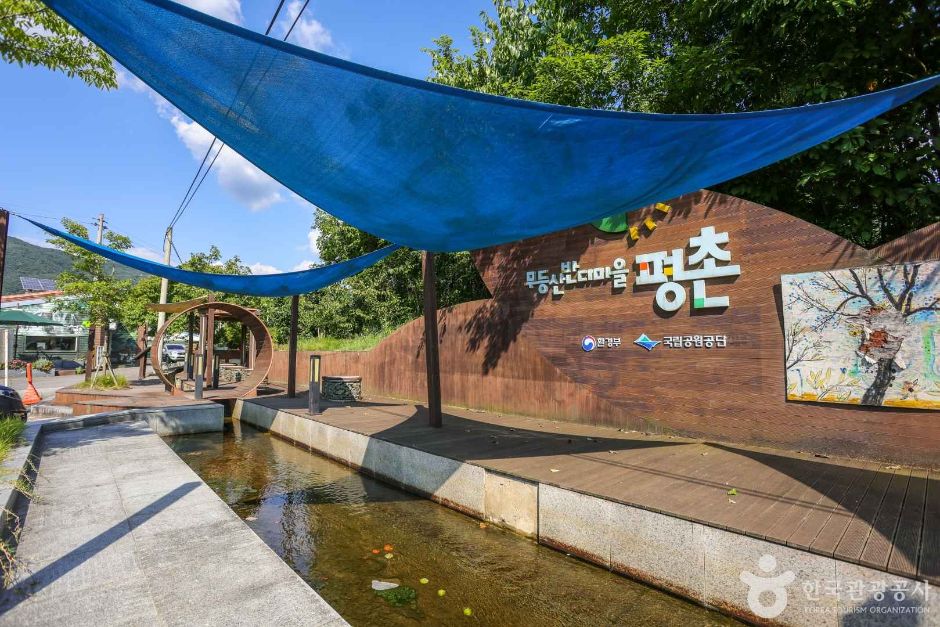
Gwangju Pyeongchon Village (광주 평촌마을)
11.8Km 2025-08-12
15 Pyeongchon-gil, Buk-gu, Gwangju
+82-62-266-2287
Gwangju Pyeongchon Village, located north of Mudeungsan Mountain, is a cozy farming village made up of four villages Dongrim, Daman, Woosung, and Dangmoe. The village still has an excellence natural preservation, growing environmental-friendly rice in the fields and Punamcheon stream that runs through the middle of the village is home to fireflies and otters. The village also keeps the tradition of making pottery as the village was the place that made grayish-blue-powdered celadon during the Joseon dynasty. The village street corner offers visitors to Mudeungsan Mountain a place to rest with Mudol-gil shelter and Bandi lodging.

Soswaewon Garden (담양 소쇄원)
12.1Km 2023-01-04
17, Soswaewon-gil, Damyang-gun, Jeollanam-do
+82-61-381-0115
Soswaewon Garden is a private garden from the Joseon period where Korea's traditional beauty is preserved. It was built by Yang San-Bo (1503-1557) after he gave up his success when his mentor Jo Gwang-Jo (1482-1519) was killed during political strife. Soswaewon Garden presents itself as a clean and transparent garden where the righteous enjoy the life of anbinnakdo (being comfortable amid poverty and taking pleasure in an honest lifestyle) surrounded by a bamboo grove.
Including peach trees, various kinds of trees and grass are planted on both sides of the stream while clear water flows down the foot of the garden walls. The log bridge above the valley adds to the charm of the scenery. The harmony between nature and the artificial waterfall is a sight to behold. Soswaewon Garden is 150 meters away from the main road. Passing through the thick bamboo forest, you will find the small valley and Soswaewon Garden on your left.
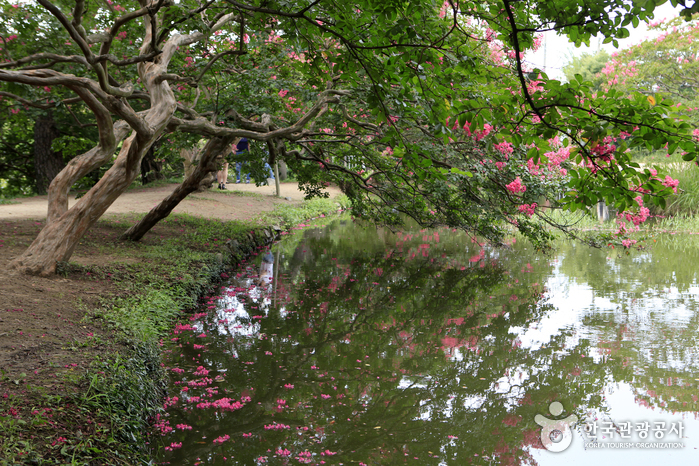
Myeongokheon Garden (담양 명옥헌 원림)
12.6Km 2025-10-23
103 Husan-gil, Goseo-myeon, Damyang-gun, Jeollanam-do
+82-61-380-3752
Located in the eco-village of Husan-ri, Myeongokheon Garden was the garden of Oh Hui-do (1583-1623) of the Joseon dynasty and served as a simple, countryside sanctuary where the scholar read and wrote many books. Main features of the garden are the Myeongokheon Pavilion, where the scholar held lectures, and the square-shaped pond in front of the pavilion that is surrounded with graceful flowering trees. The flowering trees around the pond include red pines and crape myrtles. On the right side of Myeongokheon Garden you’ll see a 300 year-old ginkgo tree, which is where King Injo (1623-1649) of the Joseon dynasty tied his horse when he went to visit Oh Hui-do.
Gyubongam Hermitage (Hwasun) (규봉암(화순))
12.7Km 2024-02-20
40-28 Dowon-gil, Iseo-myeon, Hwasun-gun, Jeollanam-do
Gyubongam Hermitage is a small hermitage located on Mudeungsan Mountain. It is believed to have been established during the Silla dynasty (B.C. 57-A.D. 935) and underwent renovations in 1959 to attain its current appearance. Renowned for its picturesque scenery, Gyubongam Hermitage is said to be a must-visit spot for those climbing Mudeungsan Mountain. It is particularly famous for its vibrant autumn foliage, and the area around the hermitage is abundant with rocky cliffs.
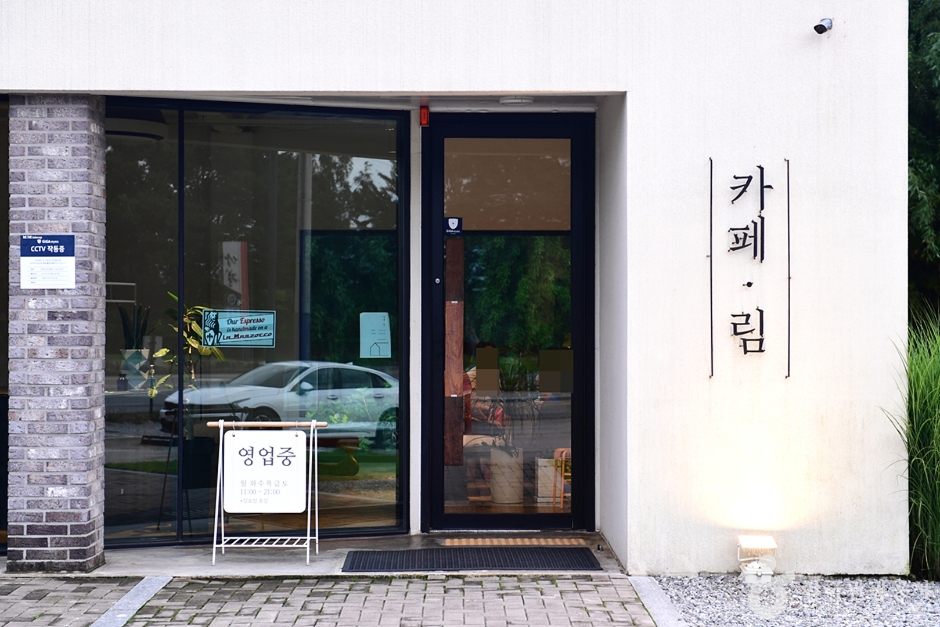
Café Limm (카페 림)
12.8Km 2024-11-12
192 Songgangjeong-ro, Bongsan-myeon, Damyang-gun, Jeollanam-do
Café Limm is a beautiful café nestled in the backdrop of lush bamboo forests in Damyang. With bamboo trees both inside and outside the café, it feels like stepping into a bamboo forest. Their signature menu item is the shakecoco (coconut milk espresso shake), made with shaken espresso and coconut milk. Visitors can also capture picturesque moments in this café that resembles a scene from an oriental painting.
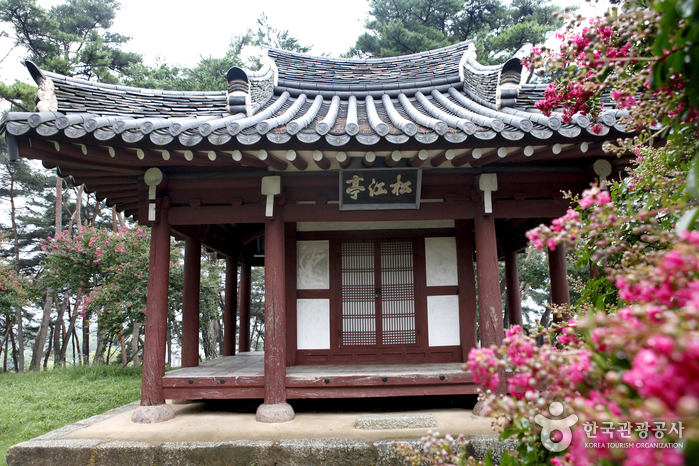
Damyang Songgangjeong Pavilion (담양 송강정)
12.8Km 2021-05-14
232, Songgangjeong-ro, Damyang-gun, Jeollanam-do
+82-61-380-2811
Songgangjeong pavilion is located in Wongang-ri, Damyang-gun, Jeollanam-do. It was registered as Jeollanam-do Provincial Monument No. 1 on January 29, 1972.
Joseon dynasty poet Jeong Cheol (pen name, Songgang) composed his famed poem “Samiingok” from this pavilion. Next to it presently stands the Samingok memorial stone. The two structures at this site, Hwanbyeonkdang and Sigyeongjeong, are collectively referred to as
the “Relics of Jeong Songgang.”
Chonnam National University Hwasun Hospital (화순전남대학교병원)
14.8Km 2025-10-23
B1 Floor, International Medical Center, 322 Seoyang-ro, Hwasun-eup, Hwasun-gun, Jeollanam-do
Chonnam National University Hwasun Hospital (CNUHH) is a globally recognized cancer-specialized hospital, selected one of the “World’s Best Specialized Hospitals” in the oncology field for five consecutive years by Newsweek. Within ten years of its opening, the hospital achieved the highest number of cancer surgeries nationwide, received JCI accreditation twice, and has become a global hospital visited by hospitals in the metropolitan area for benchmarking. The hospital has consistently received top grades in the National Quality Assessment Program by the Health Insurance Review and Assessment Service, demonstrating its excellent medial services. In 2011, the hospital opened the “International Medical Center” to attract foreign patients and pioneering overseas medical markets, and expand it global network. It is the only national university hospital in the nation to have acquired the “Korean Accreditation Program for Hospitals Serving Foreign Patients (KAHF)” by the Ministry of Health and Welfare three times.
Damyang Changpyeong [Slow City] (담양군 창평면 [슬로시티])
15.2Km 2021-04-16
56-24, Doldam-gil, Damyang-gun, Jeollanam-do
+82-2-383-3807
Damyang Changpyeong Samjinae Village is a farming village that produces vegetables and fruits including tomatoes and strawberries. The name of the village goes all the way back to early Goryeo period. Changpyeong is home to many important historical figures and known for its regional foods and local produce.
Wolbongseowon Confucian Academy (월봉서원)
15.2Km 2021-07-06
133, Gwanggok-gil, Gwangsan-gu, Gwangju
+82-62-960-8253
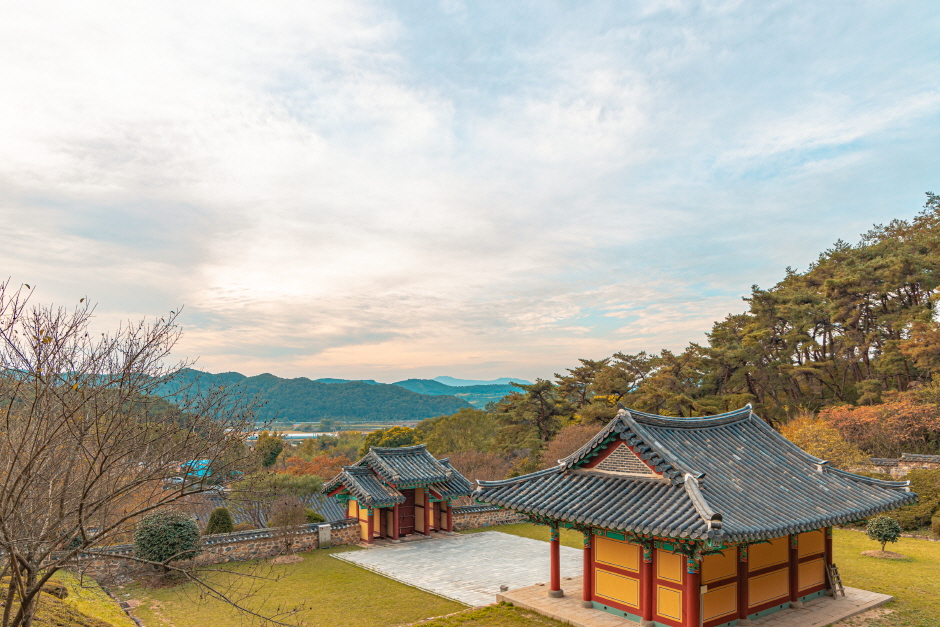
Wolbongseowon Confucian Academy, built in 1578, was established by Kim Gyehwi and other confucian scholars to honor Ki Daeseung's study and virtue through Mangcheonsa Shrine. The location of the academy was moved to its current site in 1646, and the name Wolbong was given by King Hyojong in 1654. In 1671, Bak Sang and Bak Sun's shrines were moved from Deoksansa Shrine by the suggestion of Song Siyeol. Also, Kim Jangsaeng and Kim Jip's shrines were additionally placed in 1673. Unfortunately, the confucian academy was abolished due to the abolition policy of Daewongun in 1868. Later, Bingwoldang Hall was built by Jeollanam-do's Confucian scholars in 1938, followed by Gojiksa Shrine in 1972, Jangpangak Pavilion and Oesammun Gate in 1978, Sau in 1980 and Naesammun Gate in 1981. Bingwoldang is designated as Gwangju Monument No. 9 and woodblocks of Gobongjip are preserved in Jangpangak Pavilion.
Gotaekhanok (고택 한옥에서)
15.5Km 2024-12-23
88-9 , Doldam-gil, Damyang-gun, Jeollanam-do
+82-10-3606-1283
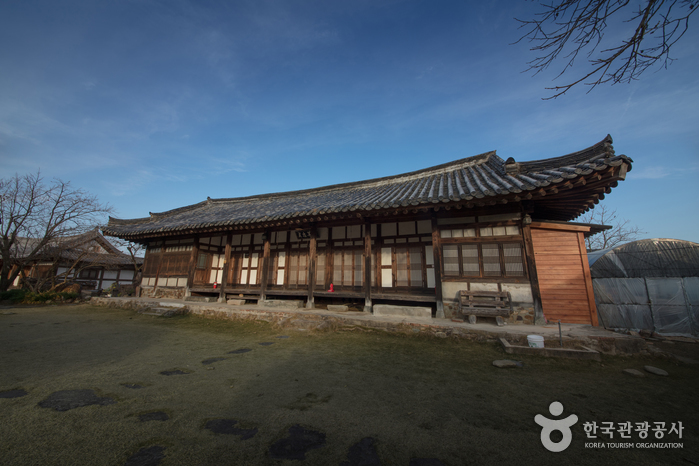
In A Hanok is a grand old house in Samjinae Village, Changpyeong, Jeollanam-do - a member of the international Slow City movement. The house comprises a sarangchae (men’s house), an anchae (women’s house), outbuildings and a spacious yard and garden. Local tourist destinations such as Soswaewon Garden, Songgangjeong Pavilion, and Damyang’s bamboo forest and redwood road are all within 30 minutes, of the house. Visitors can rest here while drinking in the atmosphere of the old Korean countryside.
 English
 한국어
한국어 日本語
日本語 中文(简体)
 Deutsch
 Français
 Español
 Русский


