
Lotte Himart - VIC Market Yeongdeungpo Branch [Tax Refund Shop] (롯데하이마트 VIC마켓영등포점)
8.2Km 2024-04-22
125, Yeongjung-ro, Yeongdeungpo-gu, Seoul
-
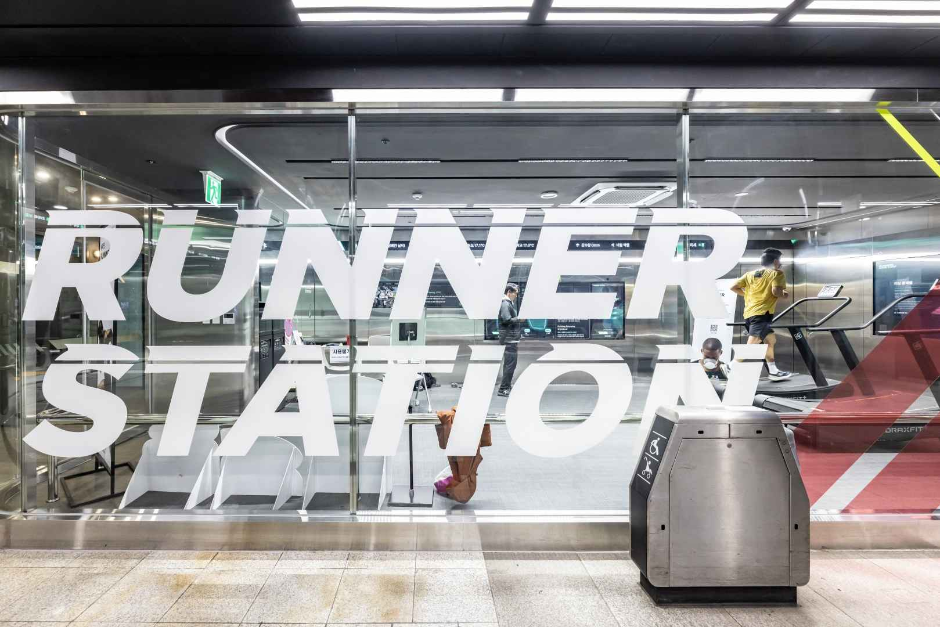
Runner Station at Yeouinaru Station (여의나루역 러너스테이션)
8.2Km 2025-11-06
343 Yeouidong-ro, Yeongdeungpo-gu, Seoul
With Seoul’s skyscrapers and the scenic Hangang River, Yeouido has become the top destination for Korean runners. In response to the growing popularity of running along the Hangang among the MZ generation, Yeouinaru Station introduced Runner Station, equipped with essentials like lockers and media boards displaying popular running routes. Wrap up your day with a refreshing run in Yeouido.
Louis Castel - Yeongdeungpo Branch [Tax Refund Shop] (루이까스텔 영등포)
8.2Km 2024-04-18
126, Yeongjung-ro, Yeongdeungpo-gu, Seoul
-
![CheongKwanJang - Dongdaemun Market Branch [Tax Refund Shop] (정관장 동대문시장)](http://tong.visitkorea.or.kr/cms/resource/33/2878233_image2_1.jpg)
CheongKwanJang - Dongdaemun Market Branch [Tax Refund Shop] (정관장 동대문시장)
8.3Km 2024-04-19
252, Jong-ro, Jongno-gu, Seoul
-
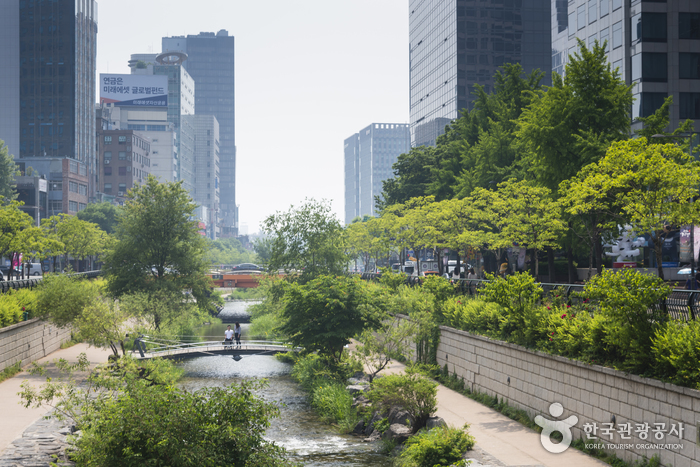
Cheonggyecheon Stream (청계천)
8.3Km 2024-05-16
Changsin-dong, Jongno-gu, Seoul
+82-2-2290-7111
Cheonggye Plaza was built on Sejong-ro Street, where Cheonggyecheon Stream begins. It was built between Dong-A Ilbo, the starting point of the Cheonggyecheon Stream restoration, and Sindap Railroad Bridge, with a length of 160 meters, a x_width of 50 meters, and a total area of 6,962 meters squared. The plaza is decorated with fountains, waterfalls, and walking paths. It was created as a place for meetings, harmony, peace, and unification, to celebrate the significance of the restoration of Cheonggyecheon Stream. A miniaturized version of Cheonggyecheon Stream is displayed here, providing an overview of the restored stream. There are also interpretive panels about the 22 bridges that cross Cheonggyecheon stream. Fountains of various shapes create beautiful scenery. Cheonggyecheon Stream is accessible from the square through stairs on the left and Cheonggye Trail on the right. There is also an 18-meter tunnel on the Cheonggye Trail, providing a unique experience for citizens entering Cheonggyecheon Stream from the plaza. After constructing Cheonggyecheon Plaza, the Seoul Metropolitan Government made it a car-free street on public holidays so that the plaza, waterside area, and streets could be used as cultural spaces for citizens to relax. A spectacular sight is created by three-color lights illuminating the fountains and a two-tiered waterfall coming down from a x_height of four meters. Palseokdam, made of eight stones from eight provinces in Korea, was laid along the waterfall's sides.
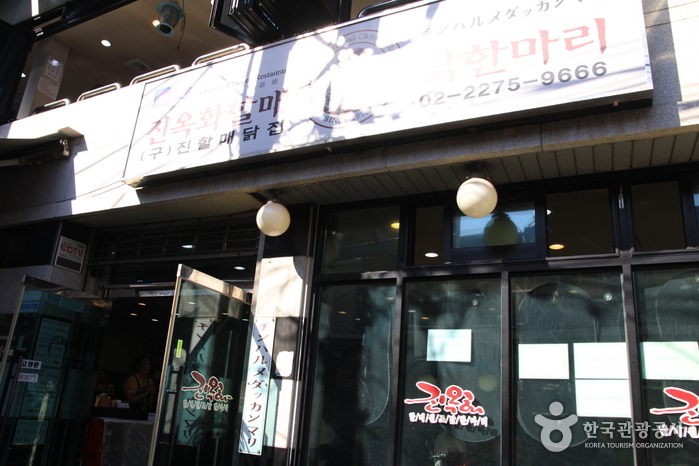
Jinokhwa Halmae Wonjo Dakhanmari (진옥화할매원조닭한마리)
8.3Km 2024-03-04
18 Jong-ro 40ga-gil, Jongno-gu, Seoul
+82-2-2275-9666
Jinokhwa Halmae Wonjo Dakhanmari is a renowned restaurant located in the alley of whole chicken soup near Dongdaemun Market, operating since 1978. Its specialty is dakhanmari (whole chicken soup), a whole chicken boiled in savory and rich broth. Adding finely chopped green onions enhances its refreshing flavor. The chewy rice cakes dipped in the seasoned sauce are also delightful. Additionally, it's customary to enjoy the remaining broth by mixing it with seasoning sauce and noodles, creating a delicious kalguksu (noodle soup).
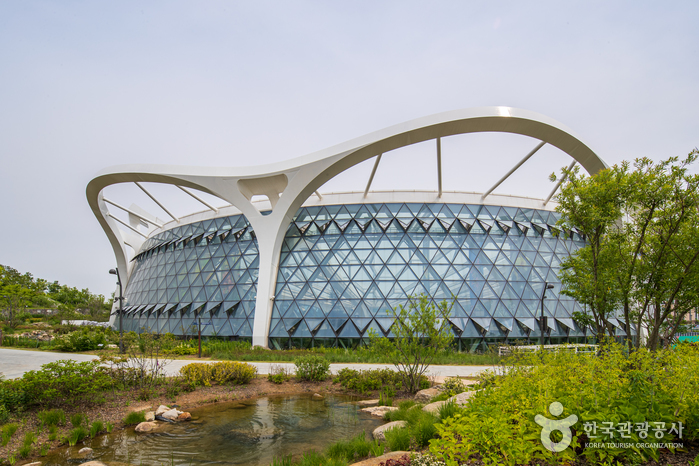
Seoul Botanic Park (서울식물원)
8.3Km 2025-06-18
161 Magokdong-ro, Gangseo-gu, Seoul
The Seoul Botanical Garden was created in Magok, the last remaining development site in Seoul, to introduce native plants and horticulture of 12 different cities from around the world and raise ecological awareness in the city. Seoul Botanic Park integrates a botanical garden and a public park, and the area is the size of 70 soccer fields. It serves as a bridgehead and lifelong education institution with the aim of spreading urban garden culture while staying true to its original role as a plant research conservation institution through expanding endangered wild plant habitats, researching the proliferation of species, and developing varieties. The botanical garden is divided into four spaces: Open Forest, Themed Garden, Lake Garden, and Wetland Garden. The main highlight is the Themed Garden that comprises the Botanic Center, Mogok Cultural Hall, and an outdoor themed garden.
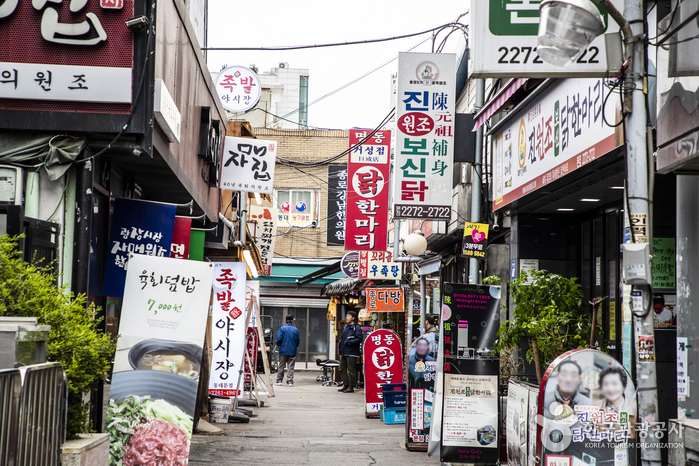
Dongdaemun Dak Hanmari Alley (서울 동대문 닭한마리 골목)
8.3Km 2024-03-04
37-7, Jongno 5(o)-ga, Jongno-gu, Seoul
+82-2-2236-9135
Located near the Dongdaemun Market, Dongdaemun Dak Hanmari Alley gets its name from the restaurants serving dak hanmari (whole chicken soup) that line the alley. Dak hanmari (whole chicken soup), literally “one whole chicken” in Korean, is a dish where a whole chicken is boiled in a soup and served with the alley’s special sauce. After the diners eat the meat, the broth is used to make kalguksu (noodle soup). Because the area is home to large-scale apparel and fashion material markets of the Dongdaemun Market, the district is always lively and bustling.
![HB Coms [Tax Refund Shop] (에이치비컴즈)](http://tong.visitkorea.or.kr/cms/resource/94/2891194_image2_1.jpg)
![Sjkcnc [Tax Refund Shop] (에스제이케이씨엔씨)](http://tong.visitkorea.or.kr/cms/resource/96/2891196_image2_1.jpg)
 English
 한국어
한국어 日本語
日本語 中文(简体)
 Deutsch
 Français
 Español
 Русский


