![VEI Clinic [Tax Refund Shop] (베이의원)](http://tong.visitkorea.or.kr/cms/resource/11/3313511_image2_1.jpg)

ID Hospital (아이디병원)
9.7Km 2025-10-23
142 Dosan-daero, Gangnam-gu, Seoul
ID Hospital offers innovative medical services and one-stop solutions, delivering value that is more than just beauty. A plastic surgery clinic comparable to a large hospital, ID Hospital ensures safe, personalized treatments with cutting-edge technology and world-class expertise.
From facial contouring to Mommy Makeover, the clinic creates harmonious transformations that enhance patient's natural beauty and confidence.
ID Clinic (Sinsa Branch) (아이디의원(신사점))
9.7Km 2025-10-23
6F, 142 Dosan-daero, Gangnam-gu, Seoul
ID Cosmedical Group, consisting of ID Plastic Surgery and ID Dermatology, has launched a beauty clinic brand with a new concept that combines its extensive expertise and experience.
Based on its high-quality medical services, ID Clinic offers personalized beauty solutions with exceptional convenience at reasonable costs.
![Apgujeong Onnuri Pharmacy* [Tax Refund Shop] (압구정온누리약국*)](http://tong.visitkorea.or.kr/cms/resource/81/2879681_image2_1.jpg)
Apgujeong Onnuri Pharmacy* [Tax Refund Shop] (압구정온누리약국*)
9.7Km 2024-04-16
#105, 164, Apgujeong-ro, Gangnam-gu, Seoul
-
![Olive Young - Sadang Station Branch [Tax Refund Shop] (올리브영 사당역)](http://tong.visitkorea.or.kr/cms/resource/00/2880500_image2_1.jpg)
Olive Young - Sadang Station Branch [Tax Refund Shop] (올리브영 사당역)
9.7Km 2024-04-18
Jisan Bldg., 941, Gwacheon-daero, Gwanak-gu, Seoul
-
![Être Boutique [Tax Refund Shop] (에트레부티크(etre boutigue))](http://tong.visitkorea.or.kr/cms/resource/78/2879678_image2_1.jpg)
Être Boutique [Tax Refund Shop] (에트레부티크(etre boutigue))
9.7Km 2024-04-19
1F, #106, 6, Nonhyeon-ro 175-gil, Gangnam-gu, Seoul
-
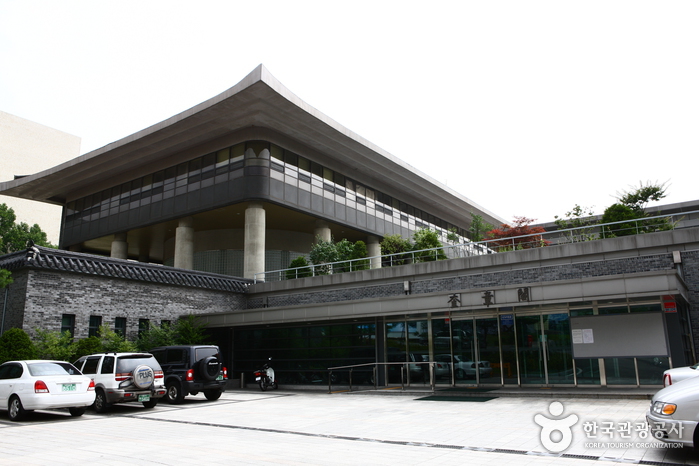
Gyujanggak Library of Seoul National University (서울대학교 규장각)
9.7Km 2022-07-27
1, Gwanak-ro, Gwanak-gu, Seoul
+82-2-880-6030
Gyujanggak Library was founded in 1776 during the reign of King Jeongjo, the 22nd ruler of the Joseon dynasty, at which time it was located within the Changdeokgung Palace grounds. It functioned as the royal library, which housed writings of the previous kings, their relics and books from home and abroad.
Today Seoul National University maintains the items of Gyujanggak in a traditional Korean building which is equipped with state-of-the-art facilities necessary for the preservation of cultural heritages. Moreover, Gyujanggak Library of Seoul National University collects and publishes books from a variety of sectors such as politics, economy and society.
Gyujanggak now houses more than 270,000 items including 7 national treasures, 8 treasures, 180,000-plus old books, about 50,000 documents and 18,000 printing blocks. Among them, Joseon Wangjo Sillok (the Annals of the Joseon Dynasty, a National Treasure), Seungjeongwon Ilgi (the Diaries of the Royal Secretariat, a National Treasure) and Uigwe (the Royal Protocols of the Joseon Dynasty) have been designated as UNESCO World Cultural Heritages.
Seoul National University (서울대학교)
9.7Km 2023-07-07
1, Gwanak-ro, Gwanak-gu, Seoul
+82-2-880-5114
Founded in 1946, Seoul National University is the most reputable university in Korea based on its long academic history and tradition. It was the first national university in Korea established by merging several institutions of higher education around the Seoul area, including Kyongsong University
BF Life Sciences Co., Ltd ((주) 비에프생명과학)
9.7Km 2025-10-23
(#1, 5th Floor), 10 Nonhyeon-ro 163-gil, Gangnam-gu, Seoul
BF Life Sciences is a leading company in the international medical cooperation business, specializing in hospital management support, advanced medical services, and research and development. We are at the forefront of next-generation biotechnology, including advanced genome decoding technology and stem cell research, driving innovation in the development of medical devices, pharmaceuticals, cosmetics, and health supplements. Additionally, BF Life Sciences is a global healthcare group providing customized theranostics through collaborations with both domestic and international medical institutions.
Leveraging our expertise in hospital management, we operates overseas branches and hospitals, leading the export of medical services and devices while also conducting various educational programs. BF Life Sciences is registered and licensed with agencies such as the Korea Trade-Investment Promotion Agency (KOTRA), the Ministry of Health and Welfare, and the Korea Food and Drug Administration, ensuring transparent business practices.
![Innisfree - Sinseol-dong Station Branch [Tax Refund Shop] (이니스프리 신설동역)](http://tong.visitkorea.or.kr/cms/resource/30/2888030_image2_1.jpg)
Innisfree - Sinseol-dong Station Branch [Tax Refund Shop] (이니스프리 신설동역)
9.7Km 2024-04-17
1F, 20, Wangsan-ro, Dongdaemun-gu, Seoul
-
 English
 한국어
한국어 日本語
日本語 中文(简体)
 Deutsch
 Français
 Español
 Русский


