![LOTTE Department Store - Yeongdeungpo Store [Tax Refund Shop] (롯데백화점 영등포점)](http://tong.visitkorea.or.kr/cms/resource/60/3007960_image2_1.jpg)
LOTTE Department Store - Yeongdeungpo Store [Tax Refund Shop] (롯데백화점 영등포점)
4.9Km 2024-04-18
846, Gyeongin-ro, Yeongdeungpo-gu, Seoul
Bugeogukjip (북어국집)
5.0Km 2024-12-27
38, Eulji-ro 1-gil, Jung-gu, Seoul
+82-2-777-3891
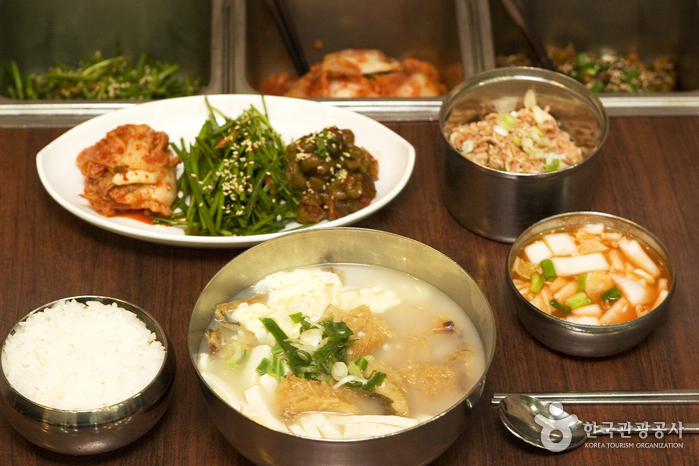
Bugeogukjip (formerly “Teojutgol”) is a restaurant behind City Hall in Seoul that has been serving up authentic dried Pollack soup since 1968. Despite a name change, the restaurant has proudly stood in this same location for decades, earning a strong reputation for its dried Pollack soup made using traditional cooking methods.
Since the restaurant only serves one thing—dried Pollack soup—there are few preparations to be made and the meal arrives on your table in minutes. Customers are free to serve themselves basic side dishes such as kimchi and can have as many servings of rice as they’d like, allowing diners to enjoy a hearty meal at a low price. While the restaurant’s design and menu may be simple, Bugeogukjip takes pride in its long history and the careful efforts that have earned it a reputation as one of the most notable restaurants in Seoul.
Mokdong Stadium (목동운동장(목동아이스링크,사격장)
5.0Km 2022-09-14
939, Anyangcheon-ro, Yangcheon-gu, Seoul
+82-2-2240-8800
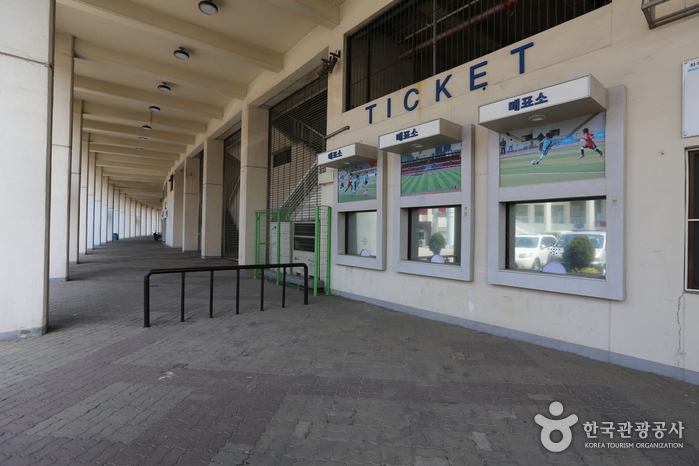
Mokdong Stadium was opened in 1989 with a stadium, a baseball field and an indoor ice rink and added footsal field in 2008 to improve Korea’s sports culture. The soccer field was used as the home field for K-league teams in the past. The ice rink hosts hockey matches and figure skating competitions as well as ice ballet performances. Other facilities include a main square, an indoor shooting range and a gym for residents to enjoy.
![Snow Peak - Mok-dong Branch [Tax Refund Shop] (스노우피크 목동)](http://tong.visitkorea.or.kr/cms/resource/22/2880122_image2_1.jpg)
Snow Peak - Mok-dong Branch [Tax Refund Shop] (스노우피크 목동)
5.0Km 2024-04-17
602, Gonghang-daero, Yangcheon-gu, Seoul
-
![Mont-Bell - Yongsan Branch [Tax Refund Shop] (몽벨 용산점)](http://tong.visitkorea.or.kr/cms/resource/65/2890565_image2_1.jpg)
Mont-Bell - Yongsan Branch [Tax Refund Shop] (몽벨 용산점)
5.0Km 2024-04-18
92, Hangang-daero, Yongsan-gu, Seoul
-
![Uniqlo - Gwanghwamun D Tower Branch [Tax Refund Shop] (유니클로 광화문D타워)](http://tong.visitkorea.or.kr/cms/resource/15/2878215_image2_1.jpg)
Uniqlo - Gwanghwamun D Tower Branch [Tax Refund Shop] (유니클로 광화문D타워)
5.0Km 2024-04-17
17, Jong-ro 3-gil, Jongno-gu, Seoul
-
Modern Shabu House Gwanghwamun D Tower Branch (모던샤브하우스 광화문D타워점)
5.0Km 2025-12-02
17 Jong-ro 3-gil, Jongno-gu, Seoul
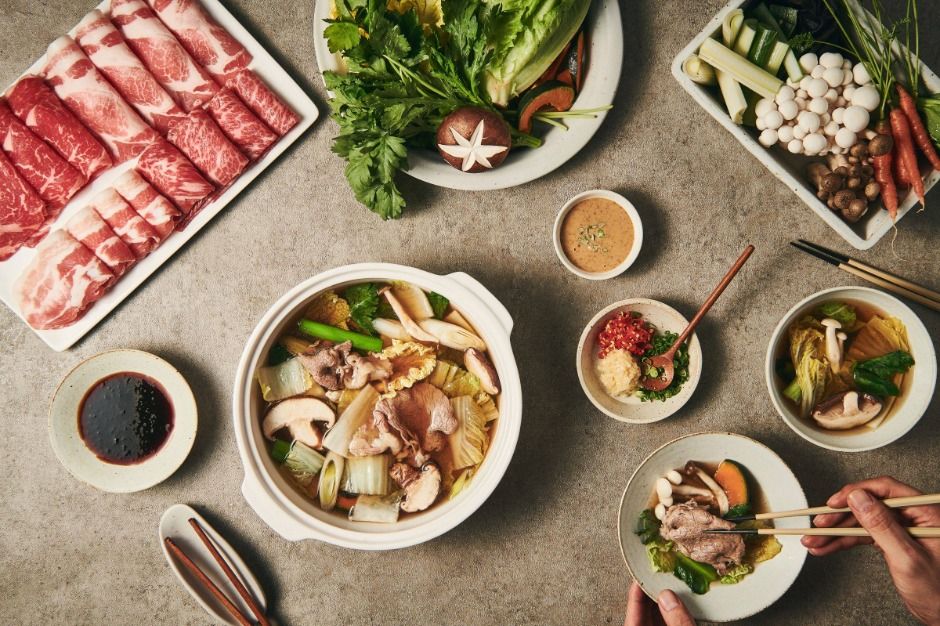
Located in Jongno-gu, Modern Shabu House Gwanghwamun D Tower Branch offers a selection of specialty broths to enjoy unlimited beef, pork, and vegetables. The restaurant serves four cuts of pork and beef in every course. The interior is designed with natural materials like earth, stone, and wood, inspired by the fluid process of cooking ingredients like meat and vegetables in a pot. The design reflects the natural movement and flow of ingredients as they cook together. The restaurant also has a range of private rooms, making it a popular choice for families with children and for gatherings, providing a comfortable dining experience.
National Museum of Korean Contemporary History (대한민국역사박물관)
5.0Km 2022-12-27
198, Sejong-daero, Jongno-gu, Seoul
+82-2-3703-9200
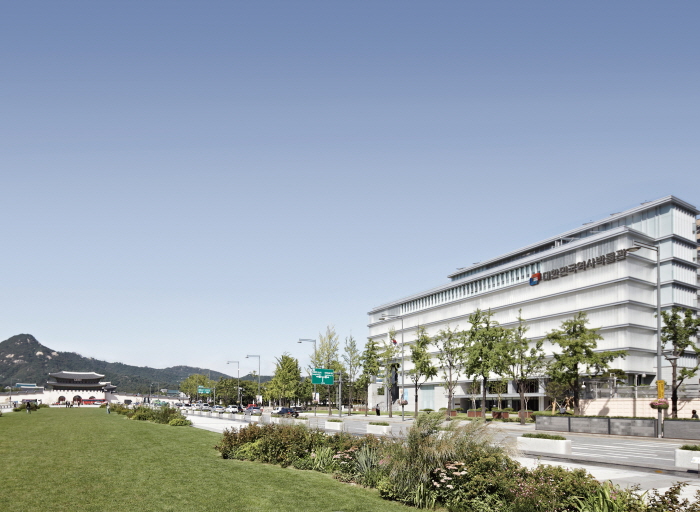
The National Museum of Korean Contemporary History opened on December 26, 2012, and showcases Korea's modern history, from the opening of Incheon Port to current times. The museum provides an in-depth look at the changes in the nation through exhibitions and educational programs, as well as researching, developing, and collecting materials. The museum is comprised of four exhibition halls; Prelude to the Republic of Korea, Foundation of the Republic of Korea, Development of the Republic of Korea, and Modernization of South Korea, toward the World. In addition, the Korean History Dream Village features a hands-on program hall for children to learn modern and contemporary history. In addition to special exhibitions, the museum also offers educational and cultural programs for children.
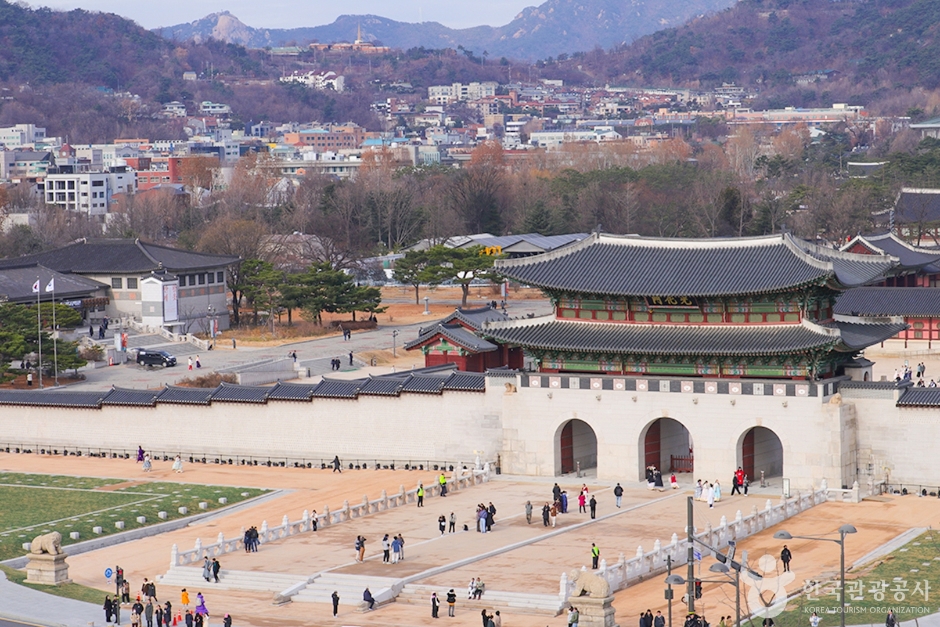
Gwanghwamun Gate (광화문)
5.0Km 2024-12-04
161 Sajik-ro, Jongno-gu, Seoul
+82-2-3700-3900
Built in 1395 under the reign of King Taejo, the first king of the Joseon dynasty, Gwanghwamun Gate is the southern gate of Gyeongbokgung Palace. It is also the main gate of the palace, therefore larger and fancier in comparison to the other gates. Gwanghwamun Gate consists of three arched gates; the center gate was used by the king, while the other two were used by the crown prince and royal officials. The tall granite walls of the gate serve as a platform for the wooden gate tower that watches over the city. The gate has a sign with its name written at the top center of the gate tower.
Gwanghwamun Gate went through several damages and restorations over the course of history. It was first severely damaged during the Imjin War (1592-1598) and was not restored until the reconstruction of Gyeongbokgung Palace in 1864. Under the Japanese administration, the gate was demolished and relocated to the north of the palace's eastern gate, followed by series of damages during the Korean War (1950-1953). In 1968, Gwanghwamun Gate was relocated back to the south of the palace and was rebuilt using concrete; however, the gate’s position was shifted a few meters away from its original location. In 2006, a major reconstruction project took place to restore Gwanghwamun Gate to its original state and location, disassembling the structure completely and replacing concrete with granite and wood. After three years and eight months of construction, Gwanghwamun Gate was fully restored to its original form and was open to the public on August 15, 2010.
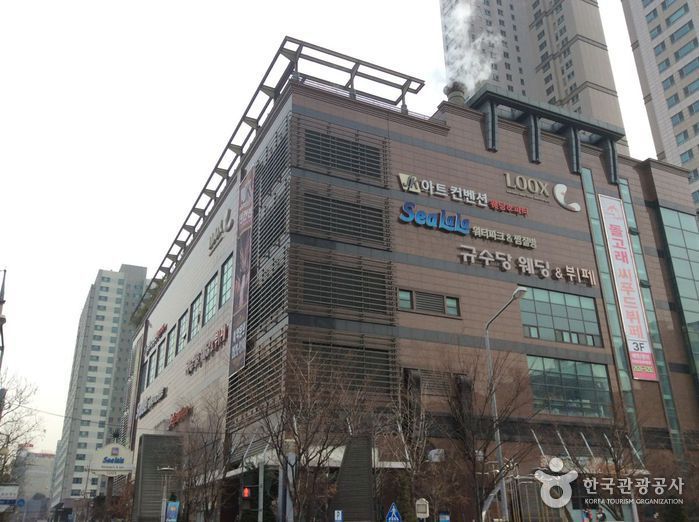
Sealala Water Park (씨랄라 워터파크)
5.0Km 2024-03-20
(2nd underground floor), 164, Mullae-ro, Yeongdeungpo-gu, Seoul
+82-2-1522-9661
Sealala Water Park is a water park at the heart of the city where one can enjoy water activities across the four seasons. Its name is a portmanteau of the sea and lala, symbolizing the fun one can have in the water park. Inspired by the Mediterranean, the water park has water flowing pool, slides, beach pools, the Kids Land, bath pools, and rotating slides. Amenities onsite include convenience stores, manhwa cafe, and a swimming equipment store. Nearby tourist sites include the Yeongdeungpo Park, The National Assembly Building, and the Yeouido Park.
 English
 한국어
한국어 日本語
日本語 中文(简体)
 Deutsch
 Français
 Español
 Русский


