
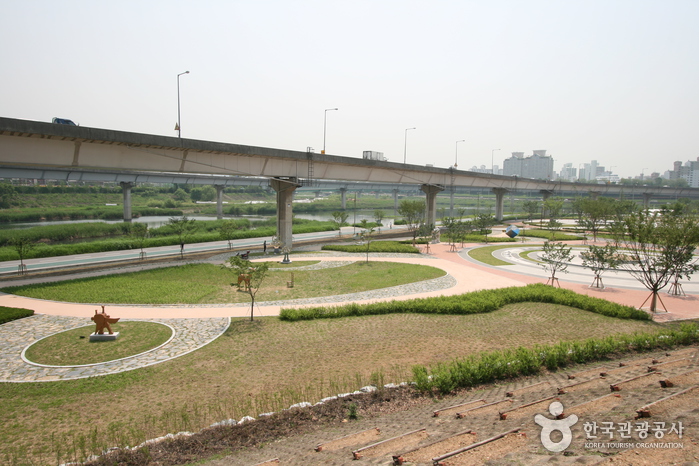
Salgoji Sports Park (살곶이 체육공원)
18.8Km 2024-03-20
16-18 Sageundong-gil, Seongdong-gu, Seoul
Salgoji Sports Park is located along the Joongnangcheon Riverside near Hanyang University. Its name "Salgoji" holds deep historical significance, meaning "the place where an arrow is shot" in Korean. The park features facilities such as an inline skating rink, soccer field, basketball court, and badminton court. There are dedicated bicycle paths and pedestrian walkways around the park. Throughout the year, walking festivals and mini marathons are organized, making it a beloved spot among cyclists. In the summer, an outdoor water playground is operated.
![Hottracks - Gwanggyo Branch [Tax Refund Shop] (핫트랙스 광교점)](http://tong.visitkorea.or.kr/cms/resource/45/2890545_image2_1.jpg)
Hottracks - Gwanggyo Branch [Tax Refund Shop] (핫트랙스 광교점)
18.8Km 2024-04-19
B1, 145, Gwanggyojungang-ro, Yeongtong-gu, Suwon-si, Gyeonggi-do
-
La:ppland [Tax Refund Shop] (라플란드)
18.8Km 2024-04-16
Bldg. Ga. 1F, 83, Samcheong-ro, Jongno-gu, Seoul
-

Lotte World Tower & Mall (롯데월드타워&롯데월드몰)
18.8Km 2024-11-28
300 Olympic-ro, Songpa-gu, Seoul
+82-2-3213-5000
Lotte World Tower was designed with a conceptual motif inspired by Korean ceramics and writing brushes. With 123 floors total, the tower is the fifth tallest building in the world, standing at 555 meters. The tower contains galleries, cafés, and a luxury hotel, in addition to a skywalk and an observation deck. It is one of the best spots to appreciate the breathtaking view of Seoul's vibrant city lights.
Lotte World Mall, located next to the tower, features Avenuel, a complex of luxury department stores. The multi-leveled mall draws in many visitors as one of the top shopping attractions in Seoul, with a variety of domestic and foreign brands. The mall also offers a wide-range of entertainment facilities, such as a movie theater, aquarium, concert hall, and more.
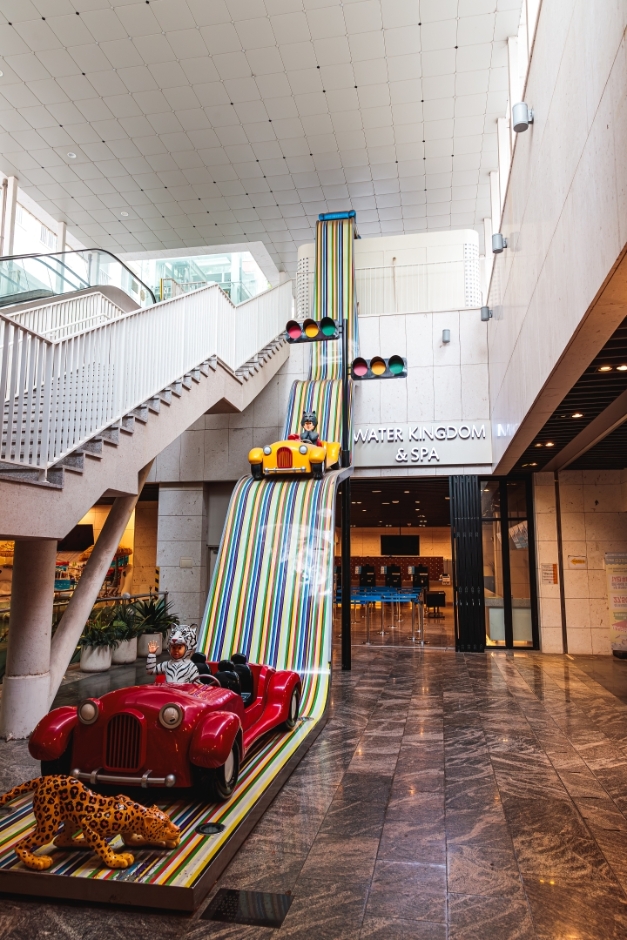
Park Habio Water Kingdom Water Park & Jjimjil Spa (파크하비오 워터킹덤&스파)
18.8Km 2025-10-24
111 Songpa-daero, Songpa-gu, Seoul
In the episode “Proxy Vacation,” where the members of Running Man take a summer vacation on behalf of the viewers, they are seen enjoying swimming and sliding in a cool pool. This refreshing vacation spot is the Water Kingdom & Spa in Songpa Park Habio. This indoor water park, open 365 days a year regardless of the weather, offers a variety of fun activities. If you get tired after playing in the water all day, you can also rest and recharge in the spa.
![Olive Young - Dongmyo Station Branch [Tax Refund Shop] (올리브영 동묘앞역)](http://tong.visitkorea.or.kr/cms/resource/87/2878187_image2_1.jpg)
Olive Young - Dongmyo Station Branch [Tax Refund Shop] (올리브영 동묘앞역)
18.8Km 2024-04-17
37-1, Jibong-ro, Jongno-gu, Seoul
-
![Yeonwoohouse [Korea Quality] / 연우하우스 [한국관광 품질인증]](http://tong.visitkorea.or.kr/cms/resource/52/3009452_image2_1.jpg)
Yeonwoohouse [Korea Quality] / 연우하우스 [한국관광 품질인증]
18.8Km 2023-09-12
5-13 , Bukchon-ro 12-gil, Jongno-gu, Seoul
+82-2-742-1115
Yeonoo House is a quiet and cozy traditional hanok in Bukchon Hanok Village, Jongno, Seoul. There are two small rooms, each with its own bathroom. Residents can access a superb panoramic view of Bukchon Hanok Village by mounting a ladder up to the roof. As Yeonoo is an old building, careful attention is paid to hygiene management. Gyeongbokgung Palace, Cheonggyeonggung Palace, and Changdeokgung Palace are all nearby.
![Lens Me - Jamsil Underground Shopping Center Branch [Tax Refund Shop] (렌즈미 잠실지하상가)](http://tong.visitkorea.or.kr/cms/resource/04/2878904_image2_1.jpg)
Lens Me - Jamsil Underground Shopping Center Branch [Tax Refund Shop] (렌즈미 잠실지하상가)
18.8Km 2024-04-16
Store #C-20 of Jamsil Underground Shopping Center, B265 Olympic-ro, Songpa-gu, Seoul
-
The Face Shop - Jamsil Underground Shopping Center Branch [Tax Refund Shop] (더페이스샵 잠실지하쇼핑센터)
18.8Km 2024-06-27
265, Olympic-ro, Songpa-gu, Seoul
-
 English
 한국어
한국어 日本語
日本語 中文(简体)
 Deutsch
 Français
 Español
 Русский


