![Kangol - Hongdae Branch [Tax Refund Shop] (캉골 홍대)](http://tong.visitkorea.or.kr/cms/resource/30/2888630_image2_1.jpg)
Kangol - Hongdae Branch [Tax Refund Shop] (캉골 홍대)
2.5Km 2024-04-23
28, Dongmak-ro 7-gil, Mapo-gu, Seoul
-

Cha Fertility Ceter - Seoul Station ((의)성광의료재단 차여성의원)
2.5Km 2025-10-23
(2nd Floor, Seoul Square), 416 Hangang-daero, Jung-gu, Seoul
Since opening in 2015, CHA Fertility Center - Seoul Station has served as Korea's leading fertility treatment center. Based on the know-how of CHA University Gangnam Medical Center, the first private hospital to deliver a test-tube baby in 1986, CHA Fertility Center - Seoul Station is conveniently located near the center of Seoul, making it convenient for domestic and international fertility clients. Foreign fertility patients who arrive in Korea via Incheon Airport not only have easy access to the clinic via the direct rail linking Seoul and the airport but also benefit from the capital city's excellent infrastructure (transportation, tours, accommodations, restaurants, etc.) for a safe and comfortable fertility treatment during their stay. In particular, many international residents in Korea, embassy officials, U.S. soldiers, and Koreans living abroad visit CHA Fertility Center for fertility treatment.
![Glam Eyewear - Hongdae Branch [Tax Refund Shop] (글램아이웨어 홍대)](http://tong.visitkorea.or.kr/cms/resource/21/2888821_image2_1.jpg)
Glam Eyewear - Hongdae Branch [Tax Refund Shop] (글램아이웨어 홍대)
2.5Km 2024-04-18
2F, 23, Eoulmadang-ro 5-gil, Mapo-gu, Seoul
-
Gyeongui Line Forest Park (Yeontral Park) (경의선숲길(연트럴파크))
2.5Km 2023-08-11
133, Donggyo-ro 51-gil, Mapo-gu, Seoul
Gyeongui Line Forest Park is a linear city park located in Mapo-gu and is also called Yeontral Park. It includes Daeheung-dong, Yeonnam-dong, Saechanggogae Pass, Changjeon-dong, Sinsu-dong, and Wonhyo-ro, which were opened in this order. Gyeongui Line Forest Park is established atop the Gyeongui railroad line and the Gyeongui Line and Airport Railroad Express are constructed as a double track underground. Gyeongui Line Forest Park was designed to be incomplete on purpose to invite the citizens in completing the park. The area which could have been left empty and neglected has turned into a meaningful green park for the citizens by the citizens.
Cheongsongok (청송옥)
2.5Km 2024-02-20
14 Seosomun-ro 11-gil, Jung-gu, Seoul
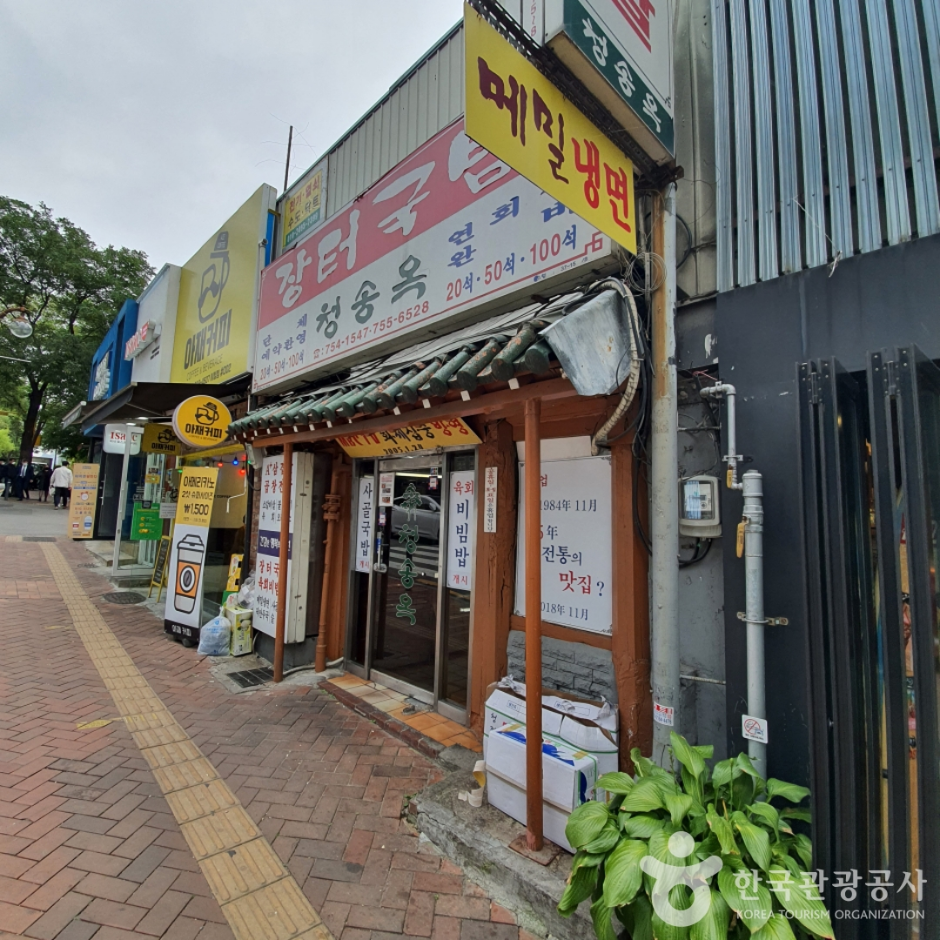
Cheongsongok is a jangteo gukbap (rice soup) restaurant that opened in 1984. The signature menu is jangteo gukbap, a rice soup with green onions and radishes in beef bone broth. The kimchi served with the gukbap is homemade, known for its spicy flavor and crisp texture. Nearby is Deoksugung Palace, and the Seokjojeon Hall in Deoksugung Palace presents a picturesque landscape harmonized with the garden, making it a popular spot for photography.
Olive Young - Plus Branch [Tax Refund Shop] (올리브영 플러스점)
2.5Km 2024-06-27
#B114~#B115, 372, Hangang-daero, Yongsan-gu, Seoul
-
![Olive Young - Sookmyung Women’s Univ. Branch [Tax Refund Shop] (올리브영 숙대)](http://tong.visitkorea.or.kr/cms/resource/25/2889625_image2_1.jpg)
Olive Young - Sookmyung Women’s Univ. Branch [Tax Refund Shop] (올리브영 숙대)
2.6Km 2024-04-18
19, Cheongpa-ro 45-gil, Yongsan-gu, Seoul
-
Lee Glasses - Hongdae Branch [Tax Refund Shop] (이기대안경 홍대점)
2.6Km 2024-06-27
1F, 56, Dongmak-ro, Mapo-gu, Seoul
-
Jeongdong Theater (국립 정동극장)
2.6Km 2024-06-19
43 Jeongdong-gil, Jung-gu, Seoul
+82-2-751-1500
Jeongdong Theater is located along Deoksugung Stone Wall Path and serves as a cultural hub for local citizens. Opened in 1995, Jeongdong Theater is historically significant as it was established to restitute the legacy of Wongaksa, the first modern theater in Korea. Jeongdong Theater features numerous critically-acclaimed productions, such as “Traditional Art Performance,” “Masters Exhibition,” and “Art Frontier,” as well as programs like “Art Stage at Noon” that are geared toward the general public. As a result, Jeongdong Theater has become one of Korea's representative traditional arts performance theaters and was designated as a Seoul Future Heritage in 2015.
The theater successfully held the performance “Miso” in 2010, featuring the traditional musical "Love Songs from Chunhyang," written and created by Jeongdong Theater. The musical attracted many international visitors from all over the world, passing on Korean cultural values and beauty, as well as gaining the attention of critics worldwide. In addition, the theater also produced "The 2nd Story of Miso: Baebijang-jeon," offering a modern interpretation of the fundamental values found in Korea's culture and art.
Jungmyeongjeon Hall (중명전)
2.6Km 2025-01-09
41-11, Jeongdong-gil, Jung-gu, Seoul
+82-2-752-7525
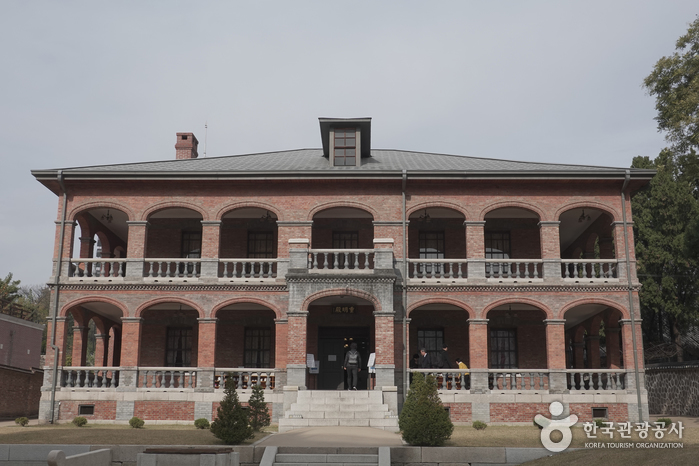
Located near Deoksugung Palace, Jungmyeongjeon Hall is a red-brick modern Western-style building. It was built in 1899 as the imperial library of the Korean Empire. After Deoksugung Palace caught on fire in 1904, the place became the temporary residence of Emperor Gojong. It also witnessed the tragic part of history in which the infamous Eulsa Treaty (Japan-Korea Protectorate Treaty), an illegal treaty forced by Japan, was signed in 1905. Its exhibition hall serves as a place for historical education.
 English
 한국어
한국어 日本語
日本語 中文(简体)
 Deutsch
 Français
 Español
 Русский


