
Gwacheon Chusa Museum (추사박물관(과천))
13.7Km 2023-07-14
78, Chusa-ro, Gwacheon-si, Gyeonggi-do
+82-2-2150-3650
Gwacheon was where Chusa Gim Jeong-hui immersed himself in studies and arts to ignite his final artistic spirit in the twilight of his life. The city of Gwacheon opened Chusa Museum in order to promulgate the essence of the learning and arts that Chusa flowered. The museum features the life exhibit of Chusa, an art and science exhibit, a planned exhibit hall, an experience room, lounges, a museum shop and an education room for thoroughly researching, exhibiting and experiencing Chusa.
Bonghwasan Mountain - Seoul (봉화산 (서울))
13.7Km 2022-09-14
Sinnae-ro 21-gil, Jungnang-gu, Seoul
+82-2-2094-2353
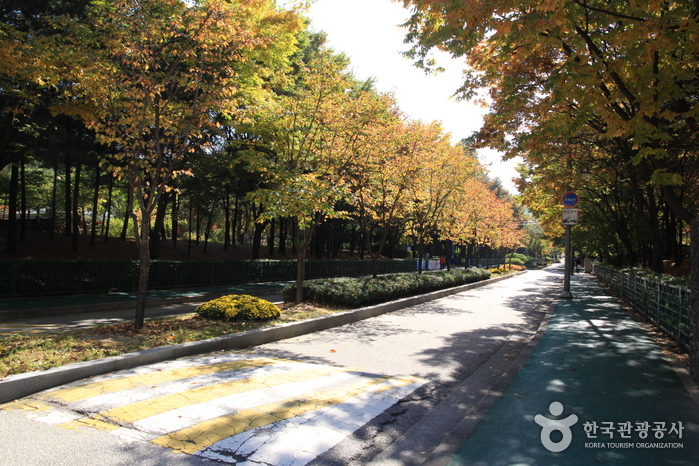
Bonghwasan Mountain (alt. 160 meters) in Jungnang-gu, Seoul offers scenic views of Buramsan, Dobongsan, and Namsan mountains. From the mountain, hikers can even see as far as the Yangju area of Gyeonggi-do Province to the north. Officially designated a “neighborhood park” in July 1977, Bonghwasan Mountain has a variety of convenience facilities, not least of which is the beacon tower of Achasan Bongsudae (remolded in 1994) perched on the mountain summit. Also near the summit is Sansingak Shrine, which is the site of the annual Bonghwasan Dodanggut (Intangible Cultural Property of Seoul), a shamanistic rite performed on the third day of the third lunar month.
![Goyang West Three Royal Tombs (The tomb of Queen Janggyeong) [UNESCO World Heritage] (고양 서삼릉(장경왕후) [유네스코 세계문화유산])](http://tong.visitkorea.or.kr/cms/resource/85/1150385_image2_1.jpg)
Goyang West Three Royal Tombs (The tomb of Queen Janggyeong) [UNESCO World Heritage] (고양 서삼릉(장경왕후) [유네스코 세계문화유산])
13.7Km 2024-02-07
233-126 Seosamneung-gil, Deogyang-gu, Goyang-si, Gyeonggi-do
+82-31-962-6009
Goyang West Three Royal Tombs is a significant historical site comprising three major royal burial grounds in the western area. Huireung Royal Tomb is dedicated to Queen Janggyeong (1491-1515), the consort of King Jungjong during the Joseon dynasty. Hyoreung Royal Tomb is the resting place of King Injong (1515-1545) and his queen, Inseong. Yereung Royal Tomb holds the remains of King Cheoljong (1831-1864) and his queen, Cheorin. This area is home to numerous tombs and relics belonging to various members of the Joseon royal family.
Nonghyup Hanaro Mart - Yangjae Branch [Tax Refund Shop] (농협하나로마트 양재)
13.7Km 2024-04-22
10, Cheonggyesan-ro, Seocho-gu, Seoul
-
Achasan Ecological Park (아차산생태공원)
13.8Km 2021-05-14
127, Walkerhill-ro, Gwangjin-gu, Seoul
+82-2-450-1655
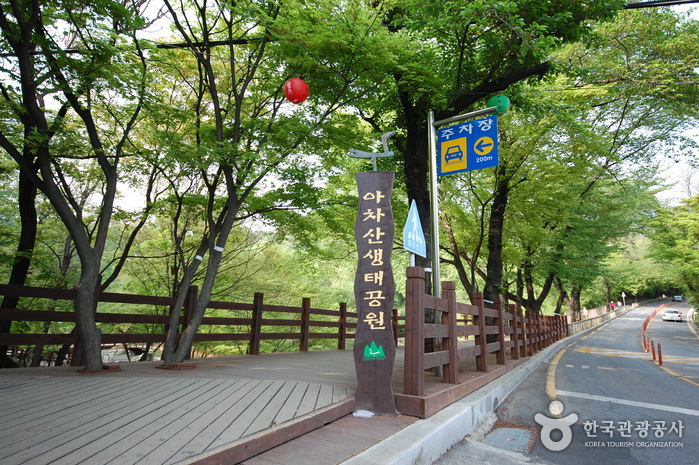
Achasan Ecological Park was established under the Seoul Metropolitan Government's Five Year Plan for Urban Green Expansion. Through various events and activities, the park provides opportunities to experience and learn about nature and its ecology. Major facilities include Eco Park, Rendezvous Square, Red Clay Road, Barefoot Path, Pine Forest, Mineral Spring, Eco Trail and pergolas.
Uidonggyegok Valley (우이동계곡)
13.9Km 2021-06-09
Ui-dong, Gangbuk-gu, Seoul
+82-2-909-0497
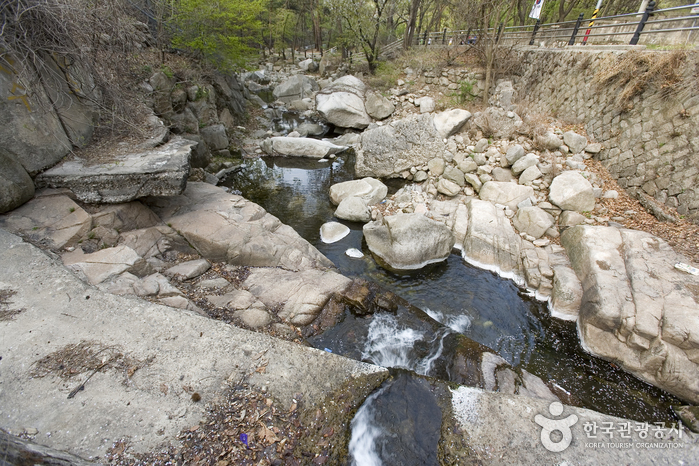
Uidonggyegok Valley is located between Bukhansan Mountain and Dobongsan Mountain, and is a popular retreat for locals. Near the entrance to the valley are accommodations, a playground, wedding hall, and other amenities. Clean water runs through the valley, and is lined with restaurants. The hiking path starting to the left of the valley entrance passes Doseonsa Temple on the way to Insubong Peak. The hiking path through the valley is quite difficult, but leads to Uiam Hermitage, and further to Dobongsan Mountain along the ridge. Additional temples in the area include Seongbulsa, Yongdeoksa, Seonunsa, and Gwangmyeongsa Temples.
Myongji Hospital (명지병원)
14.0Km 2025-10-23
55 Hwasu-ro 14beon-gil, Deogyang-gu, Goyang-si, Gyeonggi-do
Myongji Hospital is a general hospital located in Goyang-si with various departments and specialized treatment centers.
We operate Breast Thyroid Center, Prostate Cancer and Kidney Cancer Center, Ovarian Cancer and Gynecological Cancer Center, and Robotic Surgery Center for specialized treatment, and have introduced the latest medical device, da Vinci Xi to conduct surgeries for various types of cancer as well as robotic surgeries for a wide range of benign diseases. In addition, we provide more specialized and prompt medical services to patients through advanced facilities such as the Radiology Center, Rehabilitation Center, Intervention Center, and Comprehensive Health Checkup Center. Specifically, we are prominent in the field of organ transplantation and operate the Organ Transplant Center performing liver, kidney, lung, and heart transplants. We offer interpretation services for foreign patients by professional coordinators who speak English, Russian, Mongolian, and Chinese to eliminate language barriers by opening the International Medical Center in 2009 and provide guesthouses, airport pick-up and send-off services for foreign patients as well to maximize their convenience.
DOWON TOUR (도원국제여행사)
14.0Km 2025-10-23
(#323), 9 Gongneung-ro 59ga-gil, Nowon-gu, Seoul
Based on my previous experience as a Korean and Japanese language guide in China, I established Dowon International Travel Agency in 2023.
Our main focus is on medical tourism for Chinese clients, offering not only tours of popular destinations and shopping in Korea, but also services for VIP guests such as plastic surgery and health checkups.

Kansong House (간송옛집)
14.0Km 2025-04-01
149-18 Sirubong-ro, Dobong-gu, Seoul
The 100-year-old traditional hanok Kansong House sits by the burial mound of Kansong Jeon Hyeong-pil (1906-1962), who played a significant role in preserving the cultural heritages of Korea during the Japanese colonial period. This house was orginally built by Kansong's adoptive father Jeon Myeong-gi (1870-1919) to us as a storage facilities for harvested agriculture from the northern Gyeonggi-do and Hwanghae. After his father's death, Kansong used the house as a ritual house for his father and often stayed here. Some damages were done to the house during the Korean War, and partial repair was made after his death.
Ononsa Guesthouse (온온사)
14.0Km 2023-07-17
58 Gwanaksan-gil, Gwacheon-si, Gyeonggi-do
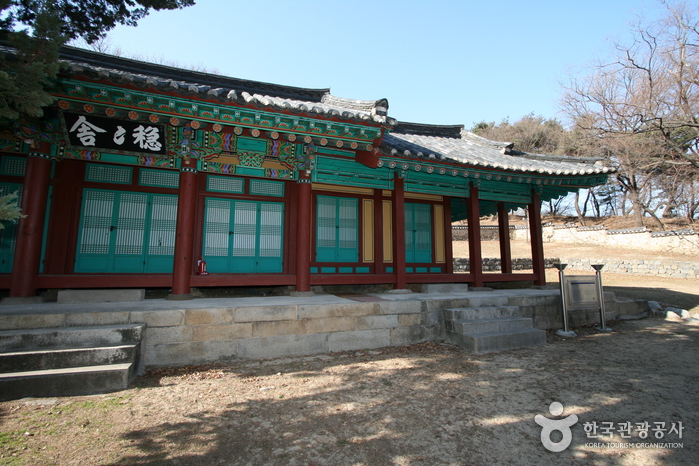
Though Ononsa, which was a guesthouse in Gwacheon, was constructed in the 27th year of King Injo's reign in the Joseon dynasty (1649), the name, "Ononsa," was given to this area during the reign of King Jeongjo. On February 11, 1790 during his royal procession to the tomb of his father, Crown Prince Sado, stayed at an inn in Gwacheon and, as he felt that it "has nice views and provides a comfortable stay," he bestowed upon the place plaques that he wrote himself - "Ononsa" to Seoheon and "Burimheon," which was the old nickname of Gwacheon, to Dongheon. This is how this place began to be called Ononsa.
It was designated as a Tangible Cultural Heritage of Gyeonggi-do on June 2, 1980, and it was restored on December 2, 1986 after being torn down.
 English
 한국어
한국어 日本語
日本語 中文(简体)
 Deutsch
 Français
 Español
 Русский


