
Hwanbyeokdang Pavilion (환벽당)
6.5Km 2023-01-25
10, Hwanbyeokdang-gil, Buk-gu, Gwangju
+82-62-510-1500
Hwanbyeokdang Pavilion was built by Yeongcheonja Sinjam and was also called Byeokgandang, which is recorded in Go Gyeong-myeong's Yuseoseongnok. The building has a hipped-and-gabled roof with three bays in the front space and two bays in the inside space. It is a modified form in which the two rooms in the middle are used as rooms, and the front and right sides are floors. Originally, it was a traditional pavilion, but it seems to have changed to its current form as it was expanded later. A tablet written by Uam Song Si-yeol hangs here, and the poems of Seokcheon Im Eok-ryeong and Jo Ja-i are on a signboard. There are two poems written by Jeong Cheol about Hwanbyeokdang Pavilion, which are published in Songgangsokjip and Gwangjumokji. Jeong Cheol's 4th-generation descendant Jeong Su-hwan bought it from Kim Yun-je's descendants, and Yeon Il-jeong's family is currently managing it.
Gwangju World Cup Stadium (광주월드컵경기장)
6.6Km 2021-06-11
240, Geumhwa-ro, Seo-gu, Gwangju
+82-62-604-2002
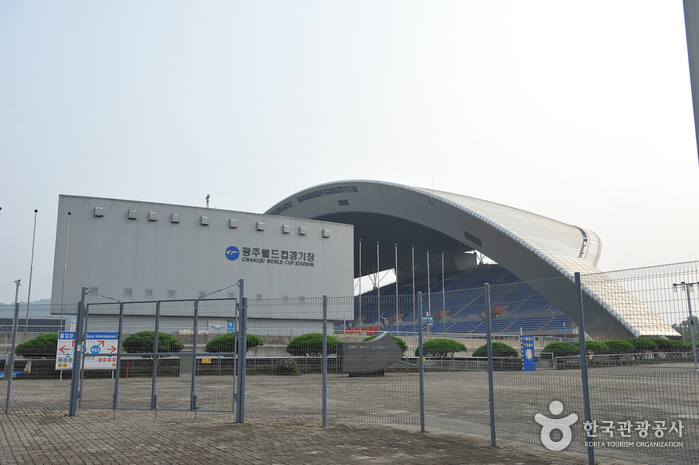
Gwangju World Cup Stadium is a major symbol of Gwangju. Designed to reflect the notion of ‘spreading far and wide’ the exterior is shaped like spokes of a wheel. When lit up, the stadium looks like a glowing dome. The ceiling and large ‘Y’-shaped pillars resemble a ‘Go,’ an instrument used in a traditional game from Gwangju, Gossaumnori. These architectural features were designed to capture and reflect the traditional aspects of Gwangju. The soccer stadium can accommodate up to 40,000 people at once and has many subsidiary facilities, including media center, athlete waiting room, medical care facilities, and more.
![Lotte Himart - Gwangju World Cup Branch [Tax Refund Shop] (롯데하이마트 광주월드컵점)](http://tong.visitkorea.or.kr/cms/resource/31/2886931_image2_1.jpg)
Lotte Himart - Gwangju World Cup Branch [Tax Refund Shop] (롯데하이마트 광주월드컵점)
6.6Km 2024-04-16
240, Geumhwa-ro, Seo-gu, Gwangju
-
![Lotte Mart - World Cup Branch [Tax Refund Shop] (롯데마트 월드컵점)](http://tong.visitkorea.or.kr/cms/resource/30/2886930_image2_1.jpg)
Lotte Mart - World Cup Branch [Tax Refund Shop] (롯데마트 월드컵점)
6.6Km 2024-04-22
240, Geumhwa-ro, Seo-gu, Gwangju
-
Gwangju Museum of Art (광주시립미술관)
6.6Km 2022-09-02
52, Haseo-ro, Buk-gu, Gwangju
+82-62-613-7100
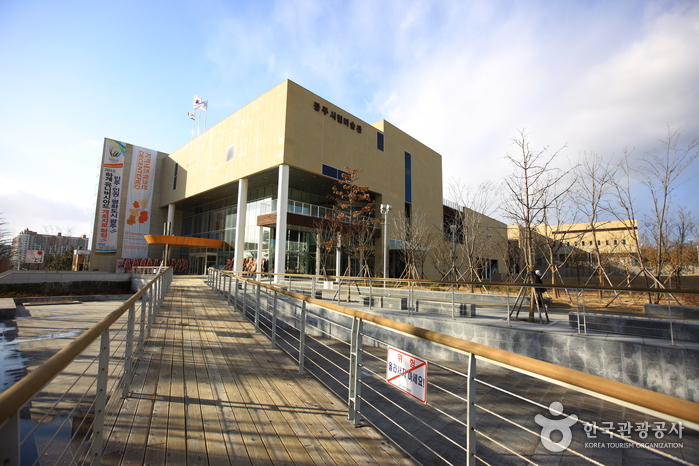
The Gwangju Museum of Art was founded on August 1, 1992, to promote local artists. In 1996, it served as the venue for the Gwangju Biennale. The museum holds over 560 works, including those from Heo Baekryeon, Oh Jiho, Yang Su-ah, and Im Jik-sun, all local artists. In addition to the permanent exhibitions, the museum also has special planned exhibitions and other cultural programs.
Jungoe Park (중외공원)
6.6Km 2021-10-25
52, Haseo-ro, Buk-gu, Gwangju
+82-62-613-7100
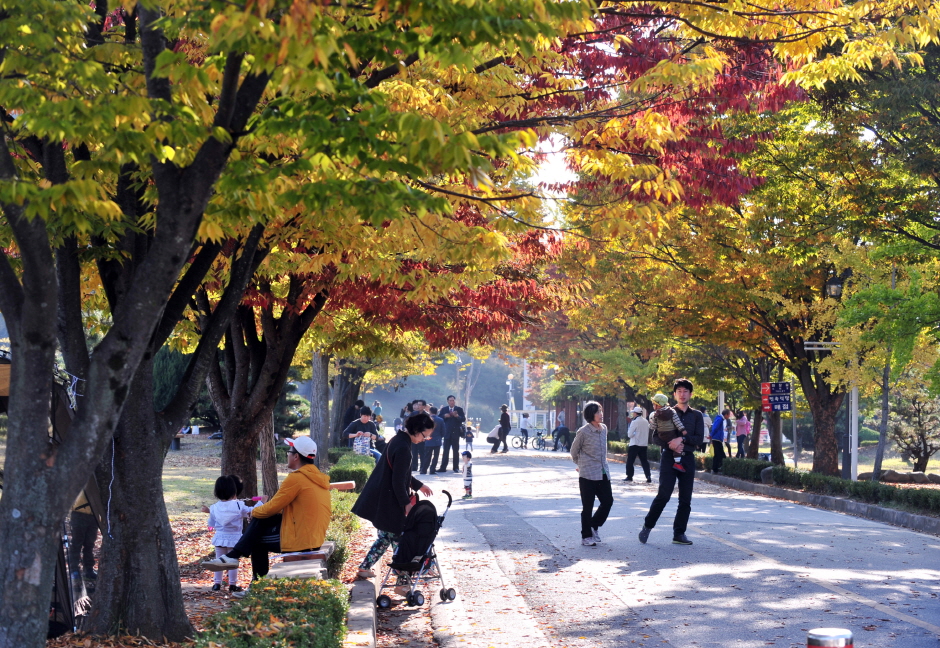
Jungoe Park is one of the nation's most famous leisure spaces. There is a children's grand park, the Olympic Garden, and the Olympic Monument. The children's grand park is especially popular on weekends and holidays.
There is also a folk museum, an education center, and the Biennale Exhibition Hall in the Biennale & Museum section of the park.
The park is most popular during fall for its beautiful foliage. In addition, the Rainbow Bridge is a symbol of the Biennale and was installed during the 1st Gwangju Biennale.
Sigyeongjeong Pavilion (담양 식영정)
6.7Km 2025-01-08
Jigok-ri, Damyang-gun, Jeollanam-do
+82-61-380-2811
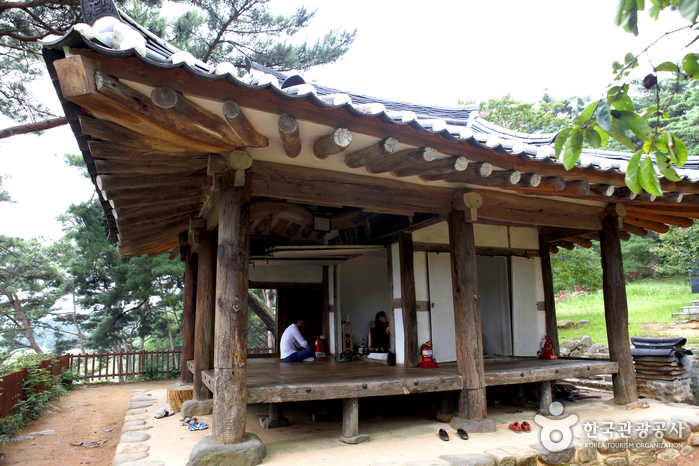
Designated as the top monument of Jeollanam-do, Sigyeongjeong Pavilion means a place where even the shadow of the moon can find a place to rest. As its name suggests, this pavilion is set in a lush and remote forested area. Countless number of scholars and writers have been attracted to this pavilion as a place of profound inspiration. The pavilion gained more fame from the legendary lyrics of Seongsanbyeolgok written by the poet Jeong Cheol. The elegant words of Kim Seongwon, a literary scholar, depict the scenic beauty of Seongsan Mountain as the seasons change.
Of all the pavilions situated at the basin of the Yeongsangang River the Sigyeongjeong Pavilion is said to be blessed with a breathtaking view from the side. The current building was restored in the early 1900s. At the Sigyeongjeong Pavilion there is the Buyongdang, a monument with the lyrics to the Seongsanbyeolgok Poem, and next to it an old library building called Jangseogak built to preserve the wooden blocks of Songgangjib, a book of poetry written by Jeong Cheol.
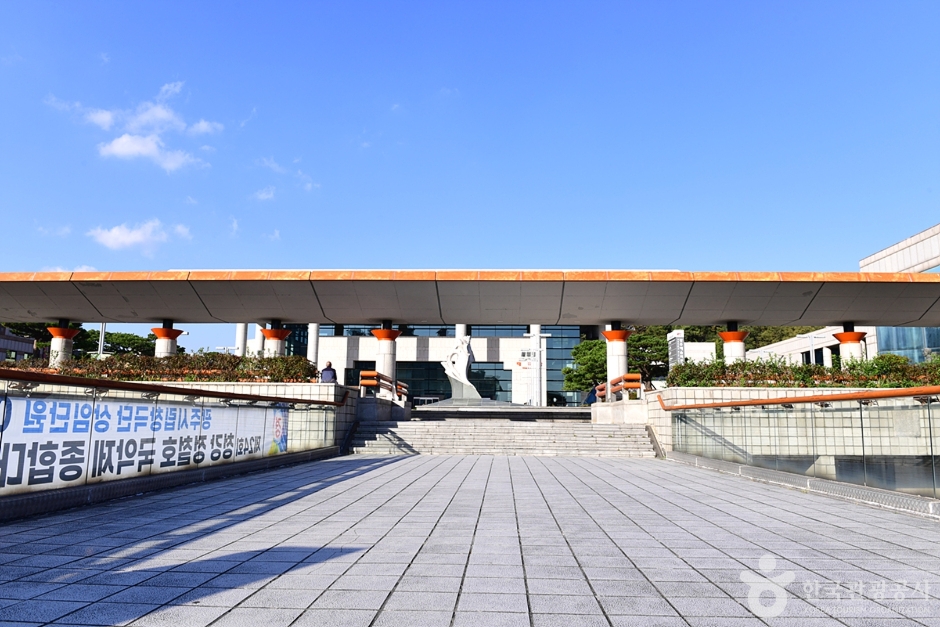
Gwangju Arts Center (광주예술의전당)
6.7Km 2024-11-18
60 Bungmun-daero, Buk-gu, Gwangju
Opened in 1991, the Gwangju Arts Center is the cornerstone of culture and arts in Gwangju. It offers high-quality performances and exhibitions across various genres, including Korean traditional music, opera, classical music, and ballet. The center boasts a range of artistic facilities, such as a main theater, a secondary theater, a traditional music hall, a sculpture garden, and an amphitheater. The main theater has a seating capacity for up to 1,500 people.
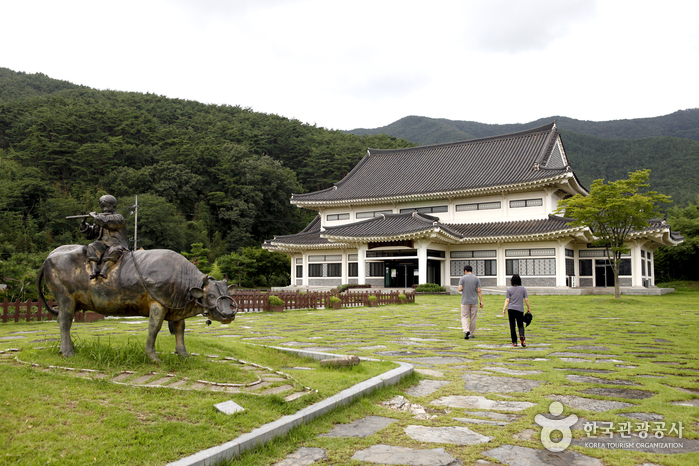
Korea Gasa Literature Collection (한국가사문학관)
6.8Km 2021-09-07
877, Gasamunhak-ro, Damyang-gun, Jeollanam-do
+82-61-380-2701
The Gasa Literature Collection was completed in October 2000 and is located in Damyang, Jeollanam-do, an area which is famous for its fertile land and rich historical heritage. Apart from the main building, additional buildings include a souvenir shop, and traditional tea house. In the museum, historical literature such as “Myeonangjip” (a collection of Gasa poems by Song Sun) and “Songgangjip,” (a collection of Gasa poems by Jeong Cheol) are on display. There are 11,461 artifacts and literature on Gasa culture, 18 Gasa works, and 15,000 books about Gasa.
Soswaewon Garden (담양 소쇄원)
7.0Km 2023-01-04
17, Soswaewon-gil, Damyang-gun, Jeollanam-do
+82-61-381-0115
Soswaewon Garden is a private garden from the Joseon period where Korea's traditional beauty is preserved. It was built by Yang San-Bo (1503-1557) after he gave up his success when his mentor Jo Gwang-Jo (1482-1519) was killed during political strife. Soswaewon Garden presents itself as a clean and transparent garden where the righteous enjoy the life of anbinnakdo (being comfortable amid poverty and taking pleasure in an honest lifestyle) surrounded by a bamboo grove.
Including peach trees, various kinds of trees and grass are planted on both sides of the stream while clear water flows down the foot of the garden walls. The log bridge above the valley adds to the charm of the scenery. The harmony between nature and the artificial waterfall is a sight to behold. Soswaewon Garden is 150 meters away from the main road. Passing through the thick bamboo forest, you will find the small valley and Soswaewon Garden on your left.
 English
 한국어
한국어 日本語
日本語 中文(简体)
 Deutsch
 Français
 Español
 Русский


